Tax Refunds: Why a Big One Isn't a Win
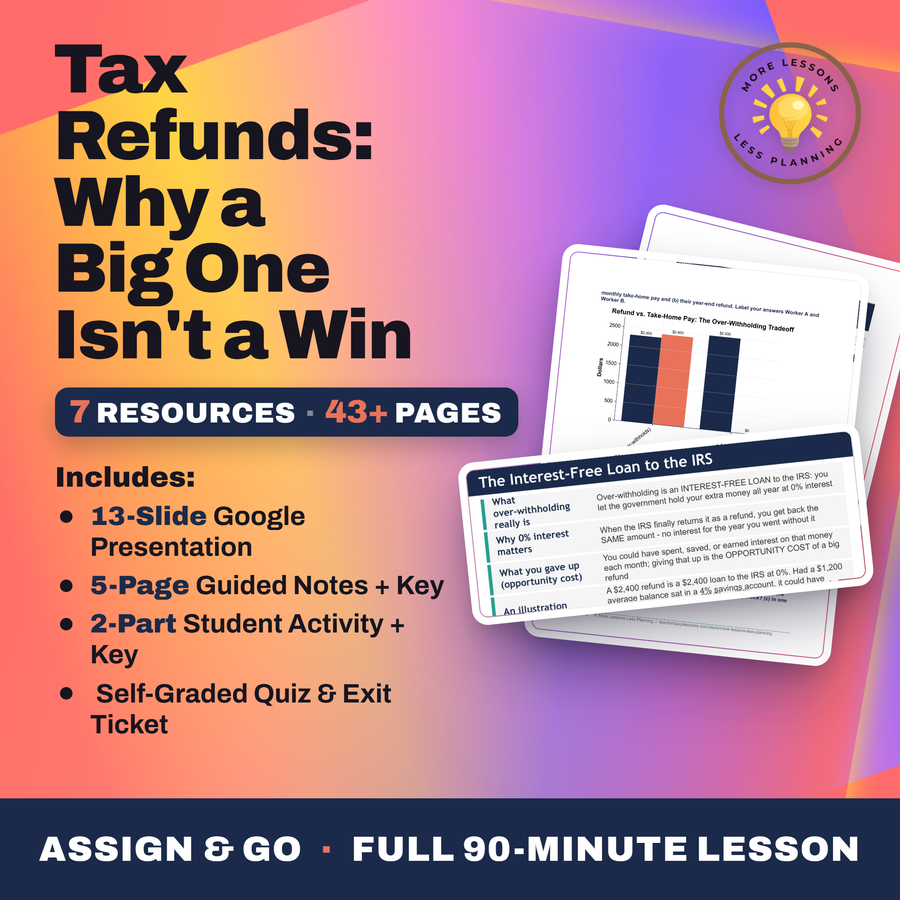
- Slide deck
- Guided notes
- Guided notes teacher key
- Activity + answer key
- Quiz + answer key
- Exit ticket + answer key
- Teacher guide
- Teacher presentation notes
Where should I send the next one?
Everything here is free and it stays that way. Leave your email and I'll send you the new lessons as they go up. You can unsubscribe from any one of them.
Every file in this toolkit
Related resources
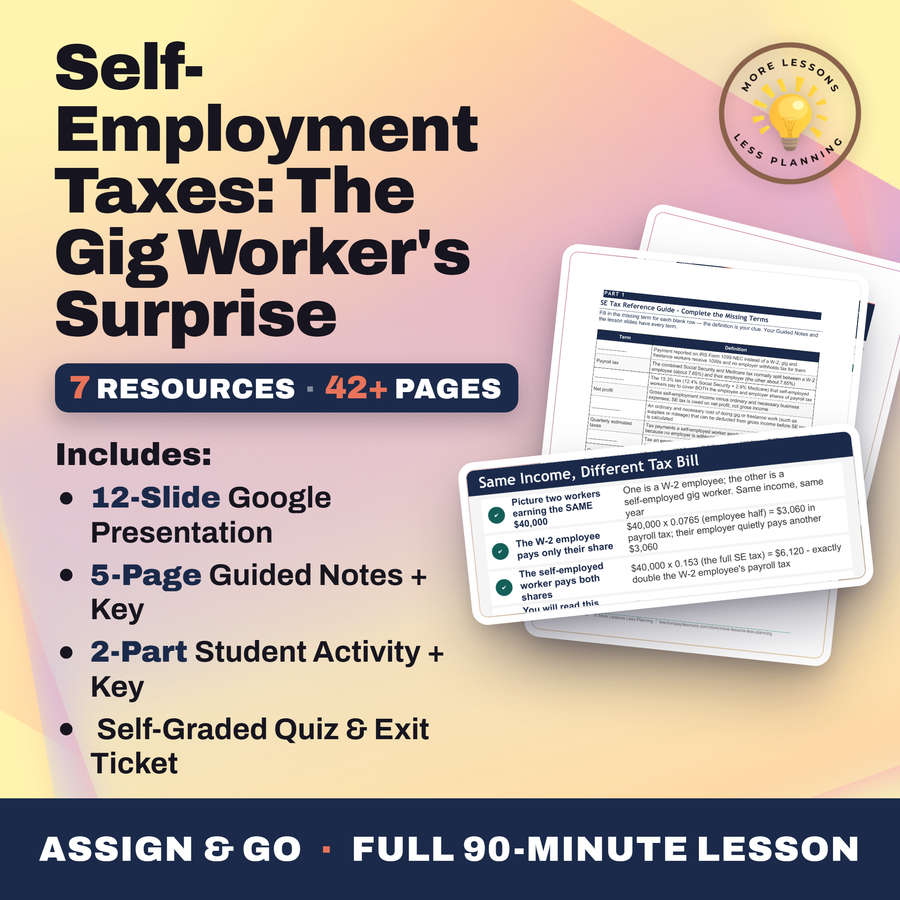
Self-Employment Taxes: The Gig Worker's Surprise
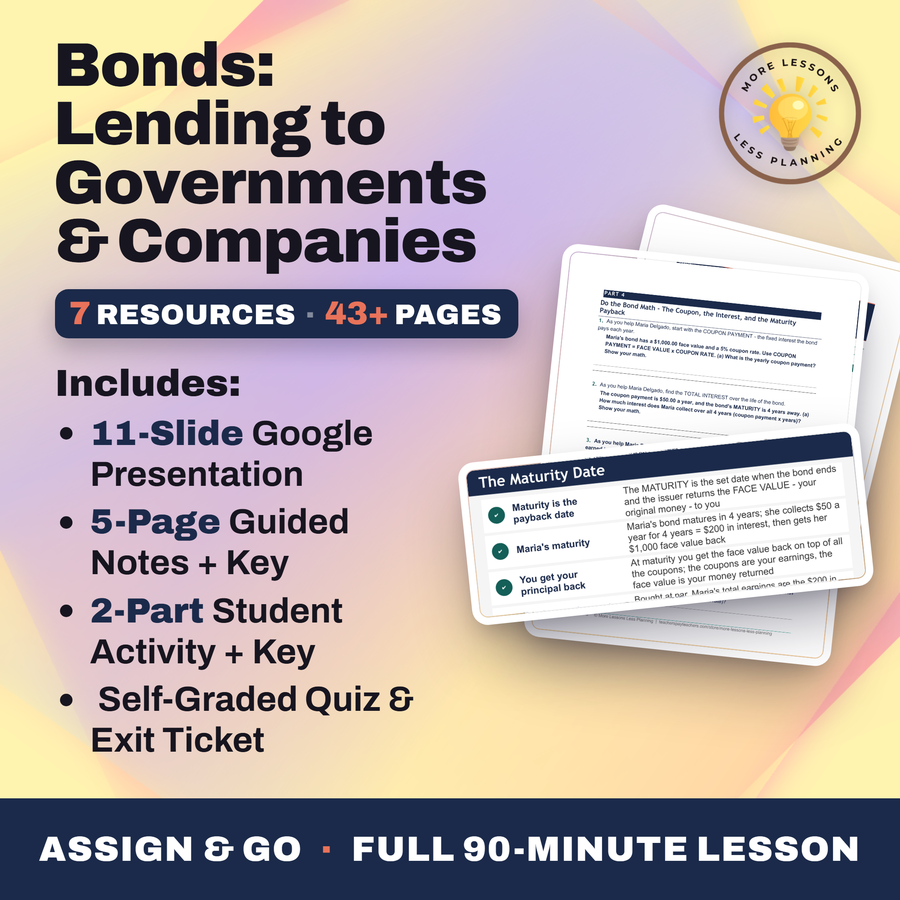
Bonds - Lending to Governments and Companies
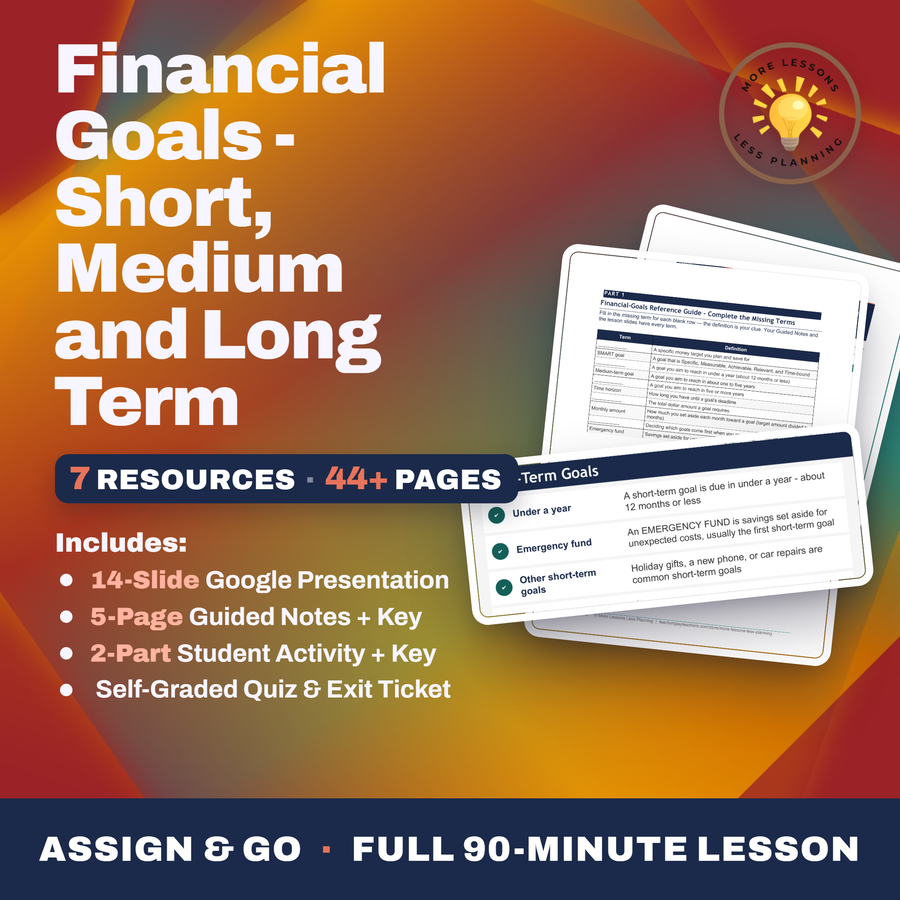
Financial Goals - Short, Medium and Long Term
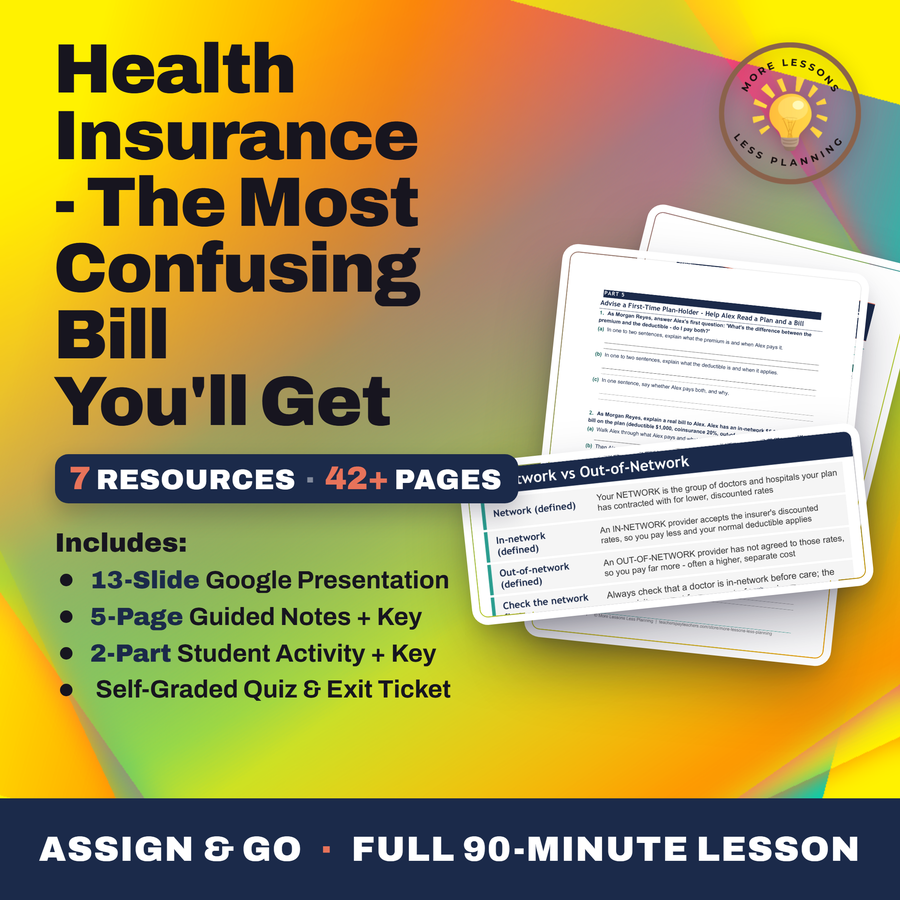
Health Insurance - The Most Confusing Bill You'll Get
Hourly vs Salary: Which Job Actually Pays More?
Impulse Buying - How Stores Trick You
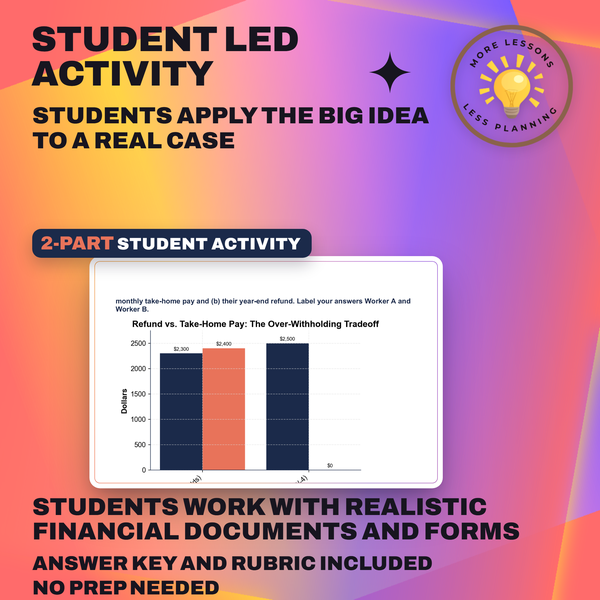
What students do
- Calculate a tax refund using total withheld minus actual tax owed
- Find the monthly cost of over-withholding by dividing a refund by twelve
- Compare two workers on the same salary to see how a W-4 changes take-home pay
- Advise a new filer on adjusting their W-4 toward accurate withholding
What it covers
- Why a tax refund is a filer's own over-withheld money, not a bonus
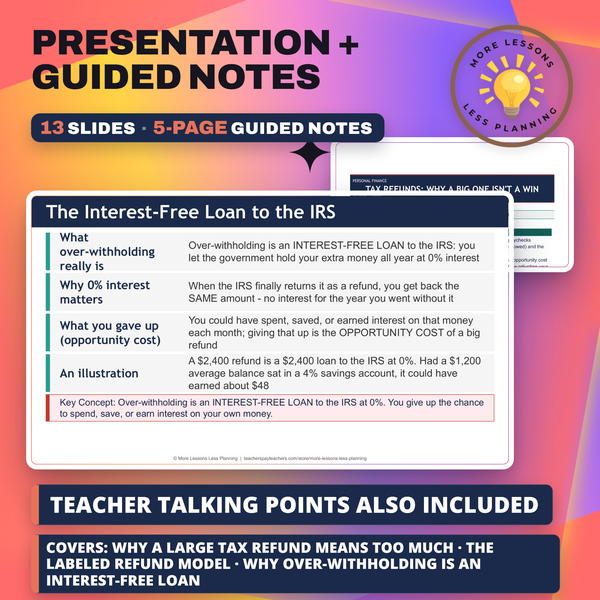
- Over-withholding as an interest-free loan to the IRS and its real opportunity cost
- The mirror-image balance-due formula for when a filer underpays instead
- The honest case for and against using a refund as forced savings
Learning targets
- Explain why a large tax refund means too much was withheld from your paychecks
- Apply the LABELED refund model (Refund = total tax withheld - actual tax owed) and the balance-due model (Balance due = actual tax owed - total tax withheld)
- Explain why over-withholding is an interest-free loan to the IRS with a real opportunity cost
- Calculate the monthly cost of over-withholding (refund / 12) and explain how adjusting your W-4 puts that money back in each paycheck
From one teacher to another
Almost every student walks in convinced a big refund is a win, and I use this lesson to talk them out of it. Two workers on the identical salary land on the same chart, and the only difference between them is a form, which makes the $200-a-month gap impossible to argue with. Students don't just hear me say it: they leave having found the gap themselves, and I made room for the forced-savings counterargument instead of pretending the answer is simple.
Every lesson on this site is free to download and use. If one of them saved you a prep period, you can chip in a few bucks toward my three kids' daycare fund. That's genuinely where tips go.