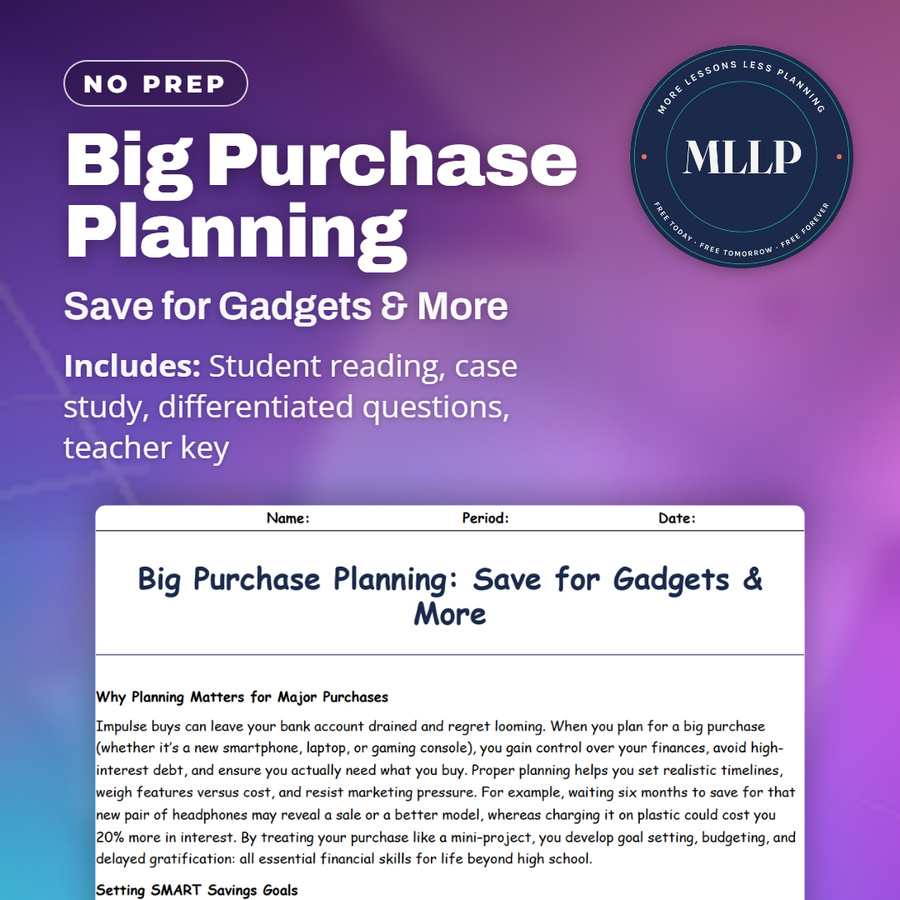
Big Purchase Planning: Save for Gadgets & More
Quality reviewed September 2026
Facts verified September 24, 2026
- Subject
- Career & Life Skills
- Grades
- Grades 9-12
- Length
- 6-page student worksheet
- Time
- About one 50-minute class period
- Great for
- Sub plans and independent work
- Includes
- Reading passage, comprehension questions + full answer key
- Format
- Print-and-go PDF
What students do
- Match high-yield savings and a certificate of deposit to definitions like an FDIC-insured account with an above-average APY and a locked-in rate for a set term, plus a sub-savings bucket, a weekly transfer, and a deadline to their own definitions
- Fill in the blanks on what a clear weekly savings amount tells you, what kind of tracker keeps you motivated, and what type of expenses to cut to free up money for a goal
- Answer multiple choice questions on what a SMART savings goal includes, how to boost a savings rate, and which account type pays the most for a short-term goal
- Write short answers on the benefits of automatic transfers, why a deadline creates urgency, and how Ethan combined tutoring income, cut expenses, and a $150 tournament prize to buy his $1,199 phone two days early
What it covers
- The SMART framework for setting a savings goal, with a step-by-step worksheet for tracking progress
- Ways to cut nonessential spending and where to safely hold savings, from high-yield accounts to a CD
- A case study on Ethan, who saved $1,200 in 12 weeks for a smartphone by cutting expenses and banking tutoring income
Start reading this worksheet
Why Planning Matters for Major Purchases
Impulse buys can leave your bank account drained and regret looming. When you plan for a big purchase (whether it’s a new smartphone, laptop, or gaming console), you gain control over your finances, avoid high‐interest debt, and ensure you actually need what you buy. Proper planning helps you set realistic timelines, weigh features versus cost, and resist marketing pressure. For example, waiting six months to save for that new pair of headphones may reveal a sale or a better model, whereas charging it on plastic could cost you 20% more in interest. By treating your purchase like a mini–project, you develop goal setting, budgeting, and delayed gratification: all essential financial skills for life beyond high school.
Setting SMART Savings Goals
Use the SMART framework to turn vague wishes into actionable plans: Specific: Name the item and its exact model. Measurable: Assign a dollar target (e.g., $999). Achievable: Calculate weekly or monthly savings based on your income. Relevant: Confirm this purchase aligns with your priorities (schoolwork, hobbies). Time-Bound: Set a clear deadline (e.g., four months from now). With SMART goals, you’ll know exactly how much to tuck away each week and avoid drifting into impulse territory. Revisiting your progress monthly keeps motivation high and allows you to adjust if expenses (or unexpected side-hustle windfalls) shift along the way.
Step-by-Step Savings Worksheet
Below is an example worksheet to track progress toward a new smartphone: Fill in your target item and total cost. Choose a deadline that gives you time but creates urgency. Divide total cost by number of weeks to get weekly savings. Update amount saved each week and compute percentage complete. Review this worksheet every Sunday evening and adjust if you fall behind or get extra income from a side hustle.
Like what you read? The full reading, the case study, and every question set are in the free download below, along with the answer key.
Why this matters
Wanting a new phone or laptop is universal for a teenager, and the reading turns that want into a plan with actual numbers instead of just hoping the money shows up. Ethan's habits, a weekly transfer, a couple of specific cuts, and a place to put the money that earns a little interest, are all things a student with any part-time income or allowance could copy right away. Planning a big purchase instead of charging it is also the reading's quiet argument against paying extra interest for something that could have been saved for in a few months.
From one teacher to another
Wanting something and having a plan to pay for it are two different things, and the reading uses the SMART framework, specific, measurable, achievable, relevant, time-bound, to bridge that gap with an actual savings worksheet. It covers ways to cut nonessential spending, like brewing coffee at home or dropping an unused streaming subscription, and compares places to hold savings once it adds up, from high-yield accounts to a CD for money that won't be needed for months. One senior, Ethan, saves $1,200 in 12 weeks for a $1,199 phone by banking $100 a week from tutoring, cutting a snack habit and a streaming add-on, and putting a $150 debate tournament prize toward the goal two days before his deadline.
What you get
Download
Where should I send the next one?
Everything here is free and it stays that way. Leave your email and I'll send you the new lessons as they go up. You can unsubscribe from any one of them.
Related resources
Buy Now, Pay Later: Teen’s Guide to Safe Installment Plans
Credit Reports Uncovered: Monitor & Dispute Errors
Emergency Budget Blueprint: Teens’ Step-by-Step Guide
Finance Jargon Buster: Essential Terms for Teens
Hidden Bank Fees: Slash Your Sneaky Charges
Inflation Explained: Protect Teen Buying Power
Every lesson on this site is free to download and use. If one of them saved you a prep period, you can chip in a few bucks toward my three kids' daycare fund. That's genuinely where tips go.