Bonds - Lending to Governments and Companies
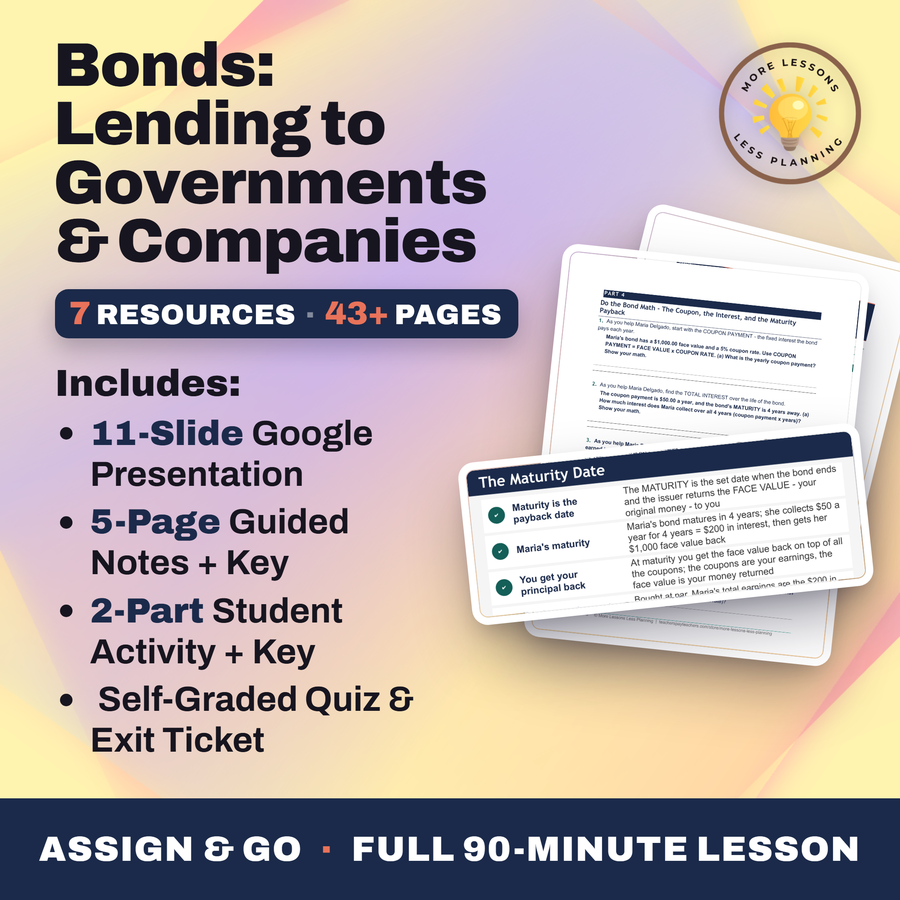
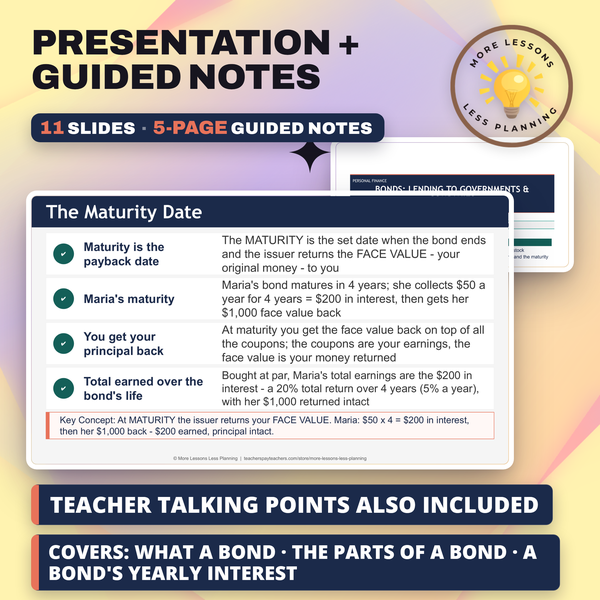
- Slide deck
- Guided notes
- Guided notes teacher key
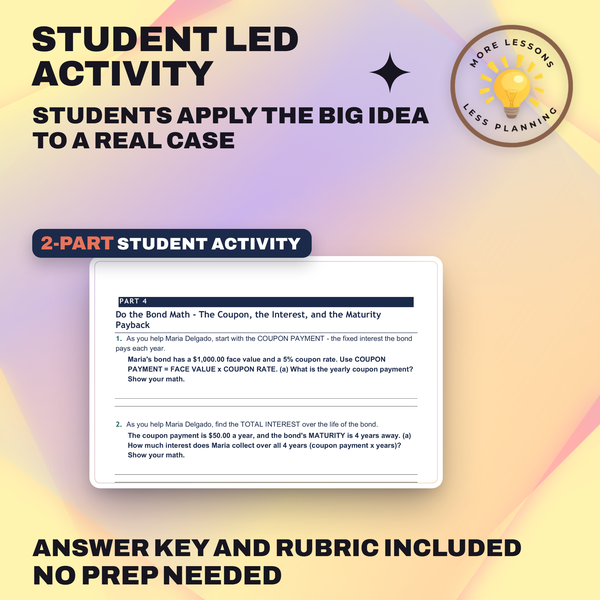
- Activity + answer key
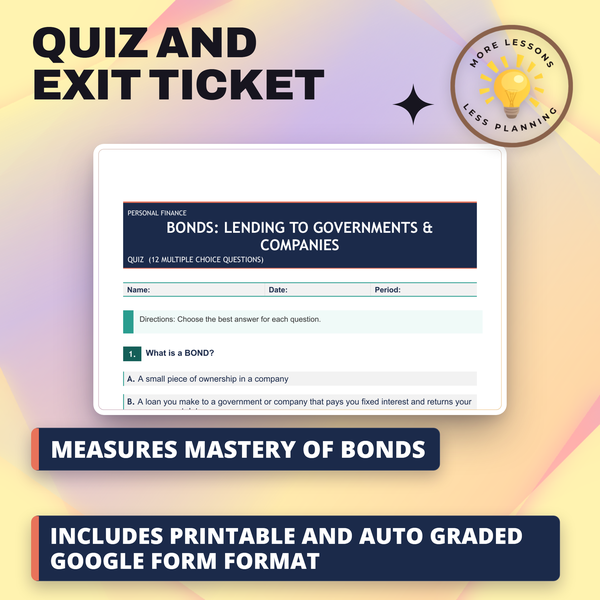
- Quiz + answer key
- Exit ticket + answer key
- Teacher guide
- Teacher presentation notes
Where should I send the next one?
Everything here is free and it stays that way. Leave your email and I'll send you the new lessons as they go up. You can unsubscribe from any one of them.
Every file in this toolkit
Related resources
Risk vs Reward - Why You Can't Win Without Risk
The Stock Market - How It Works and Why It Moves
Why Save - The Power of Starting Young
Financial Goals - Short, Medium and Long Term
Health Insurance - The Most Confusing Bill You'll Get
Hourly vs Salary: Which Job Actually Pays More?
What students do
- Calculate a bond's yearly coupon payment using face value times coupon rate
- Trace a bond from purchase through its maturity date to find total interest earned
- Compare bonds and stocks on a risk-and-return chart to see the tradeoff in action
- Sort government, corporate, and municipal bonds by who issues them and why
What it covers
- Why buying a bond makes you a lender instead of an owner
- The parts of a bond: face value, coupon rate, coupon payment, and maturity
- Default as the main risk of holding a bond, and why safer issuers pay less interest
- When a bond fits a financial goal better than a stock does
Learning targets
- Explain what a bond is and how lending to an issuer differs from owning a stock
- Identify the parts of a bond: the face value, the coupon (interest) payment, and the maturity date
- Calculate a bond's yearly interest using COUPON PAYMENT = FACE VALUE x COUPON RATE
- Compare bonds and stocks in risk and return, and explain when a bond makes sense
From one teacher to another
Lending and owning look like the same move from the outside, but they pay off in totally different ways, and that gap is what this whole lesson sits on. Students follow Maria Delgado as she puts $1,000 into a GreenLeaf Foods bond, collects a fixed $50 every year, and gets her principal back at maturity, then weigh that steady payout against a stock's messier, higher-ceiling upside on the same risk-and-return chart. I want it to click that a bond isn't a safer stock, it's a completely different deal.
Every lesson on this site is free to download and use. If one of them saved you a prep period, you can chip in a few bucks toward my three kids' daycare fund. That's genuinely where tips go.