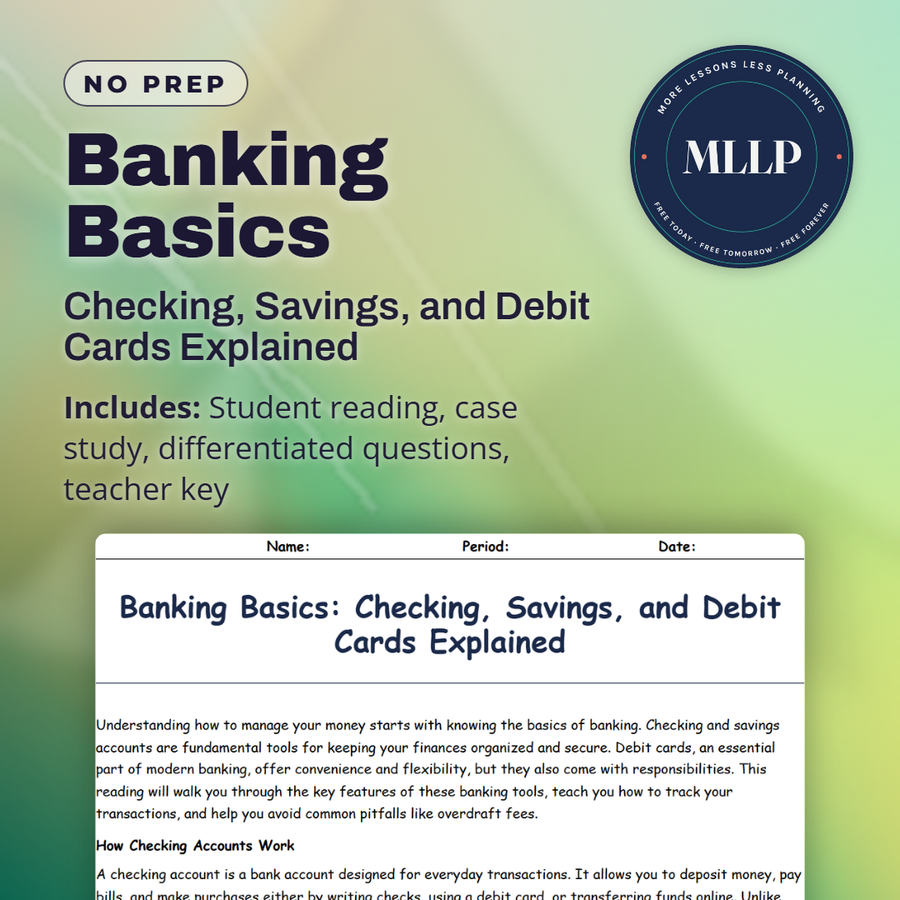
Banking Basics: Checking, Savings, and Debit Cards Explained
Quality reviewed September 2026
Facts verified September 24, 2026
- Subject
- Career & Life Skills
- Grades
- Grades 9-12
- Length
- 6-page student worksheet
- Time
- About one 50-minute class period
- Great for
- Sub plans and independent work
- Includes
- Reading passage, comprehension questions + full answer key
- Format
- Print-and-go PDF
What students do
- Match five terms including overdraft fee, savings account, debit card, and interest to what each one means
- Fill in the blanks on which account is for everyday spending, which card pulls from checking, and what savings earns over time
- Answer multiple choice questions on what a savings account is for, what causes an overdraft fee, and how a debit card differs from a credit card
- Write short answers on why checking your balance matters, two benefits of a savings account, and how a debit card helps you manage spending
What it covers
- How checking accounts work for everyday spending, including fees and overdrafts
- How savings accounts earn interest and limit monthly withdrawals
- A case study on Sarah, who overdrafted her new checking account by $10
Start reading this worksheet
Understanding how to manage your money starts with knowing the basics of banking. Checking and savings accounts are fundamental tools for keeping your finances organized and secure. Debit cards, an essential part of modern banking, offer convenience and flexibility, but they also come with responsibilities. This reading will walk you through the key features of these banking tools, teach you how to track your transactions, and help you avoid common pitfalls like overdraft fees.
How Checking Accounts Work
A checking account is a bank account designed for everyday transactions. It allows you to deposit money, pay bills, and make purchases either by writing checks, using a debit card, or transferring funds online. Unlike savings accounts, checking accounts typically don’t earn interest, but they provide easy access to your money. Many banks offer online and mobile banking features, making it easier to check your balance, pay bills, and transfer money. Some accounts come with fees, such as monthly maintenance fees or overdraft fees, but many banks waive these fees if you meet specific requirements, like maintaining a minimum balance. One of the most important aspects of using a checking account is keeping track of your transactions. Every time you spend money, whether with a debit card or by writing a check, it’s essential to record the amount to ensure you don’t spend more than you have. Overdrafting—spending more money than is available in your account—can result in high fees and damage your financial health.
How Savings Accounts Work
A savings account is designed for storing money that you don’t need to access daily. These accounts typically earn interest, which is money the bank pays you for keeping your funds in the account. Interest rates can vary depending on the type of savings account and the bank, but the more you save, the more you can earn over time. Savings accounts often have limits on how many withdrawals you can make each month without incurring fees. This structure encourages you to save rather than spend. These accounts are ideal for short-term goals, like saving for a vacation, and long-term goals, such as building an emergency fund or saving for college. Having both a checking and savings account allows you to manage your finances efficiently: you can use your checking account for day-to-day expenses while letting your savings grow over time.
Like what you read? The full reading, the case study, and every question set are in the free download below, along with the answer key.
Why this matters
A lot of students are about to open their first account, if they haven't already, and the difference between checking and savings isn't obvious until someone lays it out. Sarah's $35 fee on a $10 mistake is the kind of thing that happens to almost everyone once, and it's a lot cheaper to learn about it from a worksheet than from your own bank statement. Knowing what a debit card actually does, pull money straight from your account in real time, changes how carefully a student swipes it at checkout.
From one teacher to another
The reading opens with the basics every new account holder needs: a checking account is built for daily spending and usually earns no interest, while a savings account is built for money you don't need right away and pays you interest for keeping it there. It walks through how a debit card is linked straight to checking, pulling funds the moment you swipe, and how that's different from a credit card that lets you borrow. A comparison table lines up the two account types side by side on accessibility, interest, and transaction limits. Sarah, a high school senior with her first checking account, spends $10 more than she has and gets hit with a $35 overdraft fee, so she starts checking her balance in her bank's app and turns on low-balance alerts.
What you get
Download
Where should I send the next one?
Everything here is free and it stays that way. Leave your email and I'll send you the new lessons as they go up. You can unsubscribe from any one of them.
Related resources
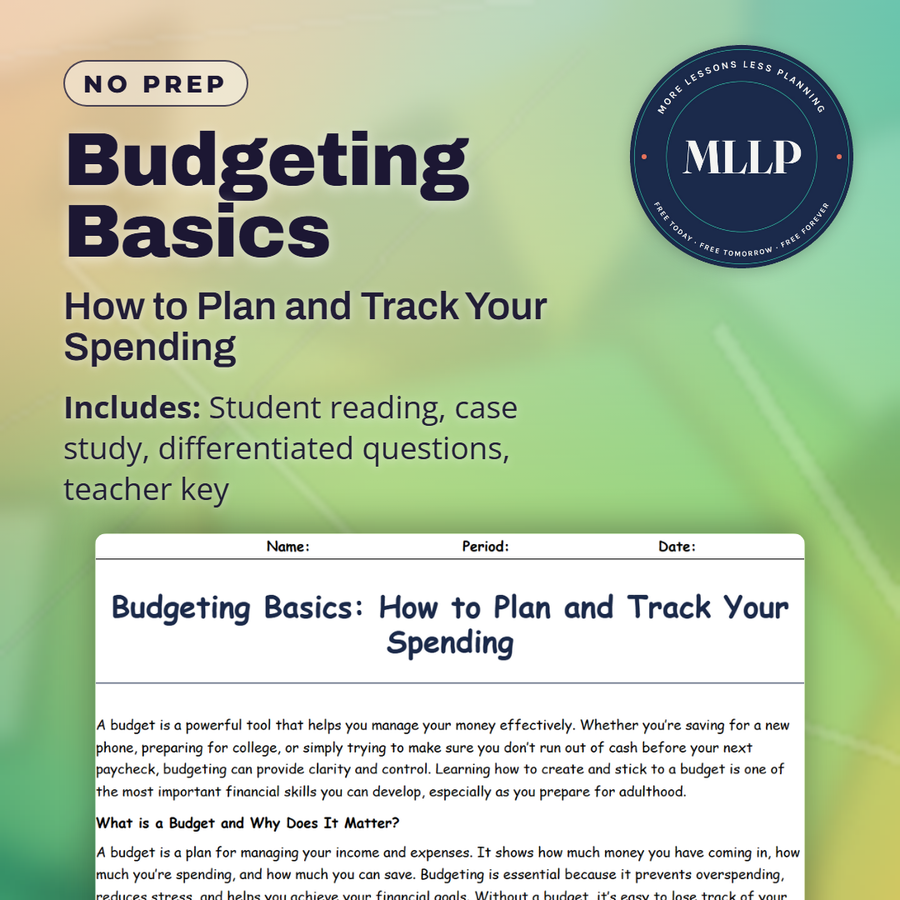
Budgeting Basics: How to Plan and Track Your Spending
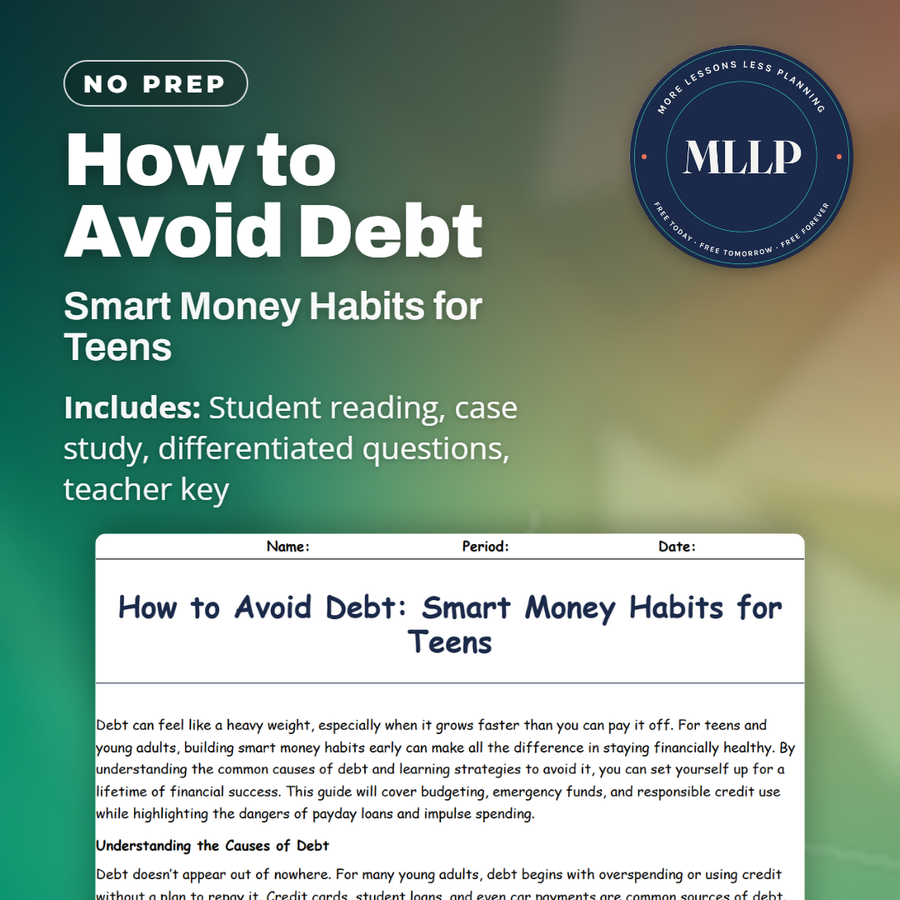
How to Avoid Debt: Smart Money Habits for Teens
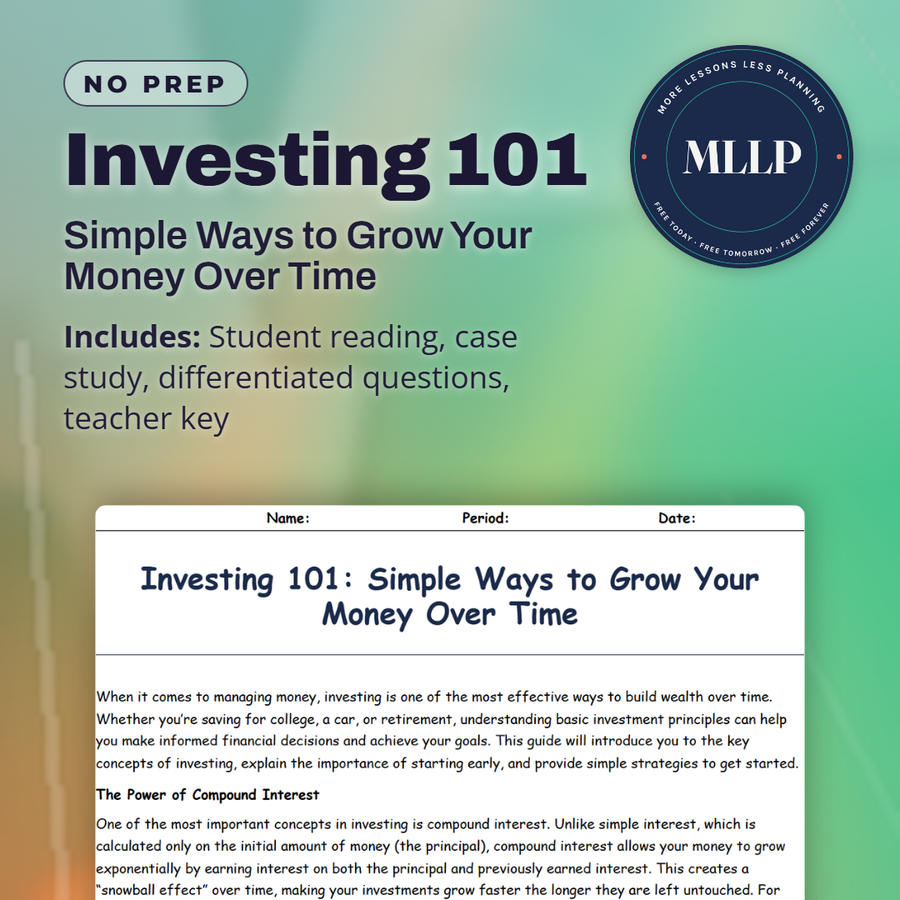
Investing 101: Simple Ways to Grow Your Money Over Time
Needs vs. Wants: Making Smart Spending Choices
Saving for Success: How to Set Financial Goals and Stick to Them
The Power of Emergency Funds: Why Every Teen Should Save for the Unexpected
Every lesson on this site is free to download and use. If one of them saved you a prep period, you can chip in a few bucks toward my three kids' daycare fund. That's genuinely where tips go.