Needs vs Wants - Marketings Biggest Trick
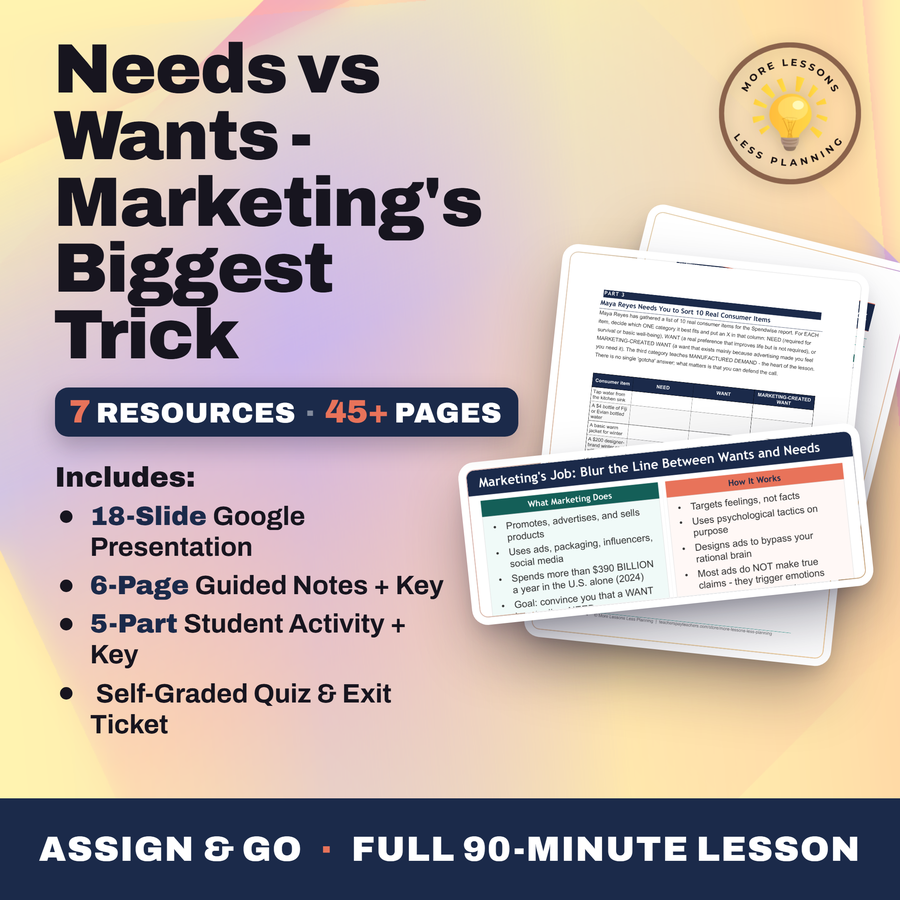
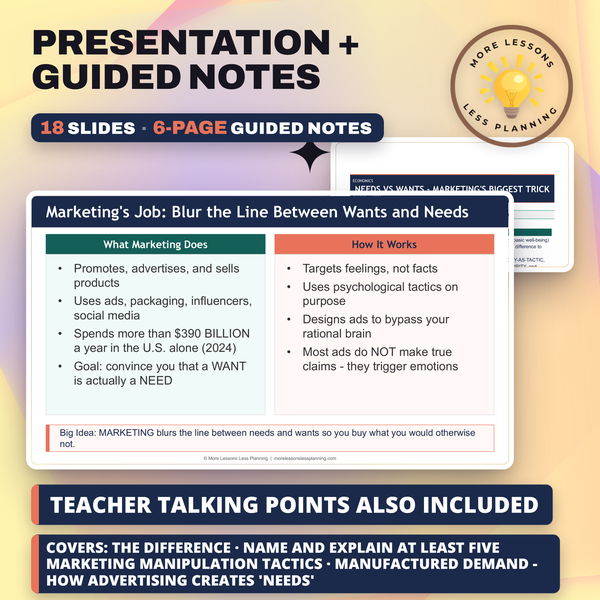
- Slide deck
- Guided notes
- Guided notes teacher key
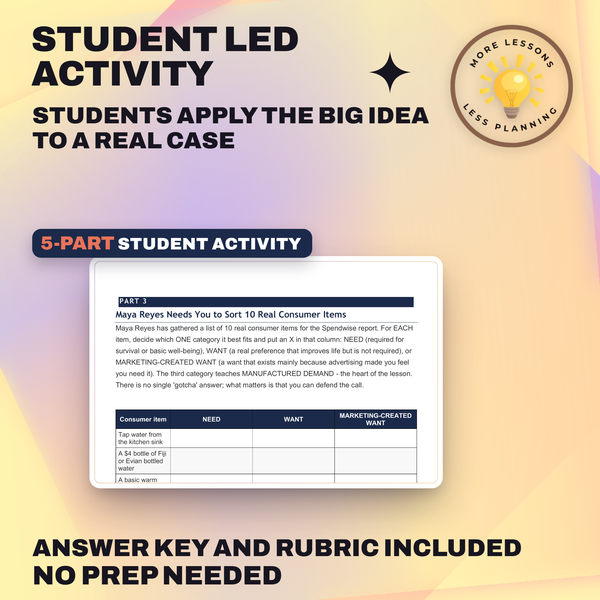
- Activity + answer key
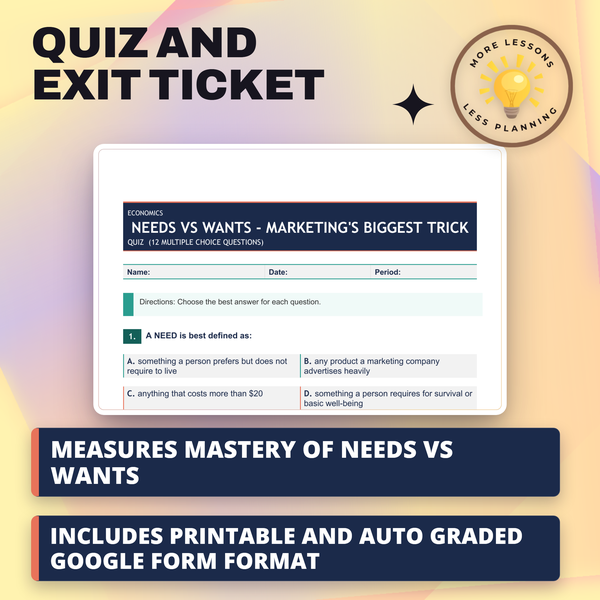
- Quiz + answer key
- Exit ticket + answer key
- Teacher guide
- Teacher presentation notes
Where should I send the next one?
Everything here is free and it stays that way. Leave your email and I'll send you the new lessons as they go up. You can unsubscribe from any one of them.
Every file in this toolkit
Related resources
Economic Systems - Capitalism vs Socialism vs Mixed
Factors of Production - Land, Labor, Capital, and Entrepreneurship
Opportunity Cost - The Real Price of Every Decision
Scarcity & Choice - Why You Cant Have Everything
The Invisible Hand - Adam Smith Explained
Big Tech Antitrust - Google Apple Amazon Meta
What students do
- Sort ten real consumer items into need, want, or marketing-created want, and defend the manufactured-demand category
- Analyze three historic ad campaigns (Listerine's 1920s bad-breath pitch, De Beers's 1947 diamond ring, the 2023 Stanley cup) for which tactic each uses
- Decode a real ad for scarcity, FOMO, social proof, emotional appeal, manufactured insecurity, or lifestyle marketing
- Audit a recent personal purchase and name its opportunity cost alongside the tactics that drove it
What it covers
- The difference between a need, a want, and a want manufactured by advertising
- Six marketing tactics, from scarcity and FOMO to lifestyle marketing, and how to spot each one
- How Listerine, De Beers, and Stanley all manufactured demand for a product people didn't know they needed
- How to audit personal spending against the tactics that shaped it
Learning targets
- Define the difference between a NEED (something required for survival or basic well-being) and a WANT (a preference that improves life but is not required), and use the difference to classify real consumer items
- Name and explain at least FIVE marketing manipulation tactics - SCARCITY-AS-TACTIC, FOMO, SOCIAL PROOF, EMOTIONAL APPEAL, MANUFACTURED INSECURITY, and LIFESTYLE MARKETING - and identify them in real ad campaigns
- Explain MANUFACTURED DEMAND - how advertising creates 'needs' that did not exist before (deodorant, Listerine bad breath, bottled water, diamond engagement rings) - using concrete case-study evidence
- Apply needs-vs-wants thinking to your own consumption (TikTok ads, Stanley cups, sneaker drops, energy drinks) and write a recommendation memo that protects your money from manipulation
From one teacher to another
Kids get uncomfortable at the right moment in this one, since by the end of the Listerine and De Beers case studies, they start noticing manufactured insecurity in their own For You page. The Stanley cup case study lands hardest because it happened to them last year, not to a previous generation. I built the closing audit so the lesson doesn't end on a vague takeaway; it ends with them naming the opportunity cost of something they actually bought.
Every lesson on this site is free to download and use. If one of them saved you a prep period, you can chip in a few bucks toward my three kids' daycare fund. That's genuinely where tips go.