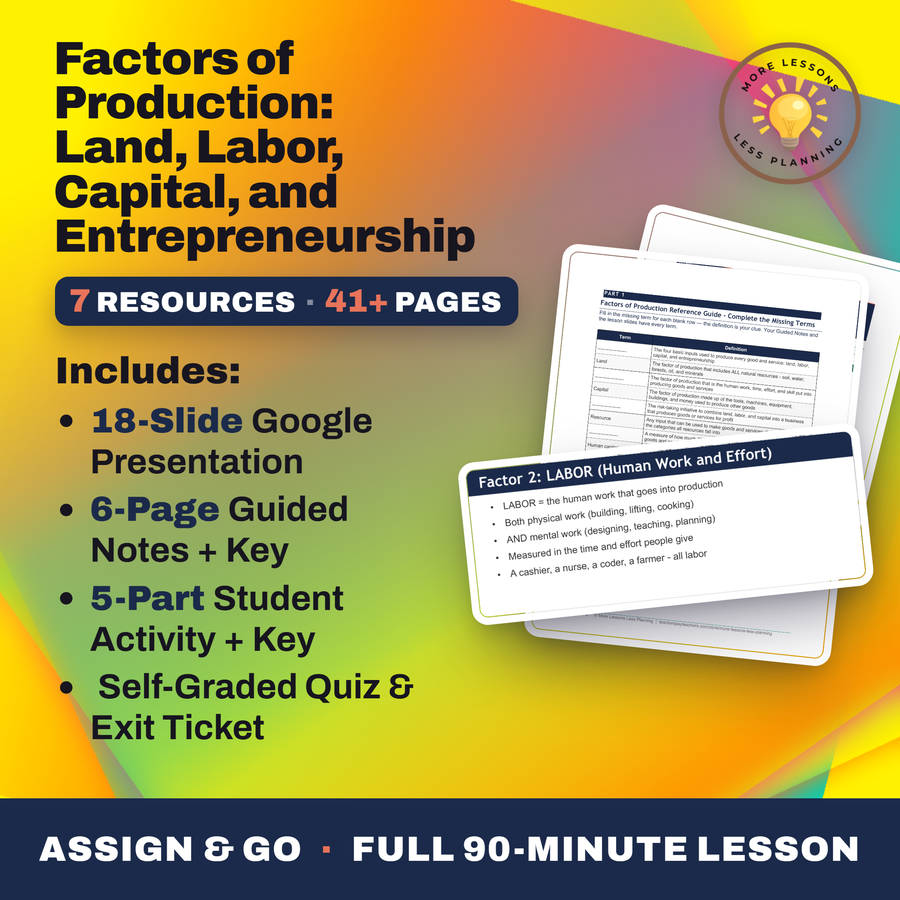

Factors of Production - Land, Labor, Capital, and Entrepreneurship
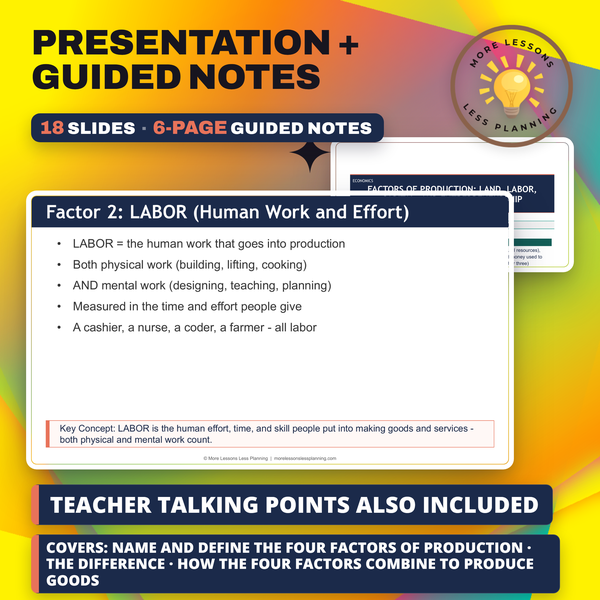
- Slide deck
- Guided notes
- Guided notes teacher key
- Activity + answer key
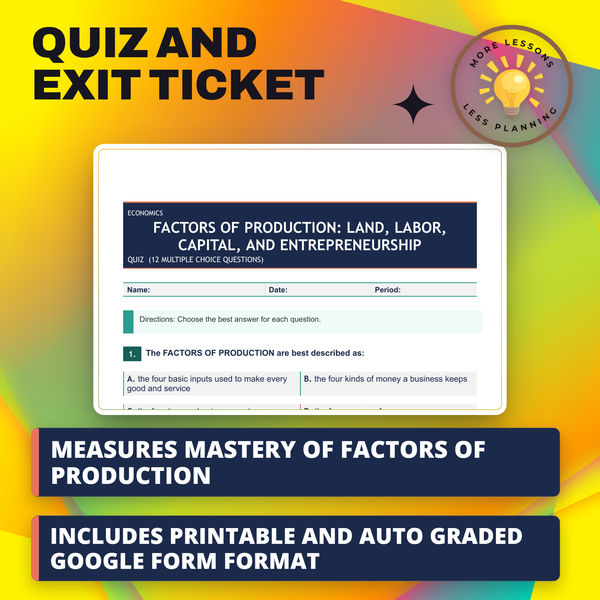
- Quiz + answer key
- Exit ticket + answer key
- Teacher guide
- Teacher presentation notes
Where should I send the next one?
Everything here is free and it stays that way. Leave your email and I'll send you the new lessons as they go up. You can unsubscribe from any one of them.
Every file in this toolkit
Related resources
Economic Systems - Capitalism vs Socialism vs Mixed

Needs vs Wants - Marketings Biggest Trick

Opportunity Cost - The Real Price of Every Decision

Scarcity & Choice - Why You Cant Have Everything

The Invisible Hand - Adam Smith Explained

Big Tech Antitrust - Google Apple Amazon Meta
What students do
- Classify Devon Park's real food-truck business inputs into land, labor, capital, and entrepreneurship
- Build a list of everything Devon's Tacos needs from each factor, plus the income each factor earns
- Calculate productivity from a small output table and explain what raises it
- Distinguish human capital from physical capital using examples from the food truck
What it covers
- What each of the four factors of production is, land, labor, capital, and entrepreneurship
- How the four factors combine to produce both a good and a service
- Factor income, rent to land, wages to labor, interest to capital, profit to entrepreneurship
- The difference between a resource and a factor of production
Learning targets
- Name and define the FOUR FACTORS OF PRODUCTION - LAND (natural resources), LABOR (human work and effort), CAPITAL (tools, machines, buildings, and money used to produce), and ENTREPRENEURSHIP (the risk-taker who combines the other three)
- Explain the difference between a RESOURCE and a FACTOR OF PRODUCTION, and classify real-world inputs into the correct factor category
- Explain how the four factors COMBINE to produce goods and services, and define PRODUCTIVITY (output per unit of input) and how it grows
- Identify FACTOR INCOME - the payment each factor earns: RENT to land, WAGES to labor, INTEREST to capital, and PROFIT to entrepreneurship
From one teacher to another
Devon's Tacos gives students one running example to hang all four factors on, so instead of memorizing four definitions in isolation, they build out an actual food truck piece by piece. Part 4 has them list what the truck needs from land, labor, capital, and entrepreneurship, then name the income each factor earns, which is where the lesson stops being vocabulary and starts being a business plan. I like that the productivity section hands them a real calculation to run, since that's the part where they're actually doing the math.
Every lesson on this site is free to download and use. If one of them saved you a prep period, you can chip in a few bucks toward my three kids' daycare fund. That's genuinely where tips go.