Economic Systems - Capitalism vs Socialism vs Mixed
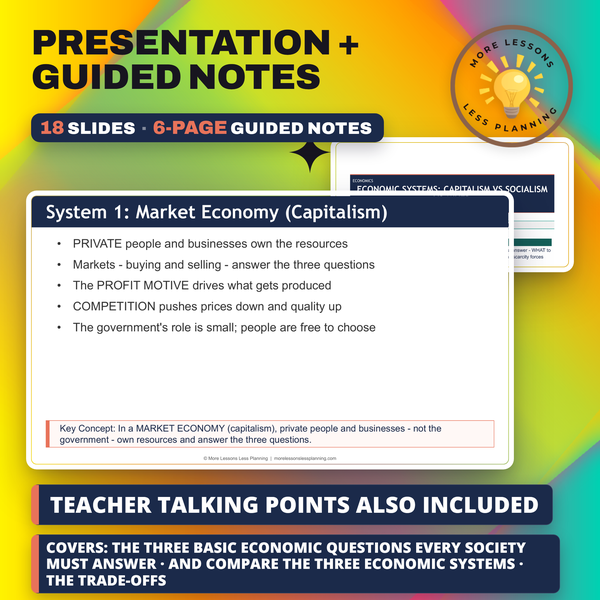
- Slide deck
- Guided notes
- Guided notes teacher key
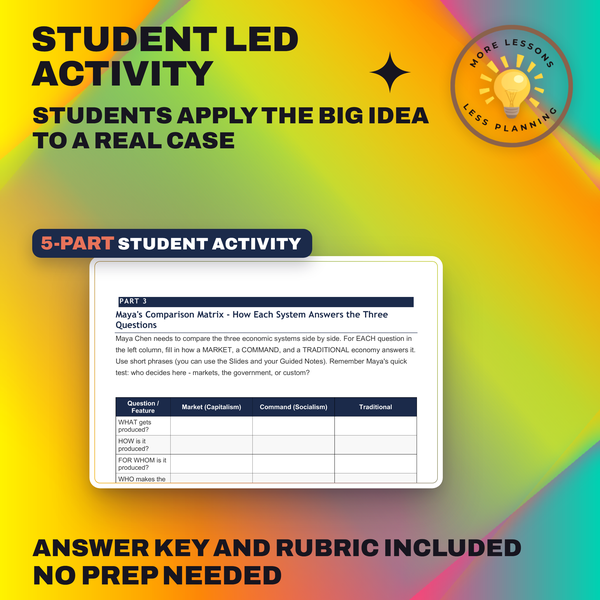
- Activity + answer key
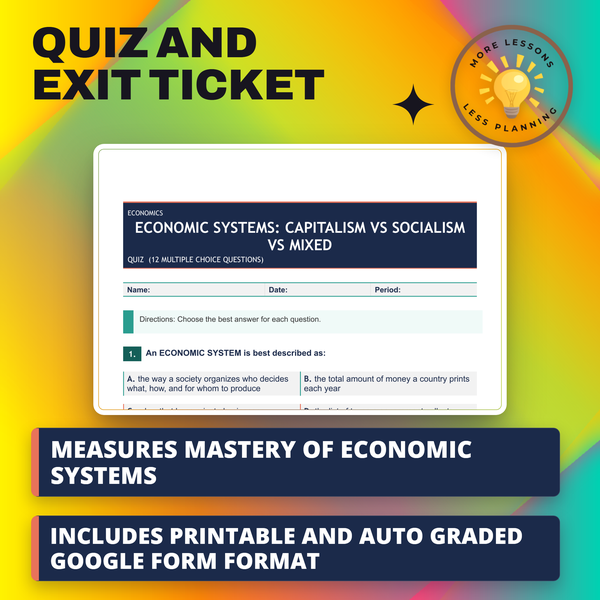
- Quiz + answer key
- Exit ticket + answer key
- Teacher guide
- Teacher presentation notes
Where should I send the next one?
Everything here is free and it stays that way. Leave your email and I'll send you the new lessons as they go up. You can unsubscribe from any one of them.
Every file in this toolkit
Related resources
Factors of Production - Land, Labor, Capital, and Entrepreneurship

Needs vs Wants - Marketings Biggest Trick
Opportunity Cost - The Real Price of Every Decision
Scarcity & Choice - Why You Cant Have Everything
The Invisible Hand - Adam Smith Explained
Big Tech Antitrust - Google Apple Amazon Meta
What students do
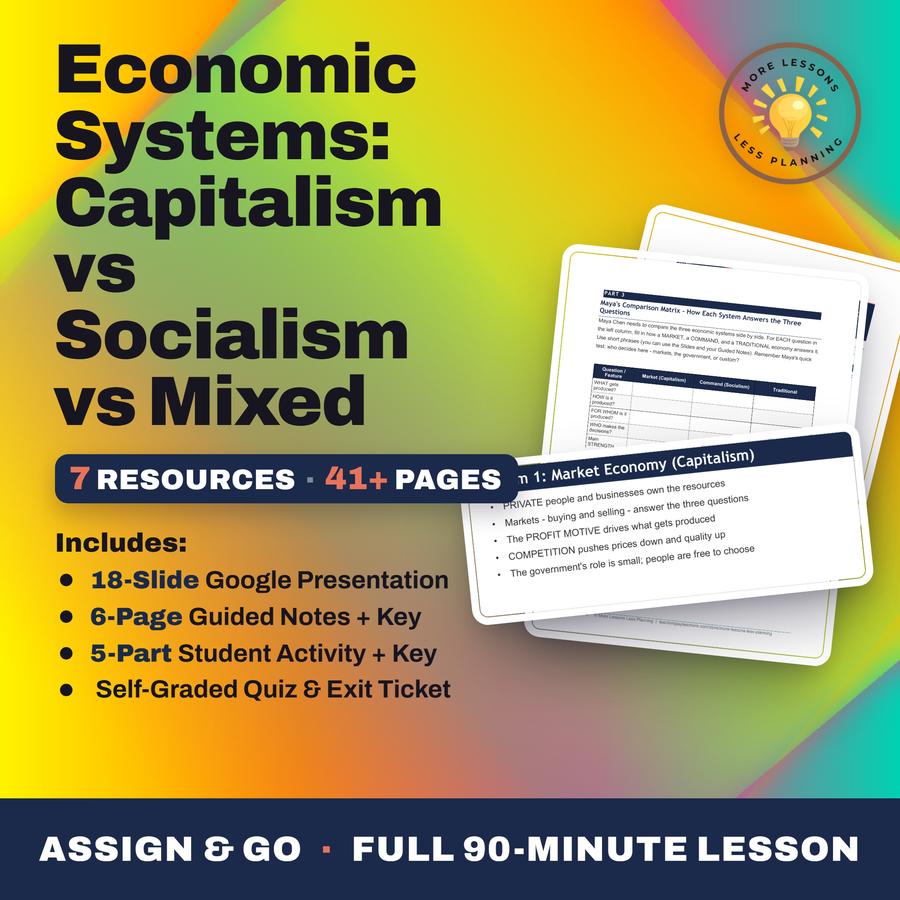
- Compare how market, command, and traditional systems each answer the three basic economic questions
- Place real countries along the spectrum from pure market to pure command and defend the placement
- Trace how a loaf of bread gets produced and distributed differently under capitalism, socialism, and a mixed economy
- Write an advisory memo to a town choosing how to organize its bread supply, using all three system terms
What it covers
- The three basic economic questions every society must answer, what, how, and for whom to produce
- How market, command, and traditional systems answer those questions differently
- The trade-off between freedom and efficiency on one side and equality and security on the other
- Why almost every real country runs a mixed economy rather than a pure system
Learning targets
- Identify the THREE BASIC ECONOMIC QUESTIONS every society must answer - WHAT to produce, HOW to produce it, and FOR WHOM to produce - and explain why scarcity forces every economy to answer them
- Define and compare the three economic SYSTEMS that answer those questions - MARKET (capitalism), COMMAND (socialism/communism), and TRADITIONAL - and explain who makes the decisions in each
- Compare the trade-offs of each system, weighing economic FREEDOM and EFFICIENCY against EQUALITY and SECURITY
- Explain why almost every real country is a MIXED ECONOMY, and place real-world examples along the spectrum from pure market to pure command
From one teacher to another
I run capitalism, socialism, and a mixed economy through one good, bread, because it's the item every student already understands before we even start. The spectrum activity is where the concept clicks: no country they can name sits at either pure extreme, so they've got to defend where a real country actually falls using evidence. I added the town memo as the closer since giving advice makes them weigh trade-offs instead of just describing the three systems.
Every lesson on this site is free to download and use. If one of them saved you a prep period, you can chip in a few bucks toward my three kids' daycare fund. That's genuinely where tips go.