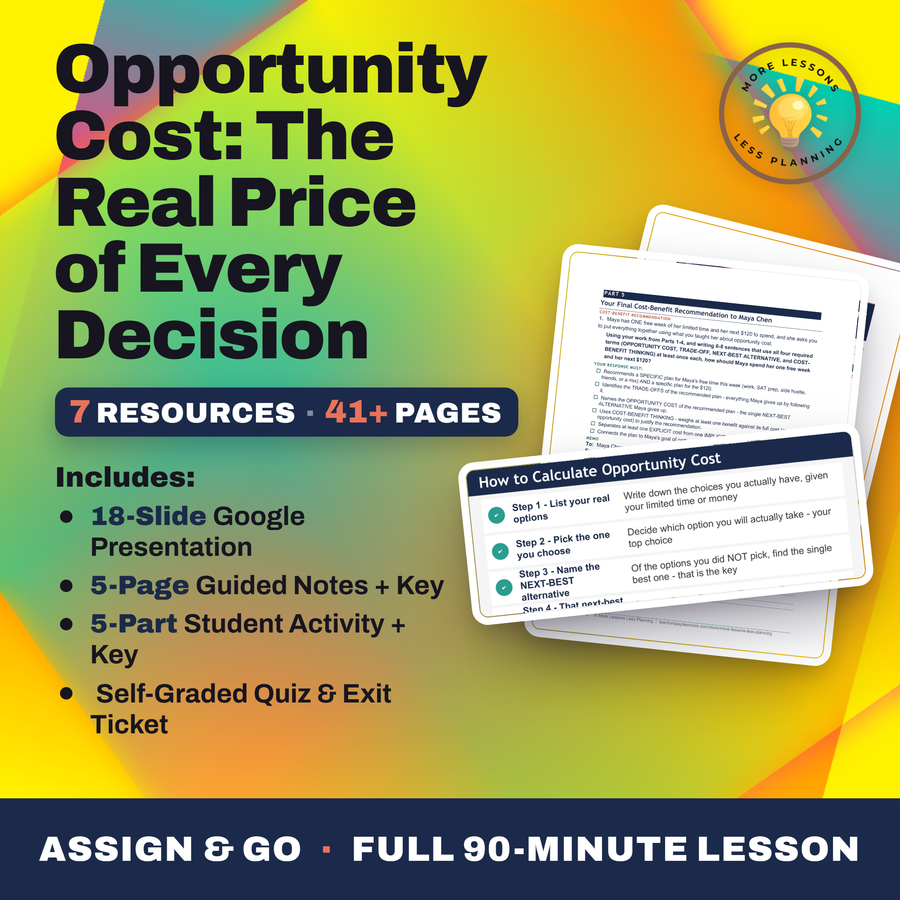
Opportunity Cost - The Real Price of Every Decision
- Slide deck
- Guided notes
- Guided notes teacher key
- Activity + answer key
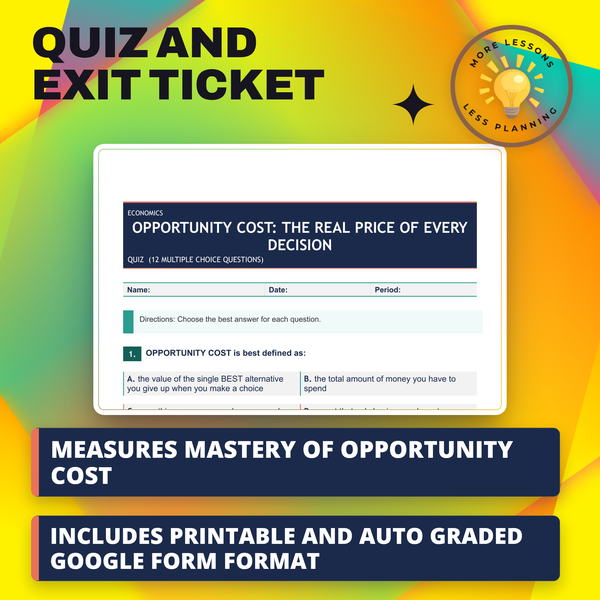
- Quiz + answer key
- Exit ticket + answer key
- Teacher guide
- Teacher presentation notes
Where should I send the next one?
Everything here is free and it stays that way. Leave your email and I'll send you the new lessons as they go up. You can unsubscribe from any one of them.
Every file in this toolkit
Related resources
Economic Systems - Capitalism vs Socialism vs Mixed
Factors of Production - Land, Labor, Capital, and Entrepreneurship
Needs vs Wants - Marketings Biggest Trick
Scarcity & Choice - Why You Cant Have Everything
The Invisible Hand - Adam Smith Explained
Big Tech Antitrust - Google Apple Amazon Meta
What students do
- Calculate the dollar and hour opportunity cost of Maya Chen's $16-an-hour shift using her wage table
- Separate the explicit cost of a decision from its implicit cost across Maya's school, work, and spending choices
- Weigh a marginal "one more shift" decision against studying for the SAT
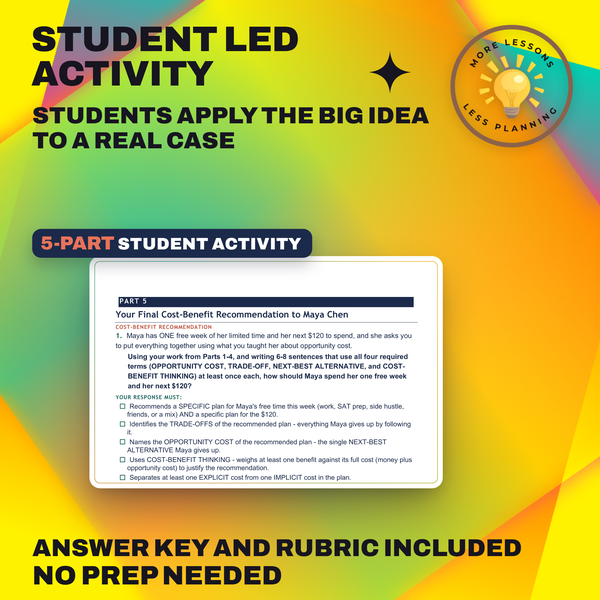
- Write a cost-benefit recommendation memo to Maya using opportunity cost, trade-off, next-best alternative, and cost-benefit thinking
What it covers
- The difference between a trade-off (everything given up) and the opportunity cost (the single best alternative)
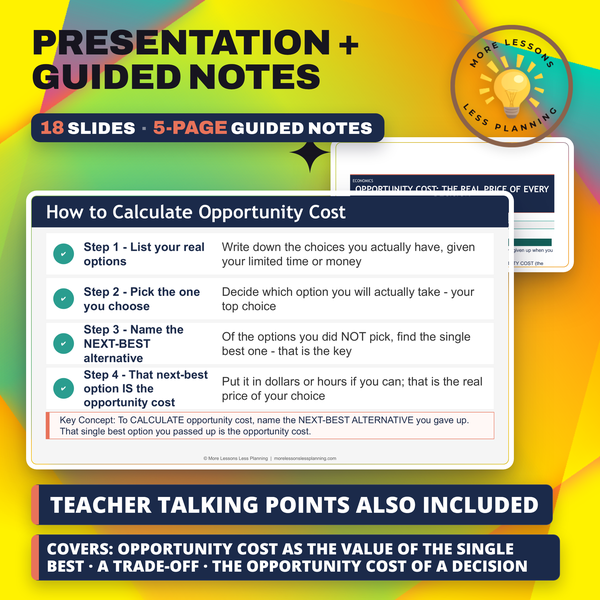
- How to calculate opportunity cost in real dollars and hours from a wage table
- Explicit costs, money out of pocket, versus implicit costs, the time and options you don't see on a receipt
- Why a marginal choice, like one extra work shift, carries its own opportunity cost
Learning targets
- Define OPPORTUNITY COST as the value of the single BEST alternative given up when you make a choice, and explain why scarcity makes every choice carry one
- Distinguish a TRADE-OFF (everything you give up) from the OPPORTUNITY COST (the single best thing given up), and tell EXPLICIT (out-of-pocket money) costs from IMPLICIT (hidden, non-money) costs
- CALCULATE the opportunity cost of a decision by naming the NEXT-BEST ALTERNATIVE given up, in real dollars and hours
- Apply opportunity-cost and cost-benefit thinking to real teen decisions about SCHOOL, WORK, and SPENDING - and to one marginal 'a little more or less' choice
From one teacher to another
I built this around Maya Chen's $16-an-hour shift because opportunity cost only lands when the numbers are real to a kid who's already clocking hours himself. Part 4's marginal choice, whether to pick up one more shift, isn't a hypothetical for my students; it's a call plenty of them make most weeks. The closing memo has to use four specific terms correctly, so their writing tells me whether the concept actually stuck.
Every lesson on this site is free to download and use. If one of them saved you a prep period, you can chip in a few bucks toward my three kids' daycare fund. That's genuinely where tips go.