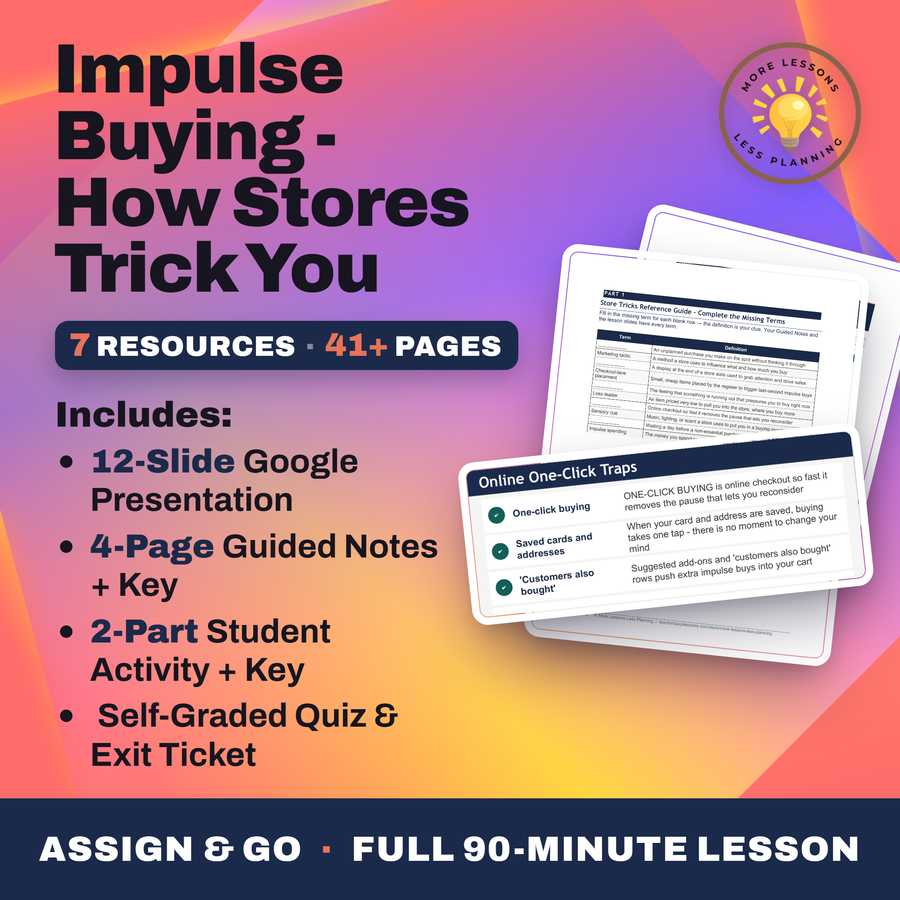
Impulse Buying - How Stores Trick You
- Slide deck
- Guided notes
- Guided notes teacher key
- Activity + answer key
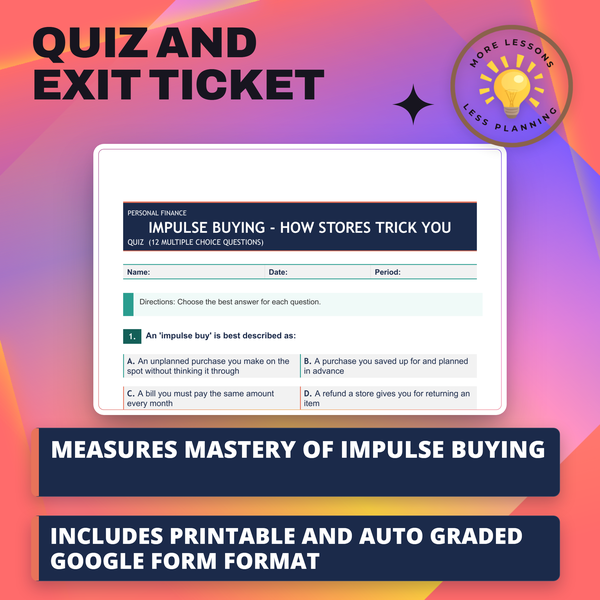
- Quiz + answer key
- Exit ticket + answer key
- Teacher guide
- Teacher presentation notes
Where should I send the next one?
Everything here is free and it stays that way. Leave your email and I'll send you the new lessons as they go up. You can unsubscribe from any one of them.
Every file in this toolkit
Related resources
Financial Goals - Short, Medium and Long Term
Bonds - Lending to Governments and Companies
Health Insurance - The Most Confusing Bill You'll Get
Hourly vs Salary: Which Job Actually Pays More?
Loan Default - What Happens When You Can't Pay
Negotiating Big Purchases: Getting a Better Deal
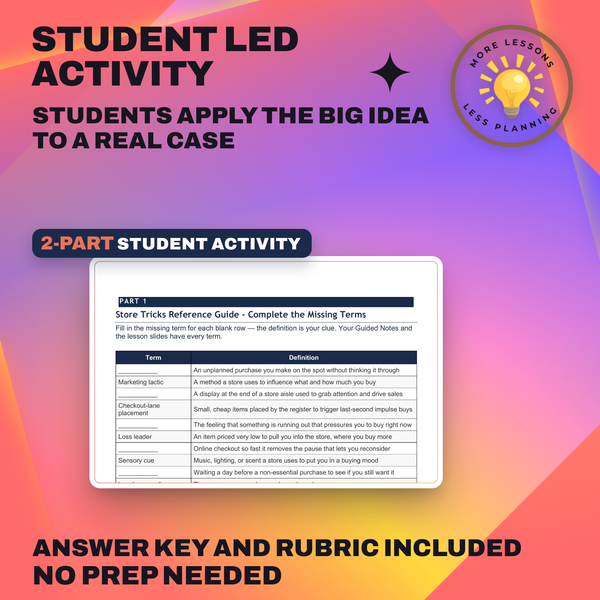
What students do
- Calculate impulse spending by subtracting planned spending from actual spending
- Identify the store tactic behind five different shopping moments, from endcaps to one-click buying
- Read a bar chart comparing planned versus impulse spending across five categories
- Apply the 24-hour rule to decide whether a purchase is a real want or a store trick
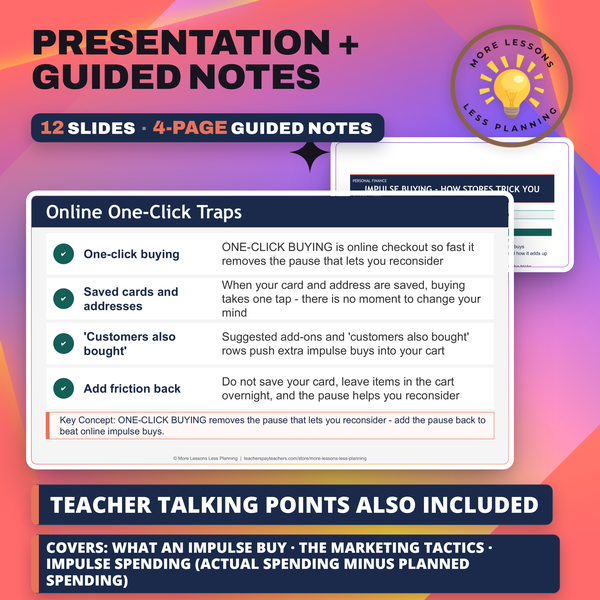
What it covers
- Store tactics that trigger unplanned purchases, including scarcity signs and checkout-lane placement
- How impulse spending adds up from a monthly total to a yearly cost
- The 24-hour rule and a shopping plan as ways to keep the money
Learning targets
- Explain what an impulse buy is and how it differs from a planned purchase
- Identify the marketing tactics and store psychology used to trigger impulse buys
- Calculate impulse spending (actual spending minus planned spending) and how it adds up over a year
- Use the 24-hour rule and a shopping plan to resist impulse buys and beat the tricks
From one teacher to another
I wrote this one because my students always blame themselves for overspending when half the time a store designed the moment on purpose. They follow a shopper who planned to spend $150 and somehow spent $290, put a dollar number on exactly where that gap came from, and learn to name the trick in real time instead of after the receipt. By the end they've got a rule that actually works: wait a day and see if you still want it.
Every lesson on this site is free to download and use. If one of them saved you a prep period, you can chip in a few bucks toward my three kids' daycare fund. That's genuinely where tips go.