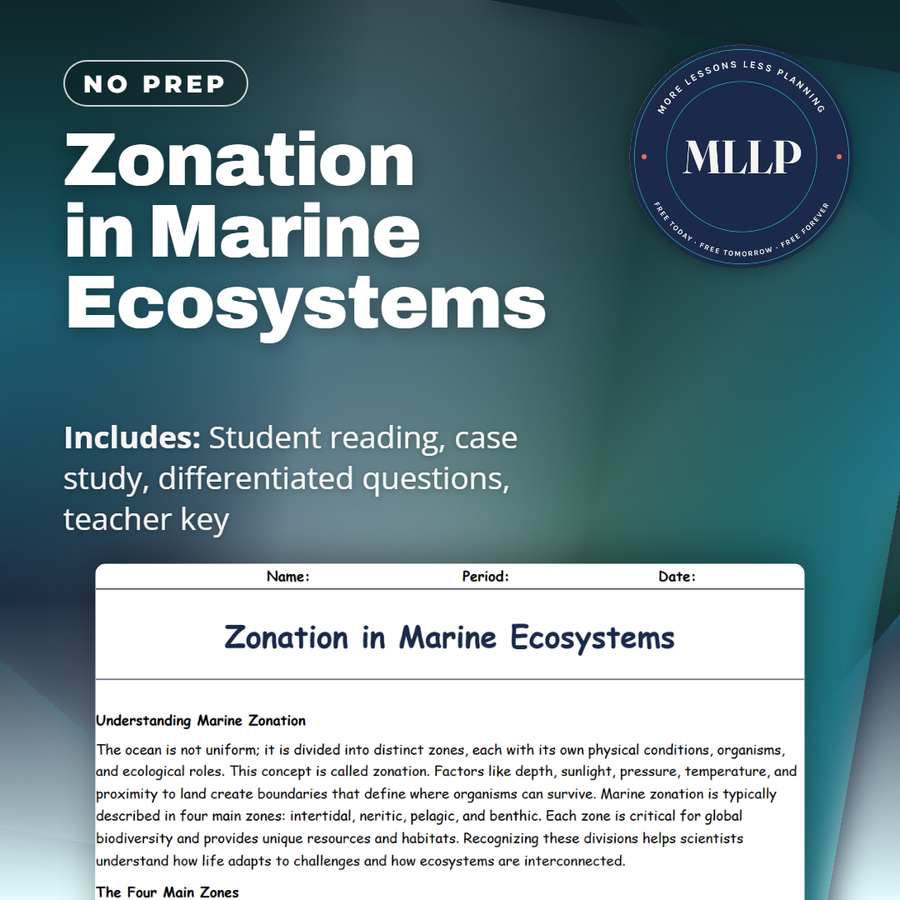
Zonation in Marine Ecosystems
Quality reviewed September 2026
Facts verified September 14, 2026
- Subject
- Science
- Grades
- Grades 9-12
- Length
- 6-page student worksheet
- Time
- About one 50-minute class period
- Great for
- Sub plans and independent work
- Includes
- Reading passage, comprehension questions + full answer key
- Format
- Print-and-go PDF
What students do
- Match terms like intertidal, neritic, pelagic, benthic, and coral reefs to their correct definitions
- Fill in the blank sentences on the pelagic zone, changing water levels, and the neritic zone
- Answer multiple choice questions on which zone lies between the tides and what makes the neritic zone productive
- Write short answers and case study questions on why zonation increases biodiversity and how intertidal organisms survive
What it covers
- The four main marine zones, intertidal, neritic, pelagic, and benthic
- Why zonation increases biodiversity and how climate change threatens it
- A case study on how barnacles, mussels, and tide pool organisms survive in the intertidal zone
Start reading this worksheet
Understanding Marine Zonation
The ocean is not uniform; it is divided into distinct zones, each with its own physical conditions, organisms, and ecological roles. This concept is called zonation. Factors like depth, sunlight, pressure, temperature, and proximity to land create boundaries that define where organisms can survive. Marine zonation is typically described in four main zones: intertidal, neritic, pelagic, and benthic. Each zone is critical for global biodiversity and provides unique resources and habitats. Recognizing these divisions helps scientists understand how life adapts to challenges and how ecosystems are interconnected.
The Four Main Zones
The intertidal zone lies between high and low tide marks. Organisms here must survive changing water levels, waves, and temperature shifts. Barnacles, crabs, and mussels dominate this area. The neritic zone extends from the low tide mark to the edge of the continental shelf. It is shallow, sunlit, and nutrient-rich, making it one of the most productive parts of the ocean. Coral reefs and seagrass beds are often found here, supporting diverse species. The pelagic zone refers to the open ocean, away from the shore and sea floor. Life here includes plankton, fish, jellyfish, and large animals like whales. Conditions vary from the sunlit upper layers to the dark, cold depths. The benthic zone is the ocean floor, ranging from shallow coastal bottoms to deep trenches. It hosts organisms adapted to life on or in the sediment, such as starfish, sea cucumbers, and deep-sea worms. Many benthic species recycle nutrients, keeping the ecosystem balanced.
Like what you read? The full reading, the case study, and every question set are in the free download below, along with the answer key.
Why this matters
Not every stretch of coastline sits underwater the same amount of time each day, and the intertidal zone is the strip where that difference is most extreme, submerged part of the day and exposed to open air the rest. That daily swing sets the intertidal zone apart from the neritic, pelagic, and benthic zones, the four marine zones that divide the ocean by depth and light rather than location.
Most students picture the ocean as one uniform habitat until they meet the intertidal zone, and that is where I push back hardest on the assumption. Barnacles and mussels anchor themselves against waves and survive being exposed at low tide, which raises an obvious question: why the neritic and benthic zones look nothing alike.
From one teacher to another
Four ocean zones, from the intertidal to the benthic, structure this worksheet on how depth and light divide up marine habitats. Readings explain why the neritic zone is so productive and how organisms in the benthic zone recycle nutrients on the ocean floor. The case study zooms into the intertidal zone, describing how barnacles and mussels anchor themselves against waves and survive being exposed at low tide.
What you get
Download
Where should I send the next one?
Everything here is free and it stays that way. Leave your email and I'll send you the new lessons as they go up. You can unsubscribe from any one of them.
Related resources
Abiotic and Biotic Factors Shaping Marine Ecosystems
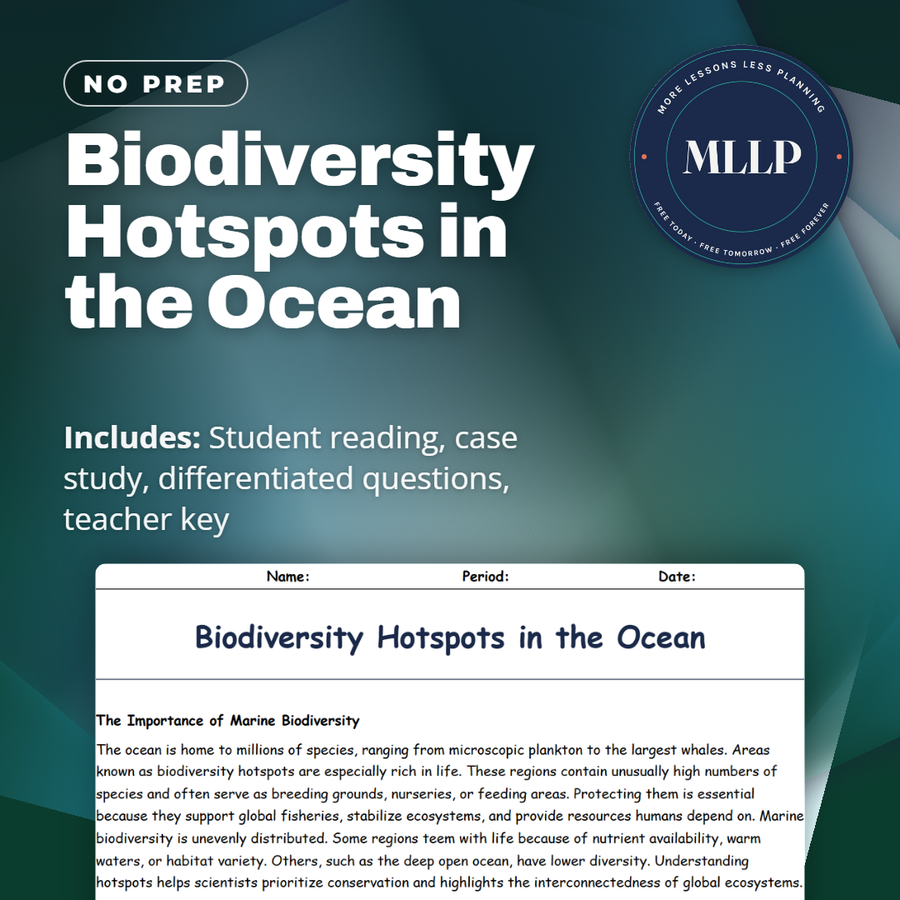
Biodiversity Hotspots in the Ocean
Ecological Niches and Competition in Marine Ecosystems
Ecosystem Principles: How Marine Life Interacts and Survives
Human Influences on Marine Ecosystems
Keystone Species and Their Role in Ecosystem Balance
Every lesson on this site is free to download and use. If one of them saved you a prep period, you can chip in a few bucks toward my three kids' daycare fund. That's genuinely where tips go.