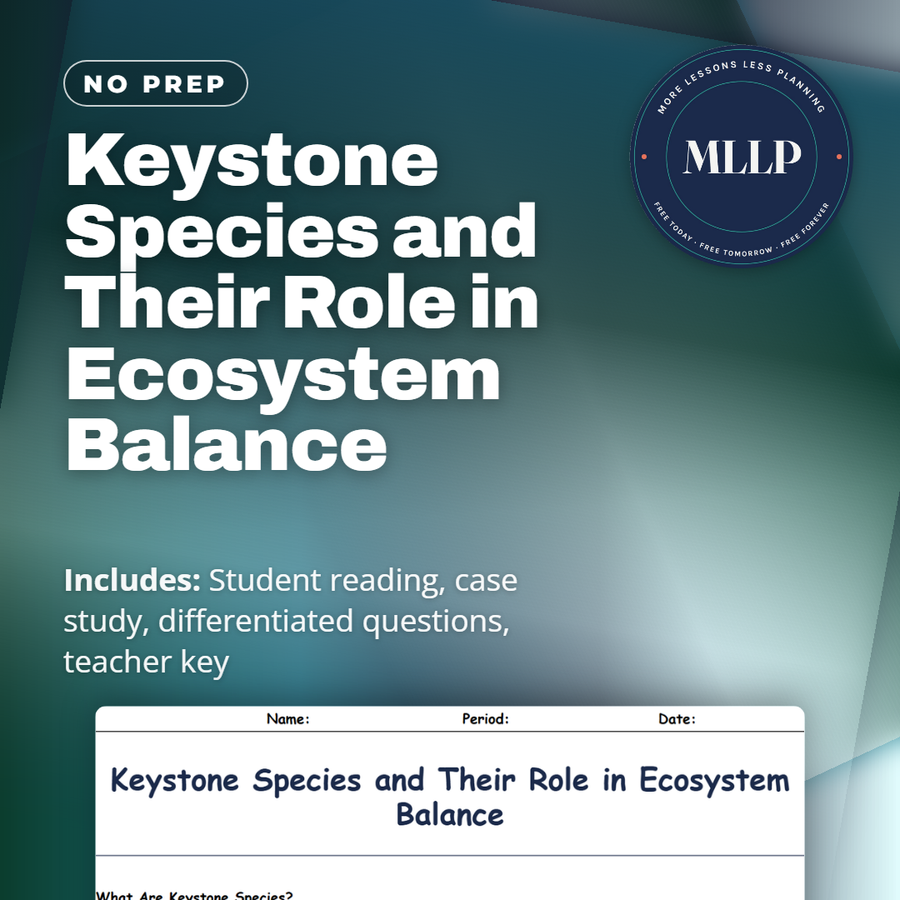
Keystone Species and Their Role in Ecosystem Balance
Quality reviewed September 2026
Facts verified September 14, 2026
- Subject
- Science
- Grades
- Grades 9-12
- Length
- 6-page student worksheet
- Time
- About one 50-minute class period
- Great for
- Sub plans and independent work
- Includes
- Reading passage, comprehension questions + full answer key
- Format
- Print-and-go PDF
What students do
- Match terms like sea otter, shark, coral, krill, and mangrove crab to their correct definitions
- Fill in the blank sentences on disproportionate impact, sea urchins, and krill as a food source
- Answer multiple choice questions on what a keystone species is and how sharks regulate mid-level predators
- Write short answers and case study questions on the sea otter and kelp forest case study and why keystone species matter for conservation
What it covers
- What makes a species a keystone species, from sea otters to mangrove crabs
- Specific keystone examples like sharks, coral, and krill and the roles they play
- A case study on sea otters, sea urchins, and the recovery of North Pacific kelp forests
Start reading this worksheet
What Are Keystone Species?
In marine ecosystems, certain species play roles so critical that the entire community depends on them. These are known as keystone species. The term refers to the central wedge of an arch: if the keystone is removed, the structure collapses. Similarly, if a keystone species disappears, the balance of the ecosystem can unravel. Not all keystone species are abundant. Some may exist in relatively small numbers but exert a disproportionate influence on food webs, habitats, and biodiversity. Their effects are often linked to controlling prey populations, maintaining habitats, or regulating competition. Identifying and protecting keystone species is one of the most important goals in conservation biology.
Examples of Keystone Species in the Ocean
A well-known keystone predator is the sea otter. In kelp forest ecosystems, sea otters feed on sea urchins. Without otters, urchin populations explode, devouring kelp and leaving behind barren underwater landscapes. When otters return, kelp forests recover, showing how one species can shape entire habitats. Another example is sharks. As apex predators, they regulate mid-level predators, preventing them from overconsuming herbivorous fish. This maintains balance and indirectly protects coral reefs. Even smaller creatures, like mangrove crabs, play keystone roles by turning over sediment and recycling nutrients in coastal wetlands. These examples remind us that ecosystem stability often hinges on a few critical players.
Like what you read? The full reading, the case study, and every question set are in the free download below, along with the answer key.
Why this matters
A keystone species is not defined by how many of them exist, it is defined by what happens when they disappear. Sea otters did not need large numbers to matter, but their near-disappearance let sea urchins destroy entire kelp forests, and the forests only recovered once otter populations came back.
Students want to rank animals by size or population when they first hear the term keystone, so I make them defend a case for sharks or mangrove crabs using effect on the food web instead. Once they can explain why a small population of otters mattered more than a much larger population of urchins, the definition finally clicks.
From one teacher to another
Sea otters, sharks, and mangrove crabs anchor this reading on keystone species and the outsized role they play in marine ecosystems. Students read about how a keystone species can be defined by its effect on the food web rather than its numbers, then see that idea play out through several examples. The case study returns to sea otters, tracing how their near-disappearance let sea urchins destroy kelp forests and how the forests recovered once otters returned.
What you get
Download
Where should I send the next one?
Everything here is free and it stays that way. Leave your email and I'll send you the new lessons as they go up. You can unsubscribe from any one of them.
Related resources
Abiotic and Biotic Factors Shaping Marine Ecosystems
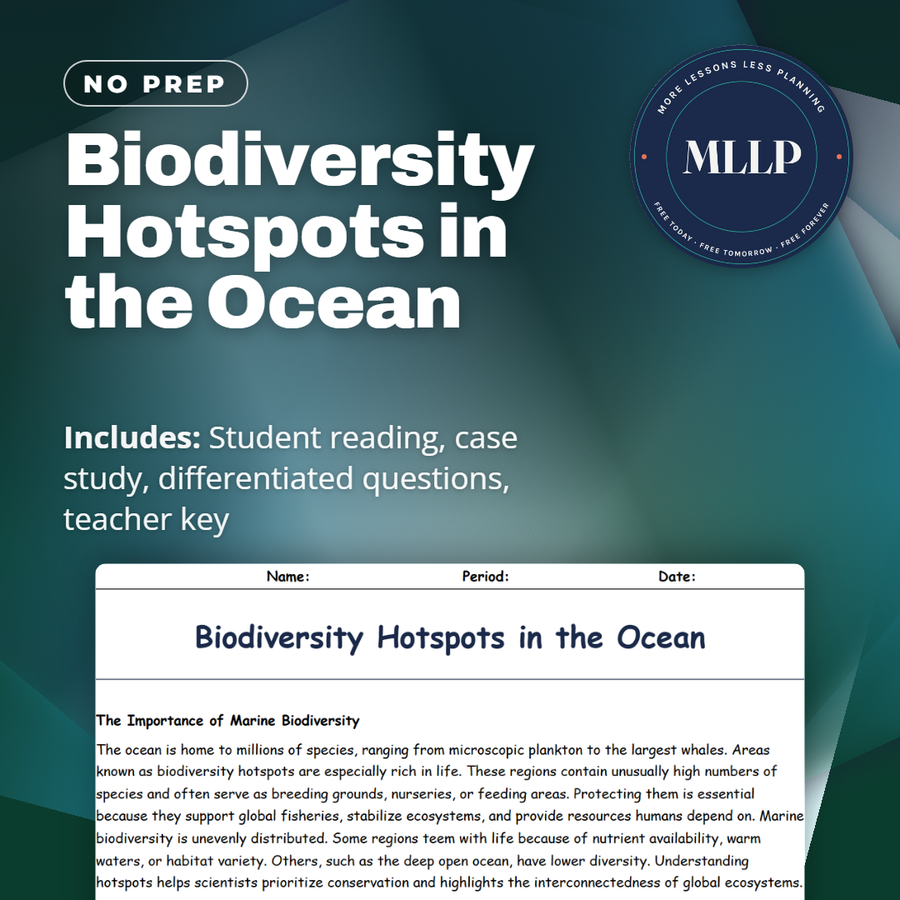
Biodiversity Hotspots in the Ocean
Ecological Niches and Competition in Marine Ecosystems
Ecosystem Principles: How Marine Life Interacts and Survives
Human Influences on Marine Ecosystems
Marine Food Chains and Webs
Every lesson on this site is free to download and use. If one of them saved you a prep period, you can chip in a few bucks toward my three kids' daycare fund. That's genuinely where tips go.