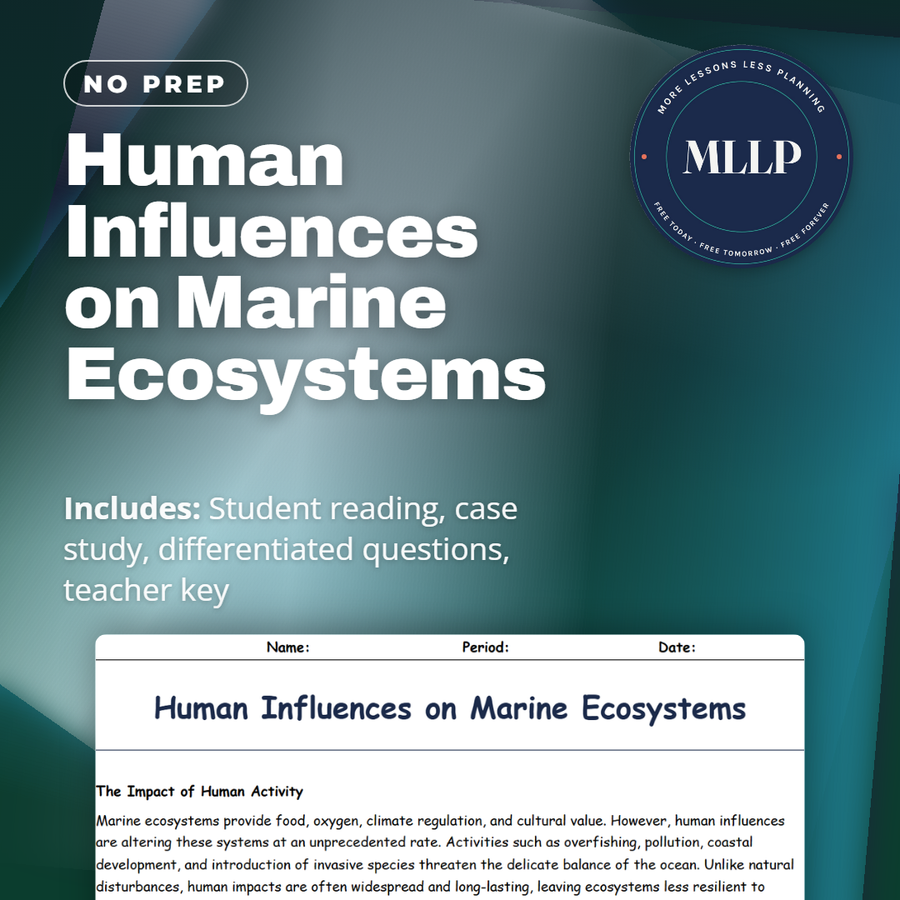
Human Influences on Marine Ecosystems
Quality reviewed September 2026
Facts verified September 14, 2026
- Subject
- Science
- Grades
- Grades 9-12
- Length
- 6-page student worksheet
- Time
- About one 50-minute class period
- Great for
- Sub plans and independent work
- Includes
- Reading passage, comprehension questions + full answer key
- Format
- Print-and-go PDF
What students do
- Match terms like habitat loss, overfishing, invasive species, pollution, and climate change to their correct definitions
- Fill in the blank sentences on mid-level predators, pollution, and ocean acidification
- Answer multiple choice questions on the effects of overfishing and why lionfish are invasive in the Atlantic
- Write short answers and case study questions on habitat destruction and the lionfish invasion
What it covers
- How overfishing, habitat destruction, and pollution disrupt marine food webs
- How pollution and climate change compound each other, from dead zones to coral bleaching
- A case study on the lionfish invasion of the Atlantic Ocean and efforts to control it
Start reading this worksheet
The Impact of Human Activity
Marine ecosystems provide food, oxygen, climate regulation, and cultural value. However, human influences are altering these systems at an unprecedented rate. Activities such as overfishing, pollution, coastal development, and introduction of invasive species threaten the delicate balance of the ocean. Unlike natural disturbances, human impacts are often widespread and long-lasting, leaving ecosystems less resilient to change. Recognizing these pressures is the first step toward conservation. Understanding how human actions disrupt ecosystems helps society create strategies for sustainability, from managing fisheries to reducing pollution.
Habitat Destruction and Overfishing
One of the greatest human threats is habitat destruction. Coral reefs are damaged by dredging, anchoring, and destructive fishing practices. Mangroves are cut down for development, reducing nursery areas for fish. Seagrass beds are torn up by boats, decreasing habitats that stabilize coastlines. Overfishing further destabilizes marine ecosystems. Removing too many predators or herbivores disrupts food webs. For example, when shark populations decline, mid-level predators increase, consuming too many herbivorous fish. Without herbivores, algae can overgrow reefs, leading to collapse. These effects ripple through entire ecosystems, showing how human actions can magnify imbalance.
Like what you read? The full reading, the case study, and every question set are in the free download below, along with the answer key.
Why this matters
Removing one predator from the ocean does not just shrink a population, it changes who eats whom. This reading traces that chain through overfishing, where taking sharks out of a system lets mid-level predators multiply unchecked, and through the Atlantic lionfish invasion, where aquarium releases turned into a predator with no natural enemies.
Runoff from far inland becomes a dead zone. A home aquarium becomes an invasion nobody can undo. I want students naming the human decision behind each ecological change, because the cause and the damage almost never happen anywhere near each other.
From one teacher to another
Overfishing, pollution, and invasive species are the focus of this worksheet on how human activity reshapes marine ecosystems. Readings trace how removing sharks or other predators lets mid-level predators multiply, and how runoff and plastic waste create dead zones and poison habitats. The case study covers the lionfish invasion of the Atlantic, describing how a species introduced through the aquarium trade spread with no natural predators to check it.
What you get
Download
Where should I send the next one?
Everything here is free and it stays that way. Leave your email and I'll send you the new lessons as they go up. You can unsubscribe from any one of them.
Related resources
Abiotic and Biotic Factors Shaping Marine Ecosystems
Biodiversity Hotspots in the Ocean
Ecological Niches and Competition in Marine Ecosystems
Ecosystem Principles: How Marine Life Interacts and Survives
Keystone Species and Their Role in Ecosystem Balance
Marine Food Chains and Webs
Every lesson on this site is free to download and use. If one of them saved you a prep period, you can chip in a few bucks toward my three kids' daycare fund. That's genuinely where tips go.