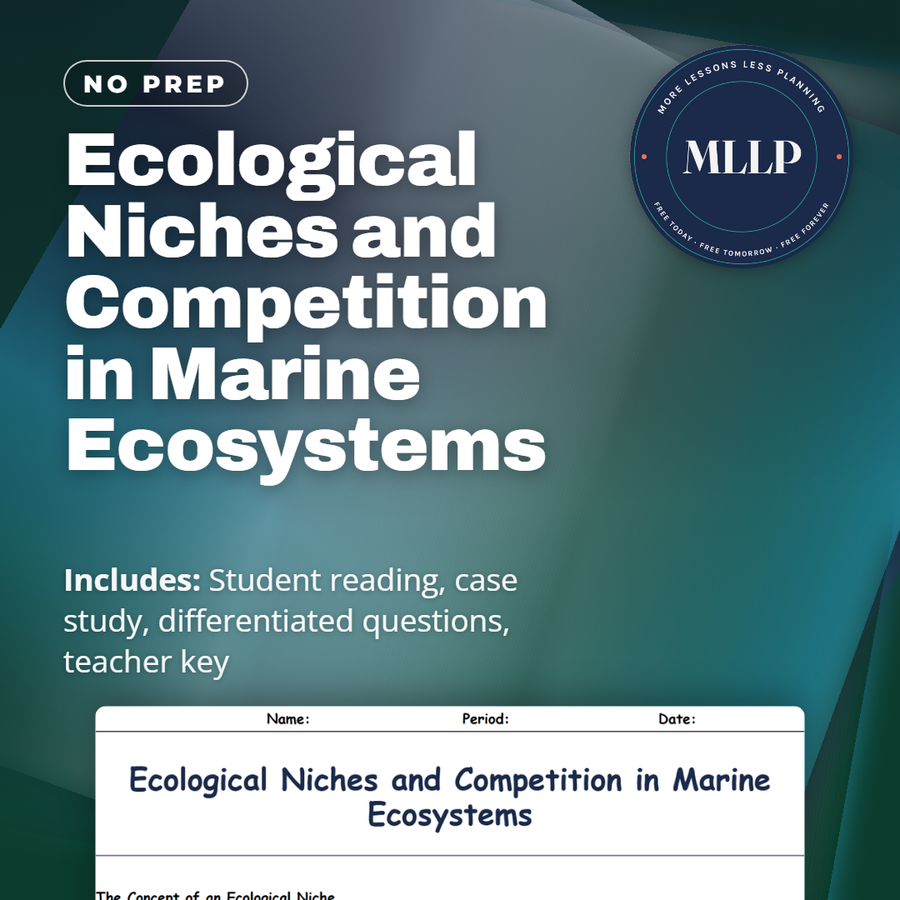
Ecological Niches and Competition in Marine Ecosystems
Quality reviewed September 2026
Facts verified September 14, 2026
- Subject
- Science
- Grades
- Grades 9-12
- Length
- 6-page student worksheet
- Time
- About one 50-minute class period
- Great for
- Sub plans and independent work
- Includes
- Reading passage, comprehension questions + full answer key
- Format
- Print-and-go PDF
What students do
- Match terms like intraspecific, interspecific, direct, indirect, and niche partitioning to their correct definitions
- Fill in the blank sentences on realized niches, interspecific competition, and niche partitioning
- Answer multiple choice questions on what an ecological niche is and the different types of competition
- Write short answers and case study questions on the barnacle case study and how competition drives natural selection
What it covers
- What an ecological niche is and how species divide up resources to avoid conflict
- The difference between intraspecific and interspecific competition, and direct versus indirect competition
- A case study on Chthamalus and Balanus barnacles competing for space on rocky shores
Start reading this worksheet
The Concept of an Ecological Niche
Every species in the ocean occupies a unique ecological niche: its specific role in the ecosystem. A niche includes what the species eats, where it lives, when it is active, and how it interacts with other organisms. In other words, the niche is like an organism’s job description. For example, parrotfish scrape algae from coral surfaces, keeping reefs clear. They fill a role distinct from herbivorous sea turtles that graze on seagrass. By dividing resources in this way, species reduce direct competition and increase overall biodiversity. The idea of niches explains why ecosystems can support many species without them all colliding for the same resources. Even animals with overlapping diets often hunt at different times or in different locations. This partitioning maintains balance and prevents one species from overwhelming the others.
Types of Competition
When niches overlap too much, competition occurs. Competition can be intraspecific, meaning between members of the same species, or interspecific, meaning between different species. Intraspecific competition may involve fighting for mates or nesting sites. Interspecific competition happens when two different species seek the same food or habitat. Competition can be direct (through physical conflict) or indirect, such as one species consuming resources more efficiently. For example, fast-swimming fish may outcompete slower ones for prey. Over time, competition drives natural selection, favoring traits that reduce conflict and promote survival.
Niche Partitioning and Resource Use
Niche partitioning is the process by which competing species evolve to use resources in different ways. In the marine environment, this might mean feeding at different depths, choosing different prey, or being active at different times of day. Seabirds, for instance, may hunt in different zones of the water column to avoid competition. Dolphins and sharks may both feed on fish, but dolphins often hunt cooperatively in schools, while sharks rely on solitary ambush strategies. These variations allow multiple predators to coexist. Without niche partitioning, competition would reduce biodiversity. When species find ways to specialize, ecosystems become richer, with more layers of interdependence and balance.
Like what you read? The full reading, the case study, and every question set are in the free download below, along with the answer key.
Why this matters
Why don't two similar species just wipe each other out competing for the same food? Niche partitioning is the answer, the way species split up resources like depth, timing, or diet so overlap does not mean constant conflict. The barnacle case study makes it concrete: Chthamalus and Balanus compete directly for the same rocky shore space.
Students walk in thinking competition always ends with a clear winner and loser. Watching what happened when researchers removed one barnacle genus from the shore shows them resource splitting instead, a shift that shows up again anytime they analyze an ecosystem afterward, ocean or not.
From one teacher to another
This worksheet walks students through the idea of an ecological niche and the competition that happens when niches overlap. Readings break down intraspecific versus interspecific competition, then show how niche partitioning lets species divide up food, depth, or timing to avoid direct conflict. The case study follows two barnacle genera, Chthamalus and Balanus, competing for space on rocky shores, and what happened when researchers removed one of them.
What you get
Download
Where should I send the next one?
Everything here is free and it stays that way. Leave your email and I'll send you the new lessons as they go up. You can unsubscribe from any one of them.
Related resources
Abiotic and Biotic Factors Shaping Marine Ecosystems
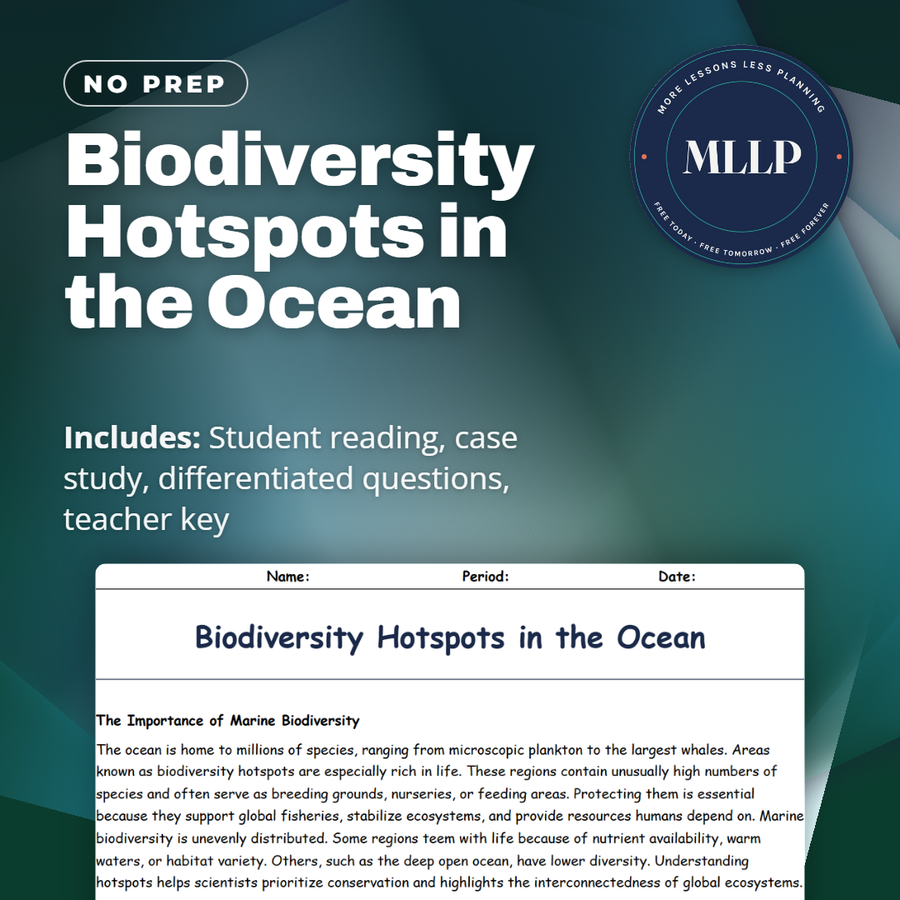
Biodiversity Hotspots in the Ocean
Ecosystem Principles: How Marine Life Interacts and Survives
Human Influences on Marine Ecosystems
Keystone Species and Their Role in Ecosystem Balance
Marine Food Chains and Webs
Every lesson on this site is free to download and use. If one of them saved you a prep period, you can chip in a few bucks toward my three kids' daycare fund. That's genuinely where tips go.