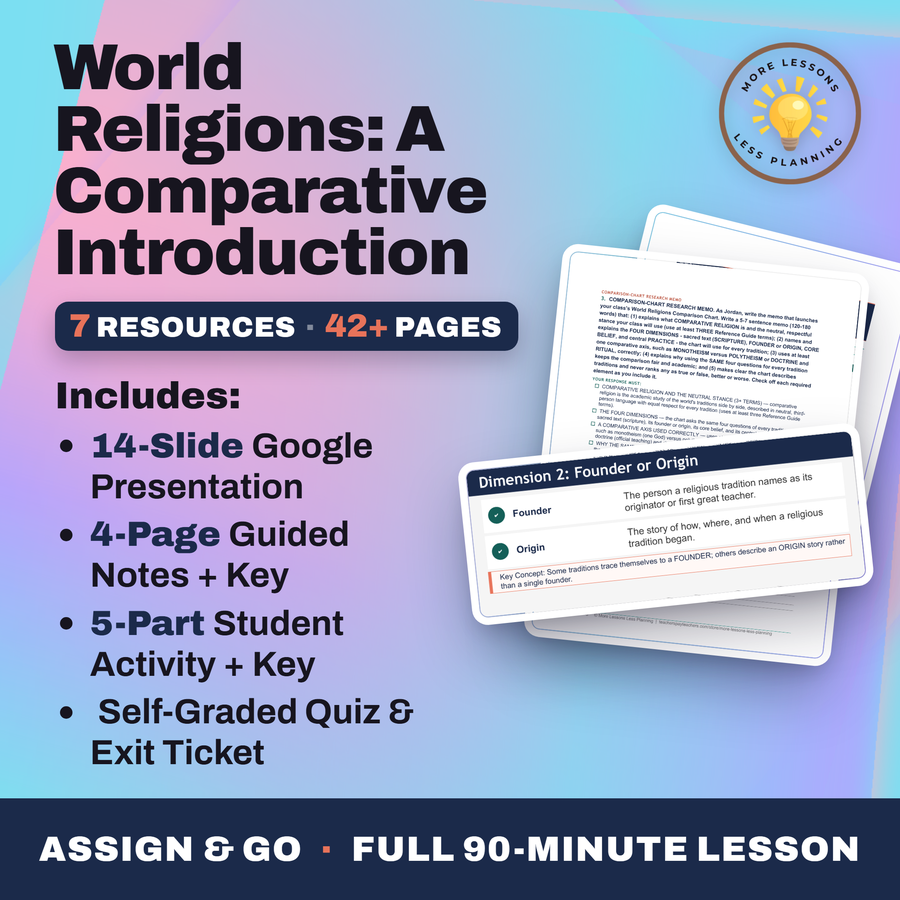
World Religions: A Comparative Introduction
- Slide deck
- Guided notes
- Guided notes teacher key
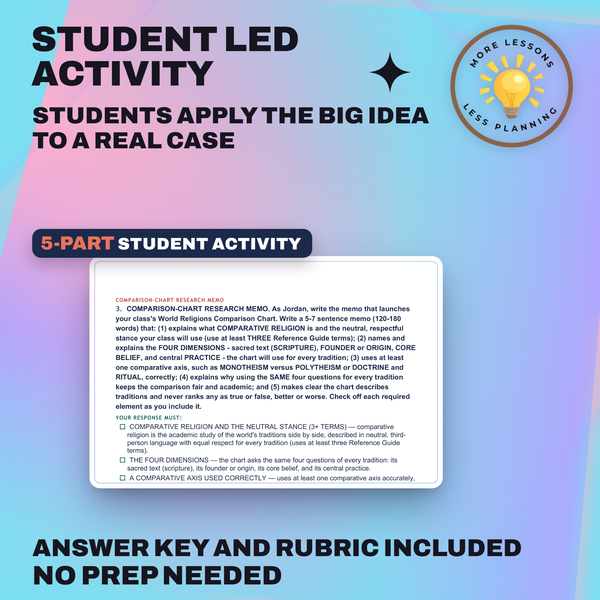
- Activity + answer key
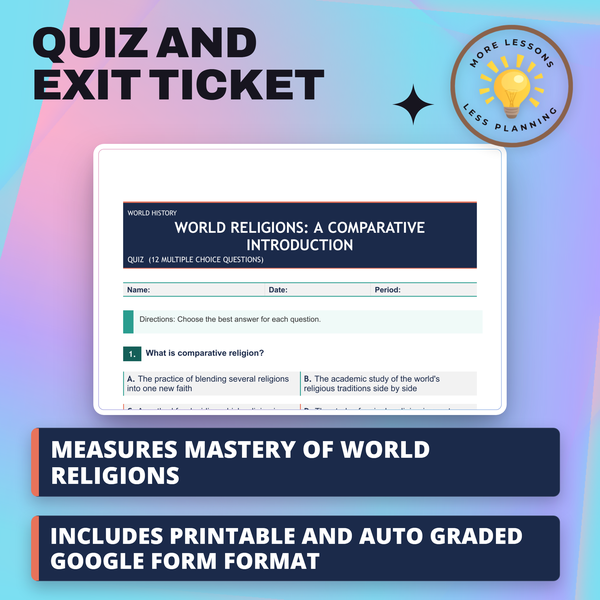
- Quiz + answer key
- Exit ticket + answer key
- Teacher guide
- Teacher presentation notes
Where should I send the next one?
Everything here is free and it stays that way. Leave your email and I'll send you the new lessons as they go up. You can unsubscribe from any one of them.
Every file in this toolkit
Related resources
Confucianism and Social Order
Hinduism - Origins and Beliefs
Pilgrimage Across World Religions
Religion on the Silk Road
Aggression and Appeasement
Alliances and the Causes of WWI
What students do
- Analyze F. Max Muller's 1879 argument for why comparing religions reveals more than studying one alone
- Build a comparison chart using the same four dimensions for every tradition studied all unit
- Decode the difference between monotheism and polytheism using neutral, third-person language
- Distinguish a tradition's founder-based origin story from one with no single founder
What it covers
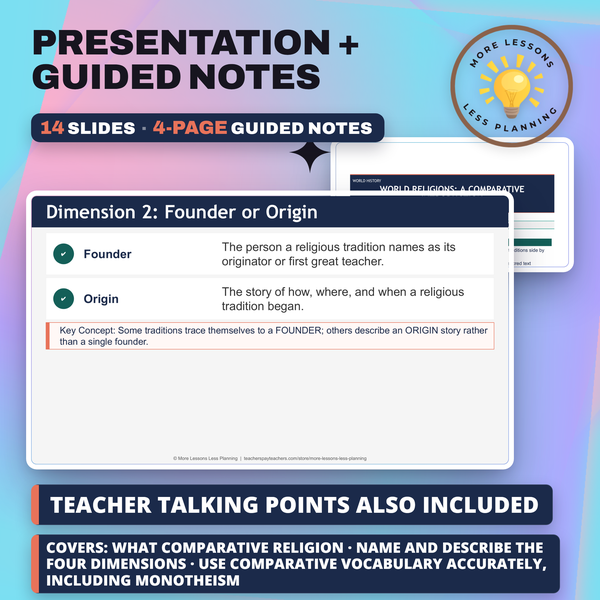
- The four-dimension framework: sacred text, founder or origin, core belief, and central practice
- Why comparative religion describes what traditions teach instead of ranking them
- A world map showing where major traditions are most widely followed today
- Who F. Max Muller was and why his Sacred Books of the East mattered
Learning targets
- Explain what comparative religion is and why scholars study the world's traditions side by side, describing rather than judging them.
- Name and describe the four dimensions used to compare any tradition: sacred text (scripture), founder or origin, core belief, and central practice.
- Use comparative vocabulary accurately, including monotheism, polytheism, doctrine, and ritual, in a neutral, academic way.
- Apply the four-dimension framework to build a comparison chart you can reuse for every religion studied in this unit.
From one teacher to another
Before students touch a single religion's actual beliefs, they need the method first, or the unit turns into a ranking contest instead of a comparison. We build a four-dimension chart together (sacred text, founder, core belief, central practice), then read Max Muller's own 1879 case for why studying traditions side by side beats studying one alone. They don't reach Hinduism the next day without already knowing exactly what questions to ask.
Every lesson on this site is free to download and use. If one of them saved you a prep period, you can chip in a few bucks toward my three kids' daycare fund. That's genuinely where tips go.