Islam - Muhammad and the Five Pillars
Quality reviewed September 2026
- Subject
- World History
- Grades
- Grades 9-12
- Time
- About two 50-minute class periods
- Includes
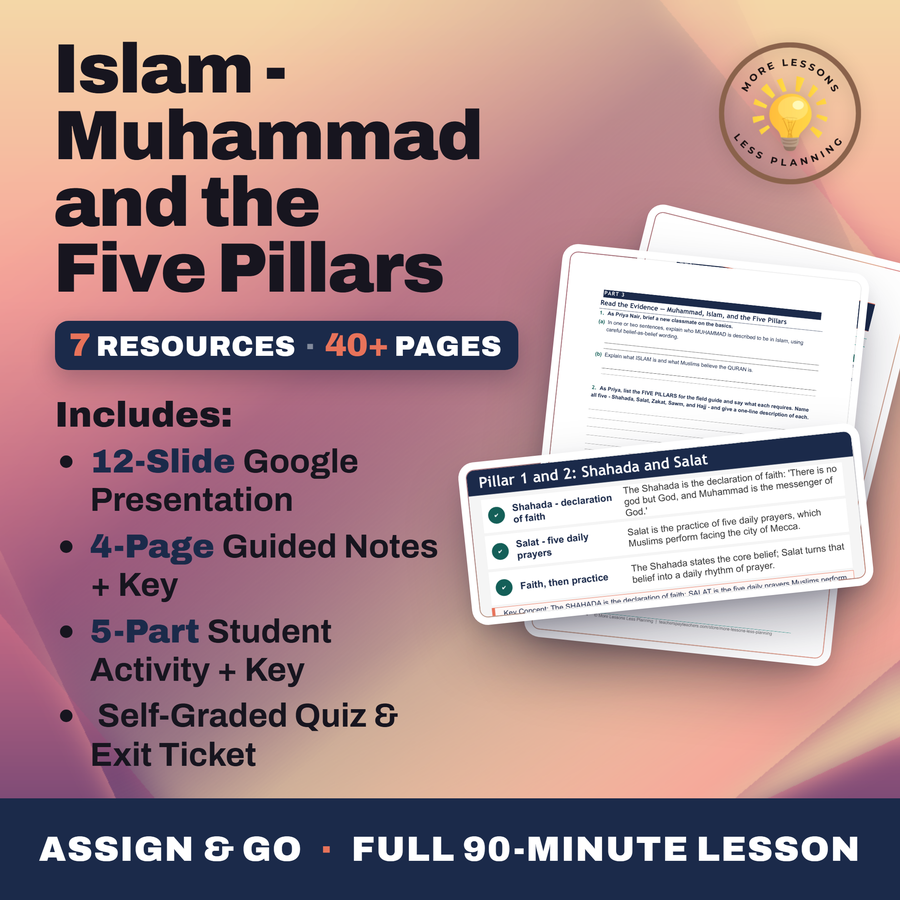
- 11 ready-to-teach files
- Format
- Word (.docx) · PowerPoint (.pptx)
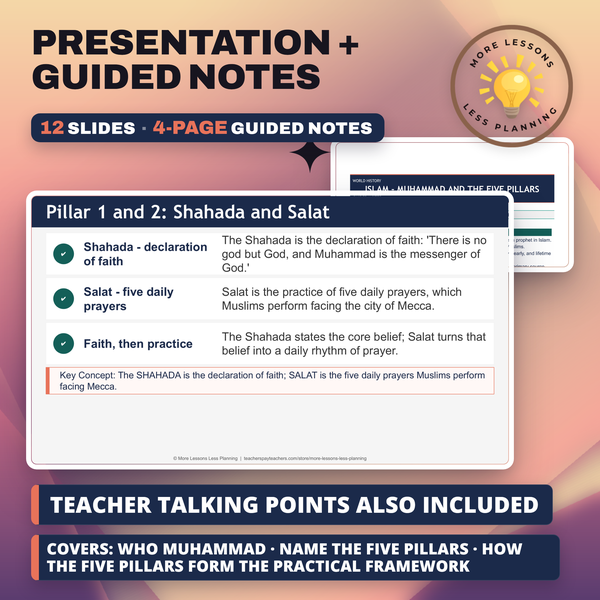
- Slide deck
- Guided notes
- Guided notes teacher key
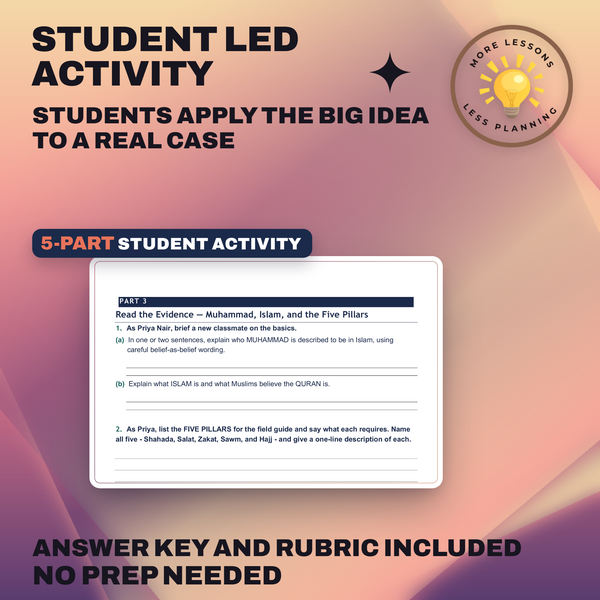
- Activity + answer key
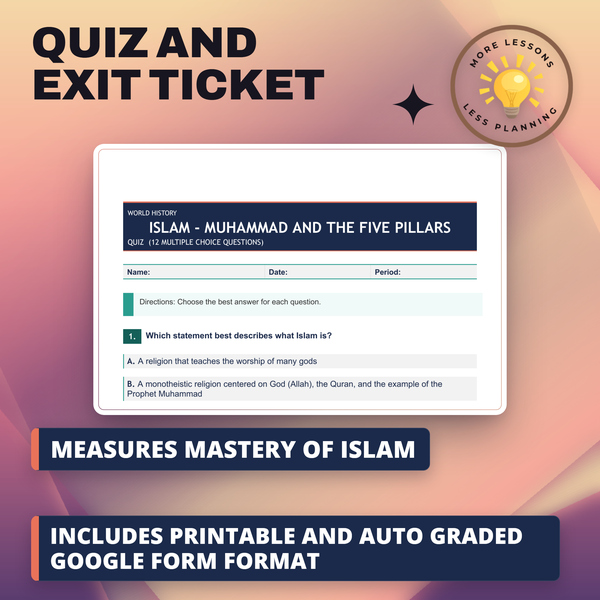
- Quiz + answer key
- Exit ticket + answer key
- Teacher guide
- Teacher presentation notes
What students do
- Explain who Muslims believe Muhammad was and his role as the final prophet in Islam
- Name the Five Pillars of Islam and describe what each one requires, Shahada, Salat, Zakat, Sawm, and Hajj
- Explain how the Five Pillars structure daily, yearly, and lifetime practice for Muslims
- Read George Sale's 1734 description of Islamic practice as a primary source and evaluate it as an outside account
What it covers
- Muhammad's life (c. 570-632 CE) and the belief that he received revelations beginning around 610 CE
- The Quran as the word of God revealed to Muhammad, and the meaning of the word Allah
- The Five Pillars, the declaration of faith, five daily prayers, almsgiving, fasting in Ramadan, and pilgrimage to Mecca
- George Sale's 1734 "Preliminary Discourse" description of prayer, alms, fasting, and pilgrimage, read as a period source
Learning targets
- Explain who Muhammad was and what Muslims believe about his role as a prophet in Islam.
- Name the Five Pillars of Islam and describe what each one requires of Muslims.
- Explain how the Five Pillars form the practical framework of Muslim daily, yearly, and lifetime practice.
- Read part of an 18th-century scholarly description of Islamic practice as a primary source, and explain what it shows.
Peek inside
1. Q1. What term names the monotheistic religion, centered on God (Allah) and on the Prophet Muhammad, whose name means submission to the will of God?
Why this matters
Five daily prayers, one month of fasting each year, and one pilgrimage across a lifetime: the Five Pillars structure practice from a single day to an entire life. Students can map that same rhythm onto their own daily, yearly, and lifelong routines even when the specific practices are unfamiliar.
George Sale wrote his account in 1734 for readers who had never met a Muslim, and that context matters as much as the content: what he chose to explain or leave out reflects his own audience, not the practice itself. Holding it at a distance is good practice for reading any outside account of a tradition.
From one teacher to another
This lesson presents Islam through its own core structure, the Five Pillars, so students learn what Shahada, Salat, Zakat, Sawm, and Hajj each require before they encounter any outside commentary on the religion. The primary source is George Sale's 1734 description of these practices, and students are asked to treat it as a period document, not as a defining account of the faith. That distinction is deliberate: the lesson wants students to state what Muslims believe and practice in accurate terms, and separately, to evaluate how an 18th-century European scholar chose to describe those practices to his own readers.
Every file in this toolkit
Download
Where should I send the next one?
Everything here is free and it stays that way. Leave your email and I'll send you the new lessons as they go up. You can unsubscribe from any one of them.
Related resources
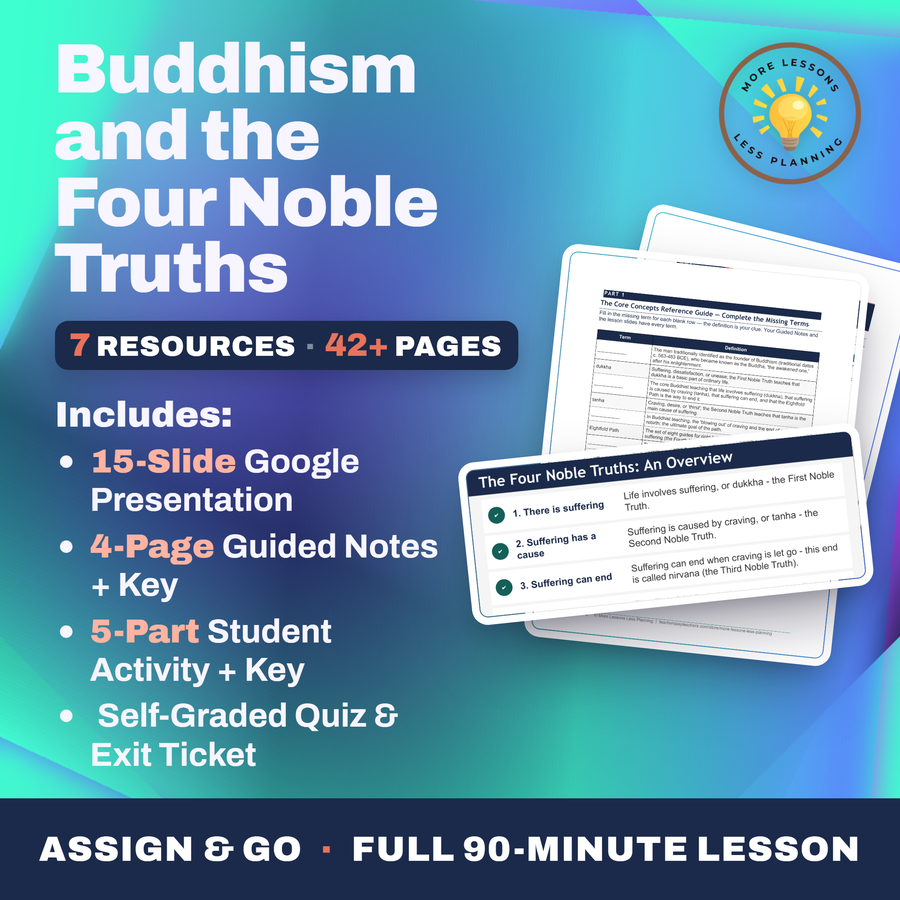
Buddhism and the Four Noble Truths
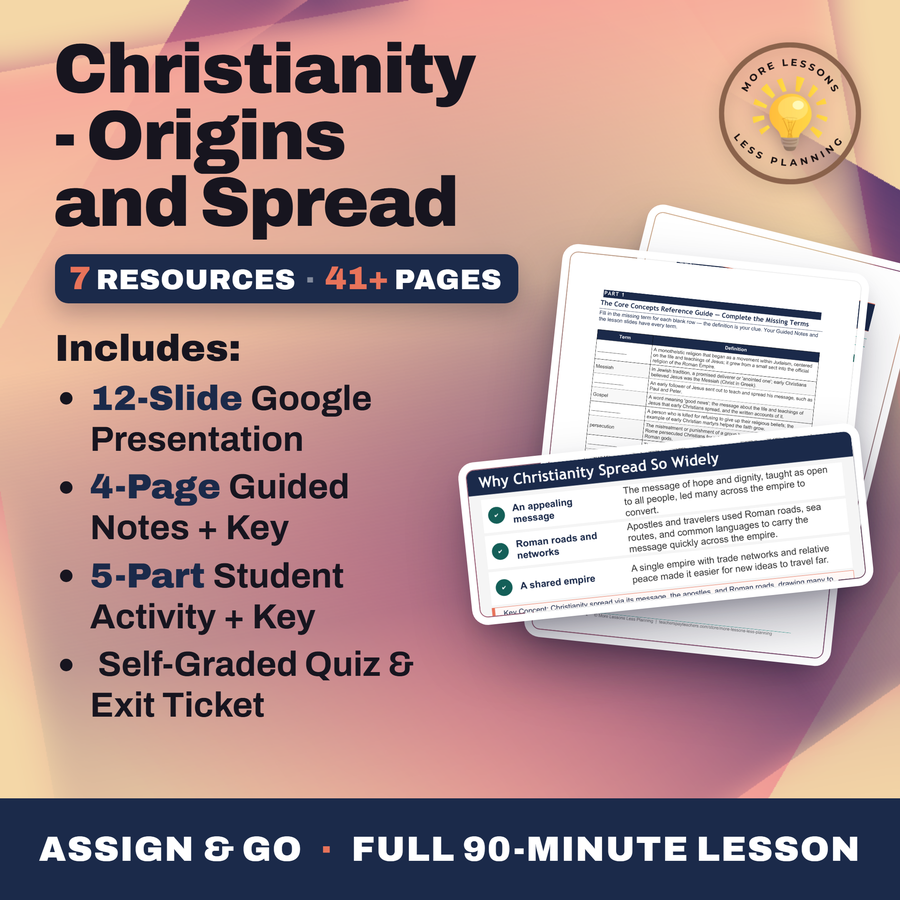
Christianity - Origins and Spread
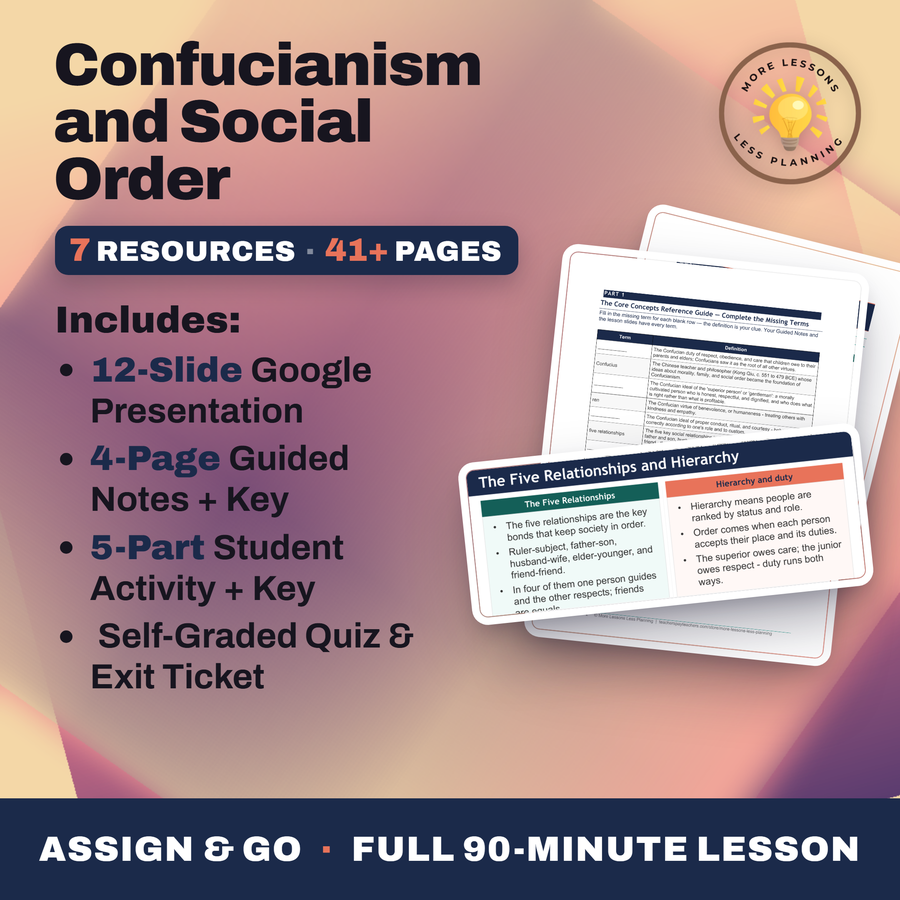
Confucianism and Social Order
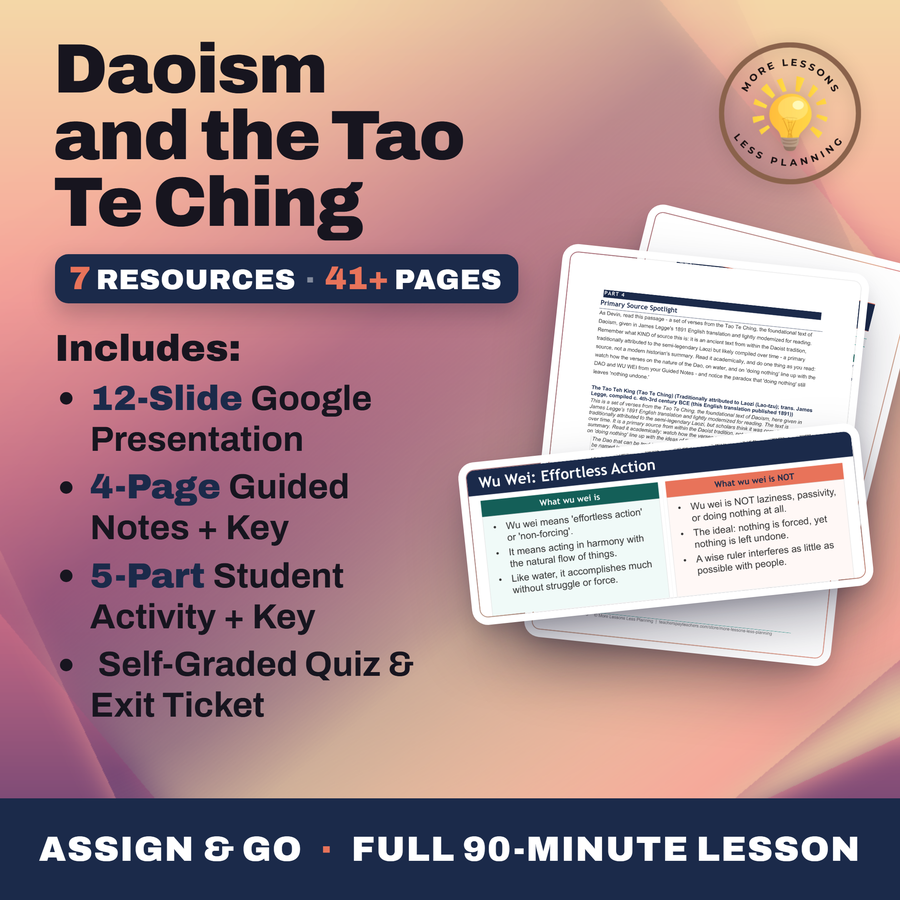
Daoism and the Tao Te Ching
Hinduism - Origins and Beliefs
Judaism - Covenant and Diaspora
Every lesson on this site is free to download and use. If one of them saved you a prep period, you can chip in a few bucks toward my three kids' daycare fund. That's genuinely where tips go.