Christianity - Origins and Spread
Quality reviewed September 2026
- Subject
- World History
- Grades
- Grades 9-12
- Time
- About two 50-minute class periods
- Includes
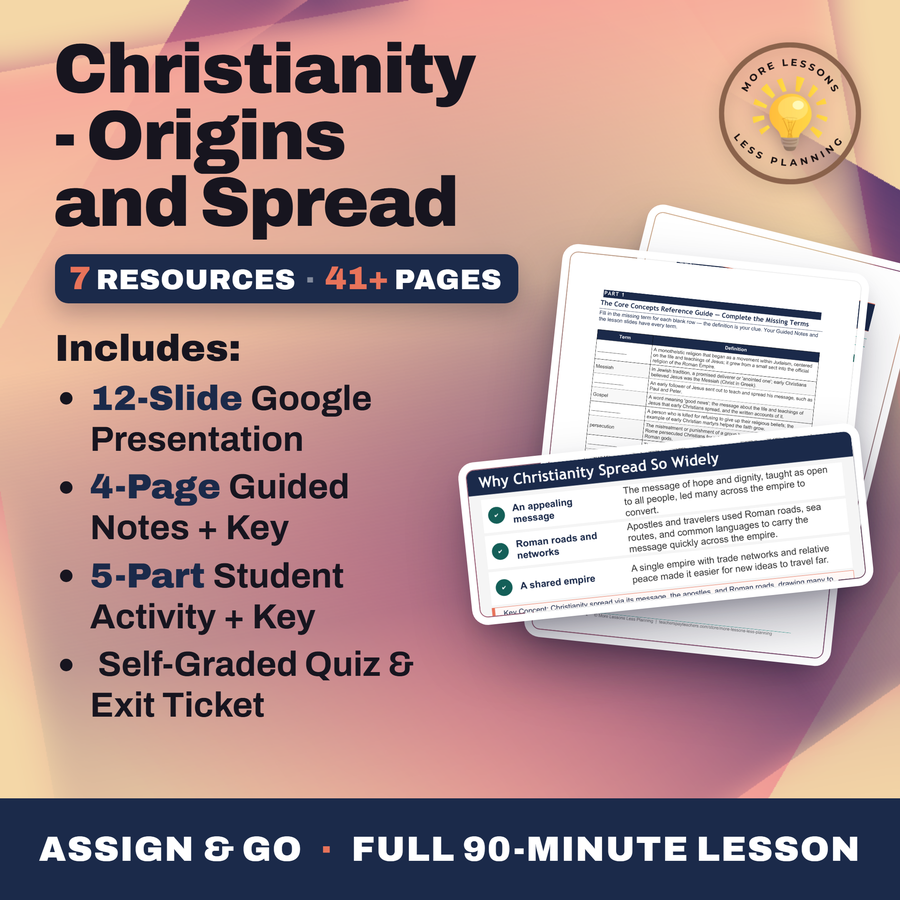
- 11 ready-to-teach files
- Format
- Word (.docx) · PowerPoint (.pptx)
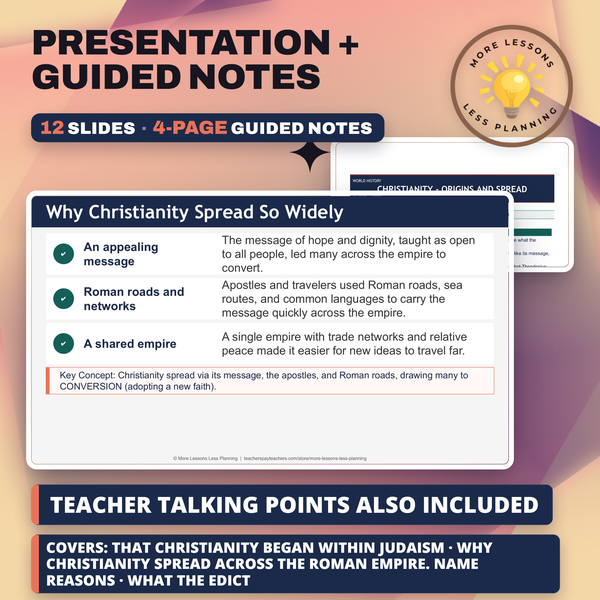
- Slide deck
- Guided notes
- Guided notes teacher key
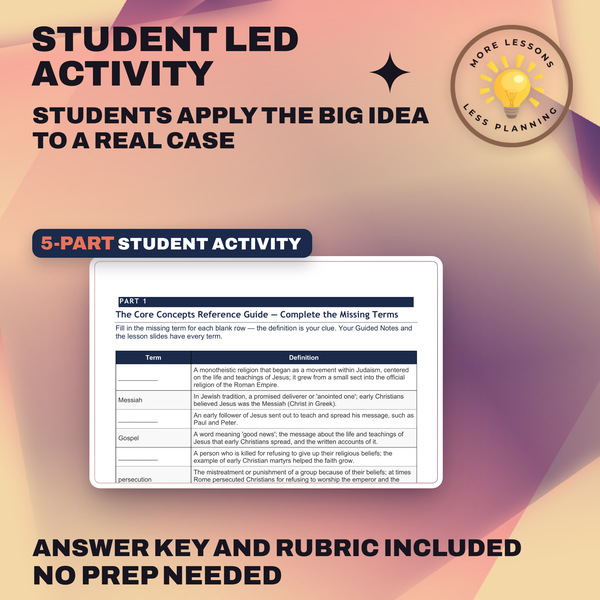
- Activity + answer key
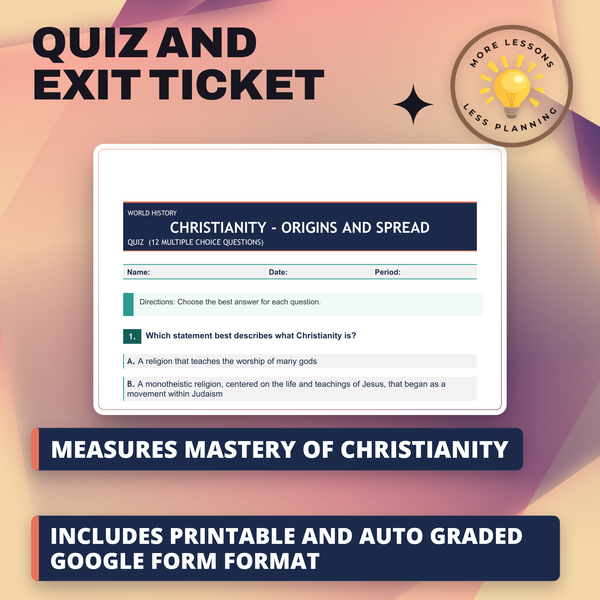
- Quiz + answer key
- Exit ticket + answer key
- Teacher guide
- Teacher presentation notes
What students do
- Explain how Christianity began as a movement within Judaism centered on Jesus as the Messiah
- Trace the reasons the faith spread across the Roman Empire, from the apostles to Roman roads to the example of martyrs
- Read Constantine's Edict of Milan (313 CE) as a primary source and explain what it granted and what it did not
- Distinguish the toleration Constantine granted in 313 CE from Theodosius later making Christianity the official religion
What it covers
- Jesus, the Messiah, the Gospel, and the apostles who carried the message after him
- Roman persecution of Christians and the role martyrs played in the faith's growth
- The Edict of Milan (313 CE), issued by Constantine and Licinius, in its own words
- The distinction between Constantine's toleration and Theodosius making Christianity the empire's official religion around 380-392 CE
Learning targets
- Explain that Christianity began within Judaism, centered on Jesus. Describe what the Messiah and the Gospel mean.
- Explain why Christianity spread across the Roman Empire. Name reasons like its message, the apostles, Roman roads, and the example of martyrs.
- Describe what the Edict of Milan (313 CE) did under Constantine. Explain that Theodosius later made Christianity the official religion.
- Read part of the Edict of Milan as a primary source. Explain what it did and did not do.
Peek inside
Where it began
Christianity is a monotheistic religion centered on Jesus's life and teachings.
It began as a small movement, or sect, within Judaism in Roman Judea.
Jesus and his first followers were Jews living under Roman rule.
Becoming distinct
Where It Began
is a monotheistic religion that began as a small movement, or sect, within Judaism, centered on the life and teachings of Jesus.
Christianity began as a small within Judaism, since Jesus and his first followers were Jews, before it gradually became a distinct religion.
1. Q1. What term names the monotheistic religion that began as a small movement within Judaism, centered on the life and teachings of Jesus?
Why this matters
Rome spent years actively persecuting the movement that would eventually run its government, and Christianity's path from that persecution to Constantine's 313 CE toleration ran through ordinary channels: Roman roads carrying the message along existing trade routes, and martyrs whose deaths became part of the story itself.
An official-sounding document can grant less than readers assume, and only checking its exact wording catches the gap here. That same habit of verifying a source's actual claims instead of its reputation carries into every other primary source the class reads this year.
From one teacher to another
This lesson traces Christianity's growth from a small movement within Judaism to the official religion of the Roman Empire, and it asks students to hold two separate claims apart the whole way through: what Christians believed about Jesus as the Messiah, and what actually caused the faith's spread across Roman territory. The primary source is the Edict of Milan itself, in Constantine and Licinius's own 313 CE language granting religious toleration, and students have to explain precisely what it did and did not do rather than assume it made Christianity the state religion outright. That distinction matters, because Theodosius's later decision decades afterward is what actually did that, and the lesson keeps the two emperors and the two centuries separate.
Every file in this toolkit
Download
Where should I send the next one?
Everything here is free and it stays that way. Leave your email and I'll send you the new lessons as they go up. You can unsubscribe from any one of them.
Related resources
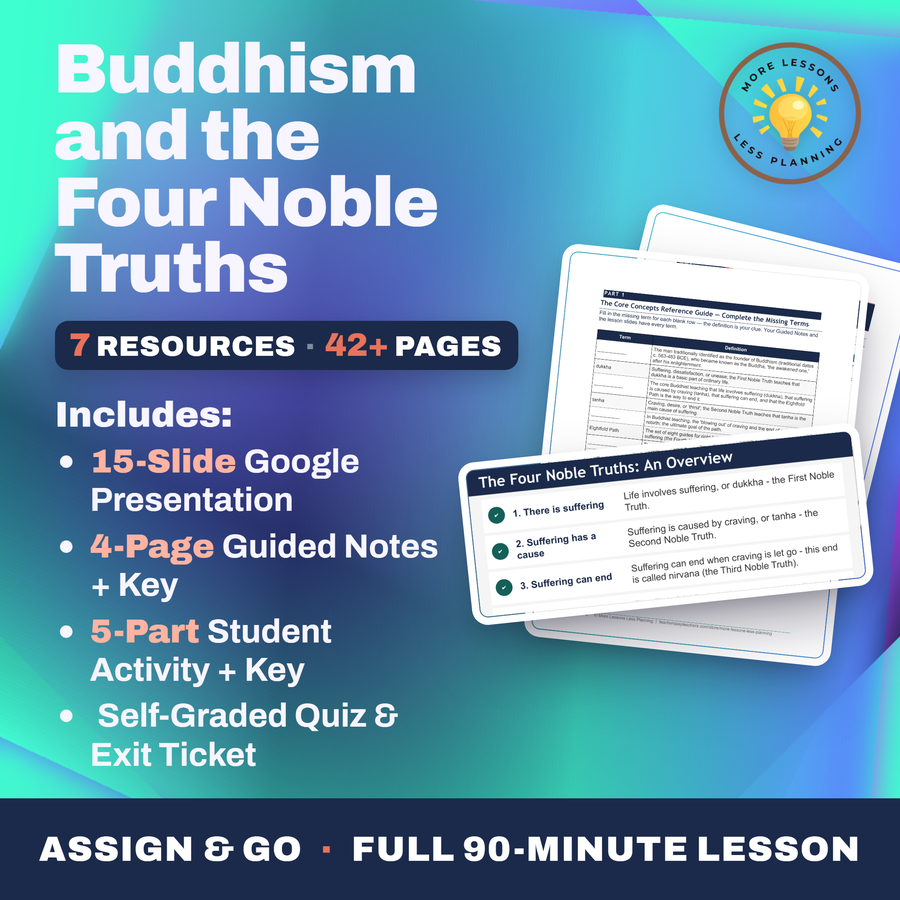
Buddhism and the Four Noble Truths
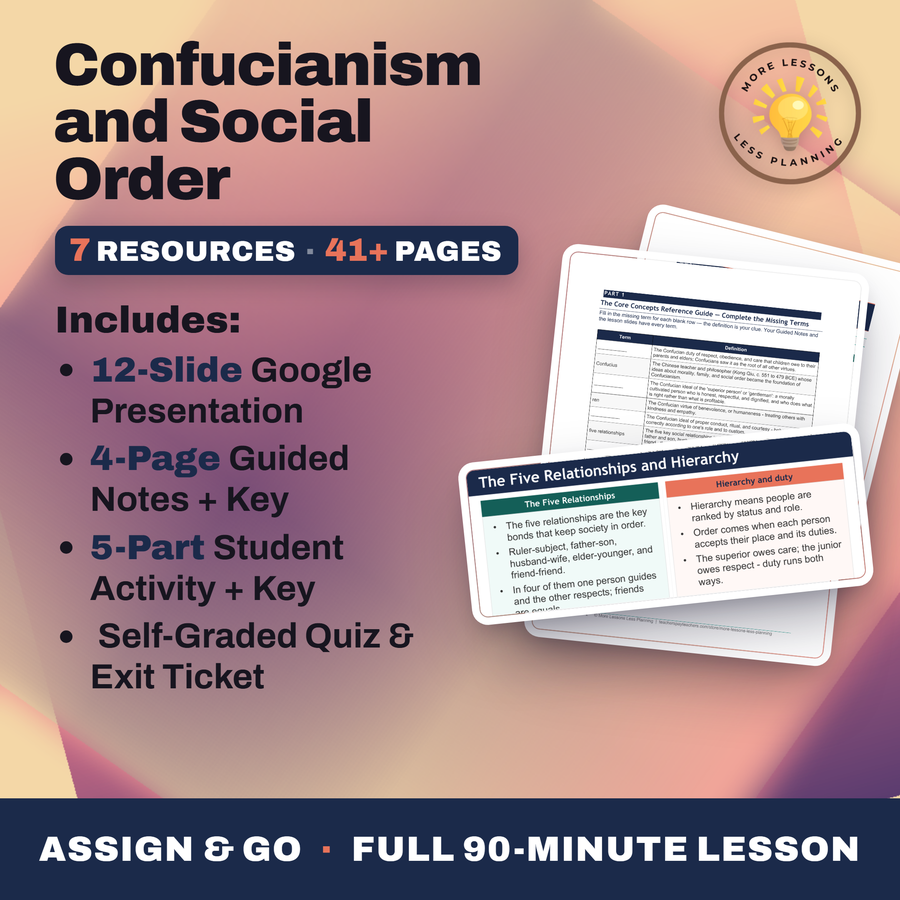
Confucianism and Social Order
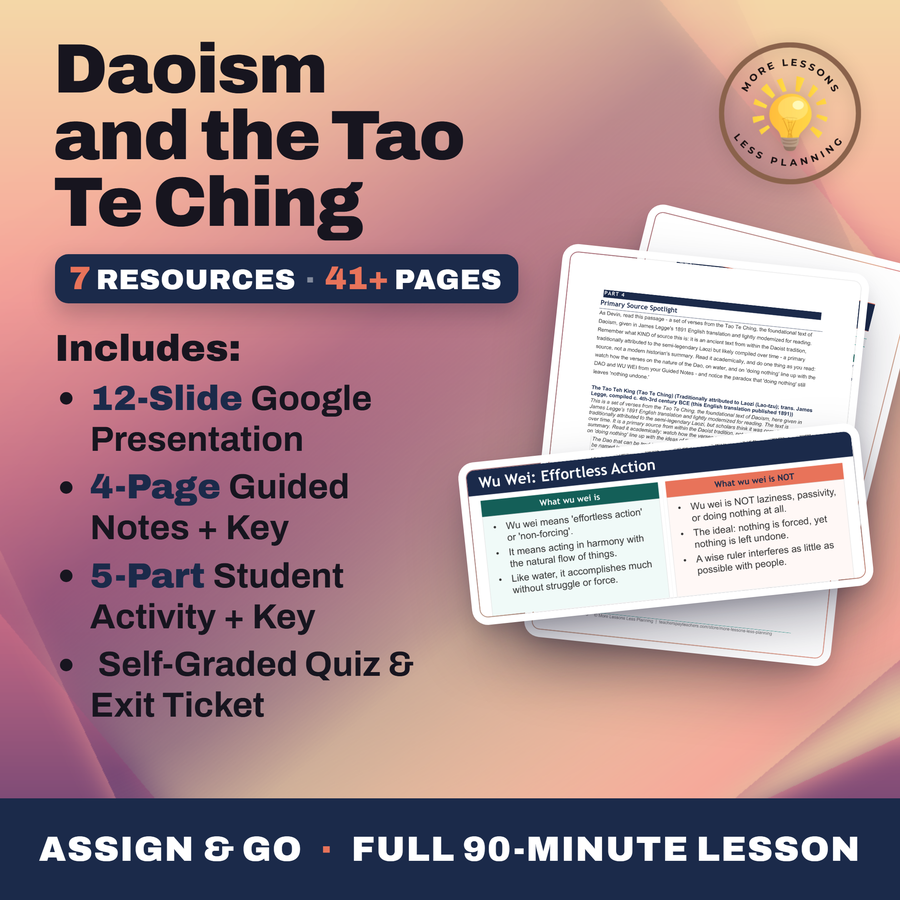
Daoism and the Tao Te Ching
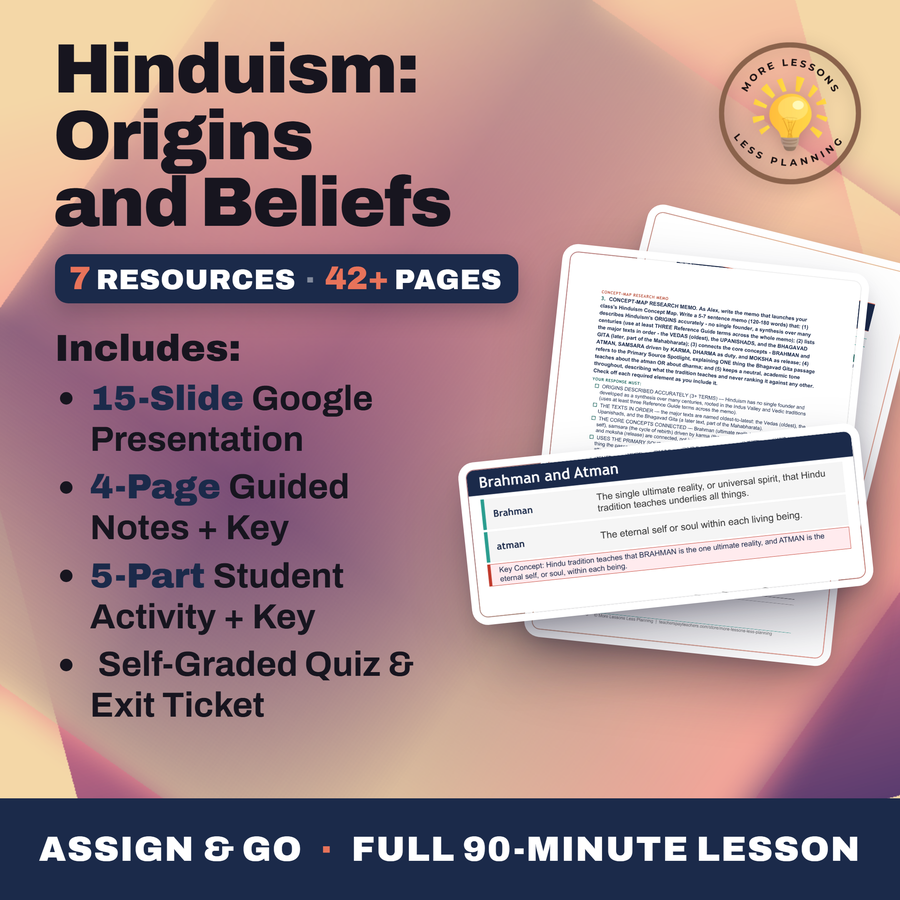
Hinduism - Origins and Beliefs
Islam - Muhammad and the Five Pillars
Judaism - Covenant and Diaspora
Every lesson on this site is free to download and use. If one of them saved you a prep period, you can chip in a few bucks toward my three kids' daycare fund. That's genuinely where tips go.