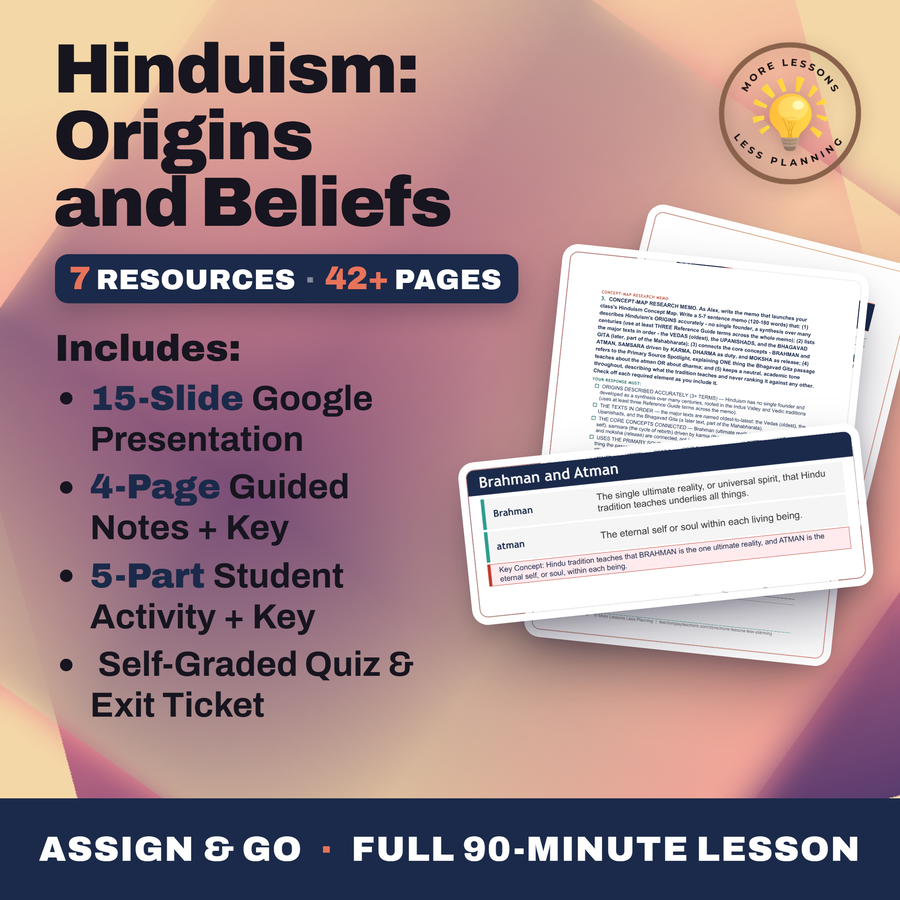
Hinduism - Origins and Beliefs
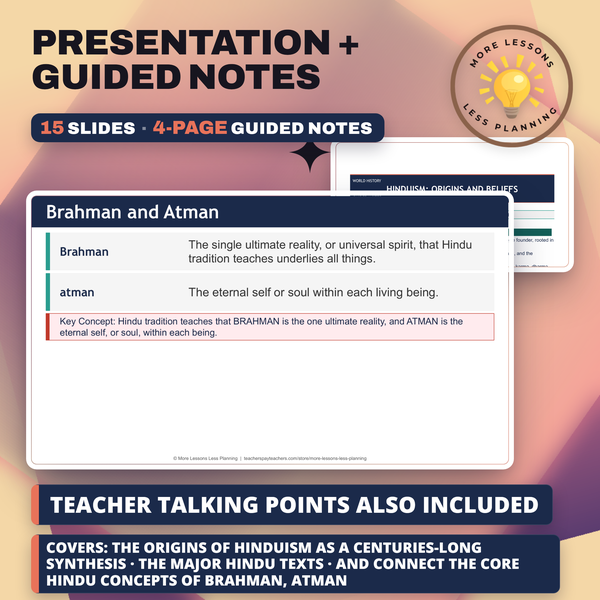
- Slide deck
- Guided notes
- Guided notes teacher key
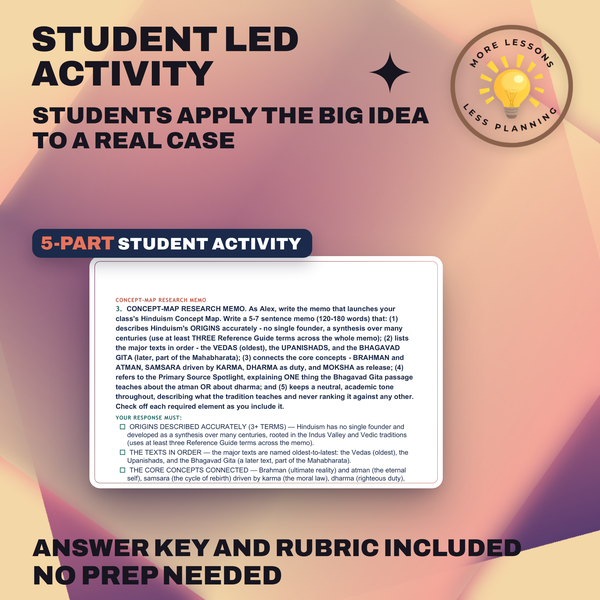
- Activity + answer key
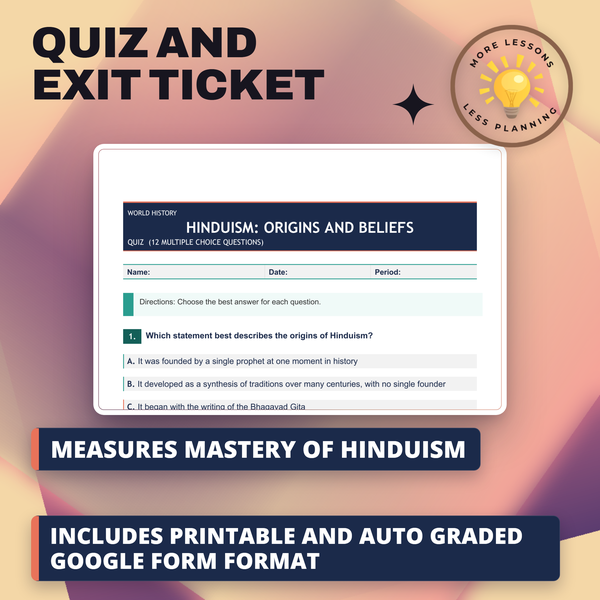
- Quiz + answer key
- Exit ticket + answer key
- Teacher guide
- Teacher presentation notes
Where should I send the next one?
Everything here is free and it stays that way. Leave your email and I'll send you the new lessons as they go up. You can unsubscribe from any one of them.
Every file in this toolkit
Related resources
Confucianism and Social Order
Pilgrimage Across World Religions
Religion on the Silk Road
World Religions: A Comparative Introduction
Aggression and Appeasement
Alliances and the Causes of WWI
What students do
- Analyze a Bhagavad Gita passage for how Krishna counsels Arjuna on dharma and the eternal atman
- Order the Vedas, Upanishads, and Bhagavad Gita by age instead of assuming the most famous text is the oldest
- Explain how karma, samsara, and moksha connect as one system rather than three separate vocabulary words
- Decode why Hinduism is described as a synthesis with no single founder or founding date
What it covers
- Brahman and atman, and how Hindu tradition connects the self to ultimate reality
- The Kailasa Temple at Ellora, carved downward from a single mass of rock around the 8th century CE
- Why dharma means righteous duty tied to role and stage of life, not simply religion
- The Kurukshetra battlefield scene that opens the Bhagavad Gita
Learning targets
- Explain the origins of Hinduism as a centuries-long synthesis with no single founder, rooted in the Indus Valley and Vedic traditions.
- Identify the major Hindu texts in order - the Vedas (oldest), the Upanishads, and the Bhagavad Gita - and describe what each contributes.
- Define and connect the core Hindu concepts of Brahman, atman, samsara, karma, dharma, and moksha, describing them academically as what the tradition teaches.
- Analyze a primary source - a passage from the Bhagavad Gita - to see how the tradition teaches dharma and the nature of the eternal self.
From one teacher to another
Which Hindu text is actually the oldest? Almost none of my students get it right on the first try, and that's exactly why I start here, because once the Vedas, the Upanishads, and the Bhagavad Gita are sorted into their real order, karma, samsara, and moksha click together as one system instead of three vocabulary words. Reading Krishna's counsel to Arjuna on the Kurukshetra battlefield lands differently once they already know what dharma and atman are supposed to mean.
Every lesson on this site is free to download and use. If one of them saved you a prep period, you can chip in a few bucks toward my three kids' daycare fund. That's genuinely where tips go.