Why Save - The Power of Starting Young
- Slide deck
- Guided notes
- Guided notes teacher key
- Activity + answer key
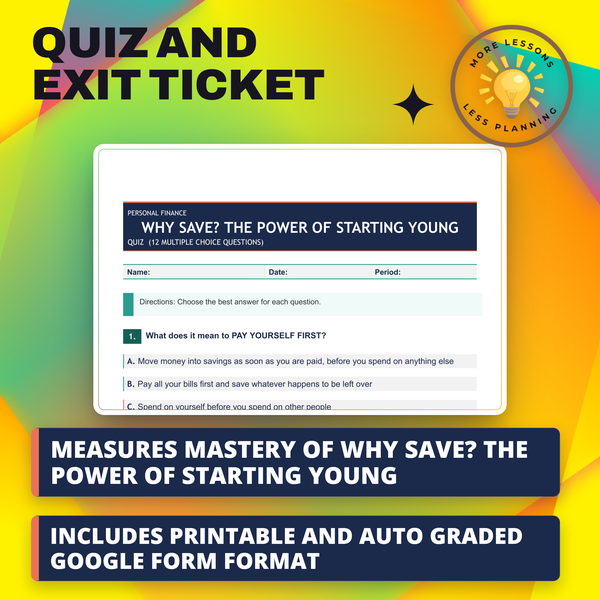
- Quiz + answer key
- Exit ticket + answer key
- Teacher guide
- Teacher presentation notes
Where should I send the next one?
Everything here is free and it stays that way. Leave your email and I'll send you the new lessons as they go up. You can unsubscribe from any one of them.
Every file in this toolkit
Related resources
Bonds - Lending to Governments and Companies

Risk vs Reward - Why You Can't Win Without Risk
The Stock Market - How It Works and Why It Moves
Financial Goals - Short, Medium and Long Term
Health Insurance - The Most Confusing Bill You'll Get
Hourly vs Salary: Which Job Actually Pays More?
What students do
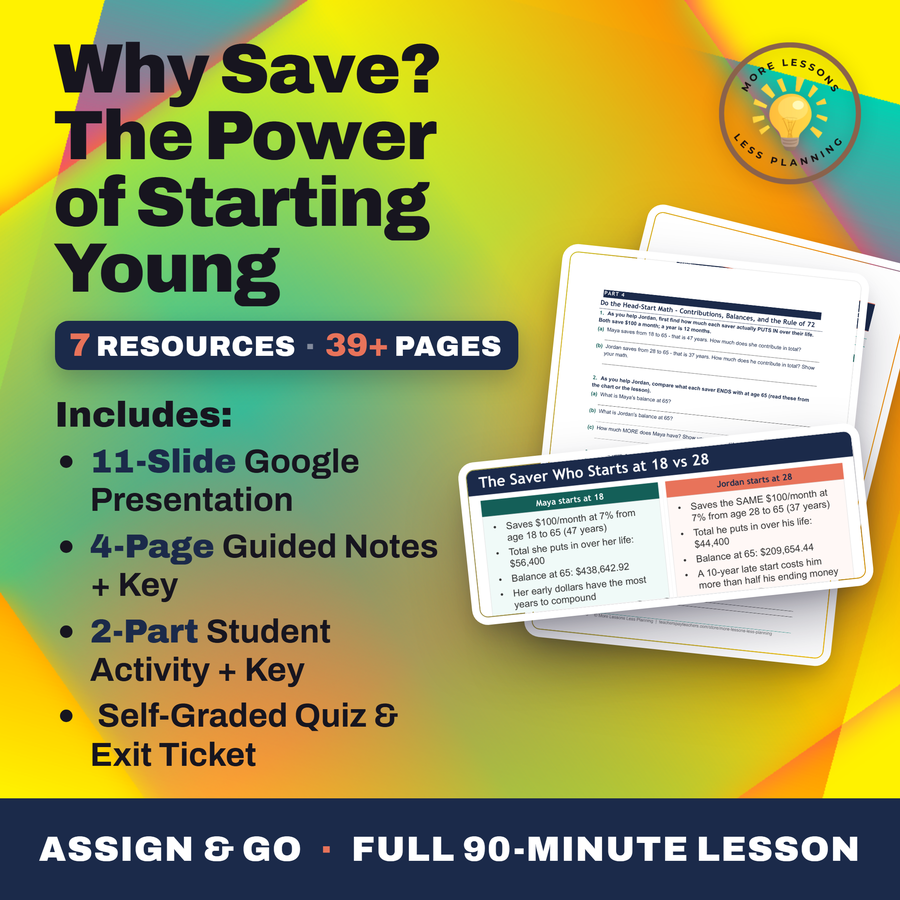
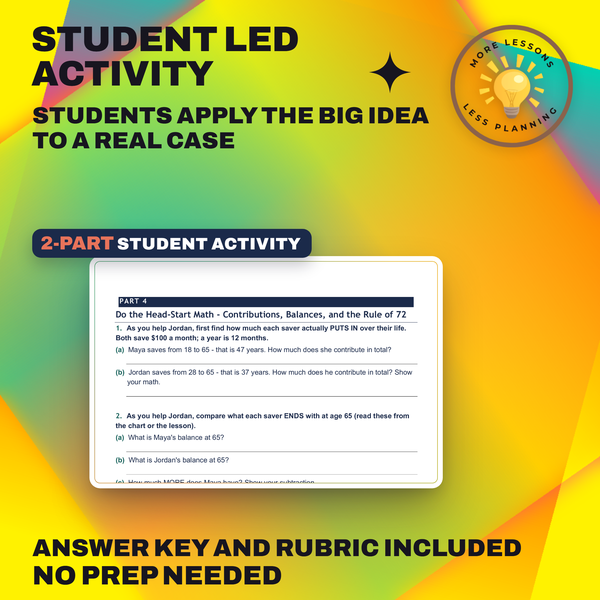
- Compare two savers who deposit the same monthly amount but start ten years apart
- Calculate the gap between total deposits and ending balance for each saver
- Read a two-line growth chart to see how the ten-year head start widens over time
- Set a specific savings goal with a dollar amount, a date, and a monthly deposit
What it covers
- Paying yourself first and building a saving habit that runs on autopilot
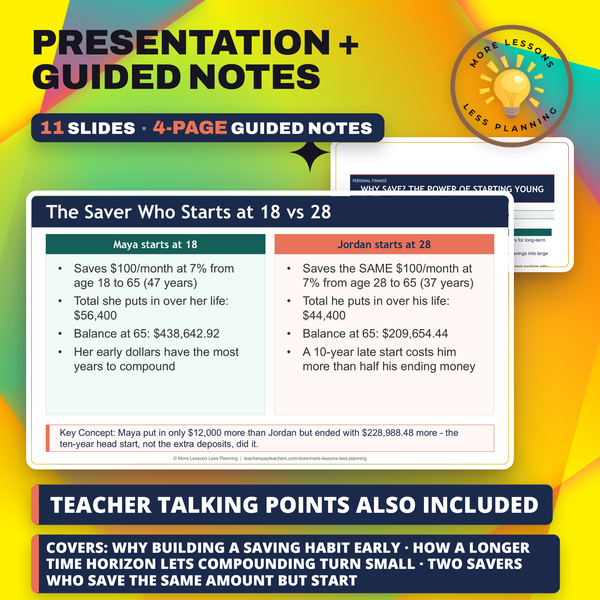
- Time horizon and compounding, and why an early decade matters more than extra deposits
- The Rule of 72 as a quick way to estimate how fast money doubles
- Where to keep short-term savings versus money meant to sit for decades
Learning targets
- Explain why building a saving habit early - and paying yourself first - matters for long-term wealth
- Describe how a longer time horizon lets compounding turn small, regular savings into large sums
- Compare two savers who save the same amount but start ten years apart, and explain why starting young wins
- Choose where to keep short-term savings and set a specific, realistic first savings goal
From one teacher to another
Two savers put in almost the same amount of money and end up nowhere near the same amount of wealth, and that gap is the whole argument for starting now. Students do the math themselves instead of hearing me lecture about compounding, so the number that a ten-year head start is worth comes from their own chart reading. It's the first lesson in the unit for a reason: everything after it assumes students already believe time matters.
Every lesson on this site is free to download and use. If one of them saved you a prep period, you can chip in a few bucks toward my three kids' daycare fund. That's genuinely where tips go.