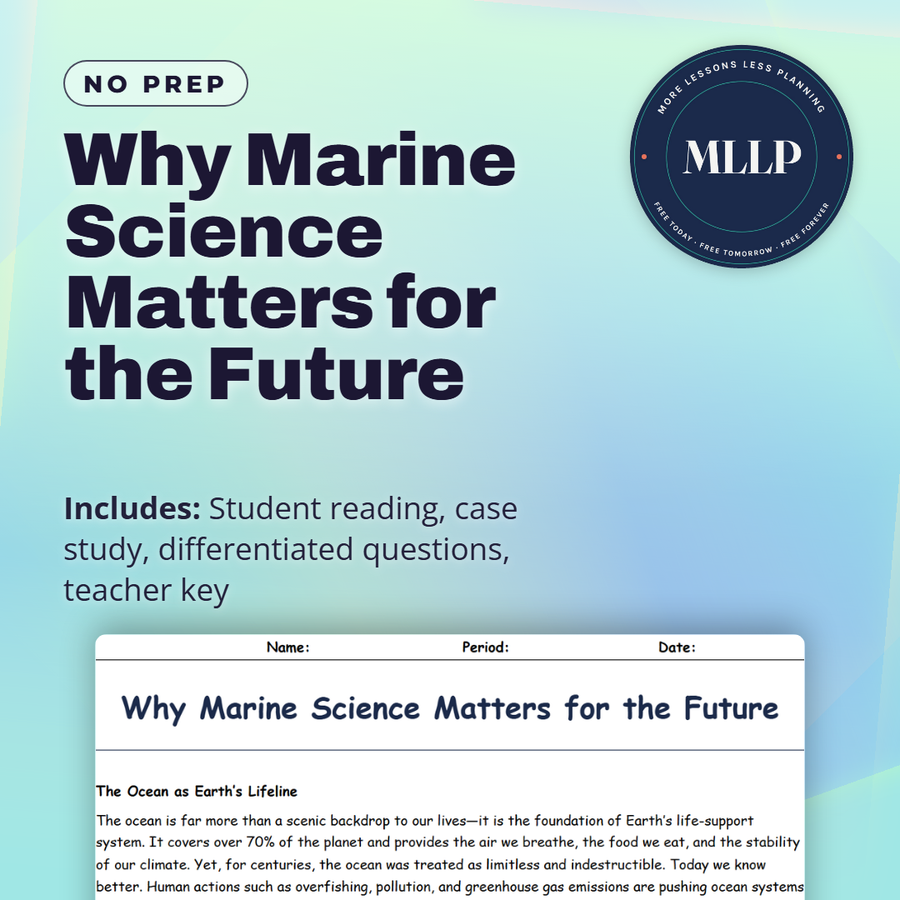
Why Marine Science Matters for the Future
Quality reviewed September 2026
Facts verified September 14, 2026
- Subject
- Science
- Grades
- Grades 9-12
- Length
- 7-page student worksheet
- Time
- About one 50-minute class period
- Great for
- Sub plans and independent work
- Includes
- Reading passage, comprehension questions + full answer key
- Format
- Print-and-go PDF
What students do
- Match terms like Sustainable Fisheries, Climate Resilience, Paris Agreement, and Conservation to their correct definitions
- Fill in the blank sentences on the Paris Agreement, blue carbon, and climate change
- Answer multiple choice questions on why the ocean is an ally against climate change, what blue carbon means, and how marine science supports sustainable fisheries
- Write short answers on why marine science matters for future food security, how global cooperation strengthens ocean conservation, and what role blue carbon ecosystems play in fighting climate change
What it covers
- How marine science supports climate resilience, sustainable fisheries, and global conservation efforts
- The concept of blue carbon ecosystems like mangroves, seagrasses, and salt marshes
- A case study on the 2015 Paris Agreement and how ocean science shaped its climate strategies
Start reading this worksheet
The Ocean as Earth’s Lifeline
The ocean is far more than a scenic backdrop to our lives: it is the foundation of Earth’s life-support system. It covers over 70% of the planet and provides the air we breathe, the food we eat, and the stability of our climate. Yet, for centuries, the ocean was treated as limitless and indestructible. Today we know better. Human actions such as overfishing, pollution, and greenhouse gas emissions are pushing ocean systems to their limits. Marine science gives us the tools to understand these changes and to design strategies for protecting the ocean while ensuring it can continue to sustain us in the future. One of the central roles of marine science is to highlight the interdependence of humans and the sea. The oxygen produced by microscopic phytoplankton, the protein provided by global fisheries, and the protection offered by coral reefs and mangroves all directly affect human survival. Without healthy oceans, societies would face food insecurity, worsening storms, and collapsing ecosystems. Marine science reminds us that protecting the ocean is a requirement for humanity’s future, not an optional goal.
Marine Science and Climate Resilience
One of the greatest challenges of our time is climate change, and the ocean is at the heart of the solution. The ocean absorbs 90% of the excess heat trapped by greenhouse gases and about one-quarter of the carbon dioxide humans release into the atmosphere. This buffering capacity protects us, but it comes at a cost: warmer waters drive sea level rise, melting polar ice, and stronger hurricanes, while carbon absorption leads to ocean acidification that harms coral reefs and shell-building species. Marine science helps us track these processes and prepare for their impacts. Physical oceanographers measure currents and temperature changes that shape weather patterns. Marine chemists analyze how carbon shifts in seawater. Biologists study species that can adapt (or fail to adapt) to changing conditions. This knowledge is not only for scientists; it equips governments, businesses, and communities to build resilience. Coastal cities can plan defenses, fisheries can adapt their practices, and global agreements can be shaped by accurate data. The ocean is our strongest ally against climate change, but only if we understand and protect it.
Sustainable Fisheries and Food Security
The ocean is the world’s largest source of protein, feeding billions of people. Yet unsustainable fishing practices threaten this supply. Overfishing, bycatch, and habitat destruction endanger fish populations and the communities that depend on them. Marine science provides the foundation for sustainable fisheries by monitoring populations, studying breeding cycles, and advising on quotas that allow species to recover. Technological advances, such as satellite tracking and DNA analysis of fish stocks, help scientists and policymakers make informed decisions. Aquaculture, or fish farming, is another area where marine science plays a role, ensuring that farmed seafood is produced in ways that do not harm surrounding ecosystems. By guiding sustainable practices, marine science ensures that future generations can enjoy the nutritional and economic benefits of the ocean without exhausting its resources.
Like what you read? The full reading, the case study, and every question set are in the free download below, along with the answer key.
Why this matters
When the world negotiated the 2015 Paris Agreement, Pacific island nations brought ocean research to the table, and that data helped shape its climate strategies. Mangroves, seagrasses, and salt marshes turned out to be part of the answer too, since these blue carbon ecosystems store carbon efficiently enough to count as a real climate tool, not just scenery along a coast.
Climate policy looks like something politicians negotiate from politics alone, until you look at who supplied the data behind the Paris Agreement's strategies. Sustainable fisheries and food security run on that same ocean research, which is why I treat conservation and international cooperation as one project instead of two separate units.
From one teacher to another
Marine science plays a direct role in shaping how the world responds to climate change, and this reading connects the two. Students read about climate resilience, sustainable fisheries, and blue carbon ecosystems like mangroves and seagrasses that store carbon efficiently. The case study covers the 2015 Paris Agreement and how ocean research, including data from Pacific island nations, shaped its climate strategies. Questions ask students to link ocean science to food security, global cooperation, and carbon storage.
What you get
Download
Where should I send the next one?
Everything here is free and it stays that way. Leave your email and I'll send you the new lessons as they go up. You can unsubscribe from any one of them.
Related resources
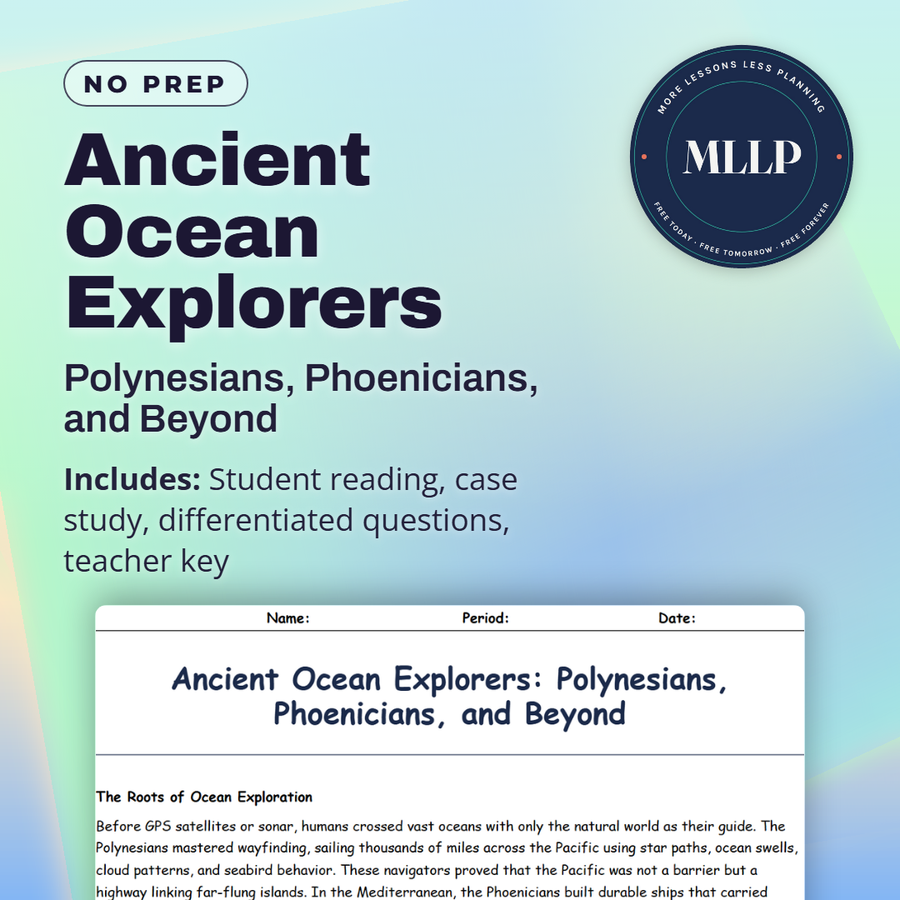
Ancient Ocean Explorers: Polynesians, Phoenicians, and Beyond
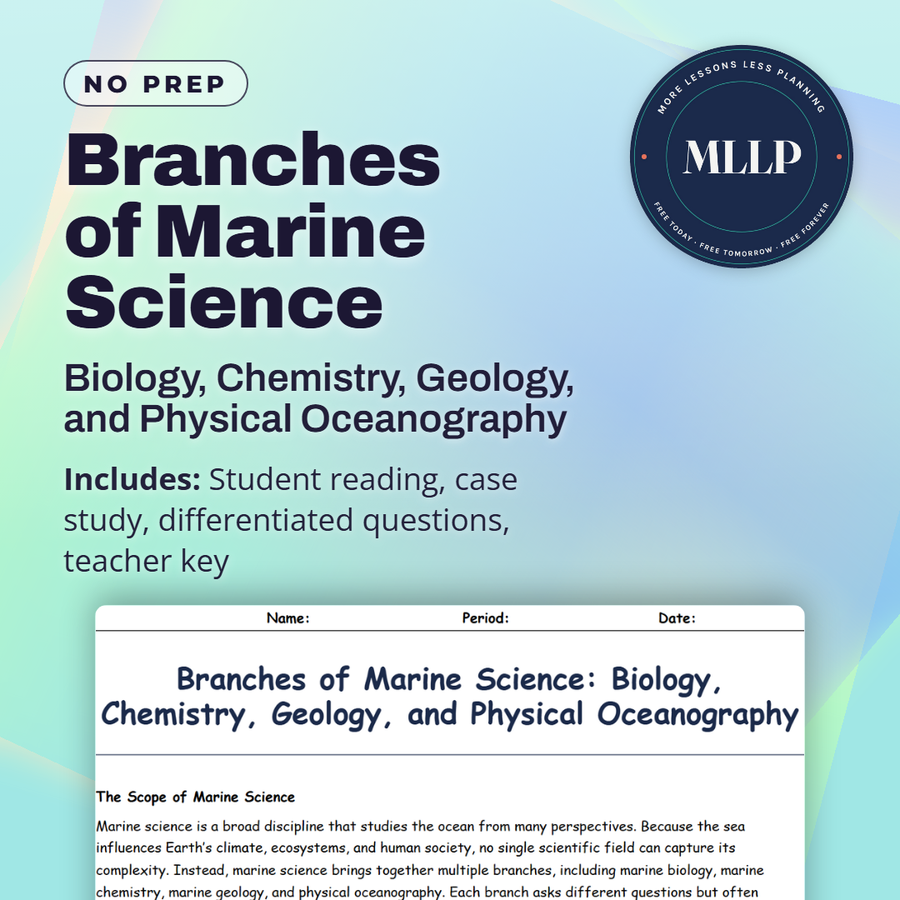
Branches of Marine Science: Biology, Chemistry, Geology, and Physical Oceanography
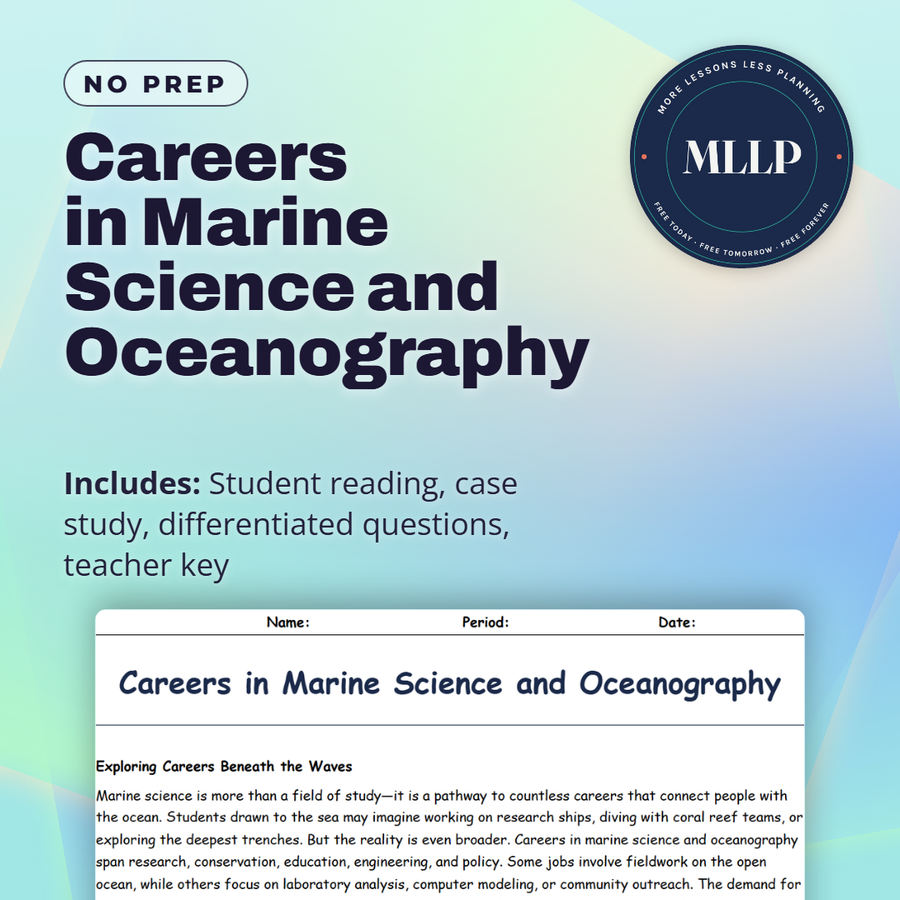
Careers in Marine Science and Oceanography
Famous Expeditions: HMS Challenger, Alvin, and Beyond
Marine Science Contributions to Society: Medicine, Climate, and Food
Modern Tools of Ocean Exploration: ROVs, AUVs, and Sonar
Every lesson on this site is free to download and use. If one of them saved you a prep period, you can chip in a few bucks toward my three kids' daycare fund. That's genuinely where tips go.