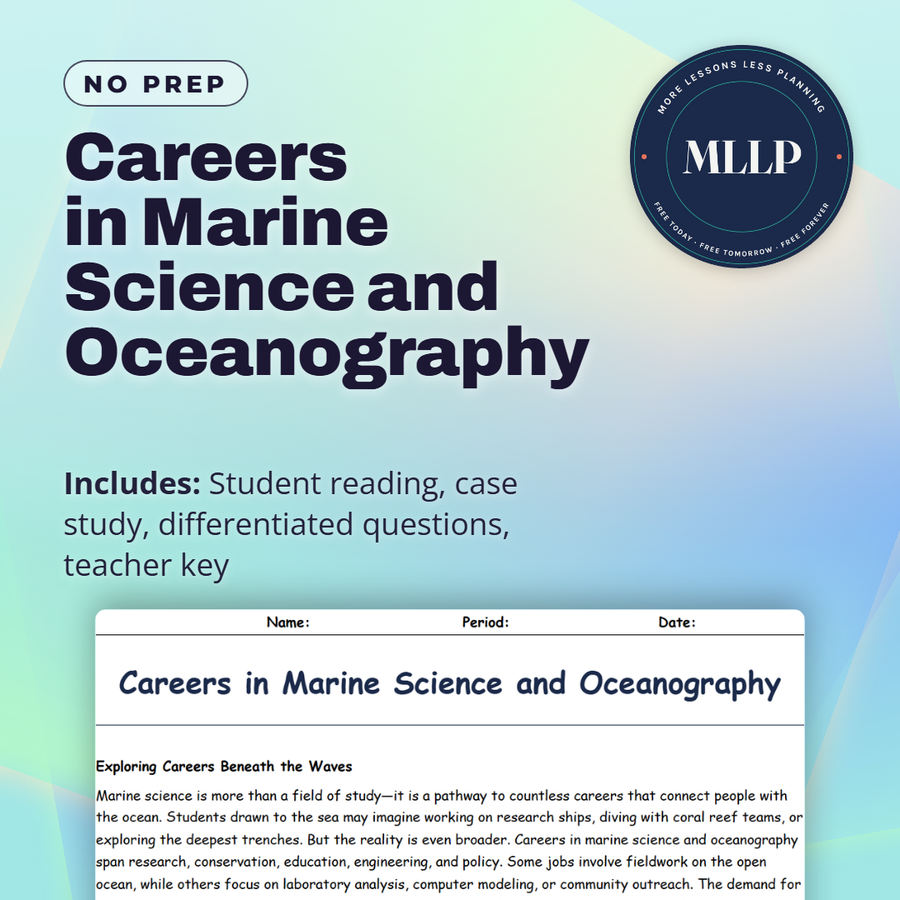
Careers in Marine Science and Oceanography
Quality reviewed September 2026
Facts verified September 14, 2026
- Subject
- Science
- Grades
- Grades 9-12
- Length
- 7-page student worksheet
- Time
- About one 50-minute class period
- Great for
- Sub plans and independent work
- Includes
- Reading passage, comprehension questions + full answer key
- Format
- Print-and-go PDF
What students do
- Match terms like Marine Biology, Marine Engineering, Applied Marine Science, and Sylvia Earle to their correct definitions
- Fill in the blank sentences on marine science careers, Sylvia Earle's nickname, and marine protected areas
- Answer multiple choice questions on which career designs submersibles and ROVs, which careers are most visible to the public, and what Mission Blue aims to do
- Write short answers on why communication skills matter in conservation work, how applied marine science solves real problems, and why internship and volunteer experience helps future marine scientists
What it covers
- Career paths in marine science research, from studying ecosystems to reading sediment records and ocean currents
- Applied and engineering careers such as designing ROVs and shaping fisheries policy, plus education and outreach roles
- A case study on Dr. Sylvia Earle's career in marine biology, exploration, and conservation
Start reading this worksheet
Exploring Careers Beneath the Waves
Marine science is more than a field of study—it is a pathway to countless careers that connect people with the ocean. Students drawn to the sea may imagine working on research ships, diving with coral reef teams, or exploring the deepest trenches. But the reality is even broader. Careers in marine science and oceanography span research, conservation, education, engineering, and policy. Some jobs involve fieldwork on the open ocean, while others focus on laboratory analysis, computer modeling, or community outreach. The demand for skilled professionals in marine science is growing as societies face challenges like climate change, overfishing, and pollution. Careers range from highly specialized research positions to public education roles in aquariums and museums. What unites these careers is a shared goal: understanding the ocean and using that knowledge to benefit both the environment and humanity. For high school and college students, learning about these career paths can open doors to exciting and meaningful futures.
Research and Exploration Careers
One of the most recognizable career tracks in marine science involves research and exploration. Marine biologists study species and ecosystems, often focusing on conservation and biodiversity. Marine chemists investigate water chemistry, pollution, and nutrient cycles. Marine geologists analyze seafloor features and use sediment records to study Earth’s history. Physical oceanographers research tides, currents, and climate systems, providing essential data for weather forecasts and climate models. Many researchers work at universities, government agencies, or institutions like Woods Hole or Scripps. Their work may involve field expeditions using ships, submersibles, and remotely operated vehicles (ROVs). Others specialize in laboratory work, studying genetic material, chemical samples, or satellite data. These careers require strong academic preparation, often including graduate degrees. While competitive, they are at the cutting edge of discovery and provide opportunities to make a lasting impact on science.
Applied and Engineering Careers
Not all marine science careers are focused solely on research. Marine engineers and technologists design the tools that make ocean exploration possible. This includes ROVs, submersibles, sonar systems, and satellite instruments. Careers in applied marine science also include aquaculture specialists who improve fish farming techniques, marine policy advisors who shape sustainable resource management, and environmental consultants who help industries reduce ocean impacts. These careers combine scientific knowledge with practical problem-solving. For instance, a marine engineer might collaborate with oceanographers to design equipment for measuring deep-sea currents, or a policy specialist might use research data to recommend new fishing regulations. Students interested in combining technical skills with marine knowledge often thrive in these applied roles, which are in high demand worldwide.
Like what you read? The full reading, the case study, and every question set are in the free download below, along with the answer key.
Why this matters
When students hear 'marine science career' they usually picture one thing: a scientist on a boat. Research, engineering, applied science, and education turn out to be four separate paths, ranging from designing ROVs to shaping fisheries policy to teaching the public what is happening in the ocean.
Dr. Sylvia Earle's career, covered in the case study, argues against picking one lane: she moved between marine biology, exploration, and conservation work through Mission Blue. It gives students a reason to take the questions about communication skills and internship experience seriously.
From one teacher to another
Marine science opens into careers well beyond fieldwork on a research ship. This worksheet covers research, engineering, applied science, and education paths, from designing ROVs to shaping fisheries policy. The case study follows Dr. Sylvia Earle's career, tracing how she combined marine biology, exploration, and conservation work through Mission Blue. The questions ask students to sort career paths by focus and explain why communication skills and field experience matter in this line of work.
What you get
Download
Where should I send the next one?
Everything here is free and it stays that way. Leave your email and I'll send you the new lessons as they go up. You can unsubscribe from any one of them.
Related resources
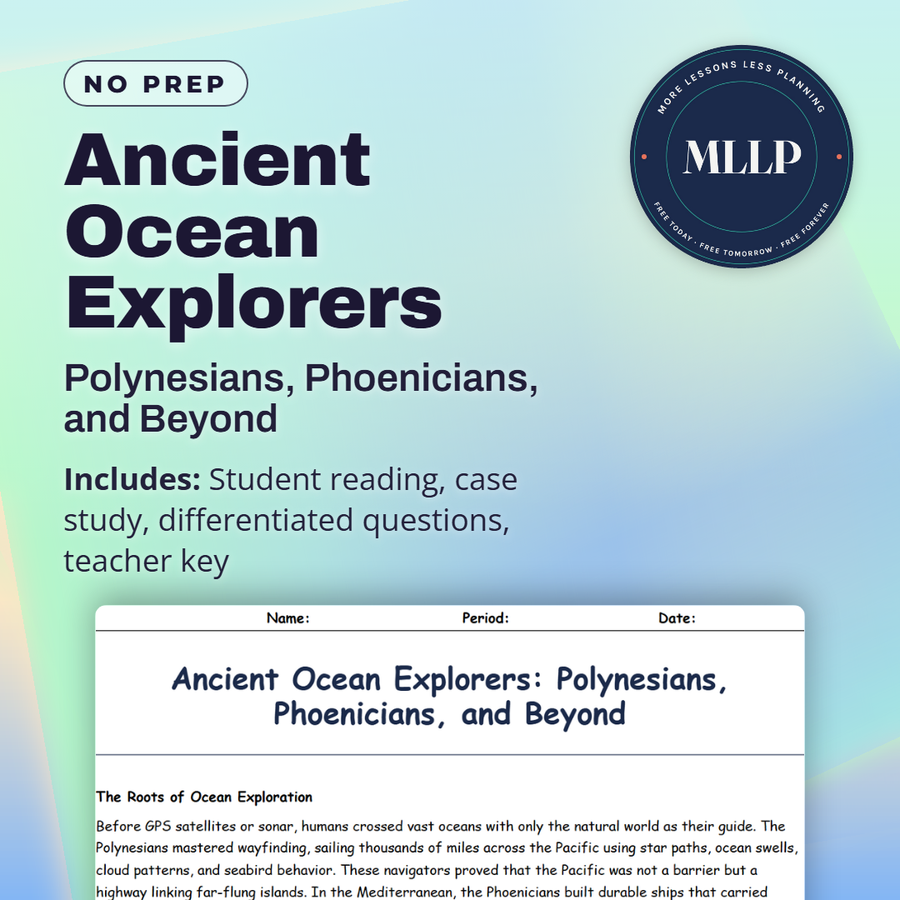
Ancient Ocean Explorers: Polynesians, Phoenicians, and Beyond
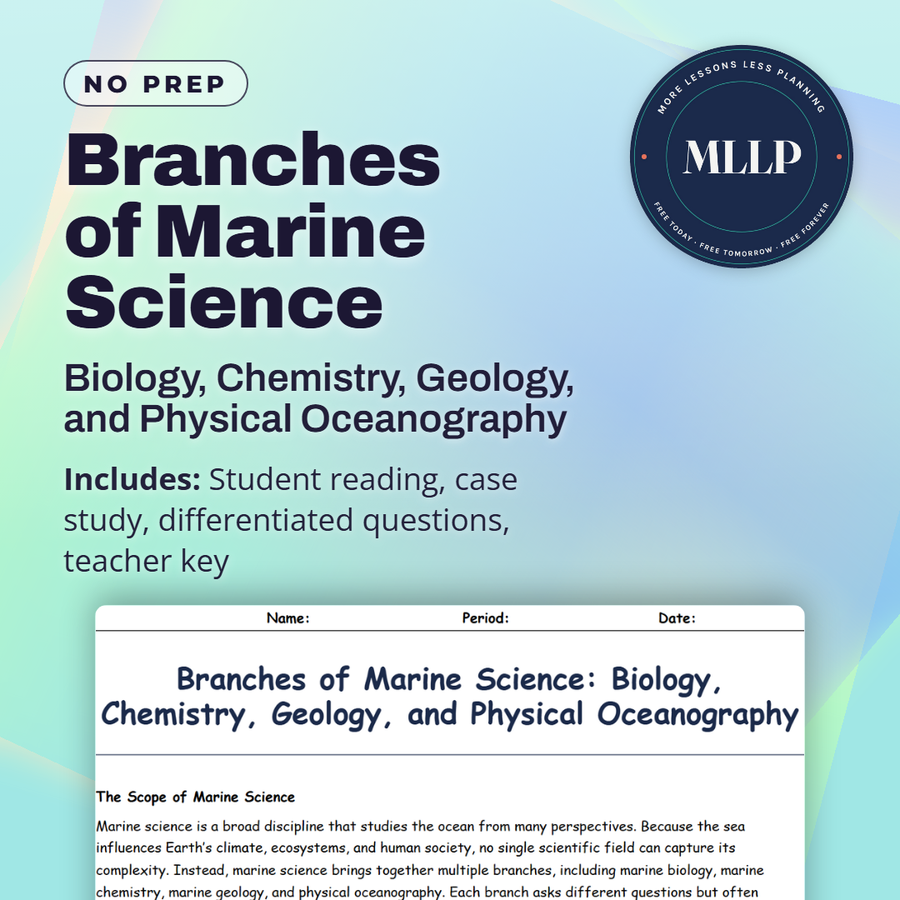
Branches of Marine Science: Biology, Chemistry, Geology, and Physical Oceanography
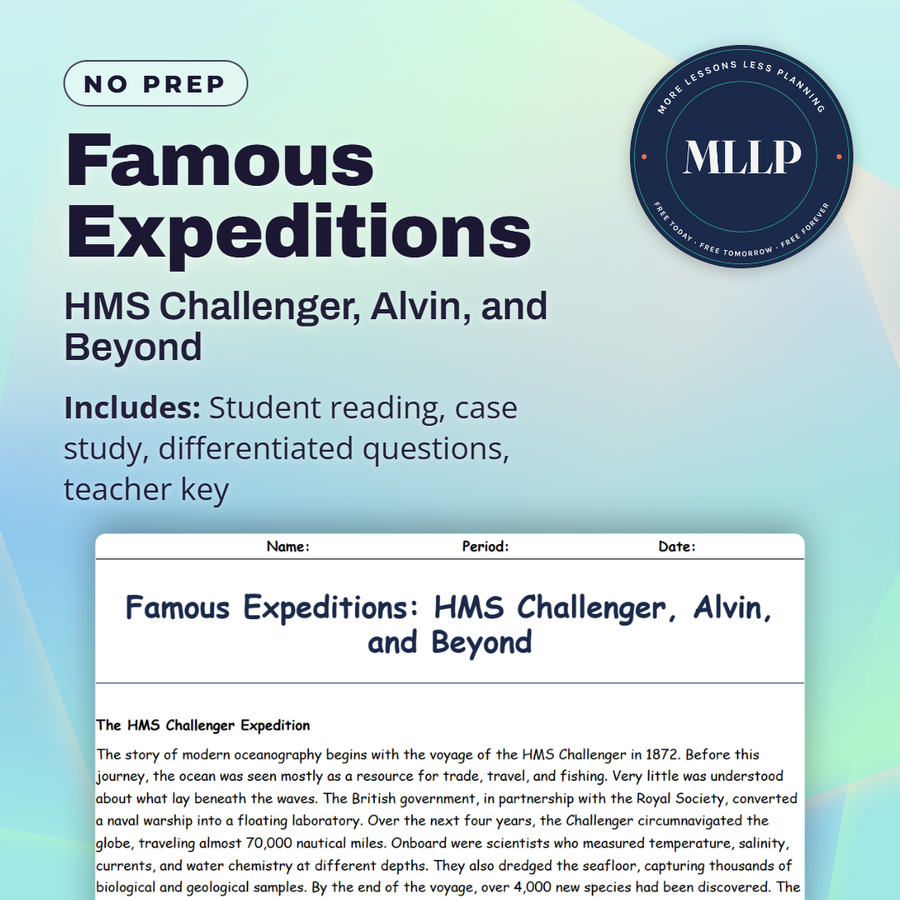
Famous Expeditions: HMS Challenger, Alvin, and Beyond
Marine Science Contributions to Society: Medicine, Climate, and Food
Modern Tools of Ocean Exploration: ROVs, AUVs, and Sonar
The Ocean’s Role in Earth’s Climate System
Every lesson on this site is free to download and use. If one of them saved you a prep period, you can chip in a few bucks toward my three kids' daycare fund. That's genuinely where tips go.