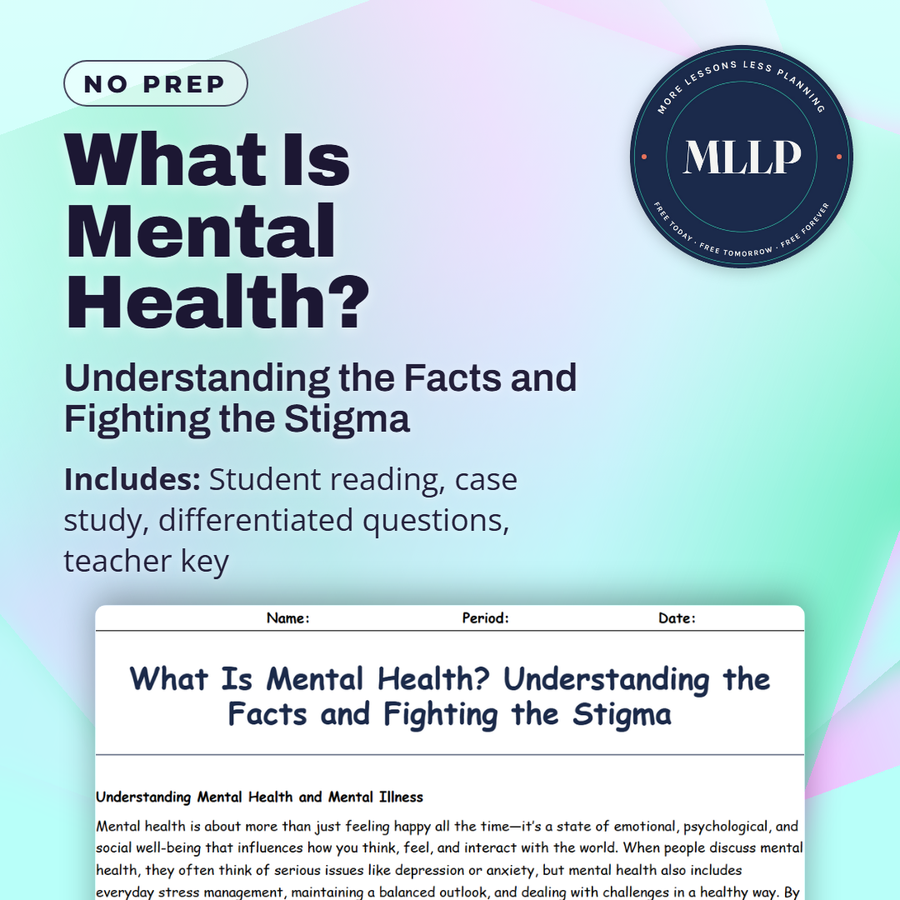
What Is Mental Health? Understanding the Facts and Fighting the Stigma
Quality reviewed September 2026
Facts verified September 21, 2026
- Subject
- Career & Life Skills
- Grades
- Grades 9-12
- Length
- 8-page student worksheet
- Time
- About one 50-minute class period
- Great for
- Sub plans and independent work
- Includes
- Reading passage, comprehension questions + full answer key
- Format
- Print-and-go PDF
What students do
- Match terms like stigma, empathy, and cultural influences to their definitions.
- Answer multiple-choice questions on the difference between mental health and mental illness.
- Fill in the blank naming poor mental health, stigma, and empathy in key sentences.
- Answer short-answer questions on how social media can reduce stigma and how friends can support a classmate who won't open up.
What it covers
- The actual difference between mental health, a state of well-being everyone has, and mental illness, a diagnosable condition, and how stigma blurs that distinction.
- How stigma from peers, family, or media keeps teens from asking for help, and how treating mental health like physical health lowers that barrier.
- A case study about a student who assumes months of low mood and lost interest in painting is just a creative slump.
Start reading this worksheet
Understanding Mental Health and Mental Illness
Mental health is about more than just feeling happy all the time: it’s a state of emotional, psychological, and social well-being that influences how you think, feel, and interact with the world. When people discuss mental health, they often think of serious issues like depression or anxiety, but mental health also includes everyday stress management, maintaining a balanced outlook, and dealing with challenges in a healthy way. By contrast, mental illness involves conditions that disrupt a person’s thoughts, emotions, or behaviors to a point where daily life becomes difficult. Conditions like schizophrenia, bipolar disorder, and clinical depression are forms of mental illness. It’s crucial to know that mental health and mental illness are not the same; a person can have poor mental health without having a diagnosable illness, and someone with a mental illness can still experience good mental health if their symptoms are managed effectively. Unfortunately, there are stigmas attached to mental health struggles: assumptions like “only weak people get depressed” or “you can snap out of it if you try harder.” Such beliefs can prevent teens from acknowledging when they need help. Stigma can come from peers, family, or even cultural views that discourage open conversations about mental struggles. The result can be hesitation to seek professional support, leading to untreated symptoms. The goal in understanding mental health is to foster empathy and recognize that everyone’s mind works differently. Learning to differentiate between daily stress and a more significant mental health issue is key to getting appropriate help.
The Impact of Stigma on Teens
When teens face stigma related to mental health, they might feel embarrassed, isolated, or reluctant to speak up about challenges like intense sadness, chronic worry, or difficulty concentrating. This reluctance can prolong suffering and affect school performance, friendships, and overall well-being. A teen who wants to visit the school counselor may worry about being labeled as “crazy” or “weak,” which can delay important interventions. Stigma doesn’t just harm the individual; it can have a ripple effect on an entire community. If peers start to mock or belittle mental health concerns, it discourages everyone from seeking help. Being aware of how media and popular culture shape our perceptions is vital. Movies sometimes depict mental illness in extreme or sensational ways, contributing to misunderstandings. Social media can also spread stereotypes quickly. However, it can be a force for good if used to share accurate information and supportive messages. Teens who become mental health advocates can help break down barriers by posting facts, personal stories (as they’re comfortable), or simply by offering an encouraging comment to a friend who’s struggling. Overcoming stigma starts with education, empathy, and the willingness to discuss mental health as part of overall health, just like nutrition or exercise.
Talking About Mental Health as Total Health
It’s helpful to see your emotional well-being as part of a bigger health picture. If you have a cold, you don’t hesitate to rest or see a doctor. Similarly, if you’re feeling overwhelmed, constantly sad, or unable to cope, seeking professional help should be just as acceptable. Viewing mental health as an essential component of total health encourages proactive self-care. This might include consistent sleep habits, physical activity, healthy eating, and open conversations with friends or trusted adults about what’s on your mind. Teens often juggle many stressors (academic demands, social pressures, extracurricular activities, and family responsibilities) that can impact emotional stability. Feeling nervous before a big test or upset after a conflict with a friend is normal, but if these feelings become persistent and start to affect daily life, it might signal something more serious. Recognizing these signs early makes it easier to seek help and manage concerns before they escalate. When we treat mental health as just another aspect of overall wellness, the idea of reaching out for support becomes far less intimidating.
Like what you read? The full reading, the case study, and every question set are in the free download below, along with the answer key.
Why this matters
Students hear "mental health" constantly online, in ads, in songs, in casual jokes, but that exposure hasn't translated into most of them being able to say what the word actually means or naming stigma when they see it happening in a hallway. This reading closes that gap directly, and it puts real responsibility on students themselves: the passage on media and culture points out that the people shifting this conversation right now are often other teens who post honestly about their own struggles. That's a role a student can step into the same week they read this.
If you or someone you know is struggling, call or text 988 (Suicide & Crisis Lifeline, US) or talk to a trusted adult right away.
From one teacher to another
Ask ten students to define mental health and you'll get ten different answers, which is exactly the gap this reading is built to close. The passages separate mental health from mental illness, then trace how a stray joke about seeing a counselor can be enough to keep someone quiet about a real problem. Camila's case study, an artist who explains away months of low mood as a creative slump, makes that quiet cost visible before the reading turns to how media and culture shape the conversation.
What you get
Download
Where should I send the next one?
Everything here is free and it stays that way. Leave your email and I'll send you the new lessons as they go up. You can unsubscribe from any one of them.
Related resources
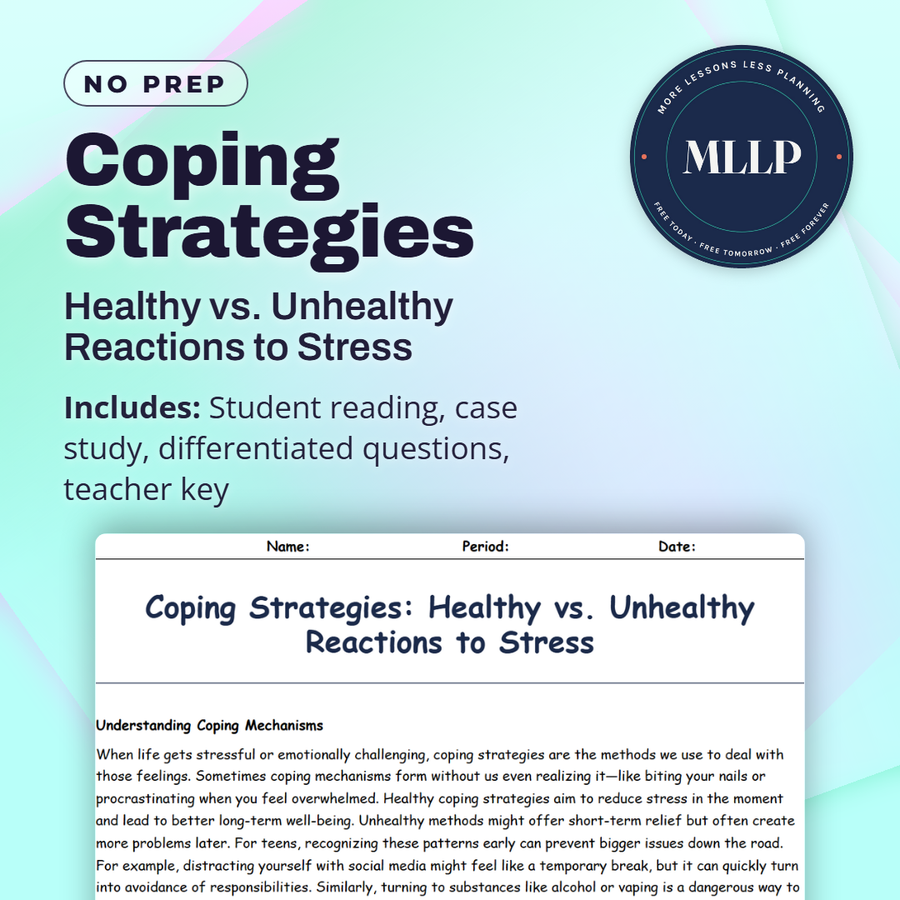
Coping Strategies: Healthy vs. Unhealthy Reactions to Stress
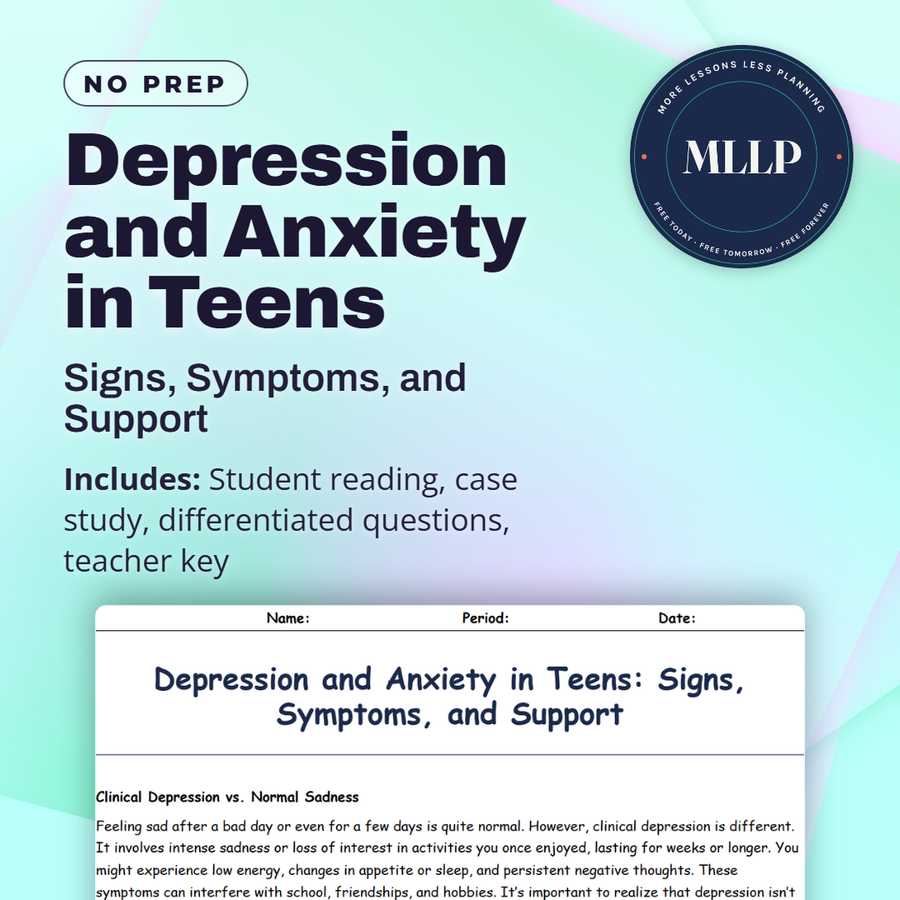
Depression and Anxiety in Teens: Signs, Symptoms, and Support
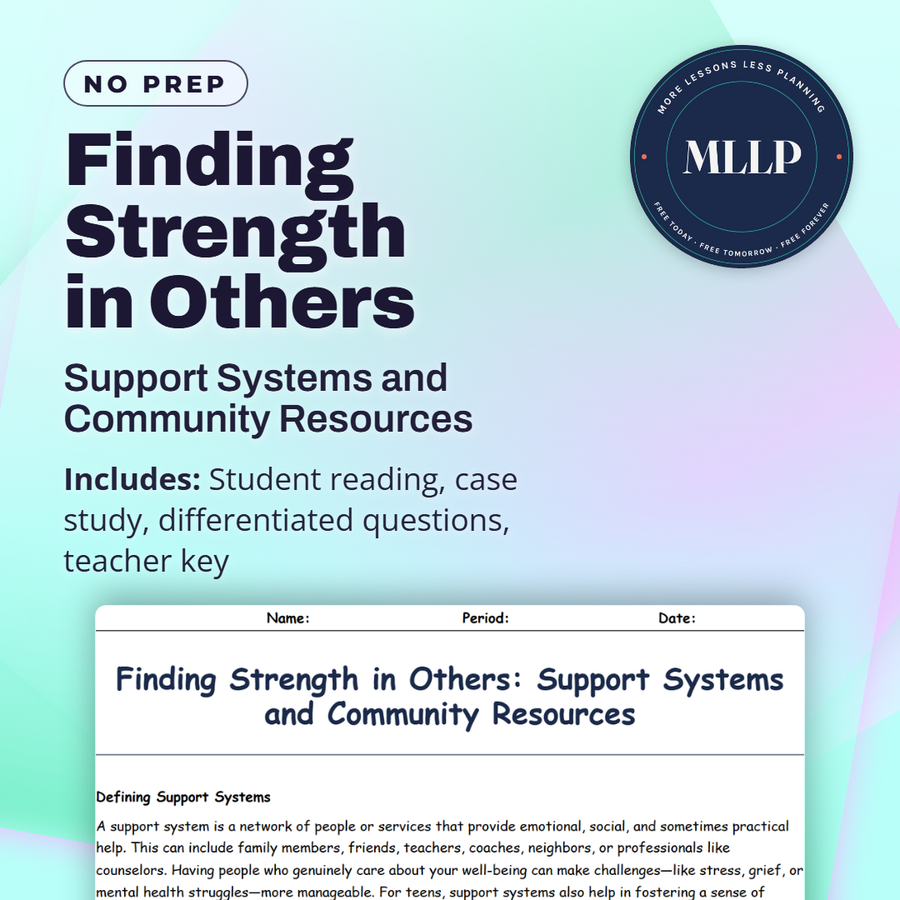
Finding Strength in Others: Support Systems and Community Resources
Getting Help: When to Reach Out and Who to Turn To
Grief and Loss: Helping Teens Understand and Heal
Mindfulness for Teens: Simple Habits for Mental Wellness
Every lesson on this site is free to download and use. If one of them saved you a prep period, you can chip in a few bucks toward my three kids' daycare fund. That's genuinely where tips go.