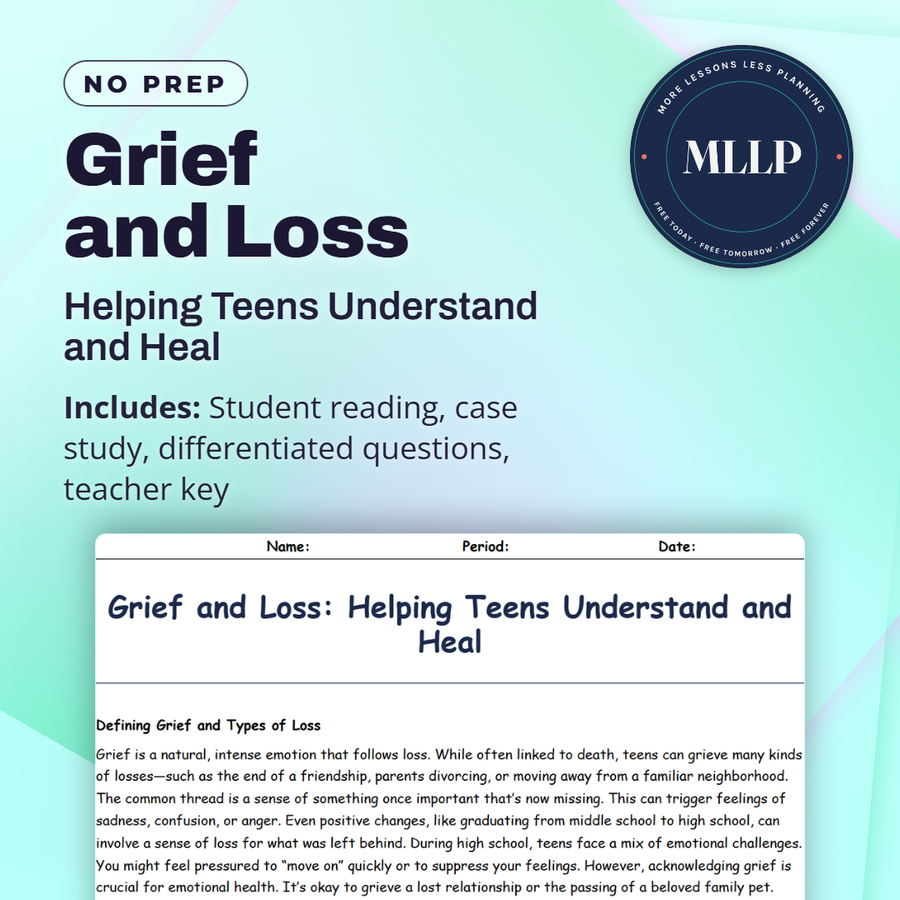
Grief and Loss: Helping Teens Understand and Heal
Quality reviewed September 2026
Facts verified September 21, 2026
- Subject
- Career & Life Skills
- Grades
- Grades 9-12
- Length
- 7-page student worksheet
- Time
- About one 50-minute class period
- Great for
- Sub plans and independent work
- Includes
- Reading passage, comprehension questions + full answer key
- Format
- Print-and-go PDF
What students do
- Match five grief-related terms, from denial to acceptance, to what each stage actually looks like
- Fill in blanks about types of loss, writing letters, and feeling conflicting emotions
- Answer multiple-choice questions on what grief is and what it means to laugh while still grieving
- Write short answers on guilt over moments of joy, the value of positive memories, and signs professional help is needed
What it covers
- How grief applies to more than death, including breakups, divorce, and moving away
- The five stages of grief laid out in a table with typical feelings and possible actions for each
- A case study on Tariq, who goes numb and snaps at friends after his grandfather dies, then reconnects by writing in his grandfather's old journal
Start reading this worksheet
Defining Grief and Types of Loss
Grief is a natural, intense emotion that follows loss. While often linked to death, teens can grieve many kinds of losses, such as the end of a friendship, parents divorcing, or moving away from a familiar neighborhood. The common thread is a sense of something once important that’s now missing. This can trigger feelings of sadness, confusion, or anger. Even positive changes, like graduating from middle school to high school, can involve a sense of loss for what was left behind. During high school, teens face a mix of emotional challenges. You might feel pressured to “move on” quickly or to suppress your feelings. However, acknowledging grief is crucial for emotional health. It’s okay to grieve a lost relationship or the passing of a beloved family pet. Each type of loss can impact you differently, but the principles for healing often overlap: allowing yourself to feel, sharing with supportive individuals, and giving yourself time to adjust to a new reality.
Explaining the Stages of Grief
A popular way to describe grief is the five stages model: denial, anger, bargaining, depression, and acceptance. While it can be helpful to name these stages, real-life grief doesn’t always follow a neat sequence. You might feel anger one day, acceptance the next, and then slip back into sadness. Everyone’s experience is unique, so comparing yourself to others can lead to misunderstandings. Teens sometimes believe they must behave a certain way to show they’re grieving “correctly.” You might feel pressure to cry more or less than you actually do. Understanding that grief is personal helps you be patient with yourself. It can also prevent the guilt that arises if you haven’t cried yet or if you feel okay one day but deeply sad the next.
Healthy Coping and Support Strategies
Talking openly about your grief can ease its intensity. Whether it’s a friend, parent, counselor, or online support group, sharing memories or expressing your confusion can help you organize your thoughts. Creative outlets like art, music, or writing can also be therapeutic. If you lost a loved one, writing a letter to that person, even if they can’t read it, can bring a sense of closure or continued connection. Self-care is another crucial part of healing. Ensuring you eat well, get enough sleep, and engage in enjoyable activities doesn’t mean you’re forgetting the loss. Instead, it helps maintain physical and emotional strength. In some cases, professional help may be necessary, especially if grief becomes overwhelming, leading to extended periods of depression or isolation.
Like what you read? The full reading, the case study, and every question set are in the free download below, along with the answer key.
Why this matters
A student who lost a grandparent last spring and one who is grieving a friendship that ended over the summer are working through the same emotional territory, even though nobody tells the second student their loss counts. I use this reading to give both of them the same permission: that laughing at lunch a week after a loss is not betrayal, it is a normal, documented part of healing.
If you or someone you know is struggling, call or text 988 (Suicide & Crisis Lifeline, US) or talk to a trusted adult right away.
From one teacher to another
Most students assume this reading is only about death until the second paragraph, where it names divorce, a friend group falling apart, and moving away as losses that deserve the same grief. Tariq's case study makes the stages feel less like a checklist and more like something messy: he goes numb after his grandfather dies, starts snapping at friends who try to help, and eventually finds his way back through his grandfather's old journal. The passages are careful to say the five stages do not run in a neat order, which matters because a lot of students expect to feel one thing at a time and get confused when they don't. There's also a direct answer to the guilt some students feel when they catch themselves laughing a week after a loss.
What you get
Download
Where should I send the next one?
Everything here is free and it stays that way. Leave your email and I'll send you the new lessons as they go up. You can unsubscribe from any one of them.
Related resources
Coping Strategies: Healthy vs. Unhealthy Reactions to Stress
Depression and Anxiety in Teens: Signs, Symptoms, and Support
Finding Strength in Others: Support Systems and Community Resources
Getting Help: When to Reach Out and Who to Turn To
Mindfulness for Teens: Simple Habits for Mental Wellness
Self-Esteem and Self-Image: Building Confidence in a Social World
Every lesson on this site is free to download and use. If one of them saved you a prep period, you can chip in a few bucks toward my three kids' daycare fund. That's genuinely where tips go.