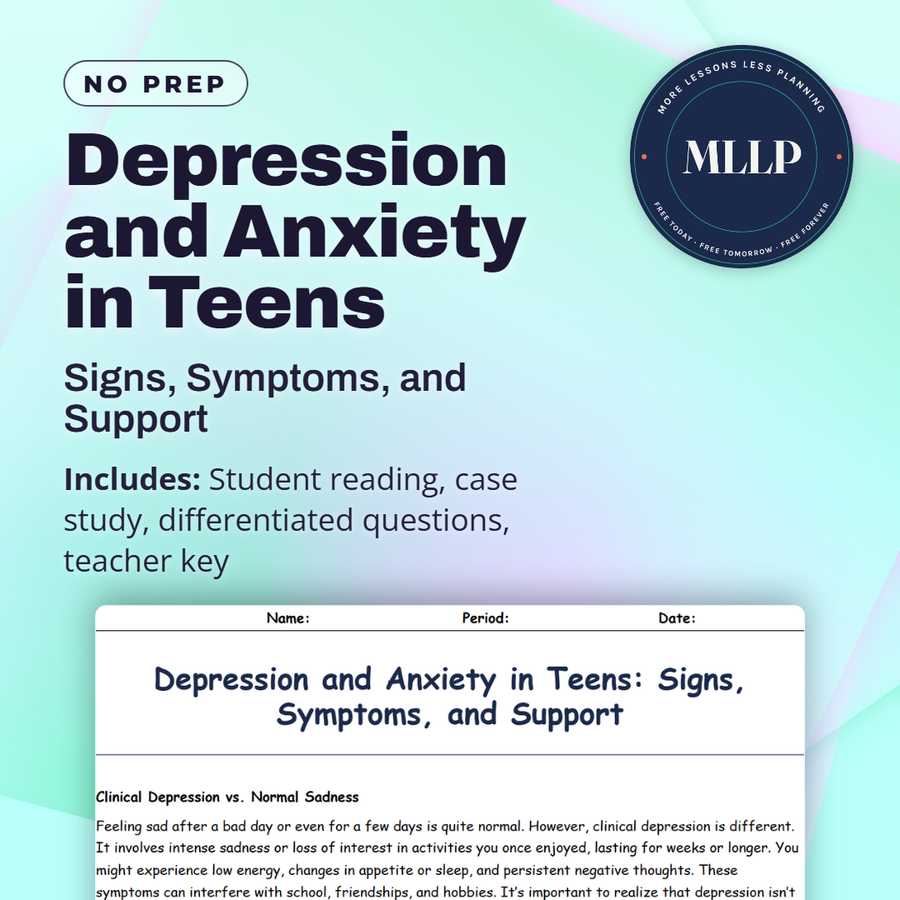
Depression and Anxiety in Teens: Signs, Symptoms, and Support
Quality reviewed September 2026
Facts verified September 21, 2026
- Subject
- Career & Life Skills
- Grades
- Grades 9-12
- Length
- 7-page student worksheet
- Time
- About one 50-minute class period
- Great for
- Sub plans and independent work
- Includes
- Reading passage, comprehension questions + full answer key
- Format
- Print-and-go PDF
What students do
- Match five terms, from clinical depression to myth, to their precise definitions
- Fill in blanks about anxiety symptoms, the support cycle, and depression as a medical condition
- Answer multiple-choice questions on what separates depression from a bad week and stress from anxiety
- Write short answers on why someone who seems fine might be hiding a struggle and what a first step toward help looks like
What it covers
- How clinical depression differs from ordinary sadness, and how anxiety differs from everyday stress
- A table comparing four conditions, depression, generalized anxiety, panic disorder, and social anxiety, by their key indicators and possible support
- A case study on Anya, the "life of the party" who hides panic attacks until a friend notices she has stopped showing up
Start reading this worksheet
Clinical Depression vs. Normal Sadness
Feeling sad after a bad day or even for a few days is quite normal. However, clinical depression is different. It involves intense sadness or loss of interest in activities you once enjoyed, lasting for weeks or longer. You might experience low energy, changes in appetite or sleep, and persistent negative thoughts. These symptoms can interfere with school, friendships, and hobbies. It’s important to realize that depression isn’t just a mood you can snap out of. It’s a complex mental health condition that may require professional support. Teens sometimes wonder if they’re just “being dramatic” or if what they feel is legitimate. Remember that depression doesn’t discriminate based on age, achievements, or social status. It can happen even when you seem to have everything going for you. Early recognition and proper intervention can prevent the condition from worsening.
Anxiety vs. Stress
Stress often has a clear cause—a deadline, a test, or a big event. Once that event passes, stress levels typically decrease. Anxiety, on the other hand, can persist and may arise without a specific trigger. It often involves excessive worry, fear, or a constant sense of unease. Physical symptoms like a racing heart, sweaty palms, or shortness of breath can accompany anxiety. Teen anxiety can stem from multiple factors: academic pressure, social dynamics, or personal insecurities. Sometimes it becomes so intense that it disrupts daily activities—avoiding school, skipping social events, or lying awake at night with racing thoughts. Recognizing that what you’re feeling may be anxiety rather than ordinary stress is key to seeking the right help.
Warning Signs and Daily Life Impact
Both depression and anxiety can show up in subtle ways. Maybe you’re withdrawing from friends or losing interest in a favorite hobby. Perhaps you feel constantly on edge, have sudden mood swings, or struggle to focus in class. Physical complaints like unexplained stomachaches or headaches could also signal underlying emotional distress. Over time, these conditions can seriously affect daily life. School performance may drop if you can’t concentrate or motivate yourself to complete assignments. Relationships might suffer because you feel misunderstood or become irritable. You might even engage in risky behaviors just to cope. Recognizing changes in how you feel, think, or behave is crucial in deciding when to reach out for assistance.
Like what you read? The full reading, the case study, and every question set are in the free download below, along with the answer key.
Why this matters
The kid who never stops joking is sometimes the one working hardest to keep a room from noticing something is wrong, and that is the exact gap this reading is built to close. I have had students tell me afterward that a friend's constant humor finally made sense as something to check on, rather than something to enjoy without a second thought.
If you or someone you know is struggling, call or text 988 (Suicide & Crisis Lifeline, US) or talk to a trusted adult right away.
From one teacher to another
The reading opens by drawing a hard line between a rough week and clinical depression, then does the same for stress and anxiety, and that distinction alone clears up more confusion in my classroom than any lecture I could give. Anya's case study carries most of the emotional weight: a student everyone assumes is fine, having panic attacks she hides from her closest friends until one of them finally checks in. I like that the passages name specific physical symptoms, a racing heart, sweaty palms, disrupted sleep, instead of leaving anxiety as a vague feeling. By the final section, students are debunking myths about depression and anxiety alongside facts about genetics and environment.
What you get
Download
Where should I send the next one?
Everything here is free and it stays that way. Leave your email and I'll send you the new lessons as they go up. You can unsubscribe from any one of them.
Related resources
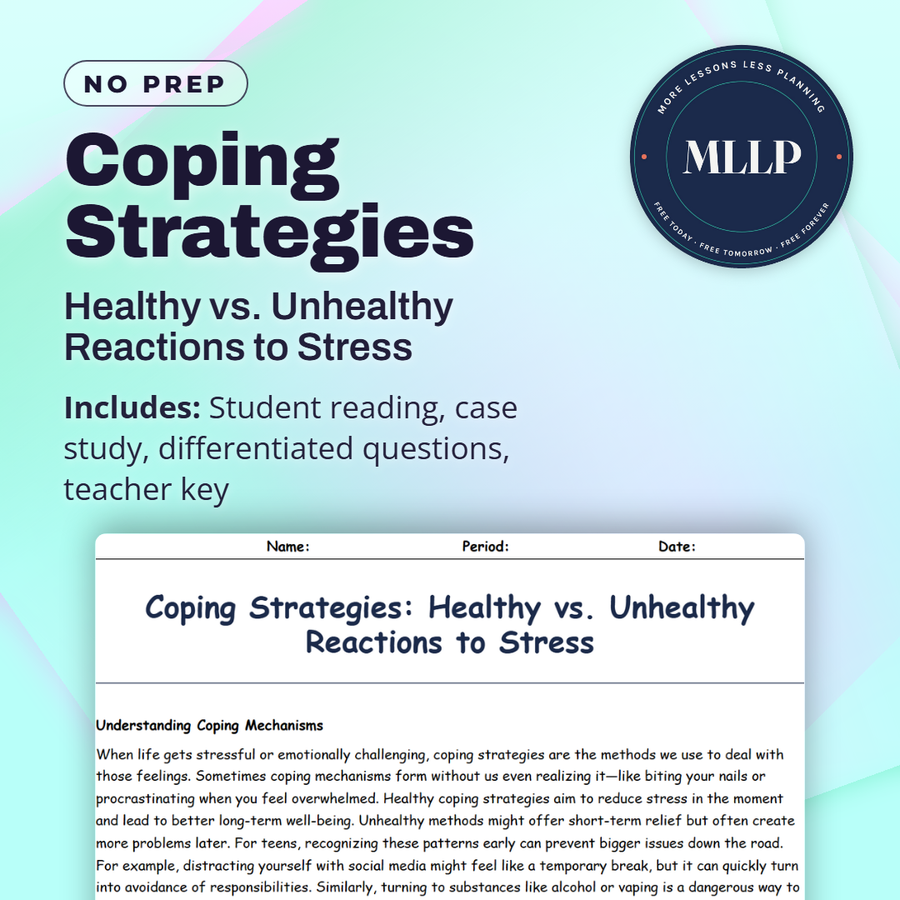
Coping Strategies: Healthy vs. Unhealthy Reactions to Stress
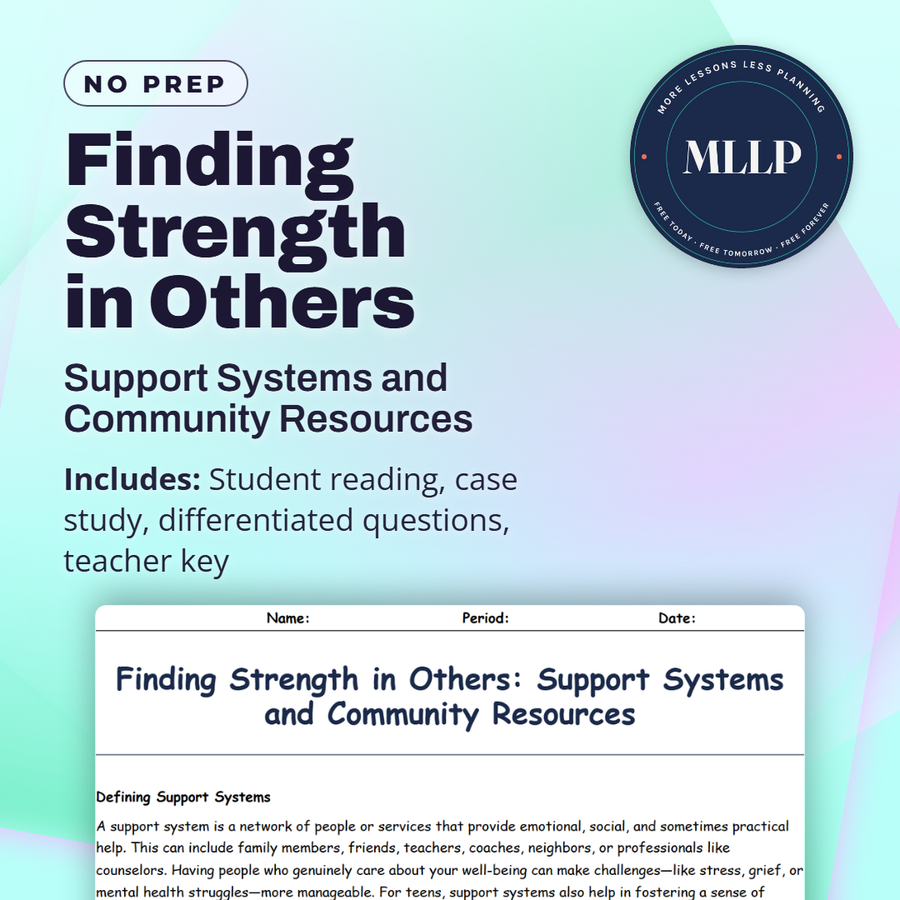
Finding Strength in Others: Support Systems and Community Resources
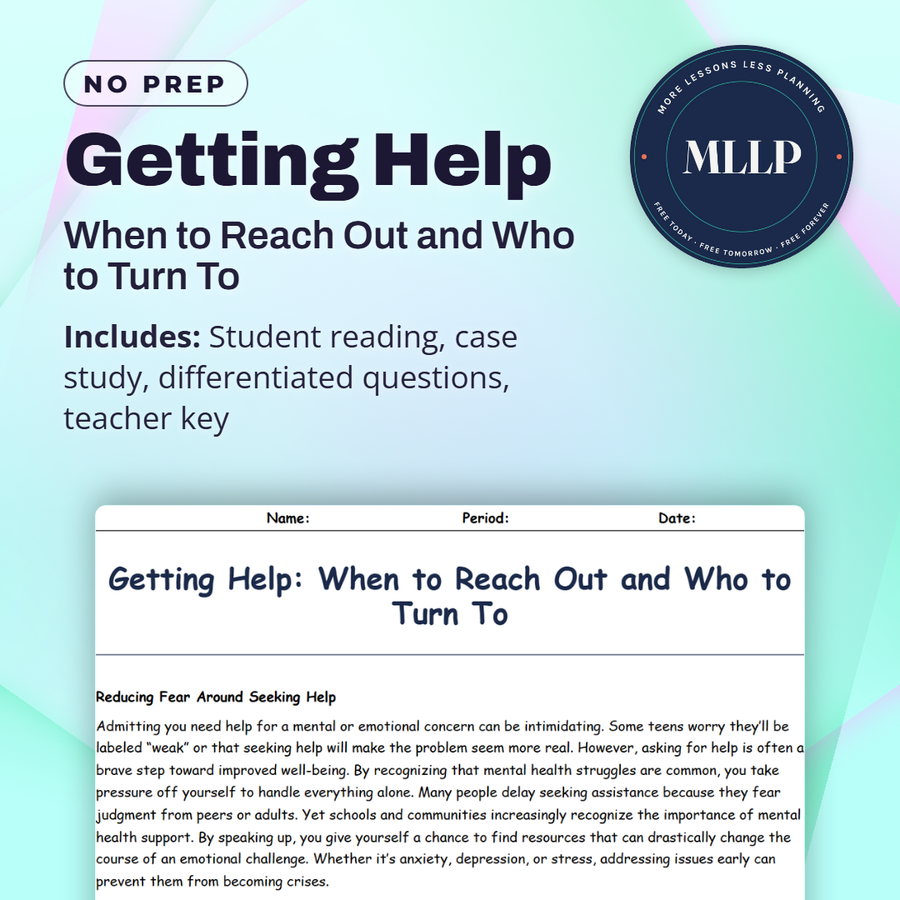
Getting Help: When to Reach Out and Who to Turn To
Grief and Loss: Helping Teens Understand and Heal
Mindfulness for Teens: Simple Habits for Mental Wellness
Self-Esteem and Self-Image: Building Confidence in a Social World
Every lesson on this site is free to download and use. If one of them saved you a prep period, you can chip in a few bucks toward my three kids' daycare fund. That's genuinely where tips go.