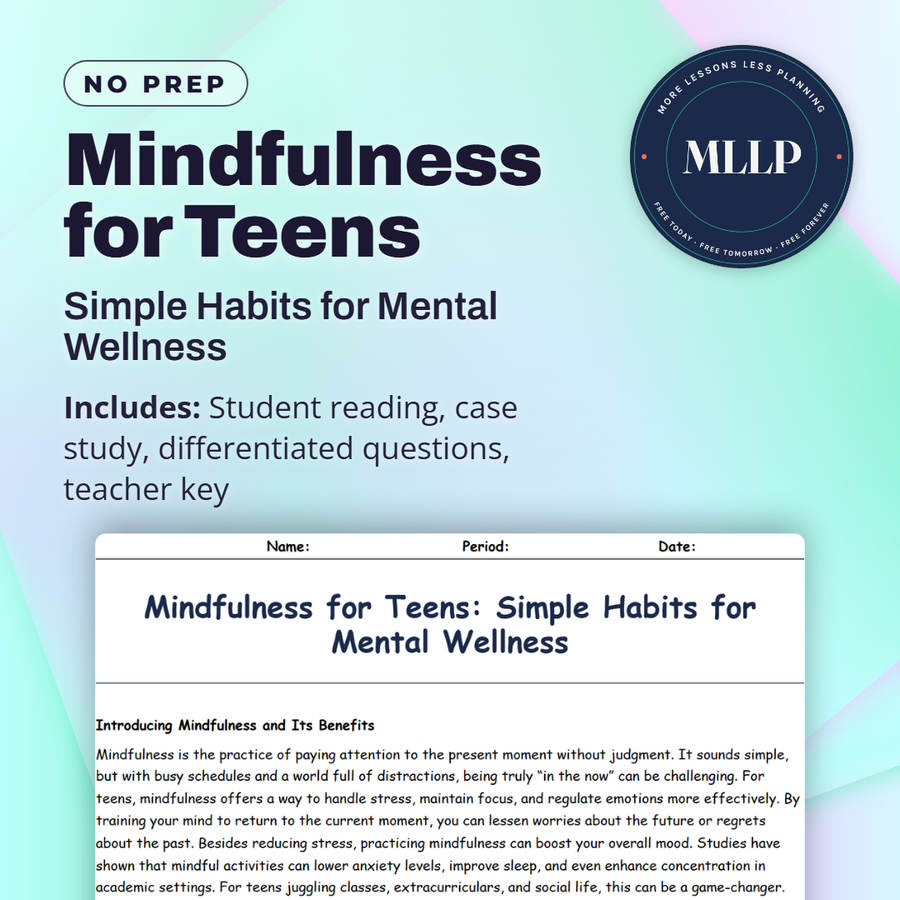
Mindfulness for Teens: Simple Habits for Mental Wellness
Quality reviewed September 2026
Facts verified September 21, 2026
- Subject
- Career & Life Skills
- Grades
- Grades 9-12
- Length
- 7-page student worksheet
- Time
- About one 50-minute class period
- Great for
- Sub plans and independent work
- Includes
- Reading passage, comprehension questions + full answer key
- Format
- Print-and-go PDF
What students do
- Match five mindfulness terms, from body scan to grounding, to what each technique actually has you do
- Fill in blanks about short mindfulness sessions, deep breathing, and concentration
- Answer multiple-choice questions on what mindfulness is and how it can affect focus
- Write short answers on gratitude checks, the benefits of a body scan, and why mindfulness is not about shutting thoughts off
What it covers
- Five specific mindfulness techniques, deep breathing, body scan, grounding, journaling, and a daily gratitude check
- How mindfulness affects both academic focus and emotional regulation
- A case study on Carmen, whose packed schedule and stress-related illness push her to try short breathing exercises and a nightly gratitude note
Start reading this worksheet
Introducing Mindfulness and Its Benefits
Mindfulness is the practice of paying attention to the present moment without judgment. It sounds simple, but with busy schedules and a world full of distractions, being truly “in the now” can be challenging. For teens, mindfulness offers a way to handle stress, maintain focus, and regulate emotions more effectively. By training your mind to return to the current moment, you can lessen worries about the future or regrets about the past. Besides reducing stress, practicing mindfulness can boost your overall mood. Studies have shown that mindful activities can lower anxiety levels, improve sleep, and even enhance concentration in academic settings. For teens juggling classes, extracurriculars, and social life, this can be a turning point. Mindfulness isn’t about emptying your mind of thoughts; it’s about recognizing them without getting carried away or judging yourself for having them.
Easy Mindfulness Practices
One of the simplest mindfulness techniques is deep breathing. You can do it almost anywhere: before a test, after an argument, or even while waiting in line. Close your eyes (if you’re comfortable), inhale slowly, and count to four. Hold for a moment, then exhale to the count of four. Another approach is a quick body scan: shift your attention gradually from your head down to your toes, noticing any tension and releasing it. Grounding exercises are also popular. Pick a color or object (like “blue”) and find five things around you that are blue. This practice pulls your focus into your immediate environment, distracting you from anxious thoughts. Alternatively, journaling can serve as a form of mindfulness, allowing you to note your feelings and observations without judgment. Consistency is key; even a few minutes a day can make a noticeable difference over time.
Making Mindfulness Part of a Routine
Like any habit, mindfulness works best when practiced regularly. You don’t need to set aside hours each day. Short, frequent sessions can be more effective than an occasional long session. For example, you might dedicate five minutes in the morning and five minutes before bed to mindful breathing or reflection. You can also integrate mindfulness into everyday activities, like consciously focusing on your senses while eating lunch or walking to class. Reflection is crucial. After a week or two, evaluate whether you feel calmer or more focused. If certain exercises resonate with you (say, journaling), consider doing them more often. For many teens, mindfulness becomes a go-to tool during stressful exams, auditions, or personal challenges. By building the habit now, you’ll have a resource to lean on throughout your life.
Like what you read? The full reading, the case study, and every question set are in the free download below, along with the answer key.
Why this matters
Swim practice before school, five classes, a part-time job after: Carmen's schedule in the case study is not an exaggeration for a lot of students in this building, and the reading's answer is not to cut anything from that schedule but to add two minutes of breathing before it starts. I ask students to actually try the five-senses grounding exercise once before their next test, because the technique only means something once they have felt it work.
If you or someone you know is struggling, call or text 988 (Suicide & Crisis Lifeline, US) or talk to a trusted adult right away.
From one teacher to another
Five minutes of deep breathing before a test does not sound like much, but that's the entry point the reading uses before building toward body scans, grounding exercises, and a nightly gratitude check. Carmen's case study grounds all of it in a real schedule: swim practice, advanced classes, and weekend volunteering that left her running on autopilot until a stress-related illness pushed her to actually try the techniques. I like that the reading treats mindfulness as trainable in short, frequent doses rather than one long session, since that's realistic for a student's actual day. It also pushes back on the idea that mindfulness means clearing your mind completely, which is where a lot of my students get stuck before they even start.
What you get
Download
Where should I send the next one?
Everything here is free and it stays that way. Leave your email and I'll send you the new lessons as they go up. You can unsubscribe from any one of them.
Related resources
Coping Strategies: Healthy vs. Unhealthy Reactions to Stress
Depression and Anxiety in Teens: Signs, Symptoms, and Support
Finding Strength in Others: Support Systems and Community Resources
Getting Help: When to Reach Out and Who to Turn To
Grief and Loss: Helping Teens Understand and Heal
Self-Esteem and Self-Image: Building Confidence in a Social World
Every lesson on this site is free to download and use. If one of them saved you a prep period, you can chip in a few bucks toward my three kids' daycare fund. That's genuinely where tips go.