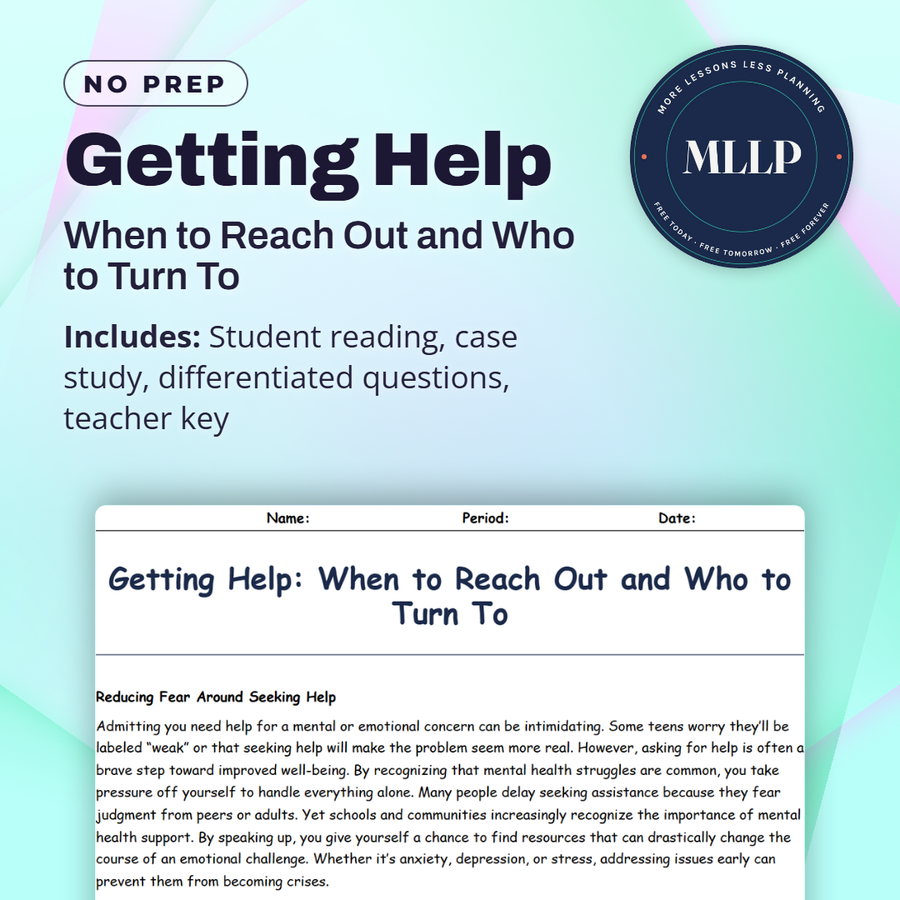
Getting Help: When to Reach Out and Who to Turn To
Quality reviewed September 2026
Facts verified September 21, 2026
- Subject
- Career & Life Skills
- Grades
- Grades 9-12
- Length
- 6-page student worksheet
- Time
- About one 50-minute class period
- Great for
- Sub plans and independent work
- Includes
- Reading passage, comprehension questions + full answer key
- Format
- Print-and-go PDF
What students do
- Match five terms, from hotlines to help-seeking anxiety, to what each actually means for a teen deciding whether to ask for help
- Fill in blanks about stigma, trusted adults, and courage
- Answer multiple-choice questions on what counts as a strong reason to reach out and what a trusted adult can offer
- Write short answers on reframing help-seeking as strength and naming a practical first step
What it covers
- Concrete signs it is time to reach out, from disrupted sleep to persistent sadness, laid out as a checklist
- A table of four help-seeking paths, trusted adult, school counselor, hotline, and therapy, with what each one offers
- A case study on Miguel, who breaks down crying over college and money worries before a former teacher points him to the school counselor
Start reading this worksheet
Reducing Fear Around Seeking Help
Admitting you need help for a mental or emotional concern can be intimidating. Some teens worry they’ll be labeled “weak” or that seeking help will make the problem seem more real. However, asking for help is often a brave step toward improved well-being. By recognizing that mental health struggles are common, you take pressure off yourself to handle everything alone. Many people delay seeking assistance because they fear judgment from peers or adults. Yet schools and communities increasingly recognize the importance of mental health support. By speaking up, you give yourself a chance to find resources that can drastically change the course of an emotional challenge. Whether it’s anxiety, depression, or stress, addressing issues early can prevent them from becoming crises.
Trusted Adults, School Counselors, and Hotlines
One of the best places to start is with a trusted adult (a family member, coach, teacher, or neighbor who has shown genuine care for you). They can offer guidance, share personal experiences, or help you find professional services. School counselors are also vital. They’re trained to deal with academic, social, and emotional issues and can connect you with additional resources if needed. For immediate concerns, especially if you’re in crisis, hotlines can be a lifeline. Many offer text or chat options, so you don’t even have to speak on the phone if that makes you uncomfortable. Hotlines provide anonymous, 24/7 support, ensuring there’s always someone available to listen.
When It’s Time to Reach Out
You might wonder, “How do I know if my feelings are serious enough to seek help?” If persistent sadness, overwhelming anxiety, or any concerning emotion is interfering with daily life (sleep, appetite, school performance, relationships), it’s time to reach out. Another clear sign is if you’re thinking about harming yourself or others. Even if you’re just unsure, asking a trusted adult or mental health professional for a quick assessment is safer than waiting to see if things get worse. It’s also important to note that mental health doesn’t always follow a clear pattern. Feelings can come in waves. You might have “good days” and “bad days,” but if the bad days start to overshadow the good, consider seeking a professional opinion. Early intervention often leads to faster, more effective solutions.
Like what you read? The full reading, the case study, and every question set are in the free download below, along with the answer key.
Why this matters
Junior and senior year stack college deadlines, financial aid forms, and family pressure on top of whatever else a student is already carrying, which is exactly the mix that pushed Miguel to the edge in the case study. I want students to leave this lesson with the four resources on that table memorized, trusted adult, school counselor, hotline, therapy, because the moment they need one is rarely a moment they feel like doing research.
If you or someone you know is struggling, call or text 988 (Suicide & Crisis Lifeline, US) or talk to a trusted adult right away.
From one teacher to another
How do you know if what you're feeling is serious enough to ask for help? That's the exact question the reading puts to students, and it answers it with specifics: disrupted sleep, dropping grades, thoughts of harming yourself, rather than a vague sense that something's off. Miguel's case study follows a student who avoids talking about college and money stress until he breaks down crying one night, then finds that a single conversation with a former teacher is what gets him to the counselor's office. The reading spends real time knocking down the idea that asking for help is weakness, pointing to athletes and high achievers who use therapy too.
What you get
Download
Where should I send the next one?
Everything here is free and it stays that way. Leave your email and I'll send you the new lessons as they go up. You can unsubscribe from any one of them.
Related resources
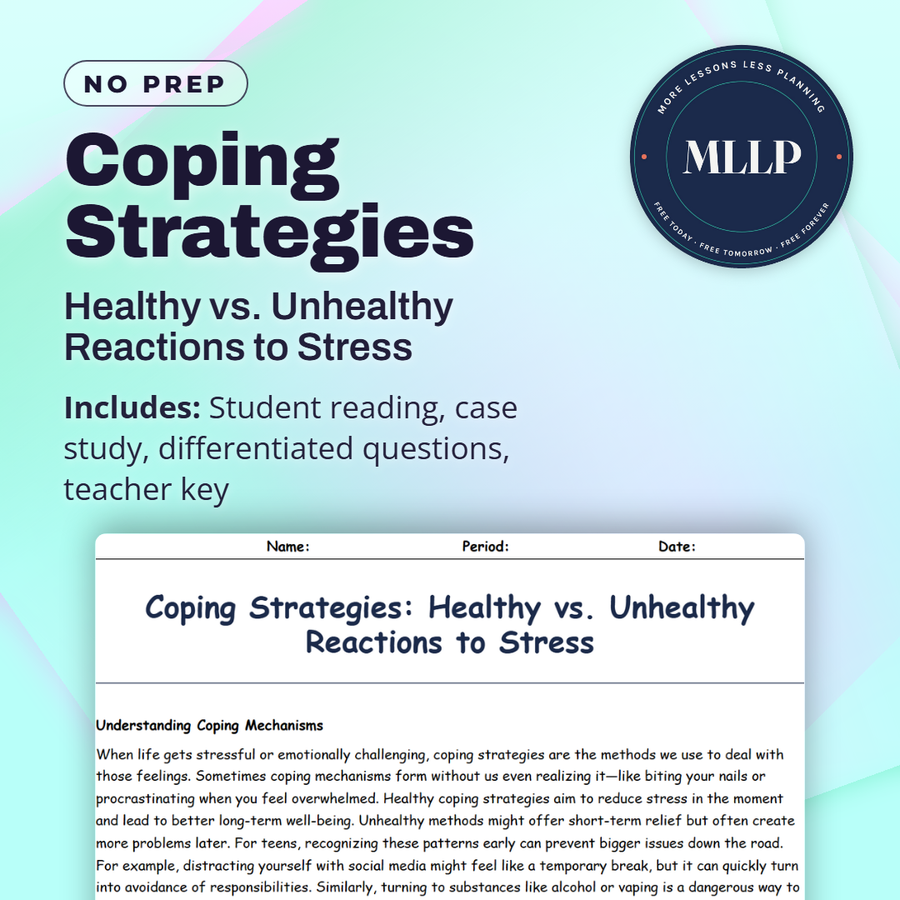
Coping Strategies: Healthy vs. Unhealthy Reactions to Stress
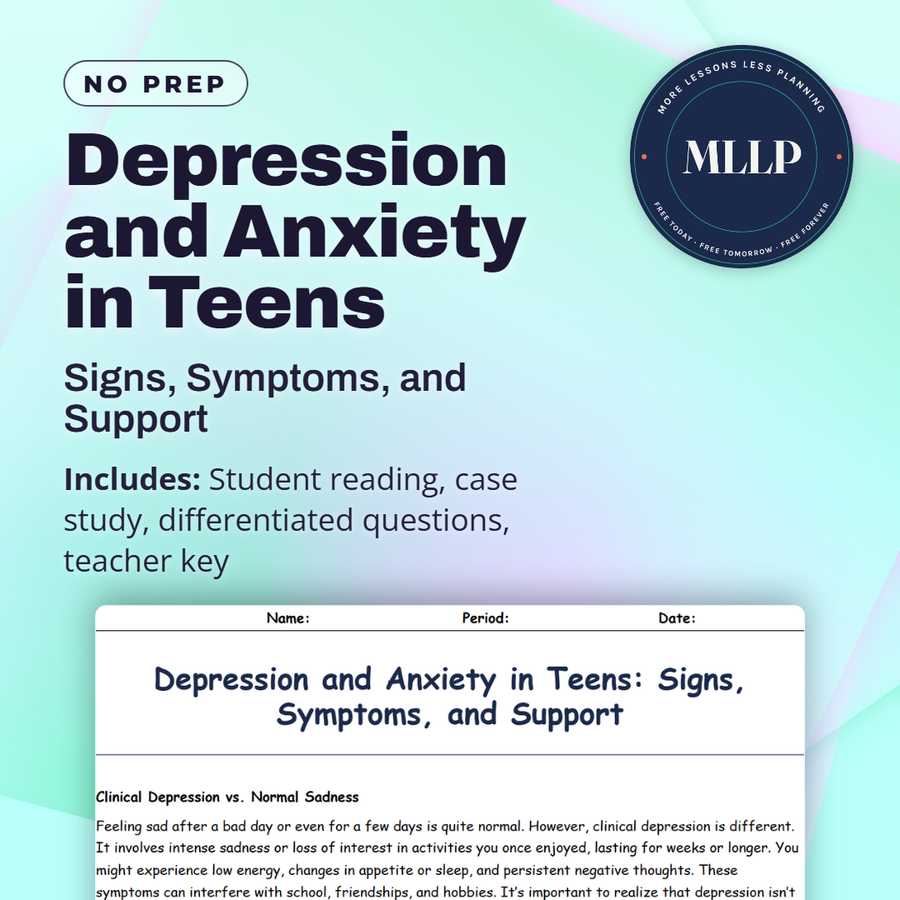
Depression and Anxiety in Teens: Signs, Symptoms, and Support
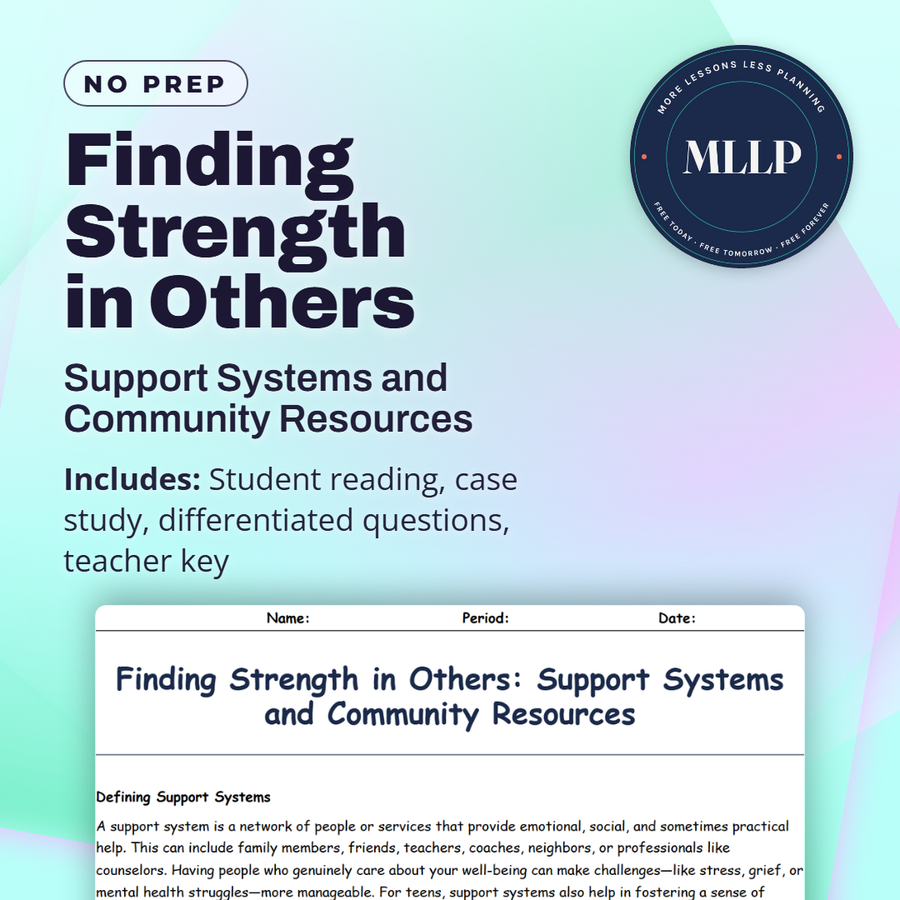
Finding Strength in Others: Support Systems and Community Resources
Grief and Loss: Helping Teens Understand and Heal
Mindfulness for Teens: Simple Habits for Mental Wellness
Self-Esteem and Self-Image: Building Confidence in a Social World
Every lesson on this site is free to download and use. If one of them saved you a prep period, you can chip in a few bucks toward my three kids' daycare fund. That's genuinely where tips go.