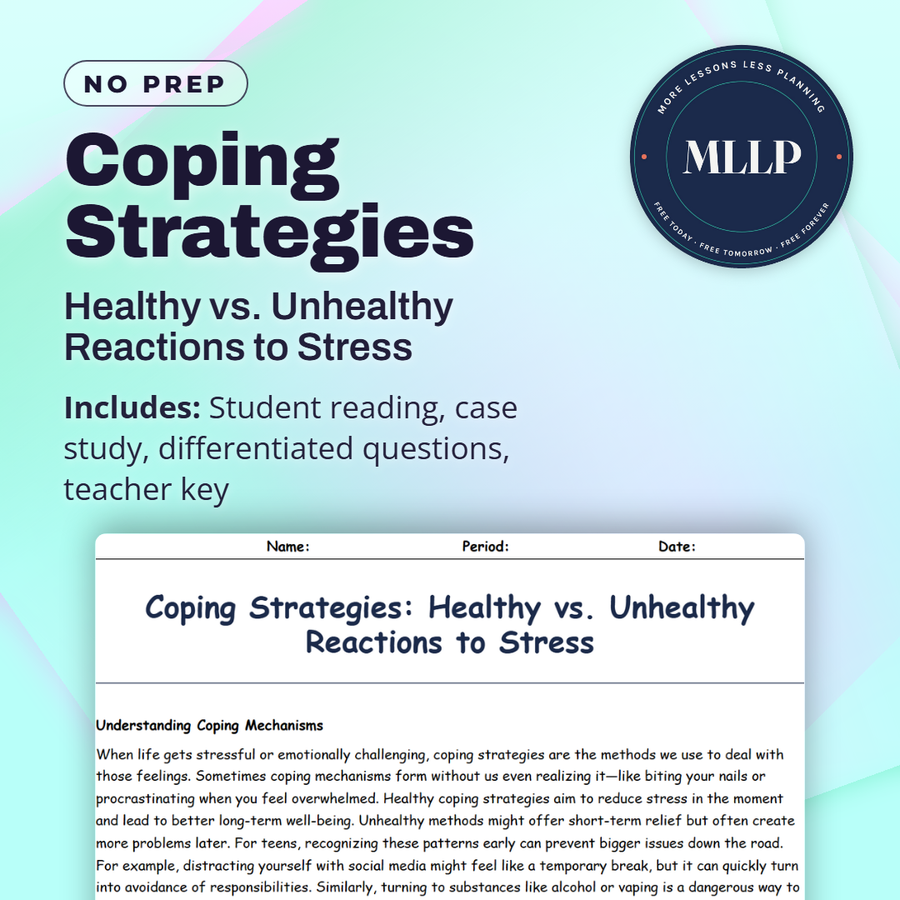
Coping Strategies: Healthy vs. Unhealthy Reactions to Stress
Quality reviewed September 2026
Facts verified September 21, 2026
- Subject
- Career & Life Skills
- Grades
- Grades 9-12
- Length
- 7-page student worksheet
- Time
- About one 50-minute class period
- Great for
- Sub plans and independent work
- Includes
- Reading passage, comprehension questions + full answer key
- Format
- Print-and-go PDF
What students do
- Match five coping-related terms, from emotional regulation to substance abuse, to what each one actually does under stress
- Fill in blanks about healthy coping, deep breathing, and self-reflection
- Answer multiple-choice questions that separate healthy responses to stress from ones that only look like they help
- Write short answers on why unhealthy coping feels appealing at first and what signals a strategy has stopped working
What it covers
- The difference between healthy coping, like journaling and exercise, and unhealthy coping, like avoidance and substance use
- A comparison table ranking five specific coping strategies as healthy or unhealthy and naming their effect
- A case study on Rohan, whose nightly binge-watching to dodge homework backfires until a counselor helps him trade it for breathing exercises and scheduled breaks
Start reading this worksheet
Understanding Coping Mechanisms
When life gets stressful or emotionally challenging, coping strategies are the methods we use to deal with those feelings. Sometimes coping mechanisms form without us even realizing it, like biting your nails or procrastinating when you feel overwhelmed. Healthy coping strategies aim to reduce stress in the moment and lead to better long-term well-being. Unhealthy methods might offer short-term relief but often create more problems later. For teens, recognizing these patterns early can prevent bigger issues down the road. For example, distracting yourself with social media might feel like a temporary break, but it can quickly turn into avoidance of responsibilities. Similarly, turning to substances like alcohol or vaping is a dangerous way to escape stress, potentially leading to addiction or health complications. Understanding how coping mechanisms develop (often from a need to self-soothe or regain control) allows you to assess which ones help you grow and which hold you back.
Healthy vs. Unhealthy Coping
Healthy coping can take many forms: journaling your thoughts, talking to a trusted friend, exercising, or practicing relaxation techniques. These activities acknowledge your stress while aiming to resolve or reduce its impact in a constructive way. They help you process emotions, build resilience, and often improve your relationships. For instance, if you’re upset about a conflict with a friend, taking a walk to clear your head and then calmly discussing the issue can lead to resolution and deeper understanding. In contrast, unhealthy coping often involves running away from the root problem. This can include constant avoidance, substance abuse, or taking out anger on others. While these tactics may provide a quick distraction or sense of release, they rarely solve the underlying issue and can damage your physical and emotional health. Being aware of the difference helps you make better choices when stress hits.
Realistic, Healthy Coping Practices
Healthy coping doesn’t have to be complicated. Small actions like deep breathing during a stressful test or writing down three things you’re grateful for each day can make a real difference. Physical activities, from yoga to biking, help burn off tension. If you enjoy creative outlets, painting or playing an instrument can serve as both a distraction and an emotional release. Communication is also key. Sharing your worries with a friend, counselor, or family member can offer a fresh perspective and keep problems from festering in your mind. Even scheduling short breaks for fun activities (like reading a chapter of a favorite book or playing a quick game) can break the cycle of stress. The main point is to find strategies that are sustainable, meaningful, and don’t harm yourself or others.
Like what you read? The full reading, the case study, and every question set are in the free download below, along with the answer key.
Why this matters
Every student in that room already has a coping strategy running on autopilot, whether it is scrolling a phone at 1 a.m. or going quiet for the rest of the night after a bad grade. Naming the pattern out loud, in class, is the only way I have found to get a fifteen-year-old to notice which habit is actually adding stress back into their week instead of relieving it.
If you or someone you know is struggling, call or text 988 (Suicide & Crisis Lifeline, US) or talk to a trusted adult right away.
From one teacher to another
Nail biting, procrastinating, doom scrolling: I ask my students to name their own go-to stress response before we even open the reading, since most of them do it without noticing. The passages trace how a coping habit can start as self-soothing and quietly turn into avoidance, using vaping and social media binges as the two examples my students recognize fastest. Rohan's case study gives them a concrete before-and-after: late-night TV marathons that felt like relief until his grades slipped, followed by a counselor's plan built around short breaks and breathing exercises. The comparison table sets up the vocabulary and practice work that follows.
What you get
Download
Where should I send the next one?
Everything here is free and it stays that way. Leave your email and I'll send you the new lessons as they go up. You can unsubscribe from any one of them.
Related resources
Depression and Anxiety in Teens: Signs, Symptoms, and Support
Finding Strength in Others: Support Systems and Community Resources
Getting Help: When to Reach Out and Who to Turn To
Grief and Loss: Helping Teens Understand and Heal
Mindfulness for Teens: Simple Habits for Mental Wellness
Self-Esteem and Self-Image: Building Confidence in a Social World
Every lesson on this site is free to download and use. If one of them saved you a prep period, you can chip in a few bucks toward my three kids' daycare fund. That's genuinely where tips go.