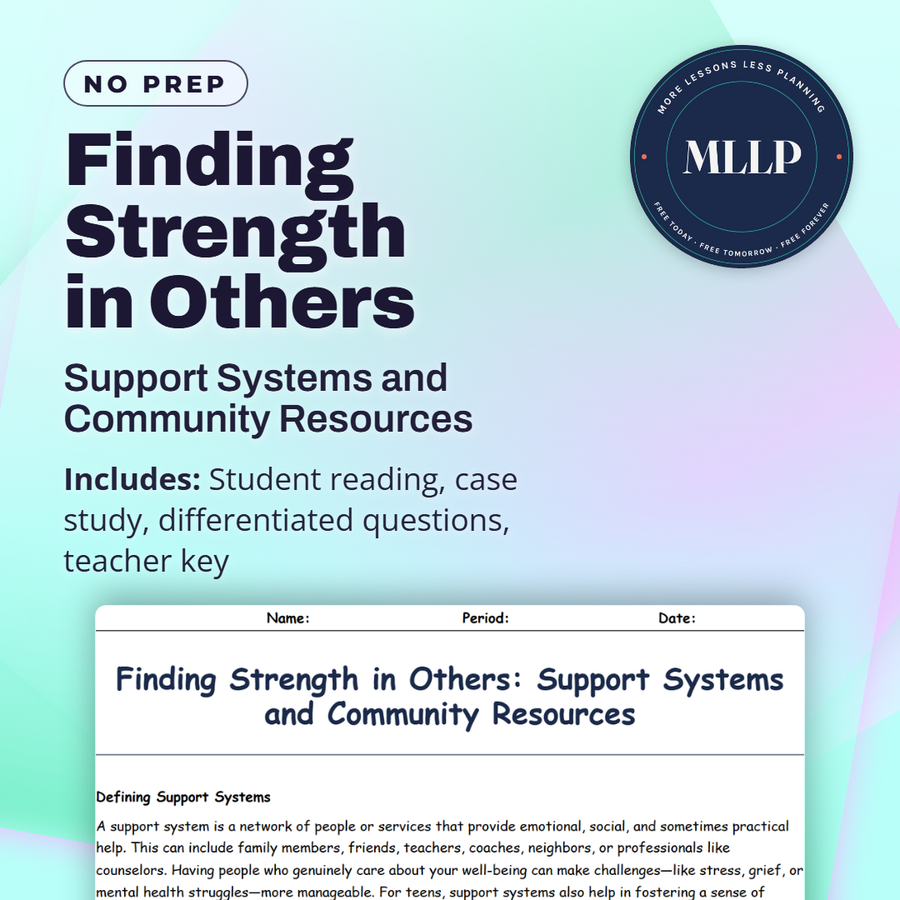
Finding Strength in Others: Support Systems and Community Resources
Quality reviewed September 2026
Facts verified September 21, 2026
- Subject
- Career & Life Skills
- Grades
- Grades 9-12
- Length
- 6-page student worksheet
- Time
- About one 50-minute class period
- Great for
- Sub plans and independent work
- Includes
- Reading passage, comprehension questions + full answer key
- Format
- Print-and-go PDF
What students do
- Match five relationship terms, from accountability to isolation, to what each looks like in a real support system
- Fill in blanks about community centers, clubs, and active listening
- Answer multiple-choice questions on what counts as a support system and how relationships protect mental health
- Write short answers on why joining a club builds connection and how a mentor's role differs from a friend's
What it covers
- The difference between formal support systems, like school counselors and clinics, and informal ones, like a close group of friends
- A resource table listing where to find family support, school counselors, community centers, and therapy groups
- A case study on Reina, who moves to a new city, eats lunch alone for weeks, then finds a new circle of friends through a volunteer club
Start reading this worksheet
Defining Support Systems
A support system is a network of people or services that provide emotional, social, and sometimes practical help. This can include family members, friends, teachers, coaches, neighbors, or professionals like counselors. Having people who genuinely care about your well-being can make challenges (like stress, grief, or mental health struggles) more manageable. For teens, support systems also help in fostering a sense of belonging and security, reminding you that you’re not alone. Support systems can be formal or informal. An informal system might be a close-knit group of friends who check in on each other. A formal system could be a community center offering after-school programs or a local clinic providing therapy sessions. Both types serve a valuable purpose, and relying on a mix of them is often the best approach.
How Strong Relationships Protect Mental and Emotional Health
Close relationships can buffer you from life’s ups and downs. When you have people you trust, you’re more likely to share worries before they escalate into bigger issues. This emotional support can reduce feelings of isolation, which is crucial in preventing conditions like anxiety and depression. Even brief, positive interactions (a text from a friend, a hug from a family member) can boost mood and resilience. Healthy relationships aren’t just about emotional support; they also involve accountability. Friends or mentors can remind you to stick to your goals, whether that’s studying for a test, practicing self-care, or attending therapy sessions. Knowing someone cares about your progress can motivate you to keep going, even when you’re tempted to give up.
Examples of Community and School-Based Resources
Many schools have counselors or social workers on staff, offering one-on-one support for academic or personal challenges. Clubs and student organizations also create spaces where you can find peers with similar interests, reducing loneliness. Outside of school, community centers, YMCA programs, and local youth groups can provide structured activities and a sense of belonging. For mental health needs, many communities have clinics, helplines, or youth drop-in centers that offer counseling services on a sliding scale, making them more affordable. Some faith-based organizations sponsor support groups and events open to the broader community, not just members of that faith. Taking the initiative to explore these resources can lead you to new friendships, mentors, and learning opportunities.
Like what you read? The full reading, the case study, and every question set are in the free download below, along with the answer key.
Why this matters
Every school has a Reina somewhere in the building right now, a student who transferred in and has not found their people yet, and this reading gives the rest of the class a specific, low-pressure way to be that first invitation. I use it right after new students arrive each semester, because the reading's advice, join something small and shared, actually maps onto the clubs and teams already sitting on our own activities list.
If you or someone you know is struggling, call or text 988 (Suicide & Crisis Lifeline, US) or talk to a trusted adult right away.
From one teacher to another
Reina's case study is the backbone of this one: a junior who moves to a new city, spends weeks eating lunch alone, then walks into one club meeting and builds an entire new circle of friends and a mentor within weeks. The reading treats that first step, showing up, as the hardest and most important part of building a support system, which matches what I see with new students every August. It also draws a clear line between formal resources, like a school counselor's office, and informal ones, like a friend who checks in by text. Active listening gets its own section, with concrete moves like eye contact and follow-up questions that students can practice on each other immediately.
What you get
Download
Where should I send the next one?
Everything here is free and it stays that way. Leave your email and I'll send you the new lessons as they go up. You can unsubscribe from any one of them.
Related resources
Coping Strategies: Healthy vs. Unhealthy Reactions to Stress
Depression and Anxiety in Teens: Signs, Symptoms, and Support
Getting Help: When to Reach Out and Who to Turn To
Grief and Loss: Helping Teens Understand and Heal
Mindfulness for Teens: Simple Habits for Mental Wellness
Self-Esteem and Self-Image: Building Confidence in a Social World
Every lesson on this site is free to download and use. If one of them saved you a prep period, you can chip in a few bucks toward my three kids' daycare fund. That's genuinely where tips go.