What Is Insurance - Paying to Protect Yourself
- Slide deck
- Guided notes
- Guided notes teacher key
- Activity + answer key
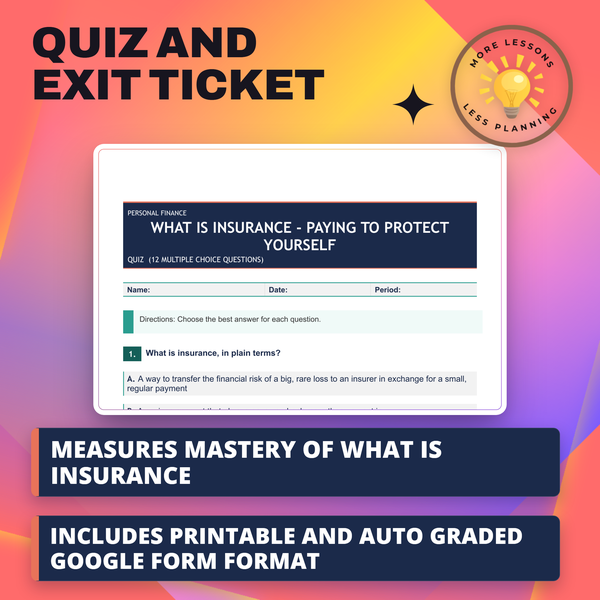
- Quiz + answer key
- Exit ticket + answer key
- Teacher guide
- Teacher presentation notes
Where should I send the next one?
Everything here is free and it stays that way. Leave your email and I'll send you the new lessons as they go up. You can unsubscribe from any one of them.
Every file in this toolkit
Related resources
Health Insurance - The Most Confusing Bill You'll Get
Renters and Homeowners Insurance - Protecting Your Stuff
Why Young People Pay More (or Less) - Risk Pricing in Auto Insurance
Bonds - Lending to Governments and Companies
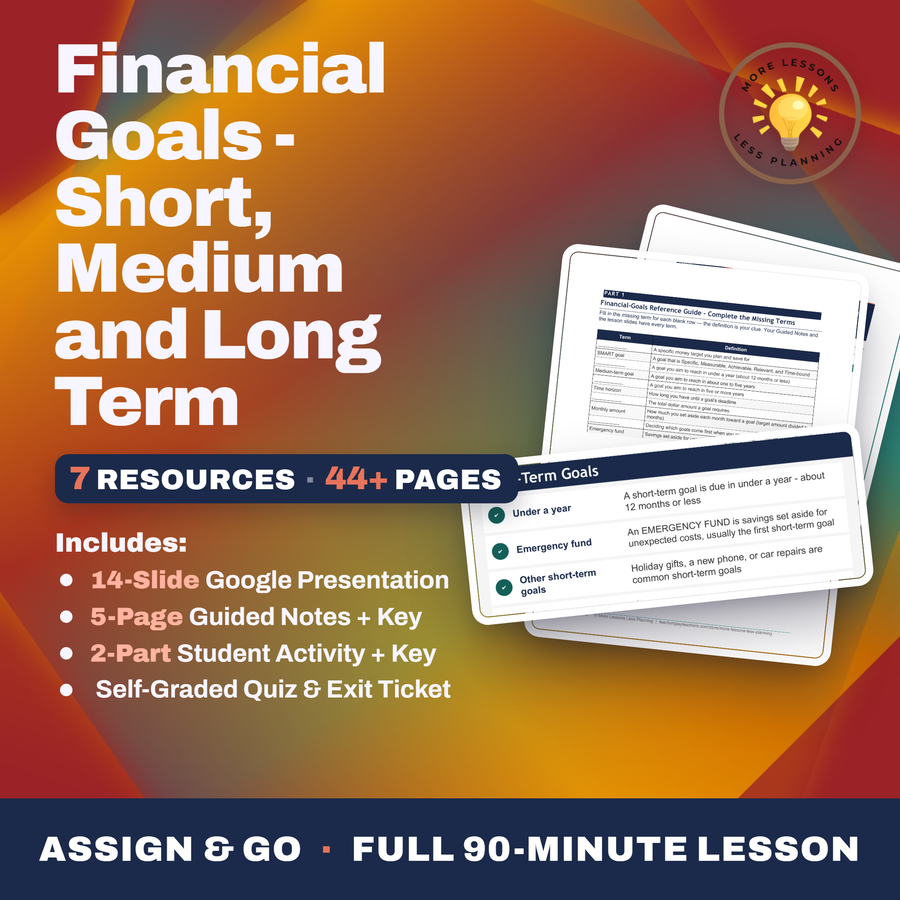
Financial Goals - Short, Medium and Long Term
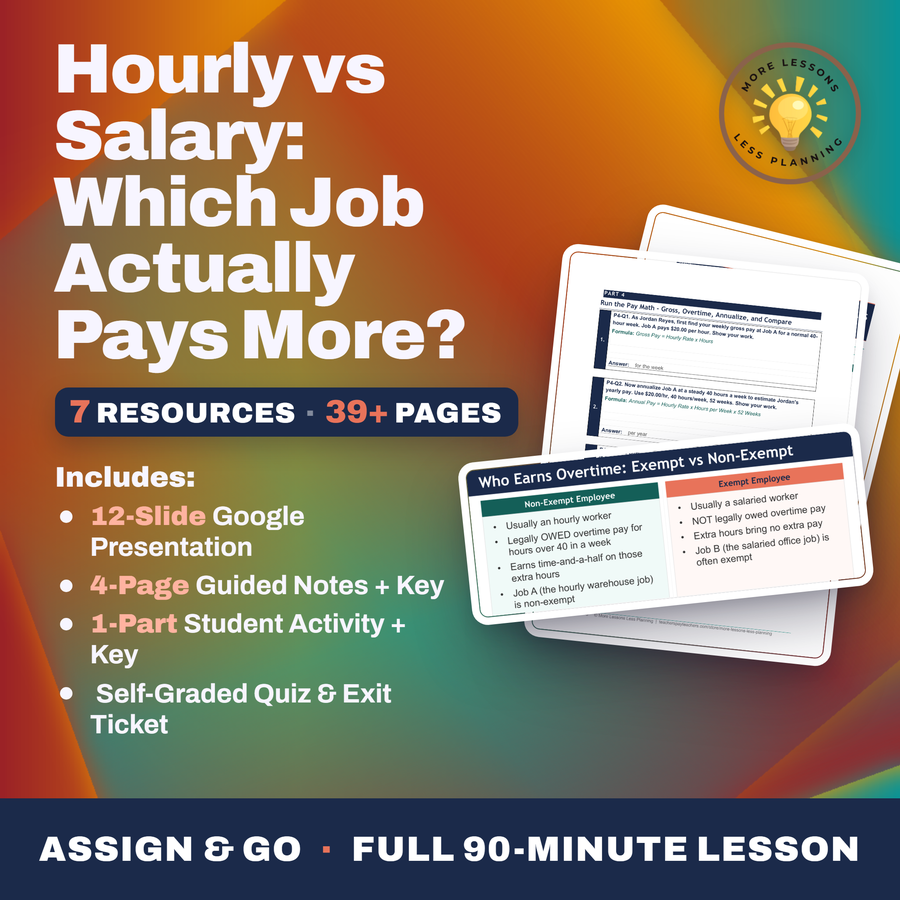
Hourly vs Salary: Which Job Actually Pays More?
What students do
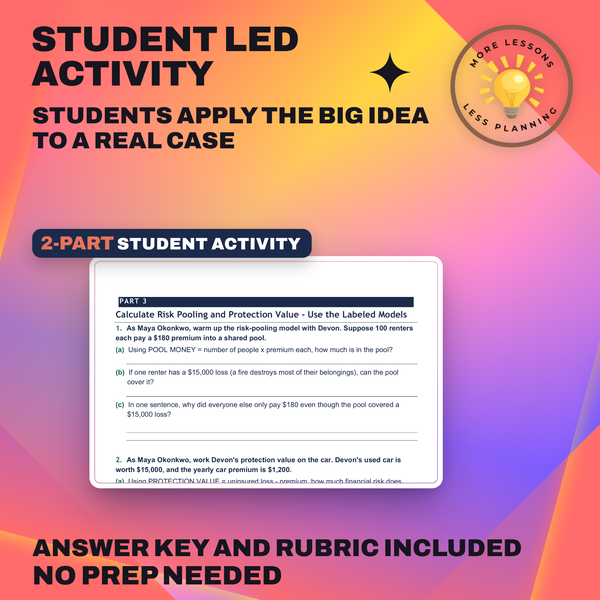
- Calculate risk pooling using pool money equals people times premium each
- Read a bar chart comparing insurance premiums against the cost of uninsured disasters
- Calculate the protection value of a policy as uninsured loss minus premium
- Decide what is and isn't worth insuring for a new adult building a budget
What it covers
- Insurance as trading a small known payment for protection from a large unknown loss
- Risk pooling and how many people's premiums cover the big claims of the unlucky few
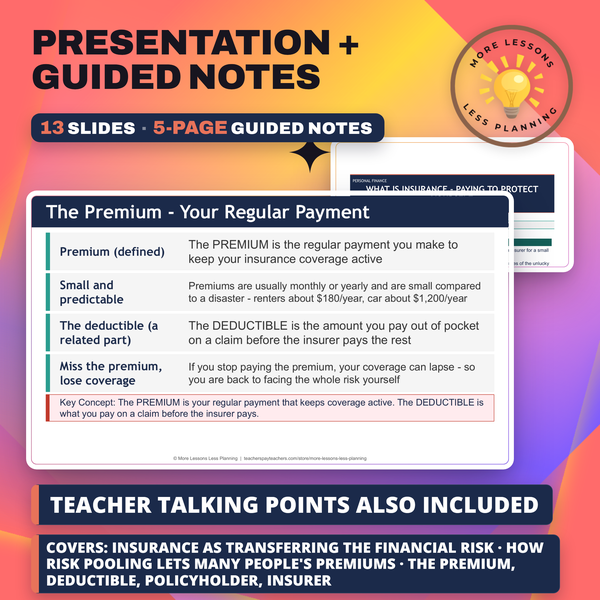
- The shared vocabulary of any policy: premium, deductible, policyholder, insurer, and claim
- A decision rule for what's worth insuring and what isn't
Learning targets
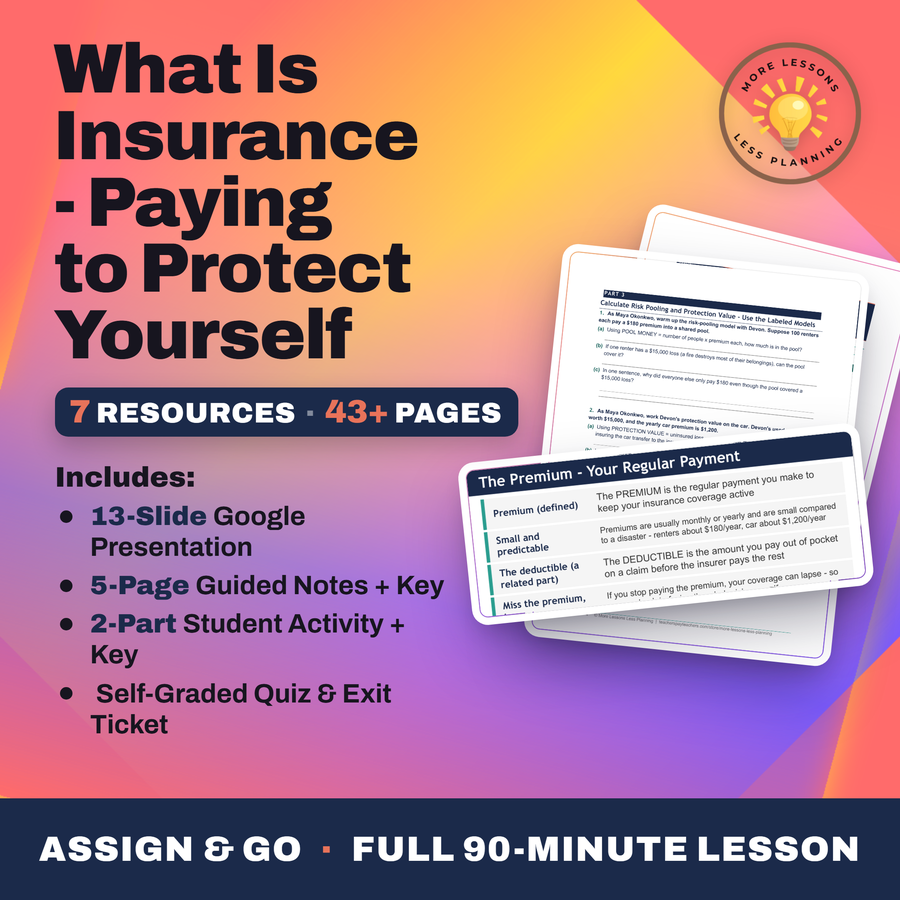
- Define insurance as transferring the financial risk of a big, rare loss to an insurer for a small regular premium
- Explain how risk pooling lets many people's premiums cover the large losses of the unlucky few
- Identify the premium, deductible, policyholder, insurer, and claim as the basic parts of how insurance works
- Explain how insurance spreads financial risk across many people and calculate the protection value of coverage
From one teacher to another
As the first lesson in the insurance unit, I built this to answer the question students actually have, which is whether insurance is a waste of money if you never use it. The chart does the heavy lifting here, stacking a $180 premium next to a $50,000 house fire so the gap speaks for itself. I ended it with a real decision, insure the car, skip the headphones, because that's the judgment I want students walking away able to make on their own.
Every lesson on this site is free to download and use. If one of them saved you a prep period, you can chip in a few bucks toward my three kids' daycare fund. That's genuinely where tips go.