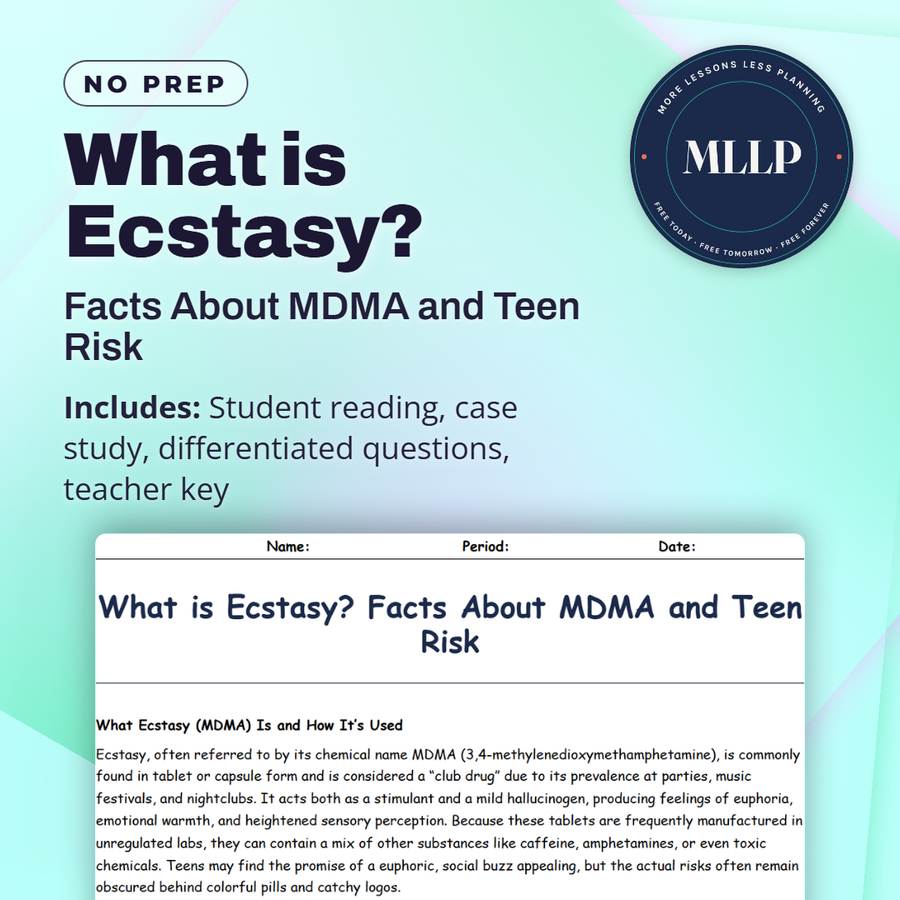
What is Ecstasy? Facts About MDMA and Teen Risk
Quality reviewed September 2026
Facts verified September 21, 2026
- Subject
- Career & Life Skills
- Grades
- Grades 9-12
- Length
- 7-page student worksheet
- Time
- About one 50-minute class period
- Great for
- Sub plans and independent work
- Includes
- Reading passage, comprehension questions + full answer key
- Format
- Print-and-go PDF
What students do
- Match five terms - among them hyperthermia, serotonin crash, and fake pills - to their definitions
- Fill in three blanks about MDMA's effect on empathy, overheating risk, and unknown chemicals in street pills
- Answer three multiple-choice questions on MDMA's classification, party-setting dangers, and pill unpredictability
- Respond to three short-answer questions about why ecstasy seems safe, hydration risks, and helping a friend in crisis
What it covers
- Five sections on what MDMA is, its short-term effects, overheating and dehydration risk, counterfeit pills, and long-term brain changes
- A quick-facts table on MDMA's primary effect, physical dangers, chemical risks, and after-effects
- A case study following a student at a music festival who ends up in the hospital after a night of nonstop dancing
Start reading this worksheet
What Ecstasy (MDMA) Is and How It’s Used
Ecstasy, often referred to by its chemical name MDMA (3,4-methylenedioxymethamphetamine), is commonly found in tablet or capsule form and is considered a “club drug” due to its prevalence at parties, music festivals, and nightclubs. It acts both as a stimulant and a mild hallucinogen, producing feelings of euphoria, emotional warmth, and heightened sensory perception. Because these tablets are frequently manufactured in unregulated labs, they can contain a mix of other substances like caffeine, amphetamines, or even toxic chemicals. Teens may find the promise of a euphoric, social buzz appealing, but the actual risks often remain obscured behind colorful pills and catchy logos.
Short-Term Effects: Energy, Empathy, Euphoria
One of the main draws of ecstasy is its ability to make users feel unusually connected to those around them, sometimes described as an increased sense of empathy. The drug floods the brain with serotonin, dopamine, and norepinephrine, amplifying positive emotions. Users may dance for hours without fatigue, talk freely with strangers, or feel an intense emotional bond with friends. However, these effects come at a cost. MDMA also raises body temperature and heart rate, which can be especially dangerous in hot, crowded environments like concerts. Dehydration, overheating, and electrolyte imbalances can lead to serious complications if not promptly addressed.
Risks of Dehydration, Overheating, Serotonin Crash
Ecstasy-related fatalities often stem from hyperthermia—extreme overheating of the body. Since MDMA can mask normal fatigue signals, users might dance or exert themselves for hours without resting or hydrating. Additionally, the surge of serotonin in the brain eventually comes with a “crash,” leaving users feeling depressed, anxious, or irritable in the days following use. Some teens may chase the next dose to stave off this crash, increasing the likelihood of dependence and escalating harm to the body and mind.
Like what you read? The full reading, the case study, and every question set are in the free download below, along with the answer key.
Why this matters
Ecstasy doesn't come up as often in health class as alcohol or vaping, but it shows up at exactly the events students are most likely to attend without a parent nearby: festivals, concerts, parties. Because the pills are made in unregulated labs, a student who thinks she knows what she's taking often doesn't, which is a risk that has nothing to do with willpower or judgment. Recognizing overheating and dehydration as a medical emergency instead of a rough night could matter for a friend at one of those events.
If you or someone you know is struggling, call or text 988 (Suicide & Crisis Lifeline, US) or talk to a trusted adult right away.
From one teacher to another
Ecstasy gets framed here the way students are actually going to encounter it: as a pill at a party that promises connection and energy, not an abstract danger presented in a lecture. The reading works through what MDMA does to serotonin in the short term and what a counterfeit pill can contain instead, since the two risks compound each other in a crowded, hot room. By the next morning, Serena, a shy student who tried ecstasy at a festival to feel more connected, is in the hospital, which is where the reading's brain-chemistry sections stop being abstract.
What you get
Download
Where should I send the next one?
Everything here is free and it stays that way. Leave your email and I'll send you the new lessons as they go up. You can unsubscribe from any one of them.
Related resources
Choosing a Drug-Free Lifestyle: Health, Goals, and You
Cocaine and the Teenage Brain
Crack Cocaine: Fast High, Harsh Consequences
Heroin and Teens: Understanding the Risks and Realities
How Addiction Changes the Brain: Science for Students
How to Handle Peer Pressure and Say No with Confidence
Every lesson on this site is free to download and use. If one of them saved you a prep period, you can chip in a few bucks toward my three kids' daycare fund. That's genuinely where tips go.