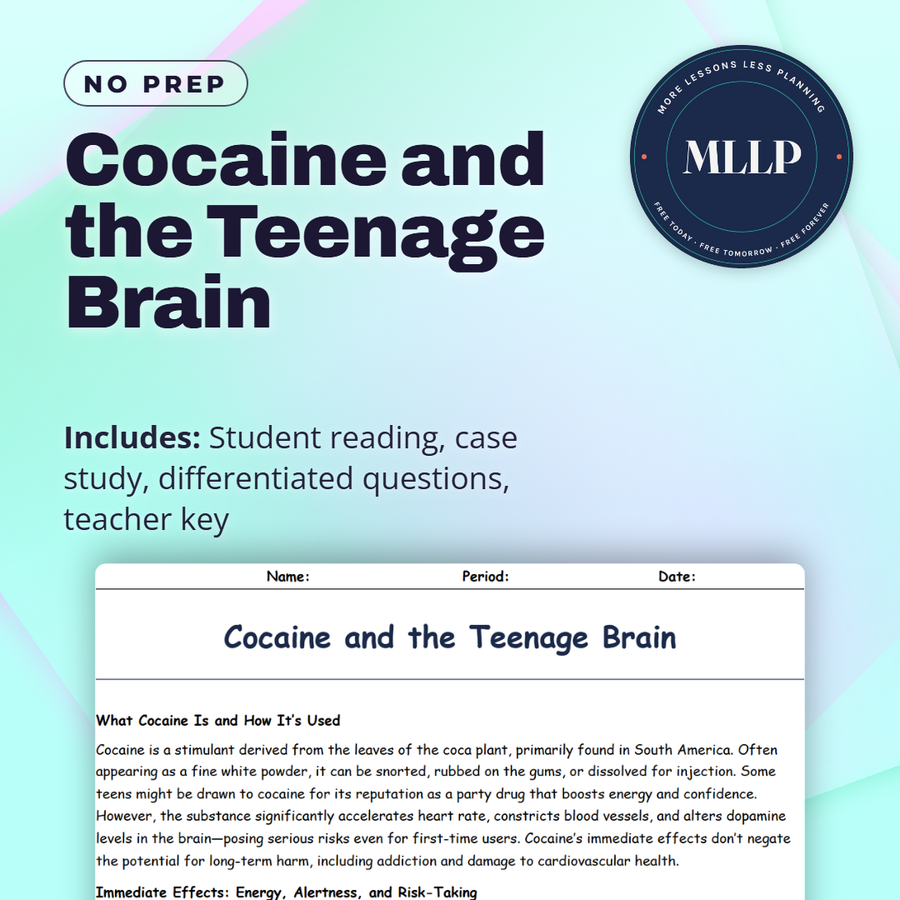
Cocaine and the Teenage Brain
Quality reviewed September 2026
Facts verified September 21, 2026
- Subject
- Career & Life Skills
- Grades
- Grades 9-12
- Length
- 7-page student worksheet
- Time
- About one 50-minute class period
- Great for
- Sub plans and independent work
- Includes
- Reading passage, comprehension questions + full answer key
- Format
- Print-and-go PDF
What students do
- Match terms like cocaethylene, relapse, and dopamine flood to what each one actually does to the brain and body
- Fill in blanks naming cocaine as a stimulant and explaining how it disrupts the brain's reward system
- Answer multiple-choice questions on why mixing cocaine with alcohol raises the danger and why relapse rates stay high
- Write short answers on why teens might overlook cocaine's risks and what healthier options exist for energy or stress
What it covers
- What cocaine does to energy, alertness, and risk-taking in the short term, and to the heart and brain over time
- Carlos's case study: leaning on cocaine to power through school and sports until a health scare exposed the habit
- Why combining cocaine with alcohol adds danger, and why relapse is common even after a period of sobriety
Start reading this worksheet
What Cocaine Is and How It’s Used
Cocaine is a stimulant derived from the leaves of the coca plant, primarily found in South America. Often appearing as a fine white powder, it can be snorted, rubbed on the gums, or dissolved for injection. Some teens might be drawn to cocaine for its reputation as a party drug that boosts energy and confidence. However, the substance significantly accelerates heart rate, constricts blood vessels, and alters dopamine levels in the brain, posing serious risks even for first-time users. Cocaine’s immediate effects don’t negate the potential for long-term harm, including addiction and damage to cardiovascular health.
Immediate Effects: Energy, Alertness, and Risk-Taking
Upon ingestion, cocaine users typically feel a surge of energy and heightened alertness. This can be accompanied by talkativeness, restlessness, and an inflated sense of capability or invulnerability. Such effects might sound appealing to teens under academic or social pressures, but they come with a steep price. Users can become impulsive, engaging in risk-taking behaviors like reckless driving, fights, or unprotected sex. Additionally, the high is fleeting: when it subsides, irritability and craving set in, perpetuating a cycle that can escalate into dependency.
Long-Term Brain and Heart Damage
Repeated cocaine use wreaks havoc on the cardiovascular system, raising the likelihood of heart attacks or strokes, even in young people. The drug constricts blood vessels, compounding stress on the heart. Neurologically, cocaine disrupts the brain’s reward circuitry by oversaturating it with dopamine. Over time, the brain’s ability to naturally regulate mood and motivation is compromised. This can manifest as chronic depression, anxiety, or the inability to feel pleasure from normal daily activities. Teens, whose brains are still in critical developmental stages, may find these changes particularly challenging to reverse.
Like what you read? The full reading, the case study, and every question set are in the free download below, along with the answer key.
Why this matters
Cocaine's reputation among teens tends to center on parties, but the case study here uses a more common hook: a stressed, overcommitted student looking for an edge before a deadline. That framing matters because warnings aimed at reckless behavior tend to bounce off students who see themselves as responsible rather than risky. Walking through what a flood of dopamine actually does to focus and mood over time gives students a reason rooted in their own goals, beyond a rule from an adult, to think twice before reaching for a shortcut during finals week or two-a-days.
If you or someone you know is struggling, call or text 988 (Suicide & Crisis Lifeline, US) or talk to a trusted adult right away.
From one teacher to another
Carlos's case study opens this reading, and it is the part students tend to remember: someone juggling sports, advanced classes, and a job who thought cocaine would simply help him push through late nights. The passages then explain what is actually happening in his body during and after that high, from the dopamine surge to the crash that follows. Students also work through a short table sorting effects by brain, heart, behavior, and social life, which gives them a quick way to organize information that could otherwise feel scattered. I assign this one early in the drug unit because it introduces vocabulary, like tolerance and relapse, that keeps showing up later.
What you get
Download
Where should I send the next one?
Everything here is free and it stays that way. Leave your email and I'll send you the new lessons as they go up. You can unsubscribe from any one of them.
Related resources
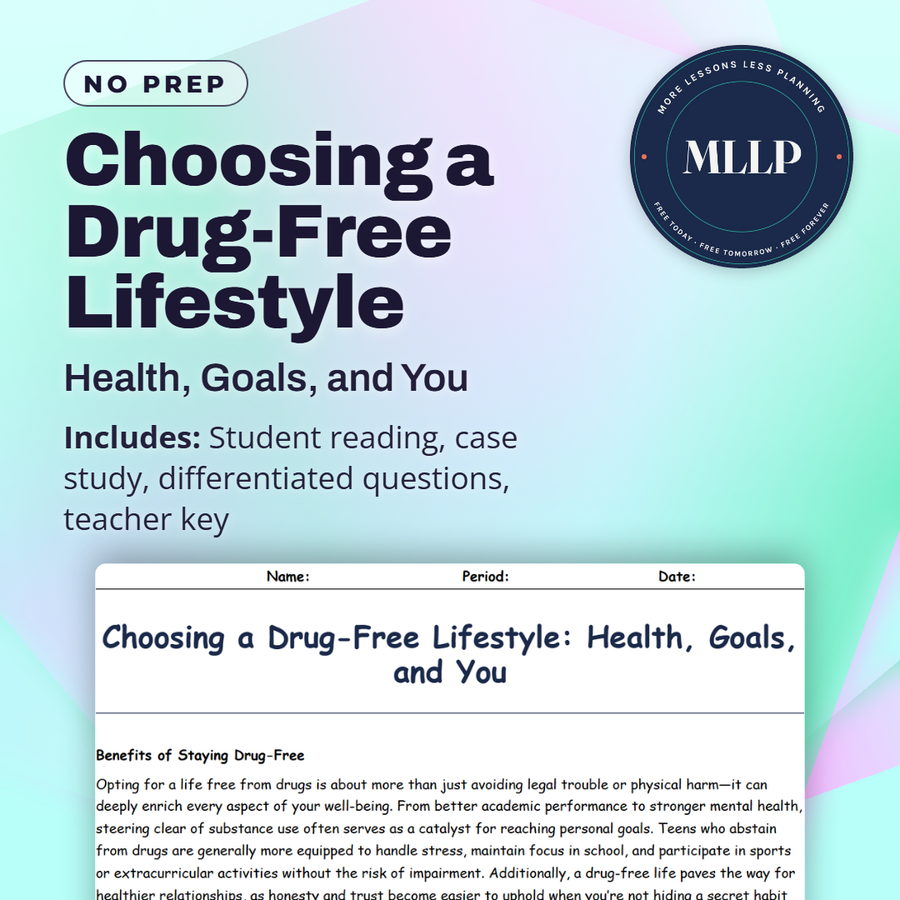
Choosing a Drug-Free Lifestyle: Health, Goals, and You
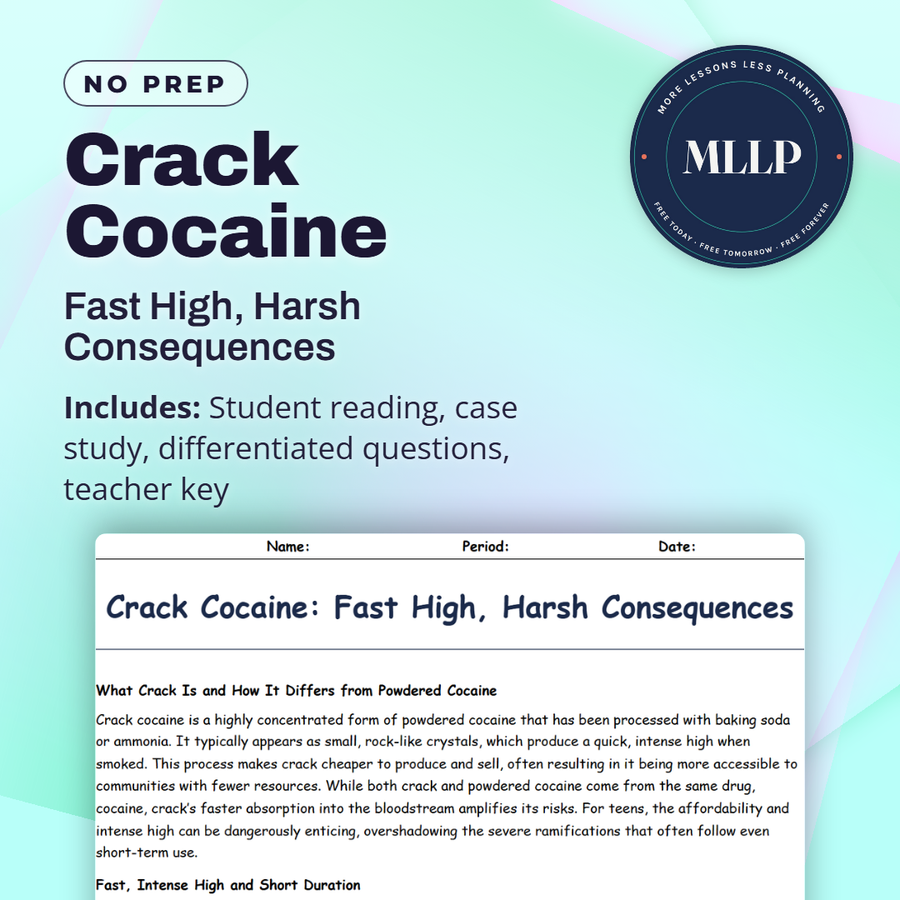
Crack Cocaine: Fast High, Harsh Consequences
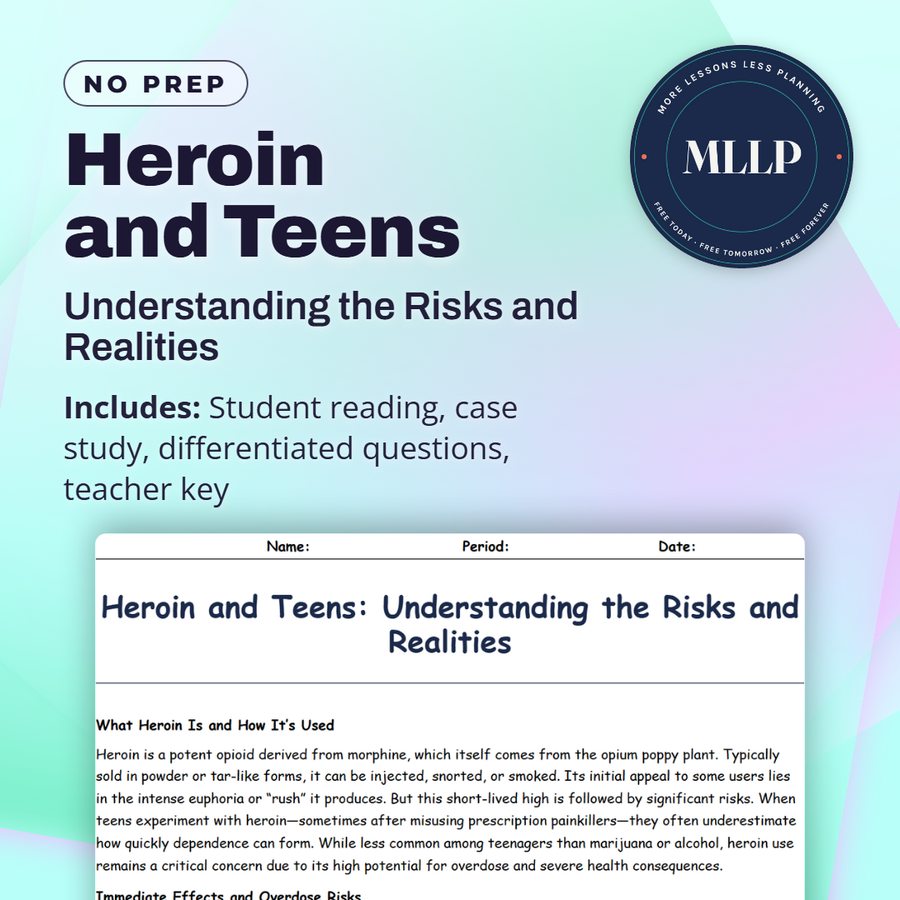
Heroin and Teens: Understanding the Risks and Realities
How Addiction Changes the Brain: Science for Students
How to Handle Peer Pressure and Say No with Confidence
Legal vs. Illegal Drugs: What Teens Need to Know
Every lesson on this site is free to download and use. If one of them saved you a prep period, you can chip in a few bucks toward my three kids' daycare fund. That's genuinely where tips go.