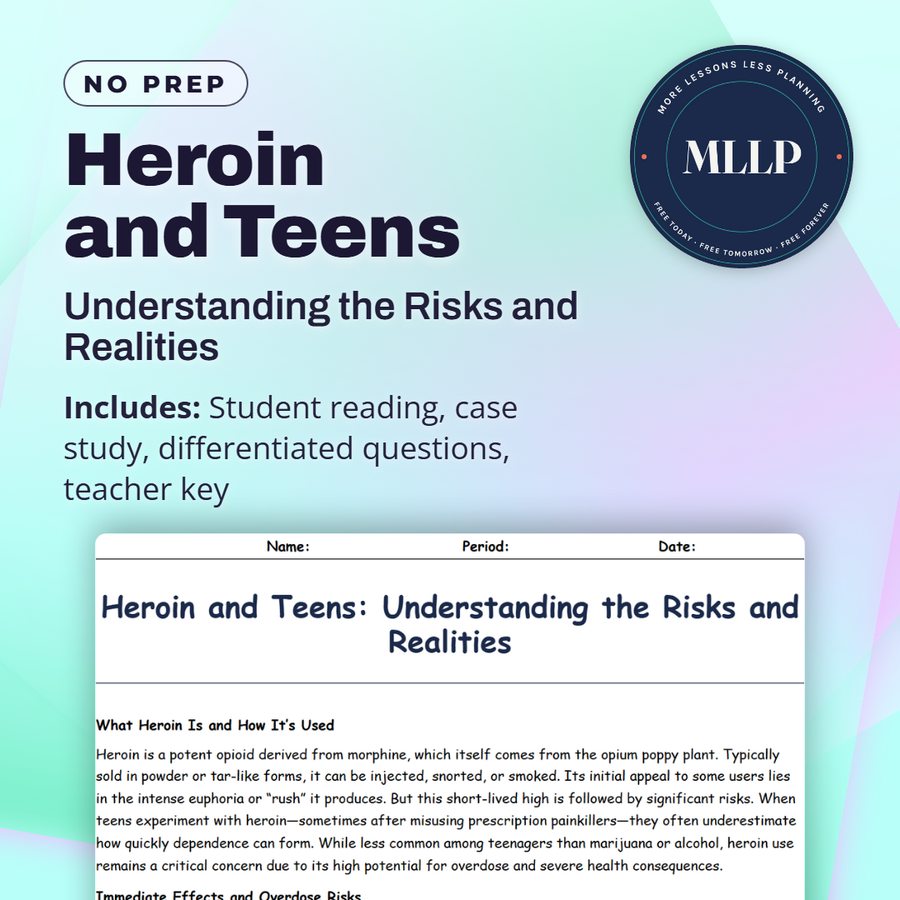
Heroin and Teens: Understanding the Risks and Realities
Quality reviewed September 2026
Facts verified September 21, 2026
- Subject
- Career & Life Skills
- Grades
- Grades 9-12
- Length
- 7-page student worksheet
- Time
- About one 50-minute class period
- Great for
- Sub plans and independent work
- Includes
- Reading passage, comprehension questions + full answer key
- Format
- Print-and-go PDF
What students do
- Match terms like overdose, withdrawal, and medication-assisted therapy to what each looks like in practice
- Fill in blanks tracing how prescription opioid misuse can lead to withdrawal symptoms and long-term brain changes
- Answer multiple-choice questions on what makes heroin so unpredictable and why teens sometimes move from pills to heroin
- Write short answers on why withdrawal hits teens especially hard and what to do if a friend is experimenting with heroin
What it covers
- Where heroin comes from, how it is used, and why overdose risk is high even for first-time users
- Rafael's case study: a sports injury, a prescription that ran out, and the switch to a cheaper alternative that followed
- The link between prescription painkiller misuse and heroin, plus what recovery and treatment can look like for teens
Start reading this worksheet
What Heroin Is and How It’s Used
Heroin is a potent opioid derived from morphine, which itself comes from the opium poppy plant. Typically sold in powder or tar-like forms, it can be injected, snorted, or smoked. Its initial appeal to some users lies in the intense euphoria or “rush” it produces. But this short-lived high is followed by significant risks. When teens experiment with heroin, sometimes after misusing prescription painkillers, they often underestimate how quickly dependence can form. While less common among teenagers than marijuana or alcohol, heroin use remains a critical concern due to its high potential for overdose and severe health consequences.
Immediate Effects and Overdose Risks
Upon taking heroin, users might feel a warm flush of the skin, a heavy sensation in the limbs, and clouded mental functioning. Breathing slows, which can be life-threatening if it becomes too shallow or stops entirely: this is how many heroin overdoses lead to death. Even a small miscalculation in dose can be fatal. Additives in street heroin, which might include fentanyl or other potent substances, further raise the risk of overdose. The unpredictability of street-sold drugs is especially dangerous for teens who may not have prior experience or knowledge to gauge potency.
Long-Term Effects: Collapsed Veins, Infections, and More
Chronic heroin use can lead to collapsed veins (when injected), liver disease, and complications from inadequate hygiene or the reuse of needles. Infections like HIV or hepatitis C spread easily among users who share paraphernalia. The drug also severely impacts mental health, intensifying anxiety or depression. Over time, the brain’s structure and physiology can change, resulting in long-term imbalances in neuronal and hormonal systems. These changes are hard to reverse, even with prolonged periods of sobriety. Teens face an elevated risk because their bodies and brains are still developing, and the drug can disrupt critical growth processes.
Like what you read? The full reading, the case study, and every question set are in the free download below, along with the answer key.
Why this matters
Rafael does not start this reading looking for a high; he starts it with a real injury and a doctor's prescription, which is closer to how most teen opioid exposure actually begins. That detail matters because it means the useful warning here is not about avoiding strangers, but about what happens once a prescription runs out and the pain has not. Students who play sports, dance, or work physical jobs are more likely to face this exact fork in the road than the version of drug risk they usually picture in their heads.
If you or someone you know is struggling, call or text 988 (Suicide & Crisis Lifeline, US) or talk to a trusted adult right away.
From one teacher to another
A sports injury and a prescription that eventually ran out: that is how this reading's case study begins, and it is a far more familiar starting point for students than a stranger offering drugs at a party. Rafael's story follows him from legitimate pain medication to a cheaper alternative, and the questions ask students to track exactly where that shift happened and why. Alongside the case study, the reading lays out what heroin does to breathing and to veins, and why street doses are impossible to measure safely. I use the risk table to slow students down specifically on the overdose section, since that is the part most often skimmed.
What you get
Download
Where should I send the next one?
Everything here is free and it stays that way. Leave your email and I'll send you the new lessons as they go up. You can unsubscribe from any one of them.
Related resources
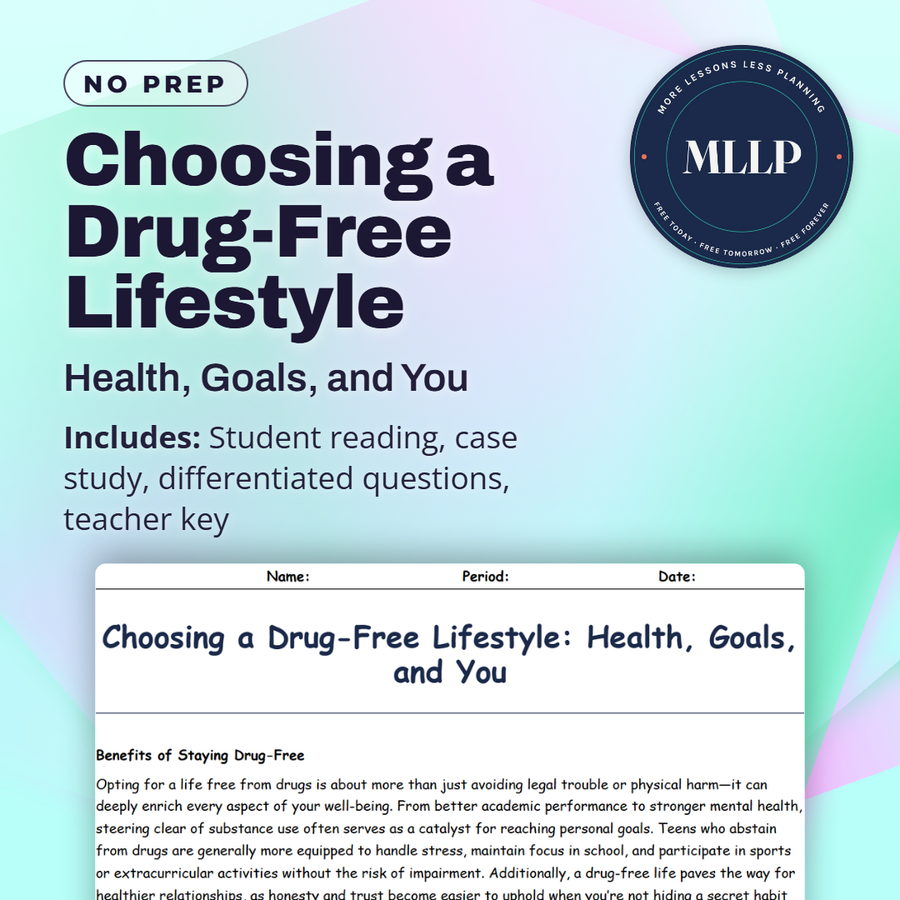
Choosing a Drug-Free Lifestyle: Health, Goals, and You
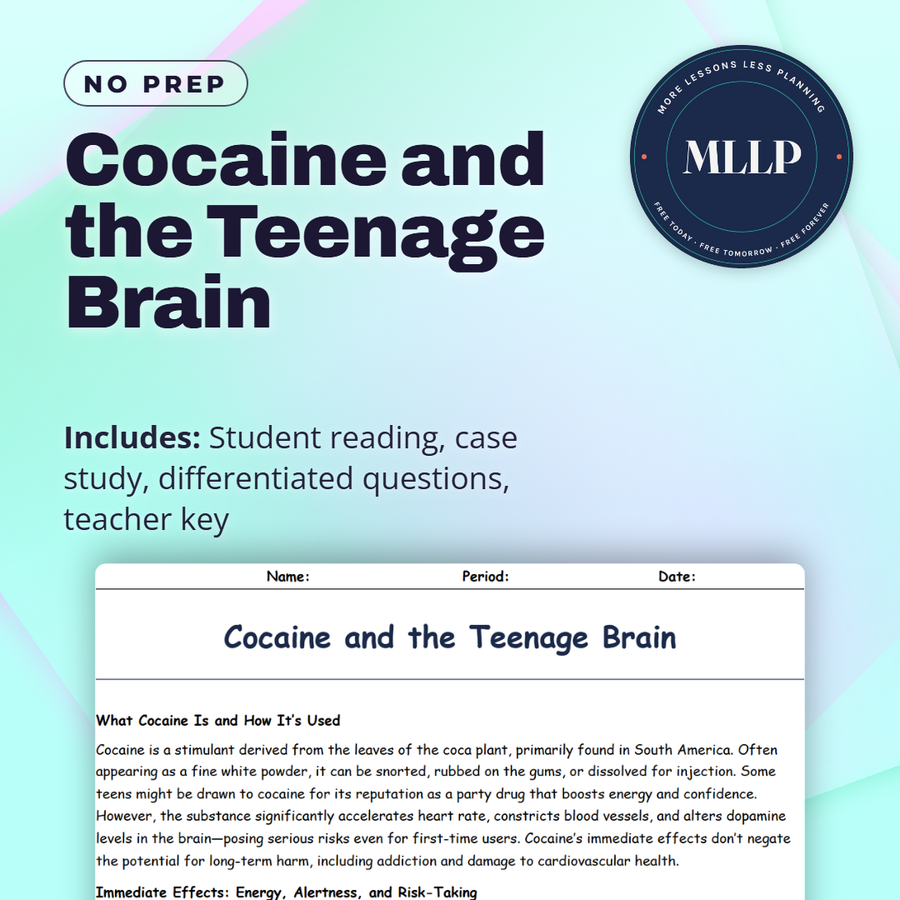
Cocaine and the Teenage Brain
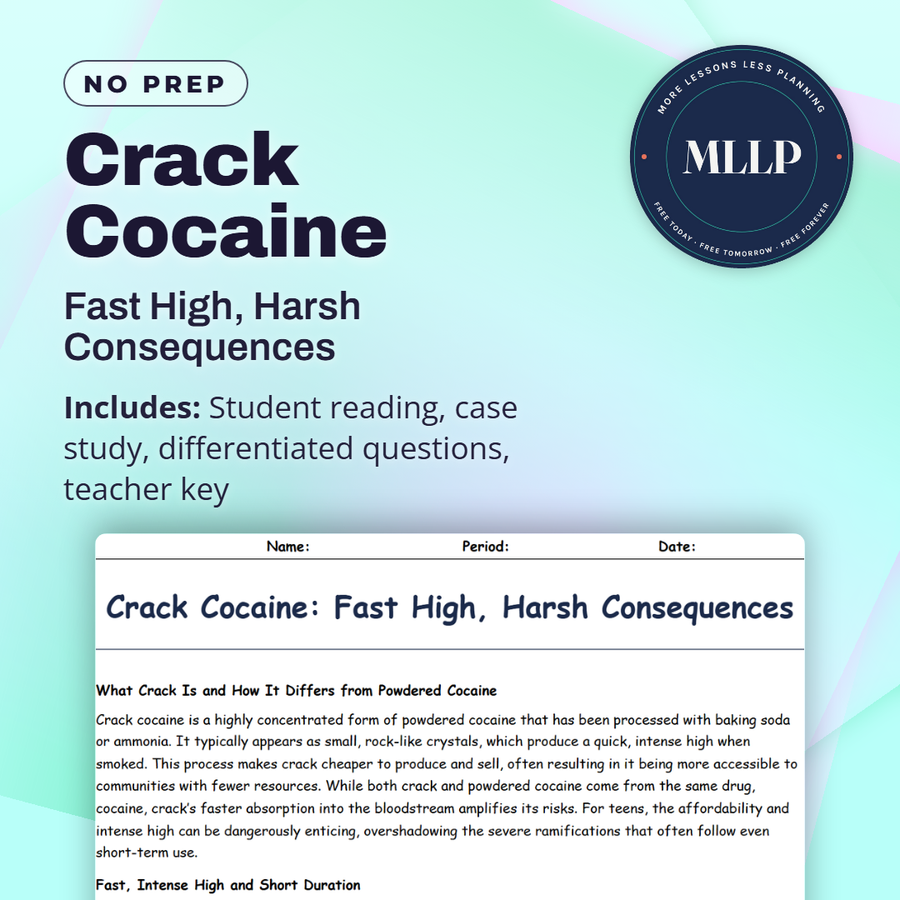
Crack Cocaine: Fast High, Harsh Consequences
How Addiction Changes the Brain: Science for Students
How to Handle Peer Pressure and Say No with Confidence
Legal vs. Illegal Drugs: What Teens Need to Know
Every lesson on this site is free to download and use. If one of them saved you a prep period, you can chip in a few bucks toward my three kids' daycare fund. That's genuinely where tips go.