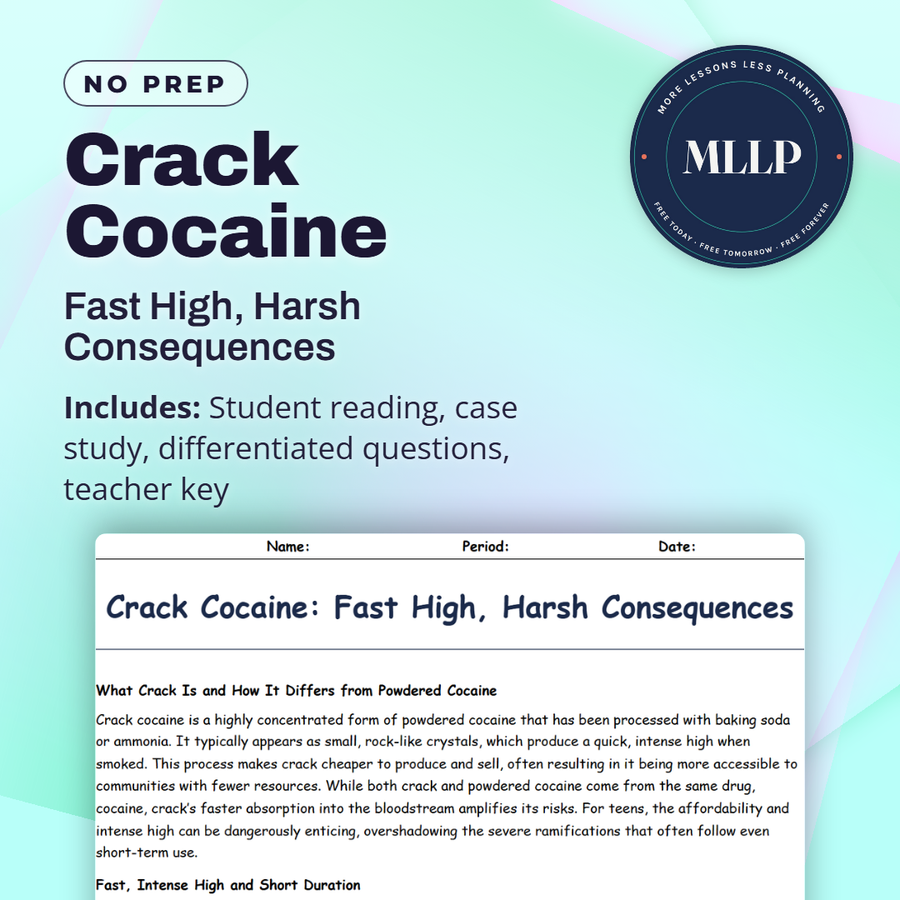
Crack Cocaine: Fast High, Harsh Consequences
Quality reviewed September 2026
Facts verified September 21, 2026
- Subject
- Career & Life Skills
- Grades
- Grades 9-12
- Length
- 7-page student worksheet
- Time
- About one 50-minute class period
- Great for
- Sub plans and independent work
- Includes
- Reading passage, comprehension questions + full answer key
- Format
- Print-and-go PDF
What students do
- Match terms like crash, psychosis, and stigma to the specific brain and body reactions each one describes
- Fill in blanks identifying crack cocaine's rock-like form and the crash and aggression that follow its short high
- Answer multiple-choice questions on what separates crack from powdered cocaine and the psychological risks of heavy use
- Write short answers on why a teen might try crack despite the risks and what schools can do to step in early
What it covers
- How crack differs from powdered cocaine in form and intensity, and why its high fades so quickly
- Marcus's case study: a habit that started at one party and turned into missed practices and an empty savings account within weeks
- The mood swings, aggression, and paranoia that can follow heavy crack use, and the toll on families and communities
Start reading this worksheet
What Crack Is and How It Differs from Powdered Cocaine
Crack cocaine is a highly concentrated form of powdered cocaine that has been processed with baking soda or ammonia. It typically appears as small, rock-like crystals, which produce a quick, intense high when smoked. This process makes crack cheaper to produce and sell, often resulting in it being more accessible to communities with fewer resources. While both crack and powdered cocaine come from the same drug, cocaine, crack’s faster absorption into the bloodstream amplifies its risks. For teens, the affordability and intense high can be dangerously enticing, overshadowing the severe ramifications that often follow even short-term use.
Fast, Intense High and Short Duration
One of the reasons crack cocaine is notoriously addictive is the rapid onset of its effects. Smokers feel the high within seconds, experiencing euphoria, heightened energy, and a sense of invincibility. However, this intense rush typically lasts only a few minutes, followed by a dramatic “crash” marked by anxiety, fatigue, and strong cravings for more. This cycle pushes users to seek the next high quickly, leading to frequent and repeated use—an alarming pattern for developing teen brains. Because adolescents already struggle with impulse control, crack’s swift reward mechanism can severely disrupt their judgment and risk assessment.
Severe Addiction and Health Risks
Crack cocaine takes a heavy toll on both the body and mind. Regular use can lead to lung damage from inhaling chemical residues, and the drug’s stimulant properties elevate blood pressure and heart rate, increasing the risk of stroke or heart attack. Addiction sets in rapidly, as the brain adapts to the flood of dopamine. Over time, users experience depression, anxiety, and in severe cases, paranoia or hallucinations. Teens might show these signs at school, such as abrupt mood swings or erratic behavior. Families often struggle to cope with the fallout, ranging from academic decline to theft or aggression.
Like what you read? The full reading, the case study, and every question set are in the free download below, along with the answer key.
Why this matters
Marcus grew up hearing about the 1980s crack epidemic from older relatives, and that distance is exactly why the topic can feel like history rather than something relevant now. The reading pushes back on that by connecting the earlier era's fallout to a fresh case that could belong to any student's classmate today. It is also one of the few readings in this unit that ties one person's choice to a wider community cost, which opens a different kind of classroom conversation than a strictly personal-risk framing.
If you or someone you know is struggling, call or text 988 (Suicide & Crisis Lifeline, US) or talk to a trusted adult right away.
From one teacher to another
This reading starts with a comparison most students have never seen laid out directly: how crack and powdered cocaine come from the same drug but hit the body on very different timelines. From there it moves into what a repeating cycle of high and crash does to mood and judgment over just a few weeks. Marcus's case study closes the reading, tracing how a single night at a party turned into a daily habit that drained his savings and pulled him off the basketball team before a teacher noticed something was wrong. I appreciate that the case study does not resolve neatly; it shows a slow slide and an uneven recovery, which feels closer to how this actually plays out.
What you get
Download
Where should I send the next one?
Everything here is free and it stays that way. Leave your email and I'll send you the new lessons as they go up. You can unsubscribe from any one of them.
Related resources

Choosing a Drug-Free Lifestyle: Health, Goals, and You
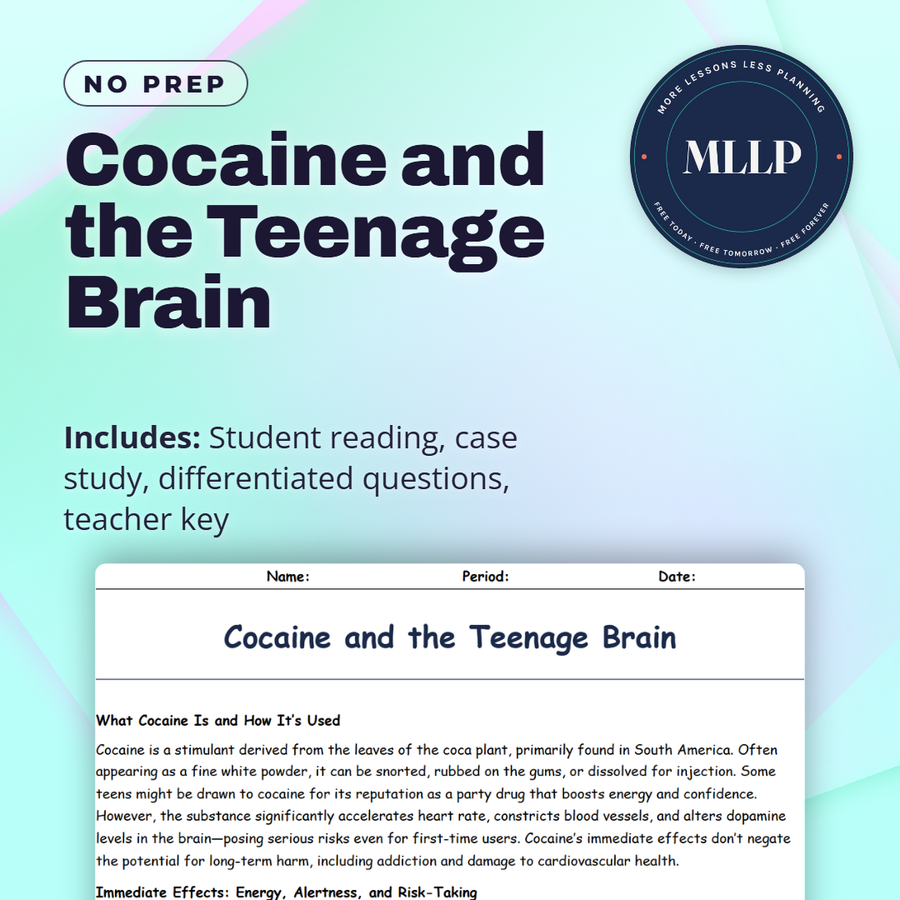
Cocaine and the Teenage Brain
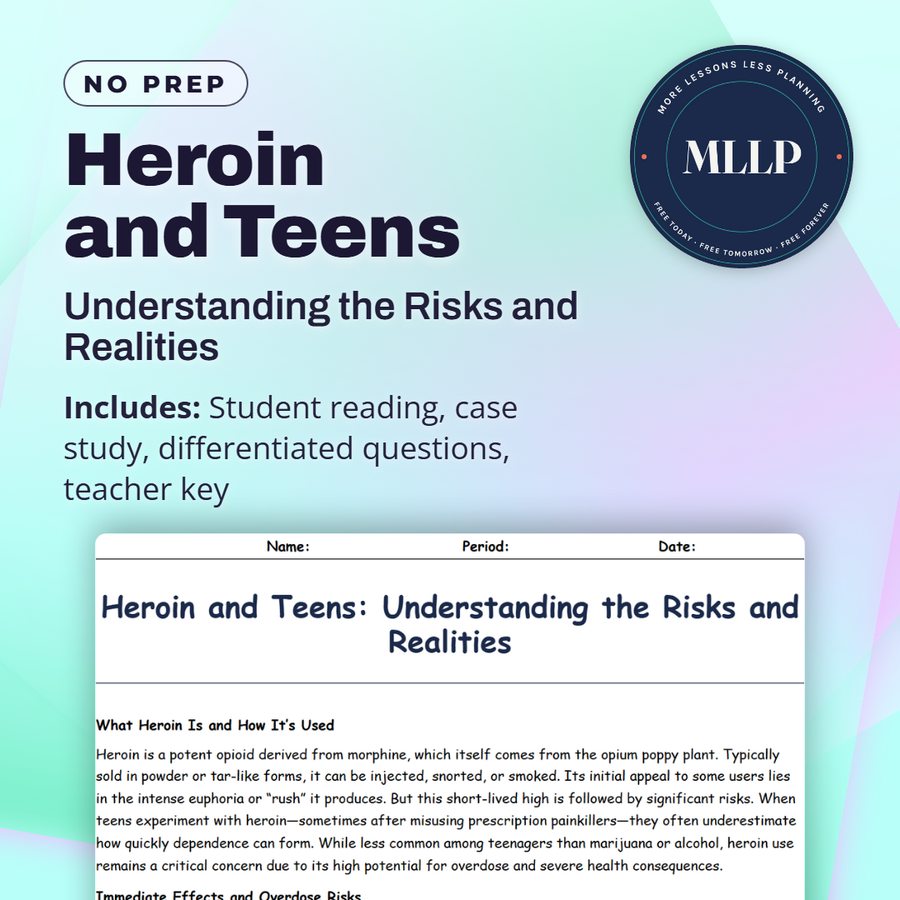
Heroin and Teens: Understanding the Risks and Realities
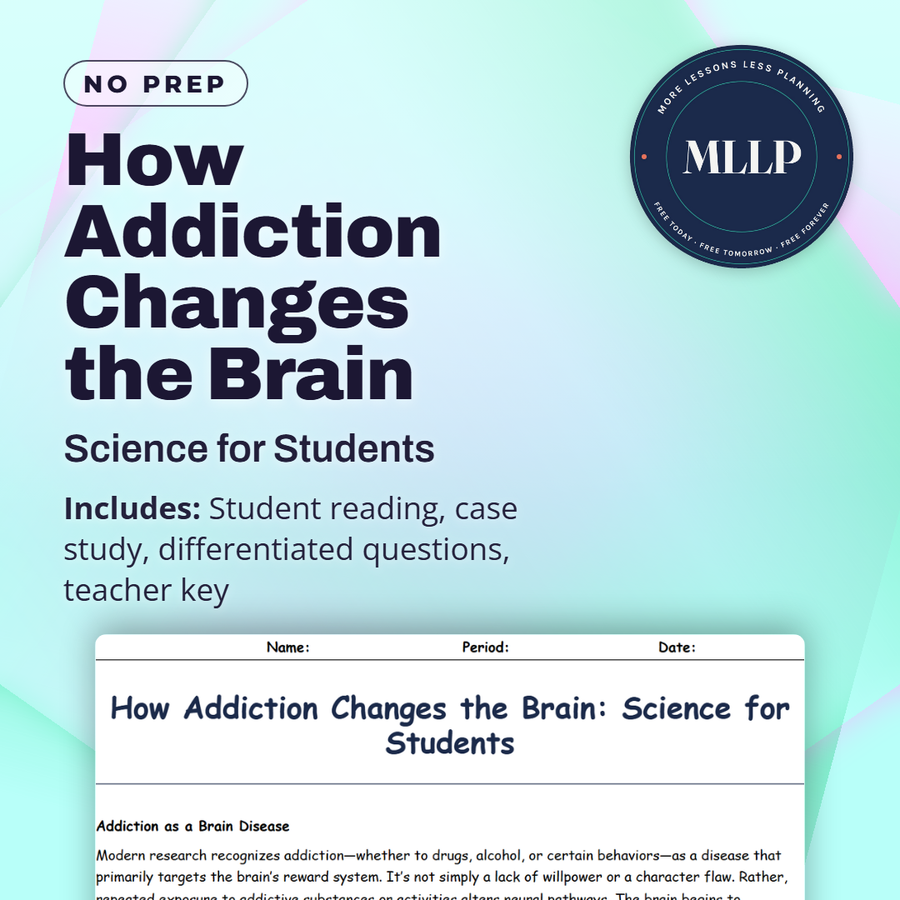
How Addiction Changes the Brain: Science for Students
How to Handle Peer Pressure and Say No with Confidence
Legal vs. Illegal Drugs: What Teens Need to Know
Every lesson on this site is free to download and use. If one of them saved you a prep period, you can chip in a few bucks toward my three kids' daycare fund. That's genuinely where tips go.