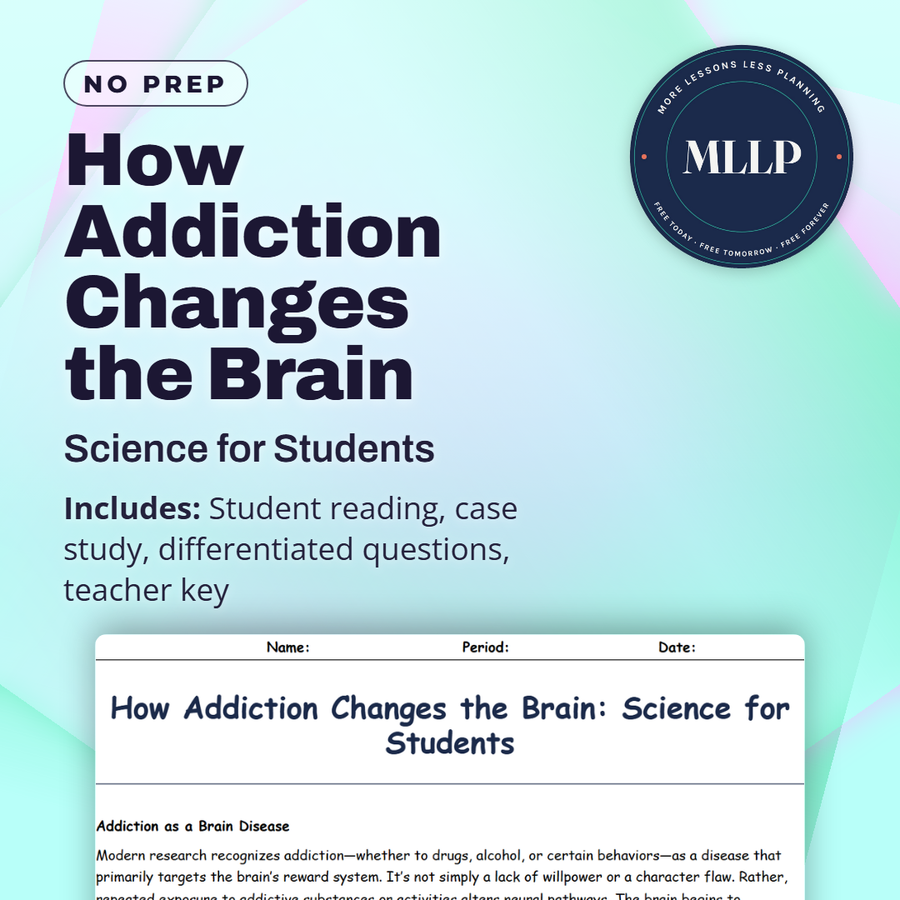
How Addiction Changes the Brain: Science for Students
Quality reviewed September 2026
Facts verified September 21, 2026
- Subject
- Career & Life Skills
- Grades
- Grades 9-12
- Length
- 7-page student worksheet
- Time
- About one 50-minute class period
- Great for
- Sub plans and independent work
- Includes
- Reading passage, comprehension questions + full answer key
- Format
- Print-and-go PDF
What students do
- Match terms like tolerance, neuroplasticity, and reward system to the brain process each one describes
- Fill in blanks naming dopamine's role in reward and how neuroplasticity allows the brain to recover
- Answer multiple-choice questions on what dopamine does and why teen brains are more vulnerable to addiction
- Write short answers on why willpower alone rarely beats addiction and what non-drug behaviors can become addictive
What it covers
- Why scientists classify addiction as a brain disease centered on dopamine and the brain's reward circuitry
- Carlos's case study: an online gaming habit that produced the same cravings and withdrawal as substance addiction
- Why teen brains are especially vulnerable to addiction, and how neuroplasticity makes recovery possible
Start reading this worksheet
Addiction as a Brain Disease
Modern research recognizes addiction (whether to drugs, alcohol, or certain behaviors) as a disease that primarily targets the brain’s reward system. It’s not simply a lack of willpower or a character flaw. Rather, repeated exposure to addictive substances or activities alters neural pathways. The brain begins to prioritize the substance above other necessities, such as food or social interaction. This can lead to compulsive use despite harmful consequences. Understanding that addiction is anchored in brain chemistry highlights why “just stop” is often an oversimplified solution.
The Role of Dopamine
At the center of addiction lies the neurotransmitter dopamine, which produces feelings of pleasure and reward. When someone uses a drug, such as cocaine or opioids, dopamine levels can skyrocket, creating intense euphoria. Over time, the brain adjusts by producing less dopamine on its own or reducing the number of dopamine receptors. This adaptation means the individual needs more of the substance to feel “normal,” a phenomenon known as tolerance. Eventually, seeking that high becomes the person’s primary focus, overshadowing relationships, academics, or other responsibilities.
How Drugs Hijack Brain Circuits
Drugs override the natural reward circuits that help us learn and repeat beneficial behaviors, like exercising or spending time with loved ones. Instead of these activities releasing dopamine in a controlled fashion, substances flood the brain, creating a powerful association between the drug and pleasure. This hijacking can make everyday joys feel dull in comparison. It also ingrains drug-taking habits so deeply that people continue using even when they know it leads to negative outcomes like failing grades, lost jobs, or damaged relationships.
Like what you read? The full reading, the case study, and every question set are in the free download below, along with the answer key.
Why this matters
Most students in this class have never used a hard drug, but nearly all of them recognize the dopamine loop from their own phone or console, which is why the case study leans on gaming instead of a substance. Reframing addiction as a brain process rather than a character flaw changes how a student talks about a parent, sibling, or friend who is struggling, and it also gives them language for their own habits long before drugs are ever part of the conversation.
If you or someone you know is struggling, call or text 988 (Suicide & Crisis Lifeline, US) or talk to a trusted adult right away.
From one teacher to another
This reading builds its case for addiction as brain chemistry before it ever names a specific drug. The opening passages introduce dopamine and tolerance, showing what repeated flooding of the reward system does to a brain that is still developing. Then the case study changes the subject entirely: Carlos's addiction is to gaming, not a substance, and the same cravings and withdrawal symptoms surface once his parents take away the console. I use the short table sorting dopamine flood, tolerance, withdrawal, and neuroplasticity as a quick reference once the vocabulary starts piling up, since students reuse these terms for the rest of the unit.
What you get
Download
Where should I send the next one?
Everything here is free and it stays that way. Leave your email and I'll send you the new lessons as they go up. You can unsubscribe from any one of them.
Related resources
Choosing a Drug-Free Lifestyle: Health, Goals, and You
Cocaine and the Teenage Brain
Crack Cocaine: Fast High, Harsh Consequences
Heroin and Teens: Understanding the Risks and Realities
How to Handle Peer Pressure and Say No with Confidence
Legal vs. Illegal Drugs: What Teens Need to Know
Every lesson on this site is free to download and use. If one of them saved you a prep period, you can chip in a few bucks toward my three kids' daycare fund. That's genuinely where tips go.