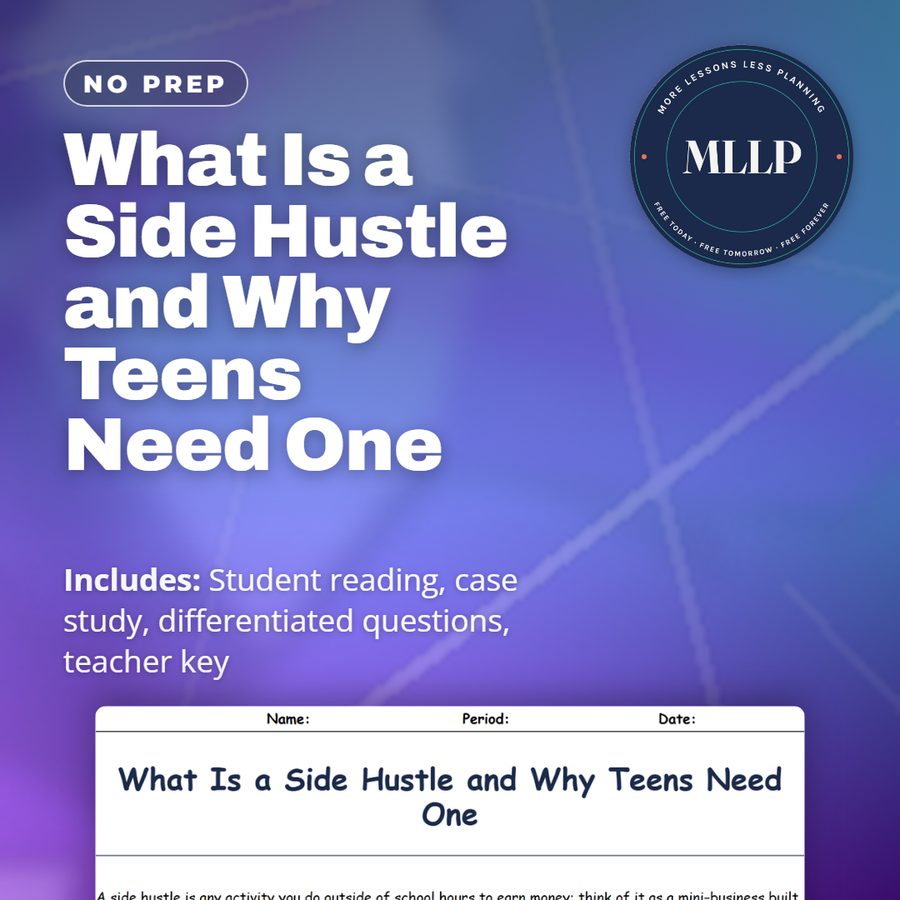
What Is a Side Hustle and Why Teens Need One
Quality reviewed September 2026
Facts verified September 24, 2026
- Subject
- Career & Life Skills
- Grades
- Grades 9-12
- Length
- 7-page student worksheet
- Time
- About one 50-minute class period
- Great for
- Sub plans and independent work
- Includes
- Reading passage, comprehension questions + full answer key
- Format
- Print-and-go PDF
What students do
- Match five gigs, dog walking, tutoring, content creation, lawn mowing, and babysitting, to their definitions
- Fill in the blanks on setting an hourly rate, sticking to a schedule, and keeping detailed records for tax time
- Answer multiple choice questions on the definition of a side hustle, what diversifying income builds, and which platforms work best for marketing a hustle
- Write short answers on three steps to take before launching a side hustle, how time blocking improves productivity, and two tax-related tasks side hustlers manage
What it covers
- Five teen-friendly gigs, dog walking, tutoring, content creation, lawn mowing, and babysitting, with typical hourly rates
- Startup steps like researching demand, setting a rate, and marketing on social media, plus time-blocking tips for balancing school and work
- A case study on Julia, who ran a tutoring and dog-walking hustle, tracked her earnings in a spreadsheet, and set aside 25 percent for taxes
Start reading this worksheet
A side hustle is any activity you do outside of school hours to earn money: think of it as a mini–business built around your skills and interests. Unlike a traditional part-time job, a side hustle can be tailored to your schedule, leveraged into multiple income streams, and scaled up at your own pace. For teens, having a side hustle isn’t just about pocket money: it’s a way to diversify income, build entrepreneurial skills, and practice money management before you head to college or the workplace. By juggling different gigs, you spread risk (if one opportunity dries up, you have others to fall back on), sharpen problem-solving abilities, and learn client relations: skills that employers and colleges love to see. Plus, early exposure to invoicing, rate-setting, and basic bookkeeping gives you a head start on financial literacy. In the current gig economy, savvy teens who treat their side hustles like real micro-businesses gain confidence, build résumés, and earn cash to fund everything from textbooks to weekend trips.
Top Teen-Friendly Gigs
From neighborhood services to digital ventures, here are five of the most popular teen side hustles:
Dog Walking
Walk dogs for busy pet owners and earn $10–$20 per hour. It’s perfect for animal lovers who want fresh air and exercise.
Like what you read? The full reading, the case study, and every question set are in the free download below, along with the answer key.
Why this matters
A side hustle gives a student cash flow they control directly, but the reading makes clear it comes with real responsibilities, like tracking income and setting money aside for taxes, that a first part-time job usually doesn't carry. Julia's spreadsheet habit shows that treating a weekend gig like an actual small business, with rates, records, and a plan for taxes, is what turns pocket money into something that holds up if a student is ever asked about it later.
From one teacher to another
A side hustle, per the reading, is income earned outside school hours that a teen can shape around their own schedule, and it profiles five common options: dog walking at $10 to $20 an hour, tutoring at $15 to $30, content creation, lawn mowing, and babysitting at $12 to $20. It walks through launching one, from researching local demand and setting a competitive rate to marketing on Instagram or TikTok, and covers time-blocking strategies for keeping schoolwork and gigs from colliding. A final section explains that self-employment income over $400 is taxable, and that a side hustler should track every dollar, save receipts, and set aside 20 to 25 percent for taxes. Julia's week carries the case study: Friday tutoring sessions and Saturday dog walks, both tracked in a color-coded spreadsheet, and once she passed $600 in earnings, a separate savings bucket holding 25 percent of her income for taxes.
What you get
Download
Where should I send the next one?
Everything here is free and it stays that way. Leave your email and I'll send you the new lessons as they go up. You can unsubscribe from any one of them.
Related resources
Big Purchase Planning: Save for Gadgets & More
Buy Now, Pay Later: Teen’s Guide to Safe Installment Plans
Credit Reports Uncovered: Monitor & Dispute Errors
Emergency Budget Blueprint: Teens’ Step-by-Step Guide
Finance Jargon Buster: Essential Terms for Teens
Hidden Bank Fees: Slash Your Sneaky Charges
Every lesson on this site is free to download and use. If one of them saved you a prep period, you can chip in a few bucks toward my three kids' daycare fund. That's genuinely where tips go.