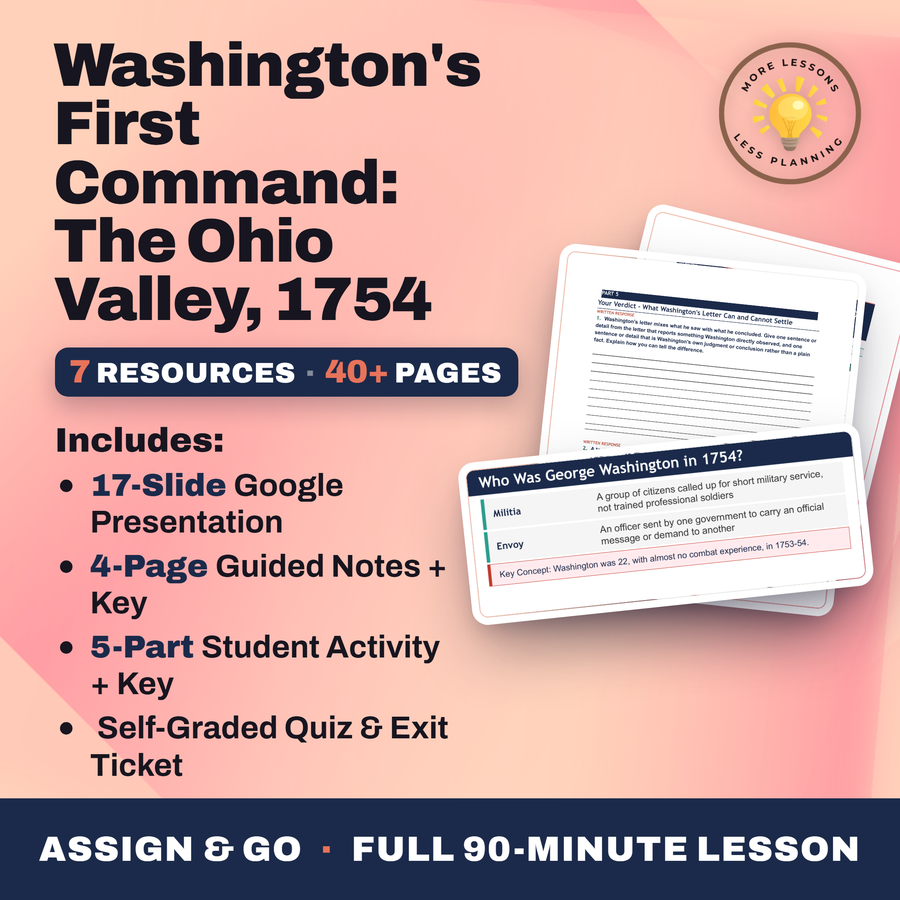
Washington's First Command: The Ohio Valley, 1754
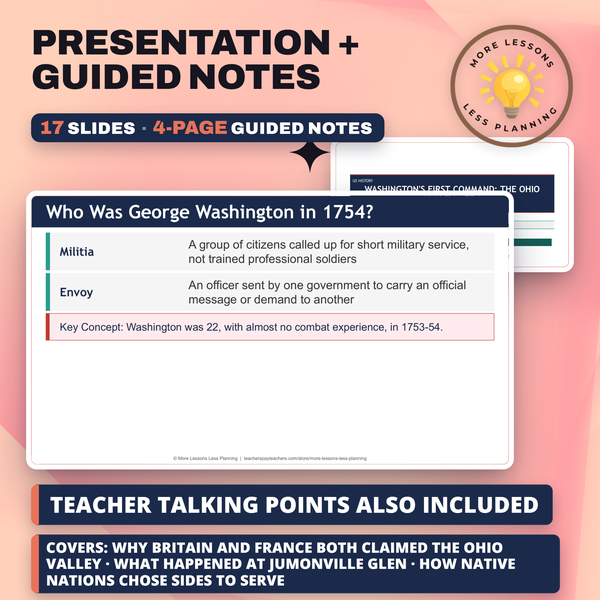
- Slide deck
- Guided notes
- Guided notes teacher key
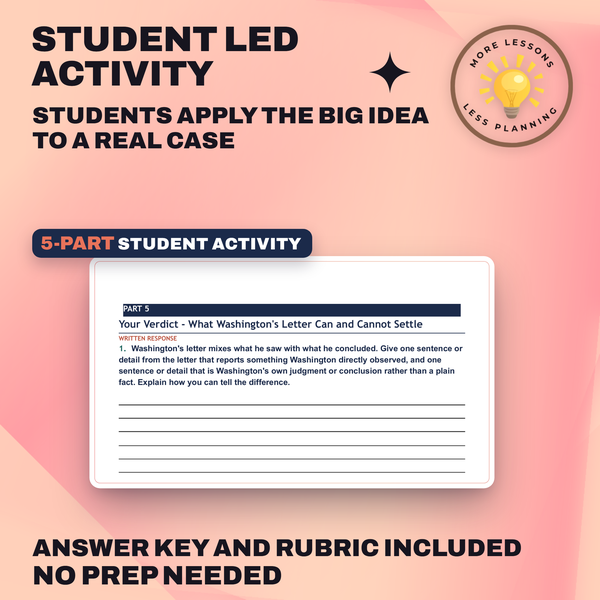
- Activity + answer key
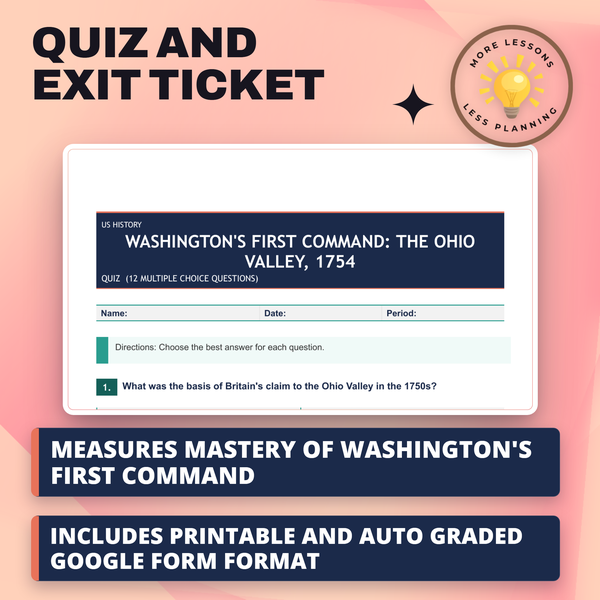
- Quiz + answer key
- Exit ticket + answer key
- Teacher guide
- Teacher presentation notes
Where should I send the next one?
Everything here is free and it stays that way. Leave your email and I'll send you the new lessons as they go up. You can unsubscribe from any one of them.
Every file in this toolkit
Related resources
Bound Labor: How Servitude Became Slavery
Puritan New England Life
The Great Awakening: Preaching That Crossed the Colonies
The Salem Witch Trials, 1692
Three Colonial Regions, Three Economies

Cliff Palace and the Ancestral Puebloans
What students do
- Map what Britain, France, and the Ohio Country nations each wanted from the same stretch of land in 1754
- Trace Washington's night march of May 27-28, 1754, from camp to the clash at Jumonville Glen
- Read Washington's own 1754 letter to Governor Dinwiddie and judge what a participant's account can and cannot settle
- Argue whether Jumonville Glen was a battle or an ambush, using the disputed evidence the lesson presents
What it covers
- Why the Ohio Country nations pursued their own interests instead of simply picking a side
- What happened in the fifteen minutes at Jumonville Glen, and why the outcome is still disputed
- How a badly sited fort at Great Meadows led to Washington's surrender on July 3, 1754
- How one frontier skirmish grew into a war that reshaped North America by 1763
Learning targets
- Explain why Britain and France both claimed the Ohio Valley in the 1750s.
- Describe what happened at Jumonville Glen and at Fort Necessity in 1754.
- Explain how Native nations chose sides to serve their own goals.
- Use Washington's own 1754 letter to judge how he explained the fight.
- Trace how one small clash grew into a war between empires by 1763.
From one teacher to another
I like teaching the French and Indian War through the one detail students never expect: it started with a twenty-two-year-old who'd never commanded anyone in combat. Students spend real time on the Ohio Country nations' own strategy before Washington even enters the story, because neutrality here was a choice, not a lack of one. By the time we reach Washington's own letter to Dinwiddie, students already know enough to catch what a participant defending his own conduct leaves out.
Every lesson on this site is free to download and use. If one of them saved you a prep period, you can chip in a few bucks toward my three kids' daycare fund. That's genuinely where tips go.