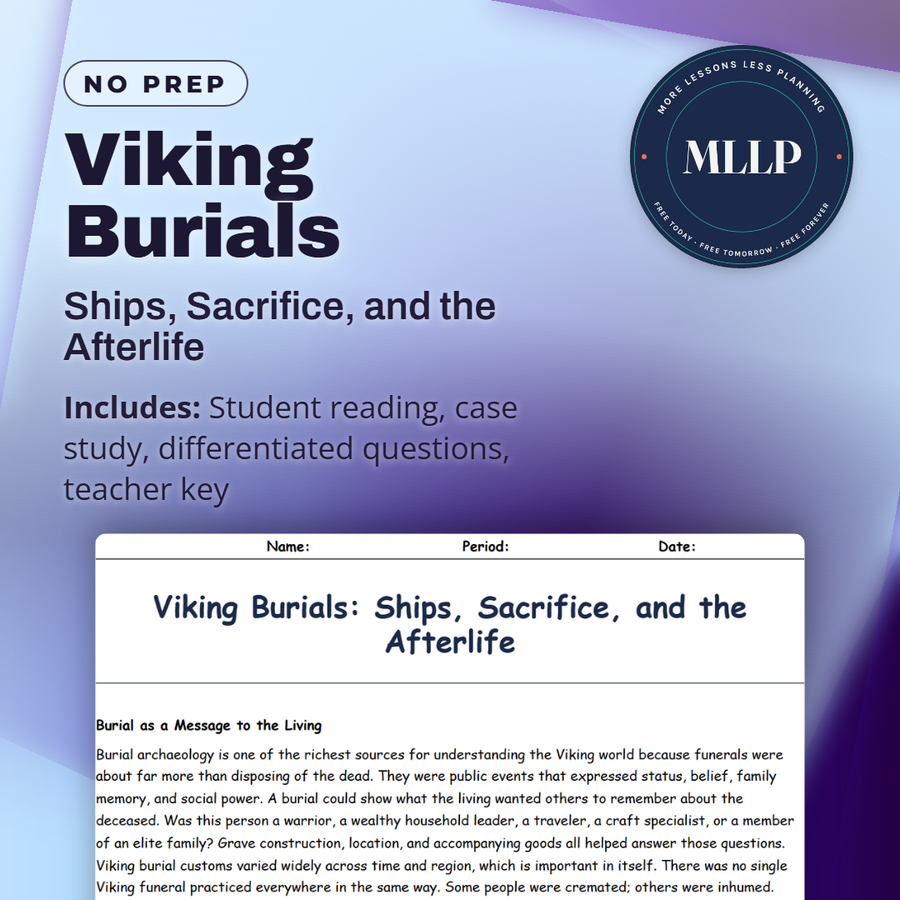
Viking Burials: Ships, Sacrifice, and the Afterlife
Quality reviewed September 2026
Facts verified September 21, 2026
- Subject
- Social Studies
- Grades
- Grades 9-12
- Length
- 9-page student worksheet
- Time
- About one 50-minute class period
- Great for
- Sub plans and independent work
- Includes
- Reading passage, comprehension questions + full answer key
- Format
- Print-and-go PDF
What students do
- Sort five terms, including ship burial, cremation, and grave goods, into their matching definitions
- Three multiple-choice questions test why ship burials mattered and why historians read Ibn Fadlan's account with caution
- A case study follows the traveler Ibn Fadlan watching a Rus funeral he can describe but not fully explain
- Write in three blanks the terms for burning the dead, objects left in a grave, and the traveler who described a Volga funeral
What it covers
- Variation across Viking burial customs, from cremation to ship graves
- The Oseberg and Gokstad ship burials as monuments of status
- Ibn Fadlan's eyewitness account of a Rus funeral on the Volga
Start reading this worksheet
Burial as a Message to the Living
Burial archaeology is one of the richest sources for understanding the Viking world because funerals were about far more than disposing of the dead. They were public events that expressed status, belief, family memory, and social power. A burial could show what the living wanted others to remember about the deceased. Was this person a warrior, a wealthy household leader, a traveler, a craft specialist, or a member of an elite family? Grave construction, location, and accompanying goods all helped answer those questions. Viking burial customs varied widely across time and region, which is important in itself. There was no single Viking funeral practiced everywhere in the same way. Some people were cremated; others were inhumed. Some were buried under mounds; others in flatter cemeteries. Some graves contained weapons, jewelry, tools, animals, or boats, while others were simple. This variety reminds us that Viking society was not uniform. It included local traditions, changing beliefs, differences of wealth, and eventually Christian influence. Yet even with that variation, one theme appears again and again: burial was a statement. The dead were positioned within stories of honor, kinship, and identity. Archaeologists therefore study Viking graves not merely to catalog objects, but to reconstruct social meaning. Every choice matters. A sword beside a body, a set of scales, a brooch, a horse, or a ship can signal something about rank, gender, mobility, or aspiration. Funeral archaeology is powerful because it captures the moment when memory becomes material.
Ships, Mounds, and Monumental Graves
The most spectacular Viking graves are ship burials, in which a vessel or ship-shaped setting formed part of the funeral monument. The Oseberg and Gokstad burials in Norway are the best-known examples from the Viking Age, while Sutton Hoo in England, though Anglo-Saxon and slightly earlier, is often compared because it shows how powerful the ship burial idea was in the wider North Sea world. A ship in a grave was not just an expensive container. It was a symbol loaded with meaning. Ships represented travel, power, wealth, and the ability to command labor. To bury one was to remove an immensely valuable object from ordinary use in order to make a statement about the dead person’s importance. In Oseberg, the lavish grave goods and the burial of two women suggest that high status could be displayed in multiple forms, not only through male warrior identity. In Gokstad, the vessel itself points to practical seafaring strength as well as elite display. Burial mounds added another layer of meaning because they made the dead visible in the landscape. A mound could dominate a shoreline or route and keep memory physically present for generations. Monumental graves therefore linked political display, family authority, and spiritual imagination. Even when organic materials decayed, the scale of the effort remained clear. A ship burial demanded timber, labor, ceremony, and social coordination. It announced that the person inside mattered enough to reshape the landscape in death.
Cremation, Grave Goods, and the Journey Beyond
Not every Viking burial was monumental, but even more modest graves provide clues about beliefs and social values. Cremation was common in many regions, especially earlier in the Viking Age. Burning the dead transformed the body and selected goods into a new state, perhaps symbolically aiding passage to another realm. Inhumation, in which the body was buried intact, also occurred widely and became more common with Christian influence. Grave goods remain one of the most discussed forms of evidence. Weapons, tools, jewelry, household items, horses, dogs, and ships or boat fittings can all appear in graves. These objects should not be read too simply. A sword in a grave may indicate martial identity, but it could also represent status and family display. A set of keys or textile tools might reflect household authority, productive labor, or social symbolism rather than everyday routine alone. Beliefs about the afterlife likely played a role. Later Norse mythology, recorded in medieval texts, speaks of places such as Valhalla, where elite warriors slain in battle were received by Odin, as well as other destinations for the dead. Archaeologists must be cautious because those texts were written down after Christianization, but burial evidence clearly shows that many Norse communities believed the dead continued to matter and perhaps continued to need things. Food offerings, animals, and cherished possessions suggest preparation for a journey or transformed existence. The funeral was not just an ending. It was an act of transition.
Like what you read? The full reading, the case study, and every question set are in the free download below, along with the answer key.
Why this matters
Funerals compress a huge amount of social information into a single event, and this reading uses that idea to teach students how to read any ritual, historical or modern, as something staged for an audience rather than as a neutral snapshot of belief. Ibn Fadlan's account is especially useful here because it forces students to weigh a vivid, detailed eyewitness source against the fact that its author was an outsider describing customs he did not fully understand, which is exactly the kind of judgment call historians make constantly. The reading's larger point, that a grave shows what the living wanted remembered rather than a full picture of everyday life, also gives students a healthy skepticism to carry into any single dramatic piece of evidence they encounter later.
From one teacher to another
A Viking funeral was rarely a private matter. This reading treats burial as a public message, since graves ranged from simple cremations to the lavish ship burials at Oseberg and Gokstad in Norway, each one built to say something about status, belief, and family memory. Students see how weapons, jewelry, tools, and even horses placed in a grave could point to more than one meaning at once, and how mounds turned private grief into a monument visible from a road or shoreline for generations. The reading also brings in Ibn Fadlan, a tenth-century Arab traveler whose eyewitness account of a Rus funeral on the Volga River describes feasting, ritual, and a ship burning, though historians read his outsider's account carefully rather than taking it at face value. A case study follows Ibn Fadlan himself, standing at a careful distance from a ceremony he can record but never fully control.
What you get
Download
Where should I send the next one?
Everything here is free and it stays that way. Leave your email and I'll send you the new lessons as they go up. You can unsubscribe from any one of them.
Related resources
 A Viking City Revealed_COVER.png)
Jorvik (York): A Viking City Revealed
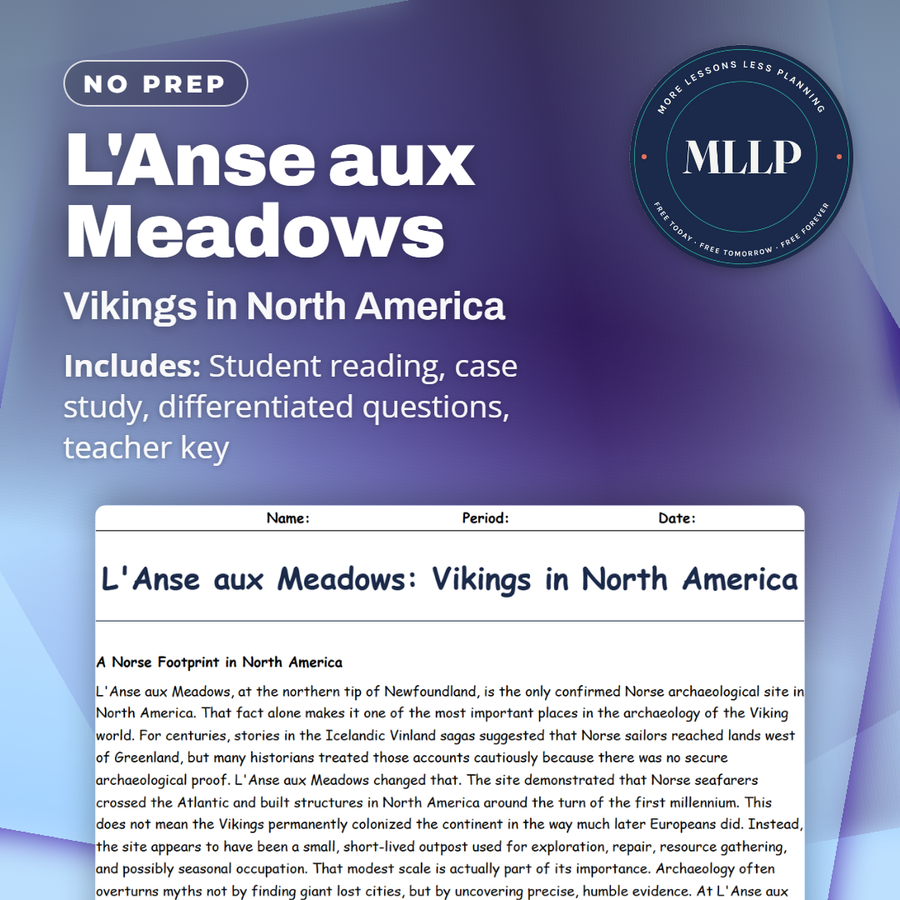
L'Anse aux Meadows: Vikings in North America
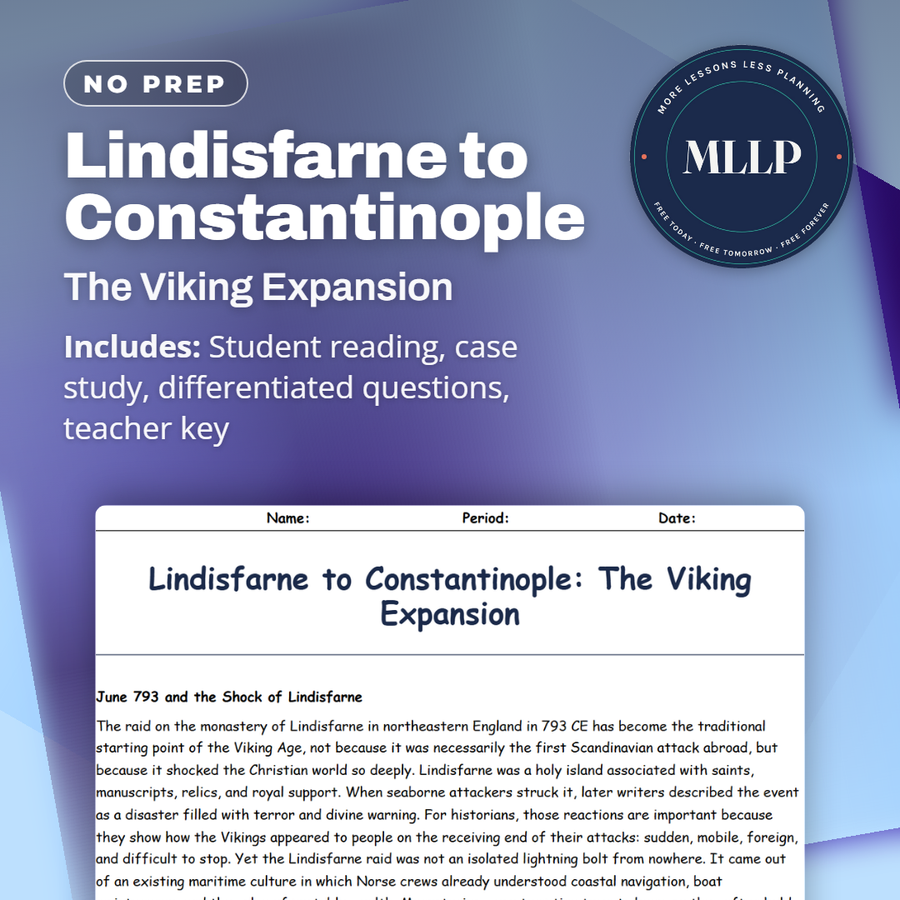
Lindisfarne to Constantinople: The Viking Expansion
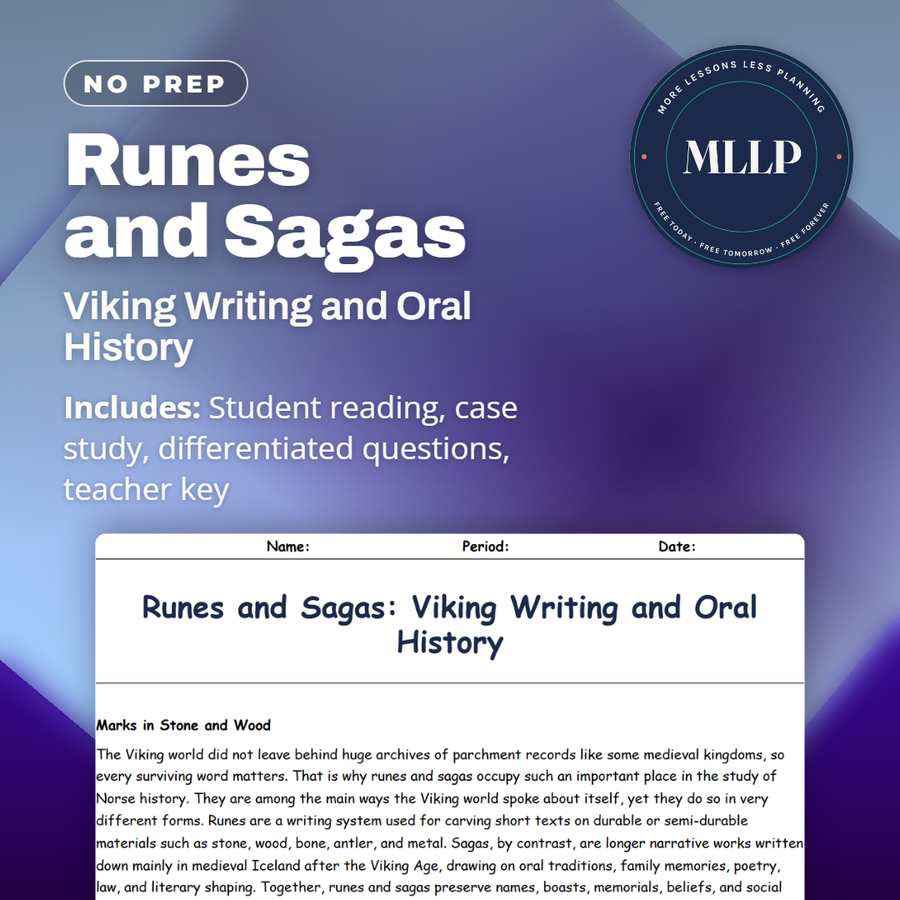
Runes and Sagas: Viking Writing and Oral History
The Norse in Greenland and Iceland: Climate and Collapse
The Viking & Norse World: An Overview
Every lesson on this site is free to download and use. If one of them saved you a prep period, you can chip in a few bucks toward my three kids' daycare fund. That's genuinely where tips go.