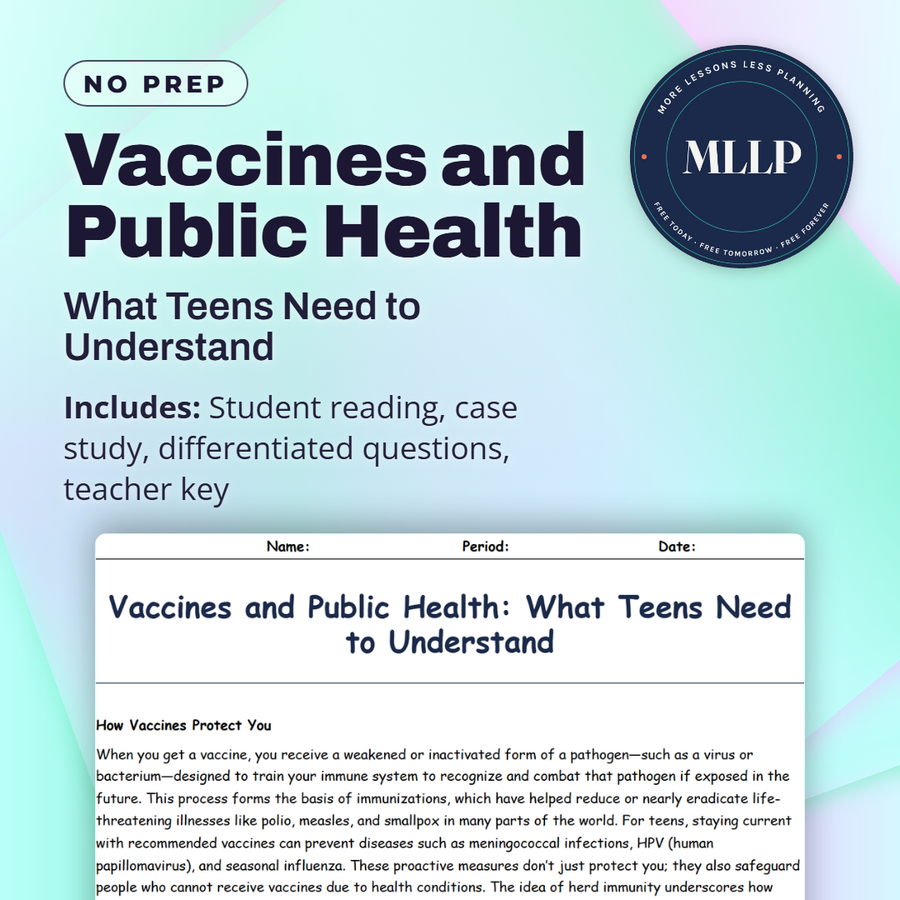
Vaccines and Public Health: What Teens Need to Understand
Quality reviewed September 2026
Facts verified September 21, 2026
- Subject
- Career & Life Skills
- Grades
- Grades 9-12
- Length
- 7-page student worksheet
- Time
- About one 50-minute class period
- Great for
- Sub plans and independent work
- Includes
- Reading passage, comprehension questions + full answer key
- Format
- Print-and-go PDF
What students do
- Answer three multiple-choice questions on how vaccines work and why public health depends on community-wide participation
- Match five terms, including herd immunity and meningitis, to their definitions
- Fill in three blanks naming herd immunity, vaccines, and public health as the reading's core concepts
- Answer three short-answer questions on vaccine misinformation on social media and what steps a teen can take if they have safety concerns
What it covers
- How vaccines train the immune system and why herd immunity protects people who cannot be vaccinated
- Which vaccines teens specifically need, including HPV, meningococcal, Tdap, and the annual flu shot
- A case study following a student who researched a meningococcal vaccine clinic after hearing conflicting claims online
Start reading this worksheet
How Vaccines Protect You
When you get a vaccine, you receive a weakened or inactivated form of a pathogen (such as a virus or bacterium) designed to train your immune system to recognize and combat that pathogen if exposed in the future. This process forms the basis of immunizations, which have helped reduce or nearly eradicate life-threatening illnesses like polio, measles, and smallpox in many parts of the world. For teens, staying current with recommended vaccines can prevent diseases such as meningococcal infections, HPV (human papillomavirus), and seasonal influenza. These proactive measures don’t just protect you; they also safeguard people who cannot receive vaccines due to health conditions. The idea of herd immunity underscores how individual choices influence the larger community. When enough people are immune, it becomes difficult for a disease to spread, offering protection to everyone, especially babies, the elderly, or those with compromised immune systems. This collective benefit is a hallmark of public health strategies, where personal health decisions can have substantial ripple effects. The more people who opt for vaccination, the better the community at large can stave off outbreaks.
Why Teens Need Certain Vaccines
You may already be familiar with childhood immunizations, but additional vaccines for teens often become relevant as you enter adolescence. For instance, HPV vaccination helps prevent certain types of cancers later in life, while the meningococcal vaccine guards against a bacterial infection that can cause serious brain and spinal cord complications. Tdap (tetanus, diphtheria, and pertussis) boosters ensure you remain protected against potentially life-threatening infections. Even the annual flu shot matters for teens. Influenza outbreaks can spread quickly in schools, leading to missed classes, sports, or social events. Getting vaccinated each year adapts your immunity to the latest strains. Despite these benefits, some teens might feel hesitant, perhaps because of misconceptions about vaccine safety. Legitimate vaccines undergo rigorous testing by health authorities. Mild side effects like soreness at the injection site or low-grade fever can occur, but serious complications are extremely rare compared to the disease’s risks. Staying informed through reliable sources like healthcare providers, scientific journals, or reputable medical websites can help dispel myths. Engaging in open conversations with parents and healthcare professionals ensures you make decisions based on facts, not rumors.
Like what you read? The full reading, the case study, and every question set are in the free download below, along with the answer key.
Why this matters
A lot of what teens hear about vaccines comes from social media, not a doctor, which is exactly the gap this reading tries to close using a student's real hesitation as the starting point. It connects an individual choice, like getting the meningococcal vaccine before moving into a college dorm, to the protection of people nearby who cannot be vaccinated for medical reasons. That link between one shot and a wider group's safety is the part of public health students usually do not get elsewhere. Naming a specific outbreak in a neighboring town, the way the case study does, makes the stakes concrete instead of abstract.
From one teacher to another
Megan almost skips a free vaccine clinic at her school because of things she has seen online, and this reading uses her hesitation as the entry point into how vaccines actually work. From there it explains herd immunity, the specific shots recommended for teens like the meningococcal and HPV vaccines, and how a single person's choice connects to classmates who cannot be vaccinated for medical reasons. The last section covers where the misinformation comes from and how public health agencies coordinate vaccination requirements for schools. I like that it treats vaccine hesitancy as a starting point to work through rather than something to lecture students out of.
What you get
Download
Where should I send the next one?
Everything here is free and it stays that way. Leave your email and I'll send you the new lessons as they go up. You can unsubscribe from any one of them.
Related resources
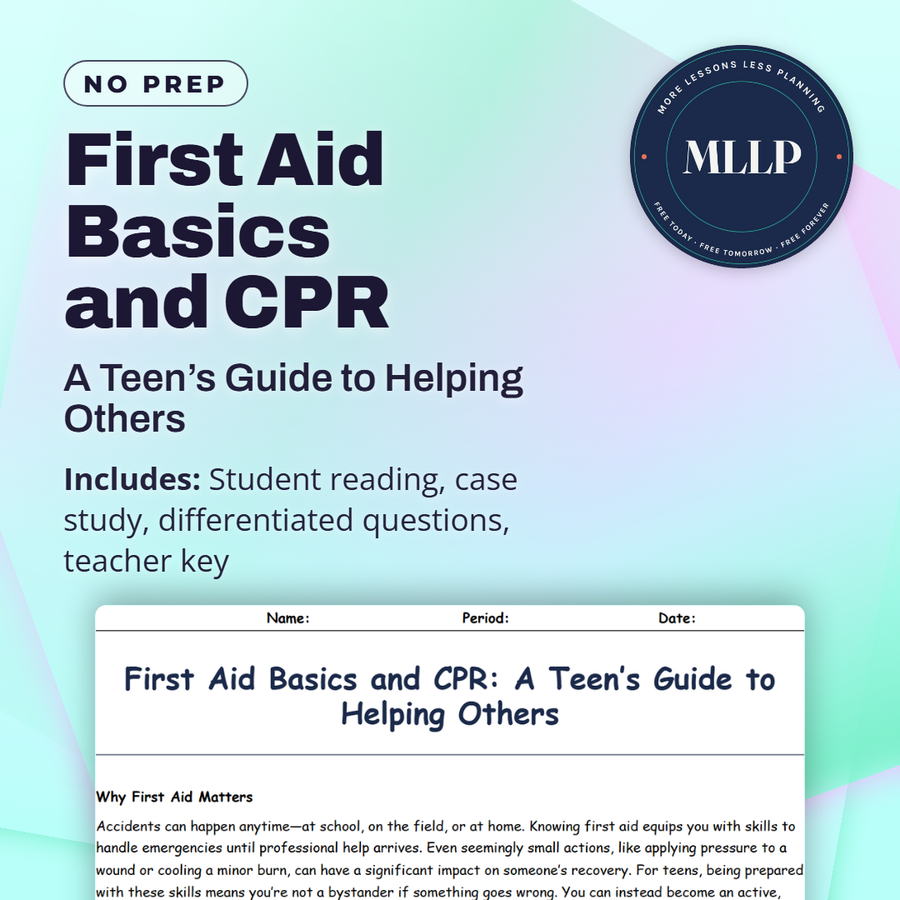
First Aid Basics and CPR: A Teen’s Guide to Helping Others
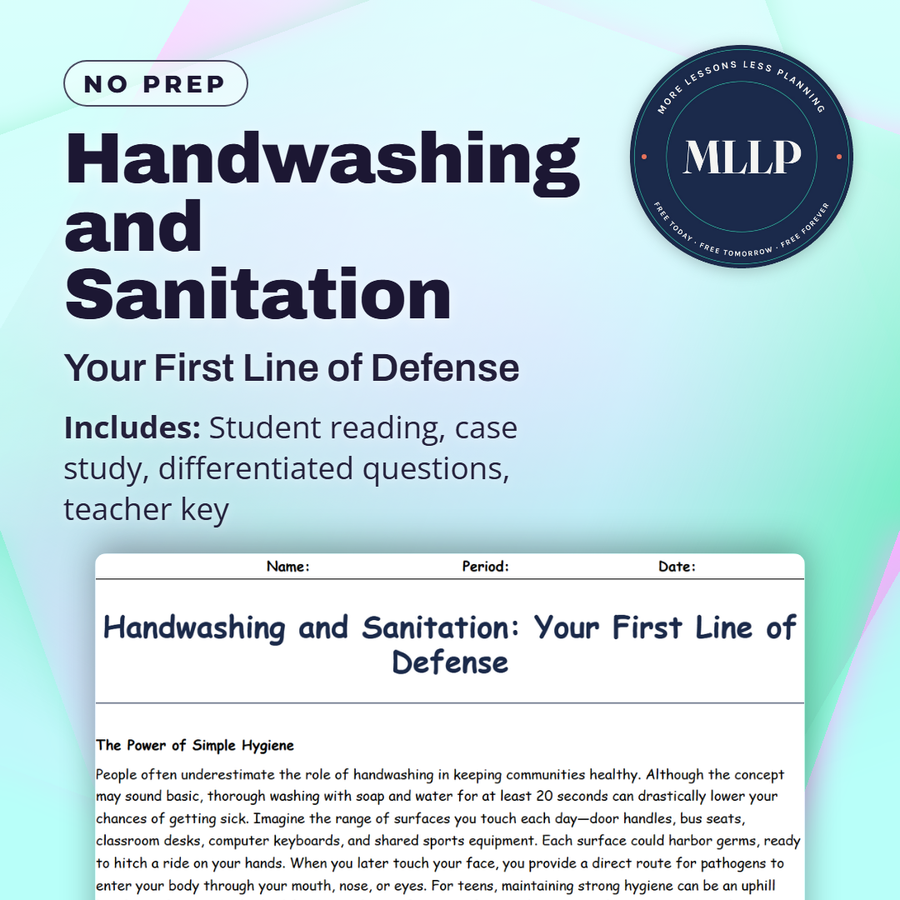
Handwashing and Sanitation: Your First Line of Defense
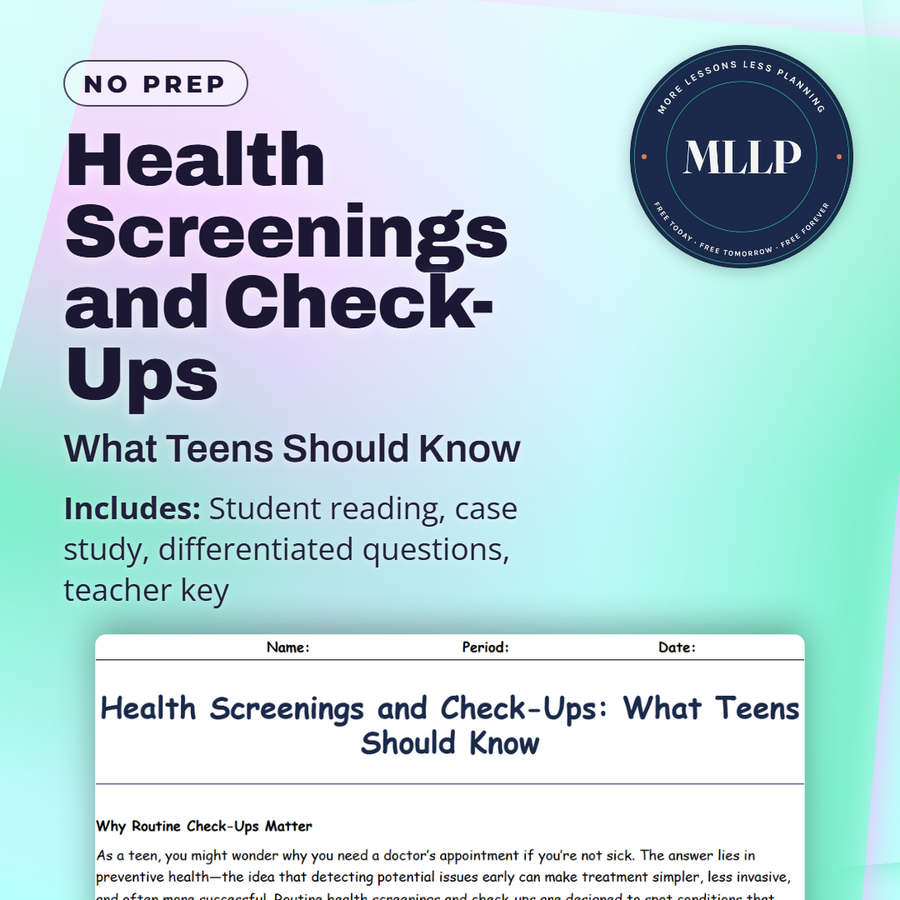
Health Screenings and Check-Ups: What Teens Should Know
Oral Health for Teens: Why Your Smile Matters
Personal Hygiene for Teens: Habits That Keep You Healthy
Preventing Illness: How Teens Can Avoid Infectious Diseases
Every lesson on this site is free to download and use. If one of them saved you a prep period, you can chip in a few bucks toward my three kids' daycare fund. That's genuinely where tips go.