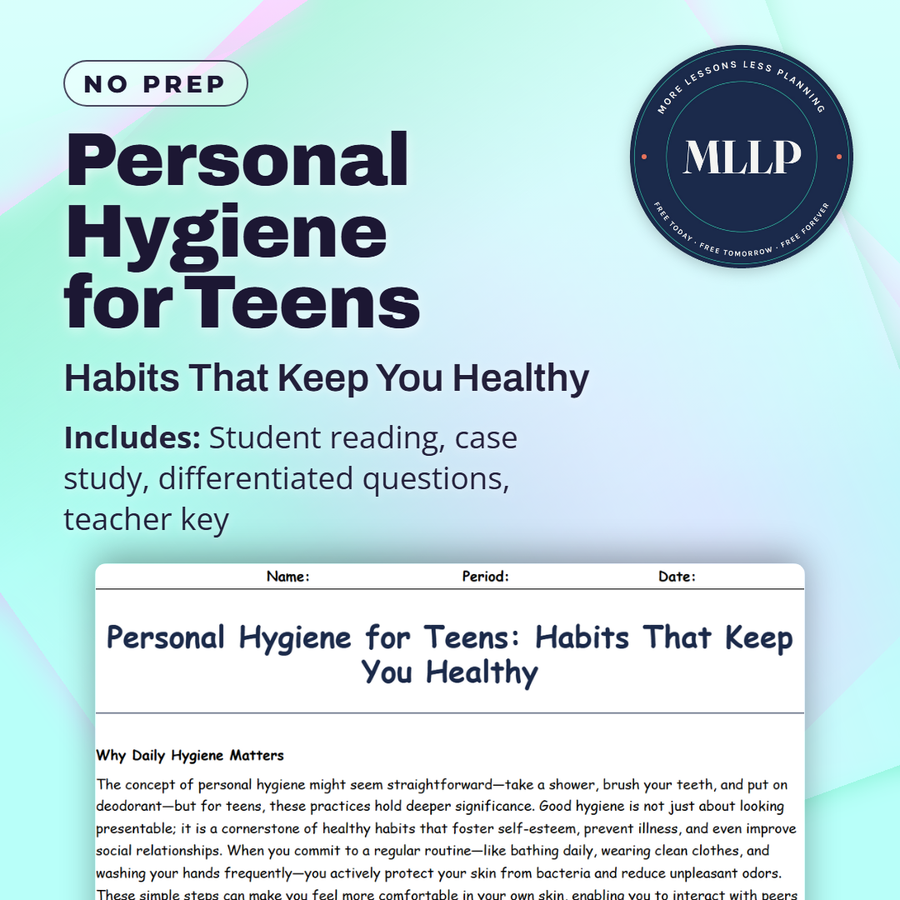
Personal Hygiene for Teens: Habits That Keep You Healthy
Quality reviewed September 2026
Facts verified September 21, 2026
- Subject
- Career & Life Skills
- Grades
- Grades 9-12
- Length
- 8-page student worksheet
- Time
- About one 50-minute class period
- Great for
- Sub plans and independent work
- Includes
- Reading passage, comprehension questions + full answer key
- Format
- Print-and-go PDF
What students do
- Answer three multiple-choice questions on why daily showering, clean clothes, and handwashing protect skin and prevent illness
- Match five terms, including body odor and self-esteem boost, to their definitions
- Fill in three blanks naming showering, clean clothes, and handwashing as the habits that keep bacteria in check
- Answer three short-answer questions on why teens skip hygiene routines and how schools could support better habits
What it covers
- Why daily habits like showering, clean clothes, and handwashing protect the body and support confidence
- How to build a hygiene routine that survives a schedule packed with practices, jobs, and homework
- A case study following a three-sport athlete whose skipped showers led to breakouts and locker-room teasing
Start reading this worksheet
Why Daily Hygiene Matters
The concept of personal hygiene might seem straightforward (take a shower, brush your teeth, and put on deodorant), but for teens, these practices hold deeper significance. Good hygiene is not just about looking presentable; it is a cornerstone of healthy habits that foster self-esteem, prevent illness, and even improve social relationships. When you commit to a regular routine (like bathing daily, wearing clean clothes, and washing your hands frequently), you actively protect your skin from bacteria and reduce unpleasant odors. These simple steps can make you feel more comfortable in your own skin, enabling you to interact with peers and authority figures confidently. For many high school students, maintaining a daily hygiene routine can feel like a chore, especially when juggling early morning classes, homework, part-time jobs, or extracurriculars. Yet skipping basic practices like regular showers or proper handwashing can lead to more time lost later because of sickness or skin problems. Think about how many surfaces you touch each day: locker handles, cafeteria tables, the shared keyboards in the computer lab. Each touchpoint can harbor germs that easily transfer onto your skin. When you then touch your face, you risk introducing germs into your body. This is why handwashing stands out as one of the most effective ways to prevent illnesses, from the common cold to more severe infections. If you participate in sports or other physically demanding activities, the buildup of sweat and oils is even greater, making showering after a workout particularly critical. The goal is not to obsess over every speck of dirt, but rather to develop a healthy respect for cleanliness and how it supports your body’s natural defenses. You don’t need fancy products; a gentle soap or body wash, shampoo suitable for your hair type, and a reliable deodorant can work wonders. These straightforward methods reduce the likelihood of bacterial growth that leads to body odor. Beyond health, these habits also show respect for yourself and others. When you show up to class feeling fresh, you’re better positioned to focus on learning rather than being self-conscious.
Building a Routine You Can Stick To
A major challenge for many teens is finding consistency in daily personal hygiene. Life can be hectic: early alarms, shifting class schedules, after-school clubs, and sports practices leave little time to think about routines. Yet the key to success lies in strategic planning and habit formation. For instance, you might schedule your shower for the same time each day: perhaps in the morning if that helps wake you up, or in the evening to wind down. Over time, this regularity becomes second nature, and you’ll be less tempted to skip. Setting small goals can also keep you on track. If you’ve been neglecting teeth-brushing at night, commit to doing it for a week straight. Once that feels automatic, you can add flossing or incorporate a nightly facial cleanse. Another important aspect is preparing your environment for success. Keep deodorant in your gym locker for a quick refresh after practice, or stash an extra travel-sized toothpaste in your backpack. If laundry schedules are a concern, talk to your family about a plan so you always have access to clean clothes. Avoid leaving sports uniforms or gym clothes unwashed in your locker; the odor and bacteria buildup can be significant. Your body also responds better to routines when paired with a balanced lifestyle. That means fueling up with healthy foods, staying hydrated, and getting enough sleep. These elements all work in tandem: a healthy diet can reduce body odor, staying hydrated aids skin health, and sufficient rest promotes a balanced immune system. When you approach your personal hygiene as part of a holistic routine rather than scattered, one-off tasks, it becomes easier to maintain. Over time, these habits become embedded in your identity, reflecting self-care and discipline that will serve you well into adulthood.
Like what you read? The full reading, the case study, and every question set are in the free download below, along with the answer key.
Why this matters
For a teenager balancing practice, a part-time job, and homework, showering can feel like the first thing to cut. This reading makes the tradeoff concrete: skipped showers show up as body acne, lingering odor, and teammates who notice, the way they did for Nicole. Confidence in a classroom or a locker room starts with feeling clean, and that confidence affects whether a student raises a hand or joins a group project without worrying about how they smell. A few minutes of routine, timed around the actual chaos of a teen's day, changes both.
From one teacher to another
Nicole's story opens this reading: a three-sport athlete whose rushed practice schedule left her skipping showers, and whose skin and social life both paid the price. From there the passages walk through why showering, clean clothes, and handwashing matter beyond looking put-together, and how to build a routine that survives early practices and late homework. I like that it treats hygiene as a scheduling problem as much as a health one, since that is the real barrier for most of my students. The short-answer questions push students to explain why they skip these habits in the first place, rather than just checking a box that they know the routine.
What you get
Download
Where should I send the next one?
Everything here is free and it stays that way. Leave your email and I'll send you the new lessons as they go up. You can unsubscribe from any one of them.
Related resources
First Aid Basics and CPR: A Teen’s Guide to Helping Others
Handwashing and Sanitation: Your First Line of Defense
Health Screenings and Check-Ups: What Teens Should Know
Oral Health for Teens: Why Your Smile Matters
Preventing Illness: How Teens Can Avoid Infectious Diseases
Protecting Your Vision and Hearing: Teen Eye and Ear Health
Every lesson on this site is free to download and use. If one of them saved you a prep period, you can chip in a few bucks toward my three kids' daycare fund. That's genuinely where tips go.