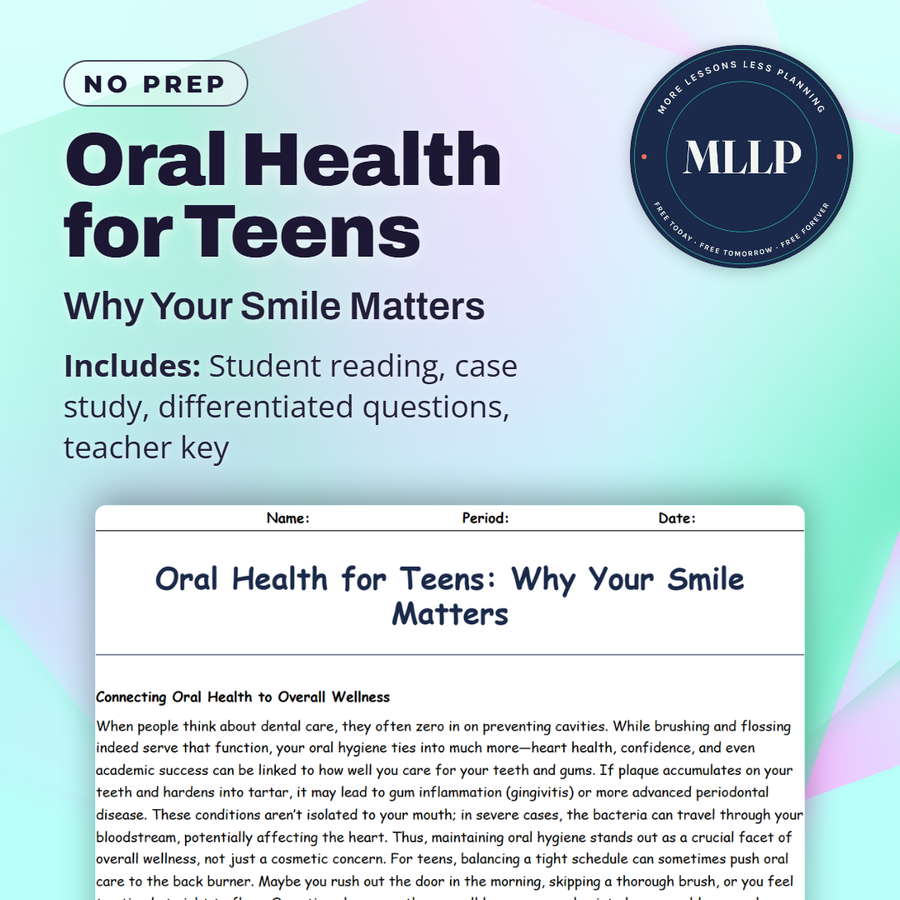
Oral Health for Teens: Why Your Smile Matters
Quality reviewed September 2026
Facts verified September 21, 2026
- Subject
- Career & Life Skills
- Grades
- Grades 9-12
- Length
- 7-page student worksheet
- Time
- About one 50-minute class period
- Great for
- Sub plans and independent work
- Includes
- Reading passage, comprehension questions + full answer key
- Format
- Print-and-go PDF
What students do
- Match terms like tartar, enamel erosion, and gum disease to their definitions
- Fill in blanks about flossing, dental checkups, and sugar's effect on enamel
- Answer multiple-choice questions on why flossing matters and how sugary drinks contribute to decay
- Write short answers on why teens underestimate dental care and how busy students can fit in better habits
What it covers
- How oral hygiene ties into heart health and confidence, beyond preventing cavities alone
- The role sugary and acidic drinks play in enamel erosion and tooth decay
- A case study following Jamal, whose energy drink habit and skipped flossing led to early gum sensitivity and cavities
Start reading this worksheet
Connecting Oral Health to Overall Wellness
When people think about dental care, they often zero in on preventing cavities. While brushing and flossing indeed serve that function, your oral hygiene ties into much more: heart health, confidence, and even academic success can be linked to how well you care for your teeth and gums. If plaque accumulates on your teeth and hardens into tartar, it may lead to gum inflammation (gingivitis) or more advanced periodontal disease. These conditions aren’t isolated to your mouth; in severe cases, the bacteria can travel through your bloodstream, potentially affecting the heart. Thus, maintaining oral hygiene stands out as a crucial facet of overall wellness, not just a cosmetic concern. For teens, balancing a tight schedule can sometimes push oral care to the back burner. Maybe you rush out the door in the morning, skipping a thorough brush, or you feel too tired at night to floss. Over time, however, these small lapses can evolve into larger problems, such as cavities, bad breath, and stained teeth. By consistently brushing twice a day with fluoride toothpaste and flossing daily, you remove food particles and plaque that bacteria thrive on. This habit significantly lowers the risk of gum disease and cavities, effectively safeguarding your smile. Moreover, regular visits to the dentist can catch early signs of trouble before they escalate.
The Role of Sugary Drinks and Diet
Some of the biggest culprits behind tooth decay are sugary and acidic beverages like soda, sports drinks, and fruit juices. The bacteria in your mouth feed on the sugars, releasing acids that wear down tooth enamel. Frequent snacking on sweets can have a similar effect. For teens, these treats might seem harmless (especially when socializing or needing a quick energy boost), but the consequences can be long-lasting if not managed. If you find it difficult to eliminate these drinks entirely, consider rinsing your mouth with water afterward to reduce acid buildup. Drinking water also helps produce saliva, which naturally defends against harmful bacteria. Diet extends beyond sugary drinks, too. Foods high in vitamins and minerals support strong teeth and gums. Calcium, found in dairy products or fortified plant-based alternatives, bolsters enamel. Vitamin C, abundant in citrus fruits and vegetables, contributes to healthy gums. Balancing indulgences with nutritious choices not only benefits your waistline but also protects that confident smile you rely on for social situations, school pictures, and college interviews.
Like what you read? The full reading, the case study, and every question set are in the free download below, along with the answer key.
Why this matters
A stained tooth or bad breath registers immediately in a teenager's world of selfies, group photos, and first impressions, long before gum disease becomes a distant health statistic. This reading leans on immediate stakes, a photo tomorrow, an interview next month, instead of asking a teenager to care about heart health decades from now. Jamal's story reinforces that timeline: his sensitivity and bleeding gums showed up within weeks of neglecting the basics, not years.
From one teacher to another
Energy drinks show up constantly in my classroom, tucked into backpacks and gulped before practice, so this reading uses that habit as its entry point into oral health. It connects brushing and flossing to something bigger than a bright smile, gum disease bacteria that can reach the bloodstream, enamel that acid wears down permanently, and it explains what a normal cavity actually looks like before it hurts. Jamal's case study gives students a peer whose habits, not a stranger's, caused real damage: sensitivity, bleeding gums, and cavities forming along the gum line. Seeing how quickly he reversed it once he switched habits is often what convinces a skeptical student to floss that night.
What you get
Download
Where should I send the next one?
Everything here is free and it stays that way. Leave your email and I'll send you the new lessons as they go up. You can unsubscribe from any one of them.
Related resources
First Aid Basics and CPR: A Teen’s Guide to Helping Others
Handwashing and Sanitation: Your First Line of Defense
Health Screenings and Check-Ups: What Teens Should Know
Personal Hygiene for Teens: Habits That Keep You Healthy
Preventing Illness: How Teens Can Avoid Infectious Diseases
Protecting Your Vision and Hearing: Teen Eye and Ear Health
Every lesson on this site is free to download and use. If one of them saved you a prep period, you can chip in a few bucks toward my three kids' daycare fund. That's genuinely where tips go.