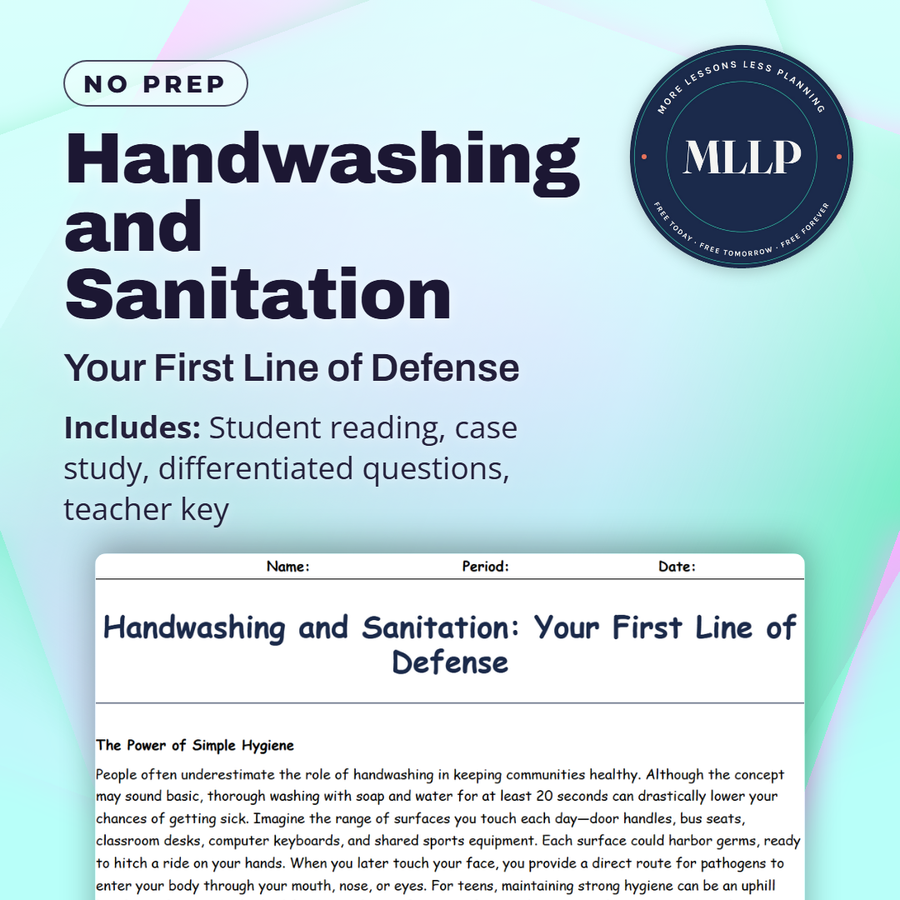
Handwashing and Sanitation: Your First Line of Defense
Quality reviewed September 2026
Facts verified September 21, 2026
- Subject
- Career & Life Skills
- Grades
- Grades 9-12
- Length
- 7-page student worksheet
- Time
- About one 50-minute class period
- Great for
- Sub plans and independent work
- Includes
- Reading passage, comprehension questions + full answer key
- Format
- Print-and-go PDF
What students do
- Match terms like hand sanitizer, disinfectant wipes, and communal equipment to their definitions
- Fill in blanks about surface cleaning, handwashing technique, and hand sanitizer
- Answer multiple-choice questions on proper handwashing steps and misconceptions about sanitizer
- Write short answers on why students skip handwashing and what role they play in keeping shared spaces clean
What it covers
- Why thorough handwashing lowers the risk of colds, flu, and other illness spread through shared surfaces
- How germs move through shared spaces like classrooms, locker rooms, and cafeterias
- A case study following Marisol, who avoided a cold outbreak in her computer lab by wiping down shared keyboards
Start reading this worksheet
The Power of Simple Hygiene
People often underestimate the role of handwashing in keeping communities healthy. Although the concept may sound basic, thorough washing with soap and water for at least 20 seconds can drastically lower your chances of getting sick. Imagine the range of surfaces you touch each day: door handles, bus seats, classroom desks, computer keyboards, and shared sports equipment. Each surface could harbor germs, ready to hitch a ride on your hands. When you later touch your face, you provide a direct route for pathogens to enter your body through your mouth, nose, or eyes. For teens, maintaining strong hygiene can be an uphill battle amidst a packed schedule. You might run from one class to the next, grab a quick snack in the cafeteria, and finish practice before heading home. Yet squeezing in a short handwashing break is time well spent. By doing so, you can reduce your risk not only of common colds but also more serious infections like influenza or gastrointestinal illnesses. Equally important is knowing when to wash: before eating, after using the restroom, after touching potentially contaminated surfaces, and whenever your hands appear visibly dirty. Hand sanitizer can be a useful substitute if soap and water aren’t available. However, it isn’t a perfect replacement. Sanitizer may fail to remove certain types of germs, especially if your hands are heavily soiled. Soap and water, on the other hand, physically wash away debris, bacteria, and viruses, which can be far more effective. Recognizing these nuances helps you make informed choices in different situations, such as using sanitizer in the hallway between classes but heading to the sink when your hands are visibly grimy.
Sanitation in Shared Spaces
A hallmark of high school life is navigating shared spaces (classrooms, libraries, locker rooms, and cafeterias). With so many people passing through, these areas can become breeding grounds for germs. While custodial staff handle cleaning duties, each student bears some responsibility for maintaining sanitation. Simple acts like discarding trash properly, wiping up spills, and avoiding clutter on desks can go a long way toward preventing bacterial or viral spread. Sharing personal items (like lip balm, hats, or even earphones) can also introduce germs to your system. By being conscious of what you share, you minimize the risk of transferring pathogens. Moreover, many schools now place hand-sanitizing stations in hallways and near entrances. Using them when entering or leaving a classroom can reduce cross-contamination. If you notice that an area in your school, such as a computer station or lab bench, is consistently dirty, it might be worth informing a teacher or school official. Maintaining hygienic conditions is a collective effort: it requires both institutional support and student diligence.
Like what you read? The full reading, the case study, and every question set are in the free download below, along with the answer key.
Why this matters
Being the one who wipes down a keyboard or carries hand sanitizer can feel embarrassing in front of friends, which is exactly why Marisol's story matters more than a hygiene checklist would. Teens weigh social cost constantly, and this reading gives them a real example of someone who took a small amount of teasing and ended up right. It reframes handwashing from a rule adults enforce into a decision a student can defend to their friends with an actual story behind it.
From one teacher to another
Health class discussions about illness always come back to the same story: someone got sick because a classroom or locker room stayed dirty. This reading gives students the science underneath that story, the twenty-second rule, when hand sanitizer works and when it doesn't, and how something as ordinary as a doorknob carries germs from one student to the next. Marisol's case study is the one that sticks: she wiped down her keyboard, got teased for it, and was one of the only students in her grade who stayed healthy during a cold outbreak. I like that the reading rewards a habit that feels tedious rather than exciting.
What you get
Download
Where should I send the next one?
Everything here is free and it stays that way. Leave your email and I'll send you the new lessons as they go up. You can unsubscribe from any one of them.
Related resources
First Aid Basics and CPR: A Teen’s Guide to Helping Others
Health Screenings and Check-Ups: What Teens Should Know
Oral Health for Teens: Why Your Smile Matters
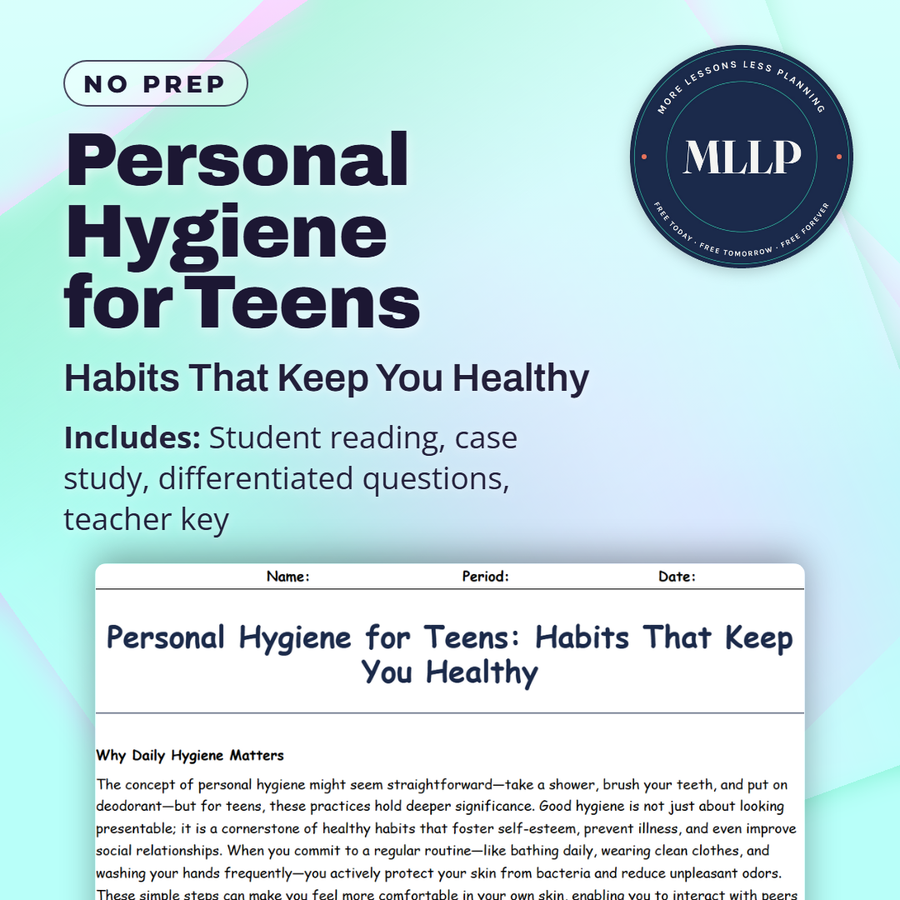
Personal Hygiene for Teens: Habits That Keep You Healthy
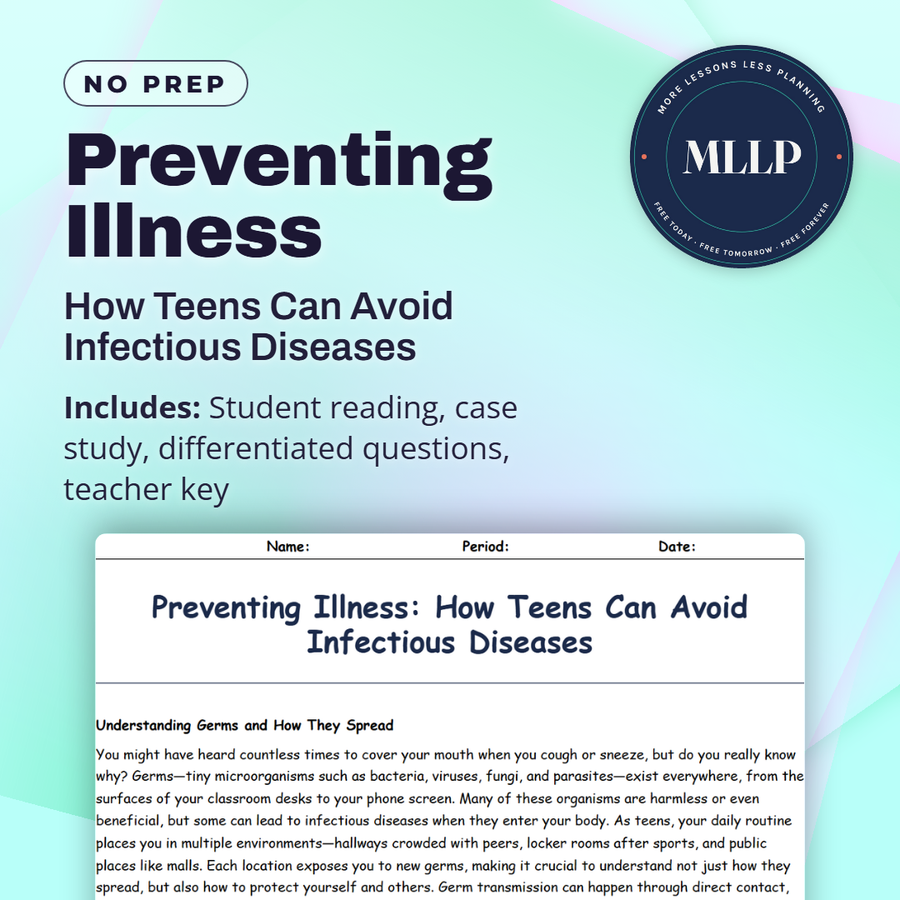
Preventing Illness: How Teens Can Avoid Infectious Diseases
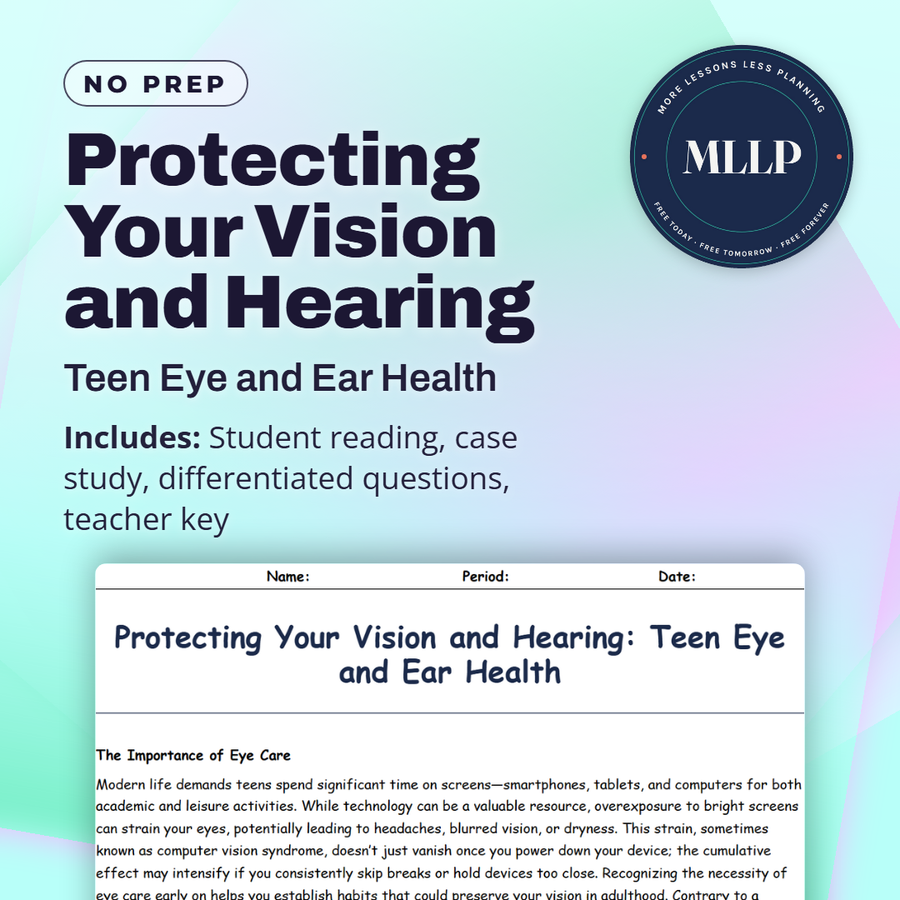
Protecting Your Vision and Hearing: Teen Eye and Ear Health
Every lesson on this site is free to download and use. If one of them saved you a prep period, you can chip in a few bucks toward my three kids' daycare fund. That's genuinely where tips go.