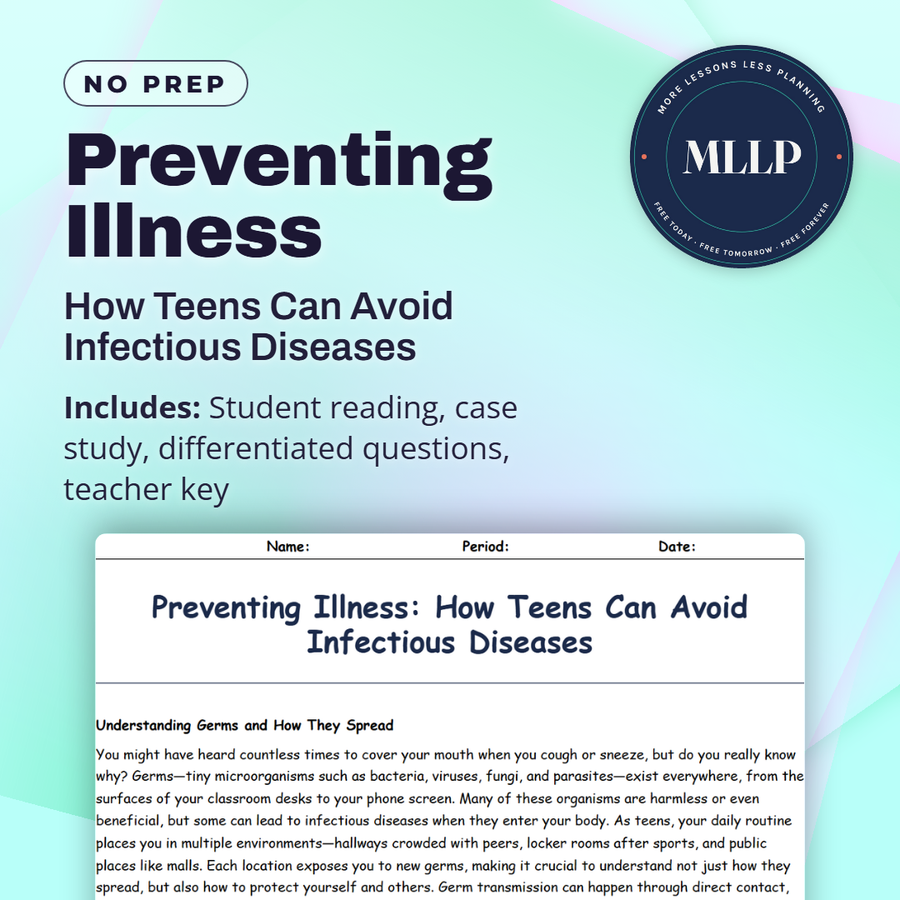
Preventing Illness: How Teens Can Avoid Infectious Diseases
Quality reviewed September 2026
Facts verified September 21, 2026
- Subject
- Career & Life Skills
- Grades
- Grades 9-12
- Length
- 7-page student worksheet
- Time
- About one 50-minute class period
- Great for
- Sub plans and independent work
- Includes
- Reading passage, comprehension questions + full answer key
- Format
- Print-and-go PDF
What students do
- Answer three multiple-choice questions on how stress, sleep, and handwashing affect the immune system
- Match five terms, including airborne spread and self-isolation, to their definitions
- Fill in three blanks naming sleep, handwashing, and staying home as the habits that stop germs from spreading
- Answer three short-answer questions on why sick students still come to school and what that costs the people around them
What it covers
- How germs travel through hallways, locker rooms, and shared water bottles, and what actually blocks the spread
- The sleep, diet, and exercise habits that keep the immune system able to fight off illness
- A case study following a student with perfect attendance who pushed through flu symptoms and spread it to her friends
Start reading this worksheet
Understanding Germs and How They Spread
You might have heard countless times to cover your mouth when you cough or sneeze, but do you really know why? Germs (tiny microorganisms such as bacteria, viruses, fungi, and parasites) exist everywhere, from the surfaces of your classroom desks to your phone screen. Many of these organisms are harmless or even beneficial, but some can lead to infectious diseases when they enter your body. As teens, your daily routine places you in multiple environments: hallways crowded with peers, locker rooms after sports, and public places like malls. Each location exposes you to new germs, making it crucial to understand not just how they spread, but also how to protect yourself and others. Germ transmission can happen through direct contact, like a handshake, or indirectly, like touching a doorknob that an infected person has touched. Airborne diseases spread through tiny droplets when a person coughs or sneezes, while others, like certain skin infections, can pass through shared clothing or towels. Being mindful of these pathways helps you identify where your risks may be higher. For example, if you share a musical instrument mouthpiece or a water bottle, you may be increasing the chance of spreading microbes to your friends. Fortunately, your body has its own defenses, primarily through the immune system. However, several lifestyle factors can weaken these defenses: poor sleep, stress, and inadequate nutrition all make it easier for germs to gain a foothold. Simple habits such as washing your hands thoroughly, avoiding close contact with sick individuals, and not touching your face can significantly reduce your odds of falling ill. If you do start feeling under the weather, staying home from school prevents spreading infections to classmates and faculty, underscoring how individual decisions can ripple through a broader community.
Lifestyle Habits That Strengthen Immunity
The foundations of good health (sufficient rest, a balanced diet, and regular exercise) are also essential to preventing illness. When you get enough sleep, your body has the time it needs to repair cells and bolster immune responses. Adequate rest is particularly important for teens, who often juggle academic responsibilities, part-time jobs, and extracurriculars. Skimping on sleep can disrupt hormone levels, leaving you more vulnerable to infections. Likewise, a nutrient-rich diet with proteins, vitamins, and minerals supports the production of immune cells and antibodies. Foods high in antioxidants (such as berries, leafy greens, and nuts) help neutralize harmful molecules in your body, reducing inflammation and keeping your defense systems robust. Beyond diet and sleep, staying physically active boosts circulation and helps transport immune cells throughout your body. Activities like running, dancing, or even brisk walking encourage better lung function and can help flush bacteria from your airways. Exercise also reduces stress hormones, which, when elevated for long periods, can weaken your immune response. However, it’s crucial to maintain balance. Overtraining, or exercising intensely without adequate recovery, can backfire and leave you susceptible to infections. Moderation and consistency remain the keys to reaping the health benefits of exercise. Mental and emotional well-being also play a part. Chronic stress (whether from exams, relationships, or family issues) can diminish your body’s ability to ward off pathogens. Techniques like deep breathing, meditation, or even hobbies you enjoy provide healthy outlets for stress relief. By nurturing both your physical and mental health, you create an environment in which germs have a tougher time taking hold.
Like what you read? The full reading, the case study, and every question set are in the free download below, along with the answer key.
Why this matters
Missing a day of school can feel like the worst option a student has, which is exactly why this reading spends real time on Allison, a student who collapsed in gym class rather than admit she needed to stay home. The passages connect a single decision, coming to school sick, to a chain reaction that reaches friends, teachers, and anyone with a weaker immune system nearby. It also covers a detail most health classes skip: stopping antibiotics early because symptoms fade can help bacteria become drug-resistant. That is a concrete, specific reason to finish a prescription, beyond simply being told to.
From one teacher to another
This reading starts with the mechanics of how germs actually spread, through door handles, shared water bottles, and the classmate three seats over, before moving into the sleep, food, and exercise habits that keep a teenager's immune system able to fight back. The last section covers what to do once symptoms show up, including the reminder that finishing a prescribed antibiotic matters even after you feel better. Allison's case study closes the reading, showing what happens when a student with perfect attendance pushes through flu symptoms instead of staying home. I use it with students who treat missing school as a bigger risk than getting their classmates sick.
What you get
Download
Where should I send the next one?
Everything here is free and it stays that way. Leave your email and I'll send you the new lessons as they go up. You can unsubscribe from any one of them.
Related resources
First Aid Basics and CPR: A Teen’s Guide to Helping Others
Handwashing and Sanitation: Your First Line of Defense
Health Screenings and Check-Ups: What Teens Should Know
Oral Health for Teens: Why Your Smile Matters
Personal Hygiene for Teens: Habits That Keep You Healthy
Protecting Your Vision and Hearing: Teen Eye and Ear Health
Every lesson on this site is free to download and use. If one of them saved you a prep period, you can chip in a few bucks toward my three kids' daycare fund. That's genuinely where tips go.