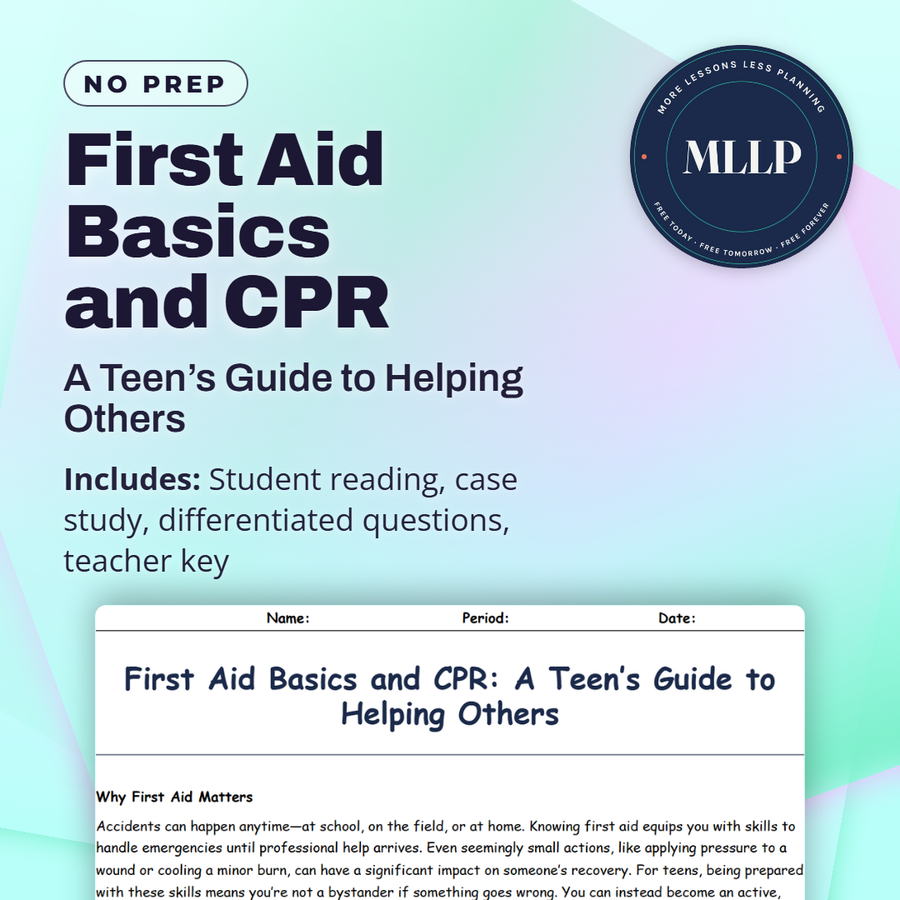
First Aid Basics and CPR: A Teen’s Guide to Helping Others
Quality reviewed September 2026
Facts verified September 21, 2026
- Subject
- Career & Life Skills
- Grades
- Grades 9-12
- Length
- 7-page student worksheet
- Time
- About one 50-minute class period
- Great for
- Sub plans and independent work
- Includes
- Reading passage, comprehension questions + full answer key
- Format
- Print-and-go PDF
What students do
- Match terms like rescue breaths, chest compressions, and AED to their definitions
- Fill in blanks about CPR, AEDs, and how to control bleeding
- Answer multiple-choice questions on chest compression rate and how an AED works
- Write short answers on why teens might hesitate to perform CPR and what else first aid covers besides cardiac emergencies
What it covers
- Why basic first aid and CPR knowledge matters and what a well-stocked first aid kit should include
- The steps of CPR, from checking responsiveness to chest compressions and using an AED
- A case study following Bree, who used CPR and an AED to help her friend Jordan after he collapsed at school
Start reading this worksheet
Why First Aid Matters
Accidents can happen anytime—at school, on the field, or at home. Knowing first aid equips you with skills to handle emergencies until professional help arrives. Even seemingly small actions, like applying pressure to a wound or cooling a minor burn, can have a significant impact on someone’s recovery. For teens, being prepared with these skills means you’re not a bystander if something goes wrong. You can instead become an active, helpful participant in a crisis, offering reassurance and immediate assistance. Learning CPR basics (Cardiopulmonary Resuscitation) can be life-saving if someone’s heart stops or if they stop breathing. It typically involves pressing down on the chest at a certain rate and depth to maintain blood circulation, along with rescue breaths. Even partial knowledge of these procedures is better than none, but formal training and practice on mannequins can boost your confidence and effectiveness. Many schools and community centers offer short courses that lead to certification, teaching you how to maintain an airway, check for responsiveness, and perform chest compressions.
Essential Elements of a First Aid Kit
Beyond knowledge, having access to the right tools is crucial. A well-stocked first aid kit includes items such as sterile gauze pads, adhesive bandages of various sizes, adhesive tape, antiseptic wipes or solutions, and disposable gloves. Tweezers can help remove splinters or small foreign objects, while scissors cut bandages or clothing if necessary. An instant cold pack can reduce swelling in sprains or bruises. Keep these supplies in a portable container, and ensure they’re within reach at home, in your car, or even in your backpack if you’re frequently outdoors or engaged in sports. Just as important as having the kit is knowing how to use its contents. Sterile gauze and bandages are essential for controlling bleeding. Gloves protect you from contact with bodily fluids and reduce the risk of infection. Antiseptics help clean wounds, preventing bacteria from entering. Renew or restock your kit periodically. Gauze can become contaminated, and medication like antibiotic ointments have expiration dates. By regularly checking the kit, you guarantee readiness whenever an emergency arises.
Like what you read? The full reading, the case study, and every question set are in the free download below, along with the answer key.
Why this matters
Most teens have never been the only capable person in an emergency, but it happens: a sibling chokes, a grandparent collapses, a teammate goes down on the field with no adult within reach. This reading exists for the ninety seconds before help arrives, when the only trained person on the scene might be a teenager who took ten minutes to read about chest compressions. Bree was not a nurse or a coach; she was a student who had sat through a lesson like this one and knew what to do when nobody else did.
From one teacher to another
I bring this reading out before we practice CPR on training mannequins, because students respond better to the steps once they have seen them play out in a real scene first. The passages cover what belongs in a first aid kit, how CPR actually works, compression rate, rescue breaths, and how an AED fits into the sequence. Bree's case study shows a peer, not a paramedic, handling a collapse calmly enough to keep her friend Jordan alive until help arrived. Reading it before the hands-on practice gives students a reason to take the compressions seriously instead of treating the mannequin like a prop.
What you get
Download
Where should I send the next one?
Everything here is free and it stays that way. Leave your email and I'll send you the new lessons as they go up. You can unsubscribe from any one of them.
Related resources
Handwashing and Sanitation: Your First Line of Defense
Health Screenings and Check-Ups: What Teens Should Know
Oral Health for Teens: Why Your Smile Matters
Personal Hygiene for Teens: Habits That Keep You Healthy
Preventing Illness: How Teens Can Avoid Infectious Diseases
Protecting Your Vision and Hearing: Teen Eye and Ear Health
Every lesson on this site is free to download and use. If one of them saved you a prep period, you can chip in a few bucks toward my three kids' daycare fund. That's genuinely where tips go.