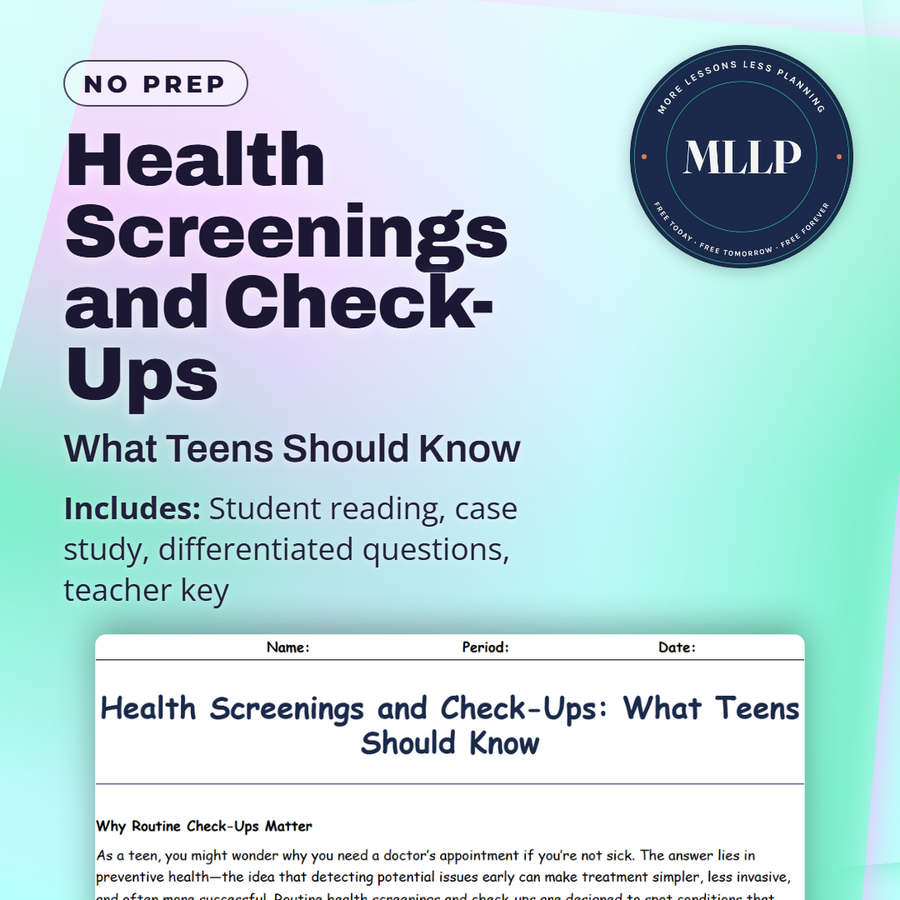
Health Screenings and Check-Ups: What Teens Should Know
Quality reviewed September 2026
Facts verified September 21, 2026
- Subject
- Career & Life Skills
- Grades
- Grades 9-12
- Length
- 7-page student worksheet
- Time
- About one 50-minute class period
- Great for
- Sub plans and independent work
- Includes
- Reading passage, comprehension questions + full answer key
- Format
- Print-and-go PDF
What students do
- Match terms like scoliosis, hypertension, and preventive health to their definitions
- Fill in blanks about hypertension, physical exams, and early detection
- Answer multiple-choice questions on what preventive health means and what a routine check-up includes
- Write short answers on what keeps teens from scheduling check-ups and why family medical history matters
What it covers
- Why routine check-ups and screenings catch problems, like high blood pressure or vision issues, before they become serious
- What a typical doctor visit involves, from vital signs to questions worth preparing in advance
- A case study following Raina, an active teen who discovered borderline high blood pressure through a school screening
Start reading this worksheet
Why Routine Check-Ups Matter
As a teen, you might wonder why you need a doctor’s appointment if you’re not sick. The answer lies in preventive health—the idea that detecting potential issues early can make treatment simpler, less invasive, and often more successful. Routine health screenings and check-ups are designed to spot conditions that might otherwise go unnoticed. From vision and hearing tests to blood pressure checks, these exams can uncover early signs of problems like high blood pressure, anemia, or even subtle hormonal imbalances. By addressing these concerns promptly, you can often avoid more serious complications down the road. In some cases, your school might offer specific screenings, like scoliosis checks or hearing evaluations. Doctors also look out for mental health red flags such as chronic stress, anxiety, or depression. Feeling comfortable enough to discuss these issues openly is a part of learning to advocate for your own health. If you’re an athlete, doctor visits for sports physicals assess your heart function, muscle strength, and joint flexibility, ensuring you’re fit to participate safely. Ultimately, consistent check-ups build a record of your health over time, giving medical professionals valuable insight into any changes or anomalies that develop.
Types of Common Screenings
Health screenings can be broad or focused on specific areas. You might undergo a blood test to check for cholesterol levels or anemia, a vision test to see if you need glasses, or a hearing exam to detect hearing loss early. If you have a family history of diabetes, your doctor might monitor blood sugar levels regularly. Dental screenings also fall under preventive care, ensuring cavities and gum disease don’t progress. Some schools even incorporate mental health screenings or questionnaires aimed at gauging stress and emotional well-being. It’s important to remember that not all screenings are mandatory for every teen. Factors such as genetic predispositions, personal medical history, and lifestyle choices can influence which evaluations are most relevant for you. During a check-up, do not hesitate to bring up any concerns—aches, changes in sleep patterns, or even mood fluctuations. Open dialogue fosters a collaborative relationship with your healthcare provider, enabling them to tailor advice and interventions to your unique situation.
Like what you read? The full reading, the case study, and every question set are in the free download below, along with the answer key.
Why this matters
Somewhere around sixteen, teens start attending parts of their own doctor visits alone, and many do not realize confidentiality protections give them room to speak honestly about sleep, stress, or symptoms they have been ignoring. This reading is where that shift gets named out loud instead of assumed. Raina's story works because nothing was visibly wrong with her; it is proof that showing up to a screening matters even when nothing feels wrong, which is the actual skill being taught here.
From one teacher to another
Most of my students assume a doctor's visit is only necessary when something already hurts, so this reading starts from the opposite idea: screenings exist to catch problems before symptoms show up. It covers the specific checks teens are likely to encounter, vision, hearing, blood pressure, scoliosis, and mental health, plus how to prepare questions ahead of an appointment. Raina's case study undercuts the assumption directly: she was healthy, active, and symptom-free, yet a school screening caught blood pressure worth tracking. That gap between feeling fine and being fine is the whole point of the reading.
What you get
Download
Where should I send the next one?
Everything here is free and it stays that way. Leave your email and I'll send you the new lessons as they go up. You can unsubscribe from any one of them.
Related resources
First Aid Basics and CPR: A Teen’s Guide to Helping Others
Handwashing and Sanitation: Your First Line of Defense
Oral Health for Teens: Why Your Smile Matters
Personal Hygiene for Teens: Habits That Keep You Healthy
Preventing Illness: How Teens Can Avoid Infectious Diseases
Protecting Your Vision and Hearing: Teen Eye and Ear Health
Every lesson on this site is free to download and use. If one of them saved you a prep period, you can chip in a few bucks toward my three kids' daycare fund. That's genuinely where tips go.