
Unions: Power in Numbers
- Slide deck
- Guided notes
- Guided notes teacher key
- Activity + answer key
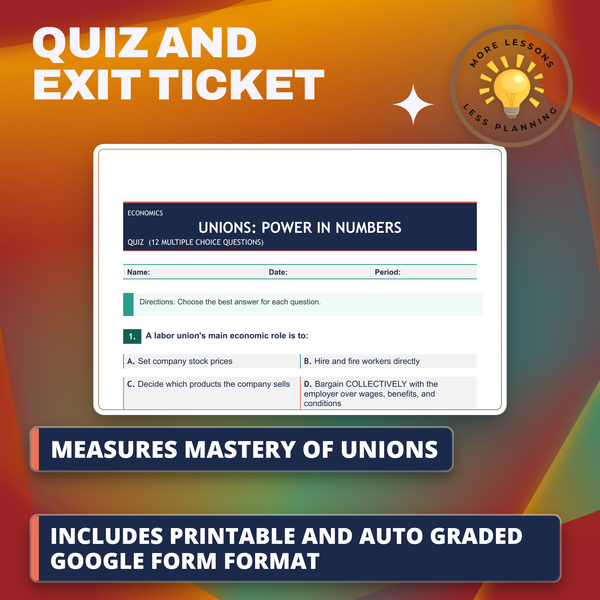
- Quiz + answer key
- Exit ticket + answer key
- Teacher guide
Where should I send the next one?
Everything here is free and it stays that way. Leave your email and I'll send you the new lessons as they go up. You can unsubscribe from any one of them.
Every file in this toolkit
Related resources
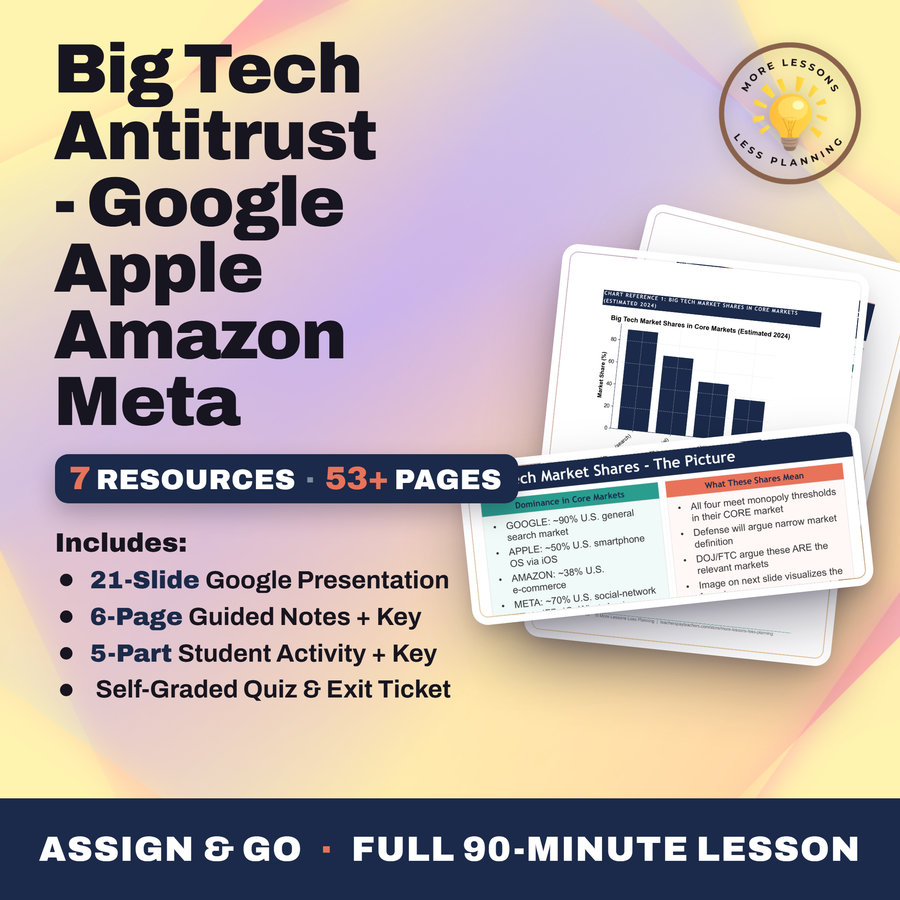
Big Tech Antitrust - Google Apple Amazon Meta
Credit Scores: The Number That Runs Your Life
Economic Systems - Capitalism vs Socialism vs Mixed
Externalities When Markets Hurt Others
Factors of Production - Land, Labor, Capital, and Entrepreneurship
Interest Rates: The Fed's Main Tool
What students do
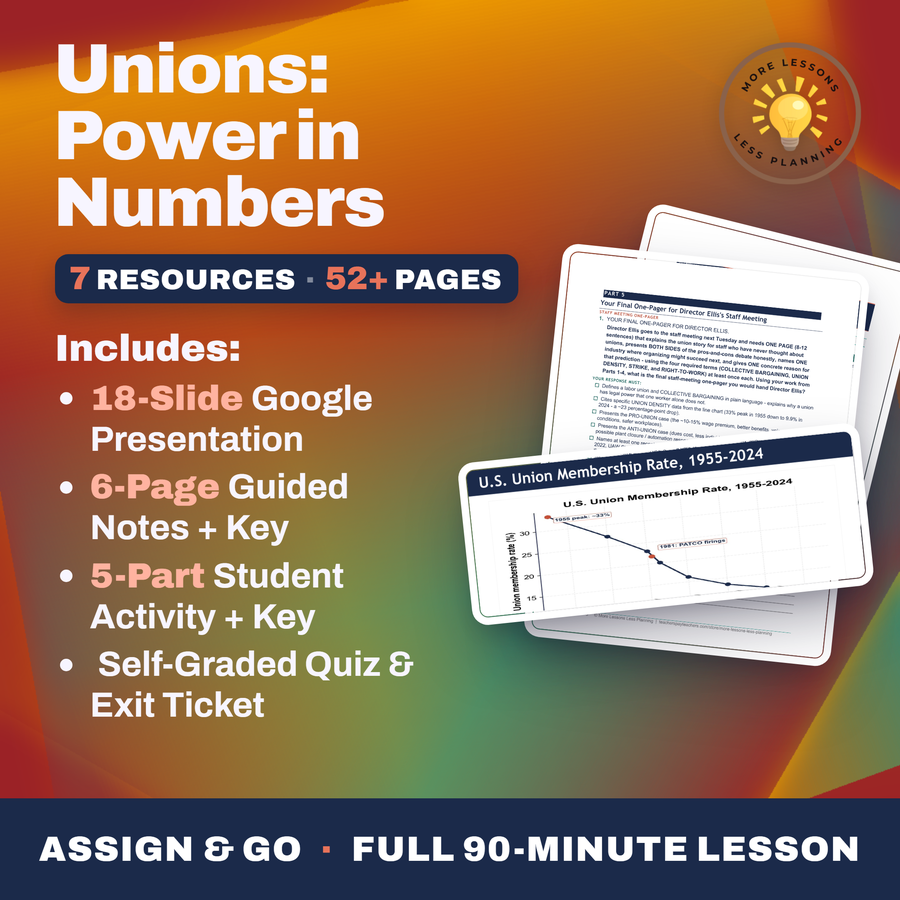
- Define a labor union and explain how collective bargaining gives workers more leverage than negotiating alone
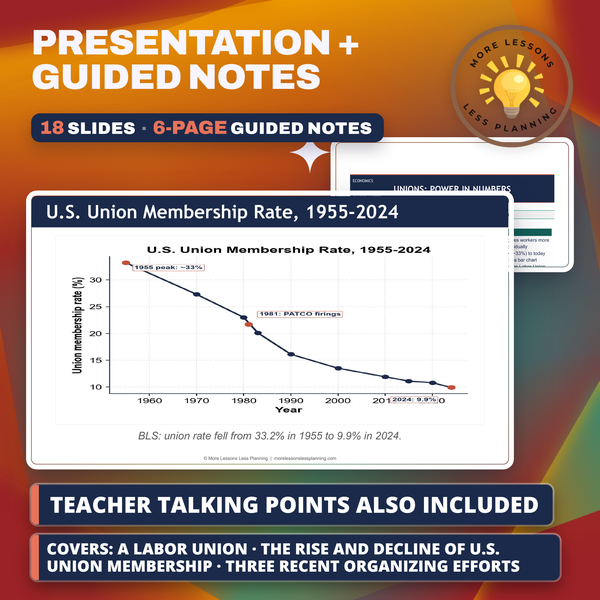
- Trace U.S. union membership from the 1955 peak of 33 percent down to 9.9 percent today using a line chart
- Compare union density by state, reading Hawaii's 26.5 percent against North Carolina's 2.4 percent off a bar chart
- Evaluate three recent organizing drives, Starbucks Workers United, the Amazon Labor Union, and the UAW Stand-Up Strike, and argue both sides of the union debate
What it covers
- Why union density fell from about a third of workers in 1955 to under 10 percent today
- Three current organizing stories, Starbucks, Amazon's JFK8 warehouse, and the 2023 UAW Stand-Up Strike
- Both sides of the pros-and-cons debate over unions, argued from the evidence rather than assigned a side
Learning targets
- Define a LABOR UNION and explain how COLLECTIVE BARGAINING gives workers more power in setting wages, benefits, and working conditions than they have individually
- Trace the rise and decline of U.S. union membership from the 1955 peak (~33%) to today (9.9%) using a line chart, and read state-level differences in union density off a bar chart
- Evaluate three recent organizing efforts (Starbucks Workers United, Amazon Labor Union JFK8, the UAW Stand-Up Strike) and present BOTH SIDES of the union pros-and-cons debate
From one teacher to another
After the history and the chart reading, this lesson ends in an actual debate instead of a lecture, with students arguing both sides of the union question rather than being handed a conclusion. The three organizing stories, Starbucks, the Amazon warehouse in Staten Island, and the UAW strike, give the numbers somewhere to land besides a decades-old chart. Most classes are already split on unions before this lesson starts, and I didn't want the activity to flatten that.
Every lesson on this site is free to download and use. If one of them saved you a prep period, you can chip in a few bucks toward my three kids' daycare fund. That's genuinely where tips go.