Big Tech Antitrust - Google Apple Amazon Meta
- Slide deck
- Guided notes
- Guided notes teacher key
- Activity + answer key
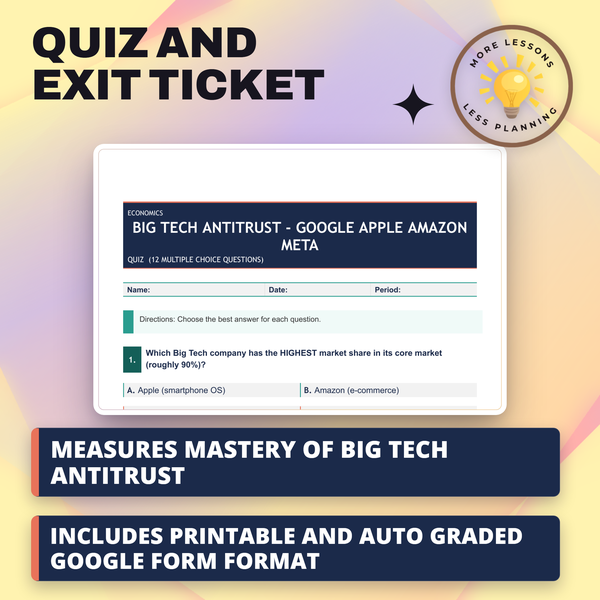
- Quiz + answer key
- Exit ticket + answer key
- Teacher guide
- Teacher presentation notes
Where should I send the next one?
Everything here is free and it stays that way. Leave your email and I'll send you the new lessons as they go up. You can unsubscribe from any one of them.
Every file in this toolkit
Related resources
What students do
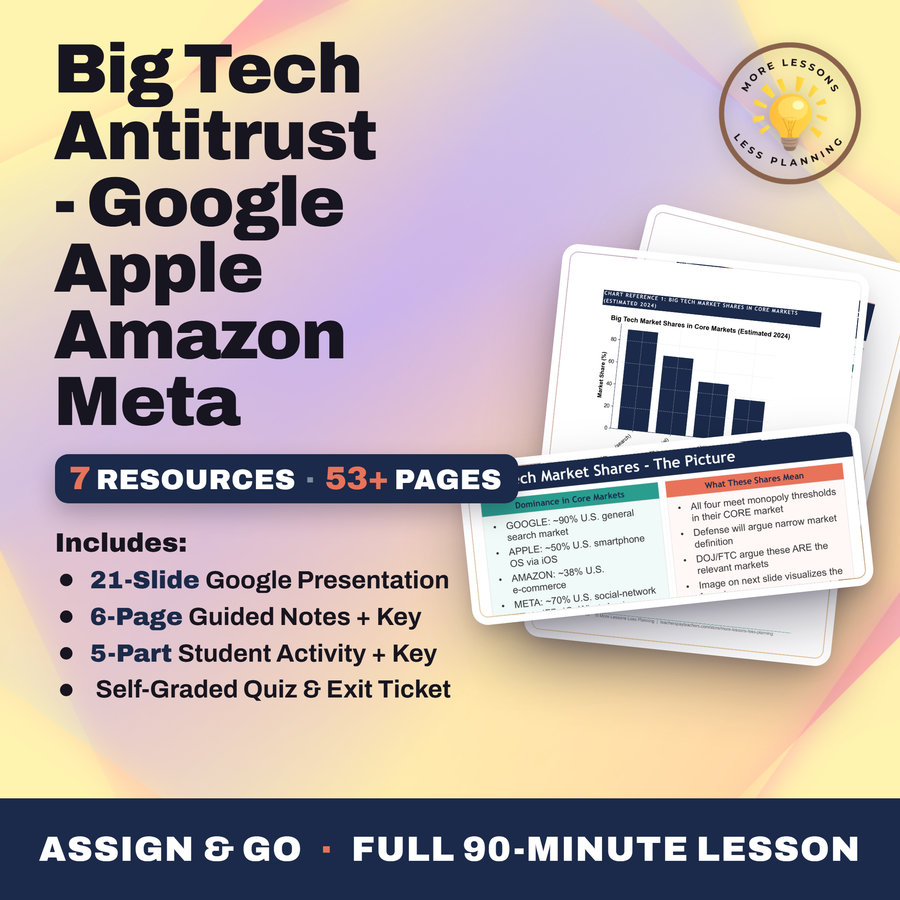
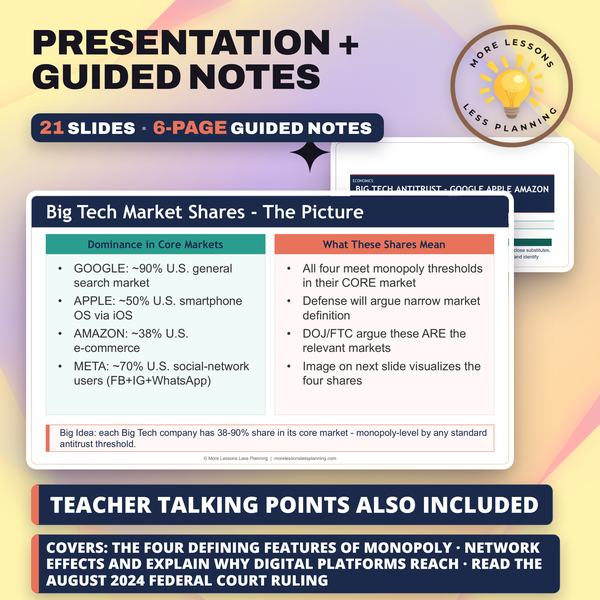
- Apply the four features of monopoly to Google, Apple, Amazon, and Meta and identify which features each company actually satisfies
- Define network effects and explain why digital platforms reach monopoly scale faster than physical-economy firms
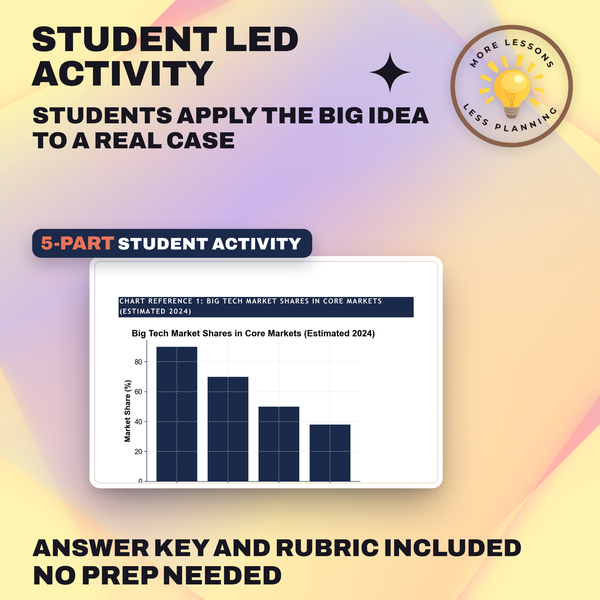
- Read the August 2024 ruling in United States v. Google alongside three market-share charts to evaluate the case against each company
- Write a Final Recommendation Memo naming which Big Tech company has the strongest antitrust case and what remedy the DOJ or FTC should pursue
What it covers
- Google's roughly 90 percent search share and the $20 billion a year Apple default-search payments at the center of the 2024 ruling
- Apple's 30 percent App Store commission and Meta's killer acquisitions of Instagram and WhatsApp
- The difference between a behavioral remedy and a structural remedy in an antitrust case
Learning targets
- Apply the four defining features of MONOPOLY from TK 22 (one seller, no close substitutes, high barriers to entry, price-maker firm) to Google, Apple, Amazon, and Meta and identify WHICH features each Big Tech company satisfies
- Define NETWORK EFFECTS and explain why digital platforms reach monopoly scale faster than physical-economy firms - and why network effects are the most durable barrier to entry in the Big Tech antitrust cases
- Read the August 2024 federal court ruling in U.S. v. Google (Judge Mehta) and three Big Tech market-share charts, then write a Final Recommendation Memo identifying which Big Tech company has the strongest antitrust case against it and what remedy the DOJ or FTC should seek
From one teacher to another
In August 2024, a federal judge ruled that Google broke antitrust law by paying Apple roughly twenty billion dollars a year to stay the default search engine, and that single ruling anchors the whole case study. Students apply the same four-features-of-monopoly test to Google, Apple, Amazon, and Meta, reading actual market-share numbers instead of taking my word for who has power and who doesn't. It ends with a Final Recommendation Memo I require from every student, naming one company and one remedy, so the unit closes on an argument instead of a summary.
Every lesson on this site is free to download and use. If one of them saved you a prep period, you can chip in a few bucks toward my three kids' daycare fund. That's genuinely where tips go.