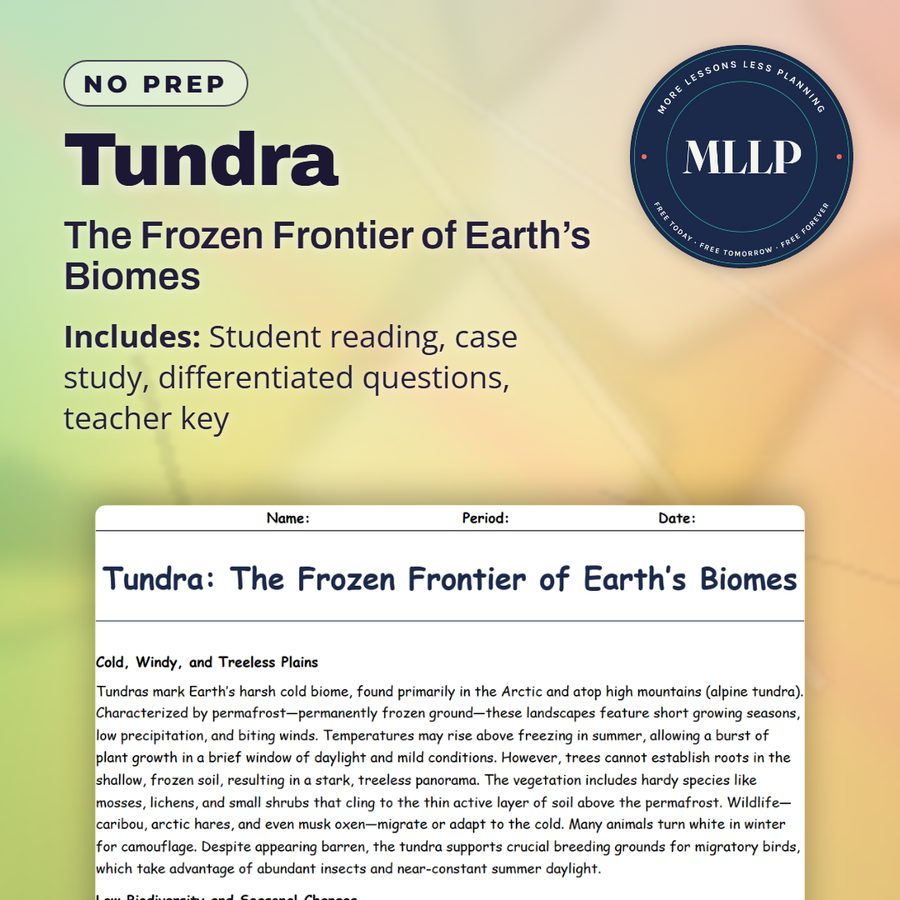
Tundra: The Frozen Frontier of Earth’s Biomes
Quality reviewed September 2026
Facts verified September 14, 2026
- Subject
- Social Studies
- Grades
- Grades 9-12
- Length
- 6-page student worksheet
- Time
- About one 50-minute class period
- Great for
- Sub plans and independent work
- Includes
- Reading passage, comprehension questions + full answer key
- Format
- Print-and-go PDF
What students do
- Match terms like Permafrost, Alpine Tundra, and Caribou to their correct descriptions
- Fill in the blank sentences on tundra animals changing coat color and permafrost storing carbon
- Answer multiple choice questions on tundra terrain, what permafrost is, and where alpine tundra occurs
- Write short answers on how permafrost affects plants and structures and why climate change concerns tundra regions
What it covers
- Arctic and alpine tundra biomes, including permafrost, short growing seasons, and cold-adapted wildlife
- Seasonal changes in the tundra and how climate change threatens to thaw permafrost and release carbon
- A case study on alpine tundra restoration in the Andes after overgrazing damaged the ecosystem
Start reading this worksheet
Cold, Windy, and Treeless Plains
Tundras mark Earth’s harsh cold biome, found primarily in the Arctic and atop high mountains (alpine tundra). Characterized by permafrost, permanently frozen ground, these landscapes feature short growing seasons, low precipitation, and biting winds. Temperatures may rise above freezing in summer, allowing a burst of plant growth in a brief window of daylight and mild conditions. However, trees cannot establish roots in the shallow, frozen soil, resulting in a stark, treeless panorama. The vegetation includes hardy species like mosses, lichens, and small shrubs that cling to the thin active layer of soil above the permafrost. Wildlife (caribou, arctic hares, and even musk oxen) migrate or adapt to the cold. Many animals turn white in winter for camouflage. Despite appearing barren, the tundra supports crucial breeding grounds for migratory birds, which take advantage of abundant insects and near-constant summer daylight.
Low Biodiversity and Seasonal Changes
Compared to rainforests or grasslands, tundras host relatively few species due to extreme conditions. Yet the species that do live here exhibit specialized adaptations. Plants grow close to the ground to avoid wind damage, and dark, fuzzy leaves can help absorb heat. Insects like mosquitoes and blackflies can appear in massive swarms during the short summer, providing food for birds. Seasonal transformations are dramatic. In winter, the sun barely rises, and temperatures plummet. In summer, the land softens, revealing pools of meltwater. Migratory animals arrive to feed and breed, then depart as autumn cold sets in. Climate change threatens to alter these cycles: if permafrost thaws, habitats shift, and invasive species could move in, reshaping the tundra.
Like what you read? The full reading, the case study, and every question set are in the free download below, along with the answer key.
Why this matters
Caribou changing coat color with the seasons is the detail students remember about the tundra, but permafrost matters more, storing carbon sealed underground. Arctic and alpine tundra share short growing seasons and cold-adapted wildlife, yet permafrost connects this biome to a bigger climate story. The Andes case study shows alpine tundra recovering after overgrazing, with local herders helping bring it back.
The tundra gets written off as simply cold and empty, so permafrost thawing and releasing stored carbon usually counts as new information. Once that release connects to the climate change passage, the tundra stops being the most forgettable biome on the map and becomes the one most tied to what happens everywhere else.
From one teacher to another
This one breaks down tundra biomes, both Arctic and alpine, and gets into why permafrost matters beyond just being frozen ground. I like that it connects permafrost thawing to carbon release, since that's a detail students often miss when they picture the tundra as just cold and empty. The case study on alpine tundra restoration in the Andes shows how overgrazing damaged a fragile ecosystem and how herders helped it recover. Pairs well with a biomes or climate unit.
What you get
Download
Where should I send the next one?
Everything here is free and it stays that way. Leave your email and I'll send you the new lessons as they go up. You can unsubscribe from any one of them.
Related resources
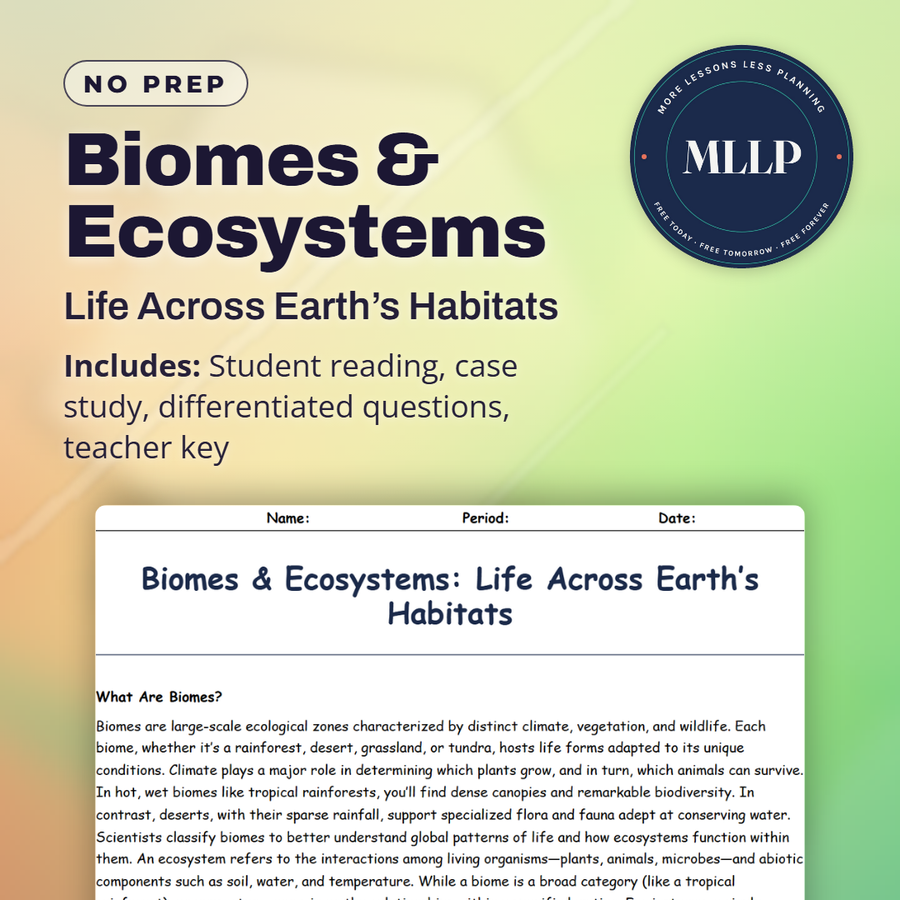
Biomes & Ecosystems: Life Across Earth’s Habitats
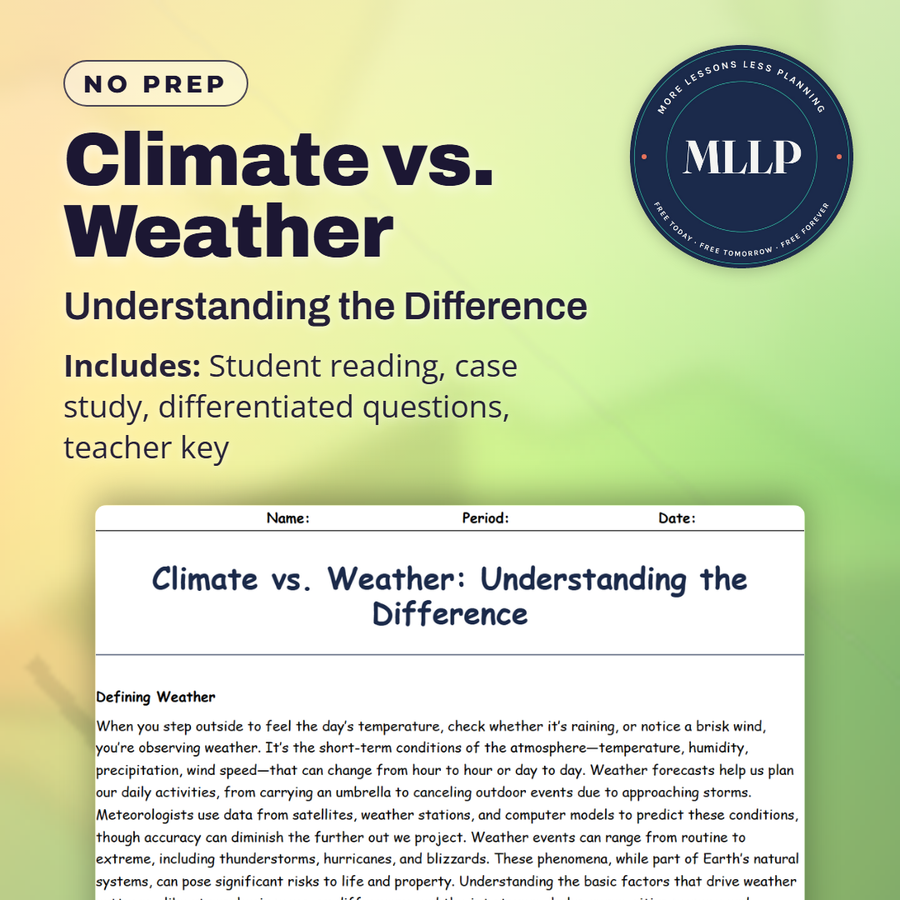
Climate vs. Weather: Understanding the Difference
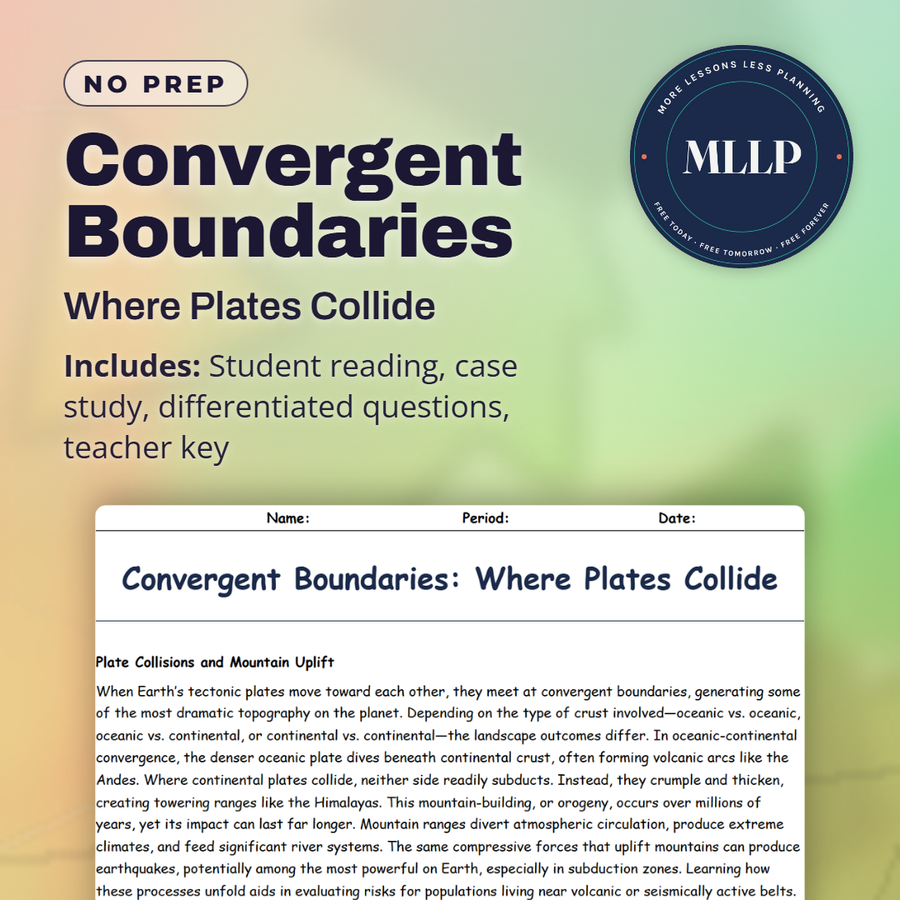
Convergent Boundaries: Where Plates Collide
Deserts: Survival in the Harshest Climates

Divergent Boundaries: Where Plates Pull Apart
Earth’s Layers: From Crust to Core
Every lesson on this site is free to download and use. If one of them saved you a prep period, you can chip in a few bucks toward my three kids' daycare fund. That's genuinely where tips go.