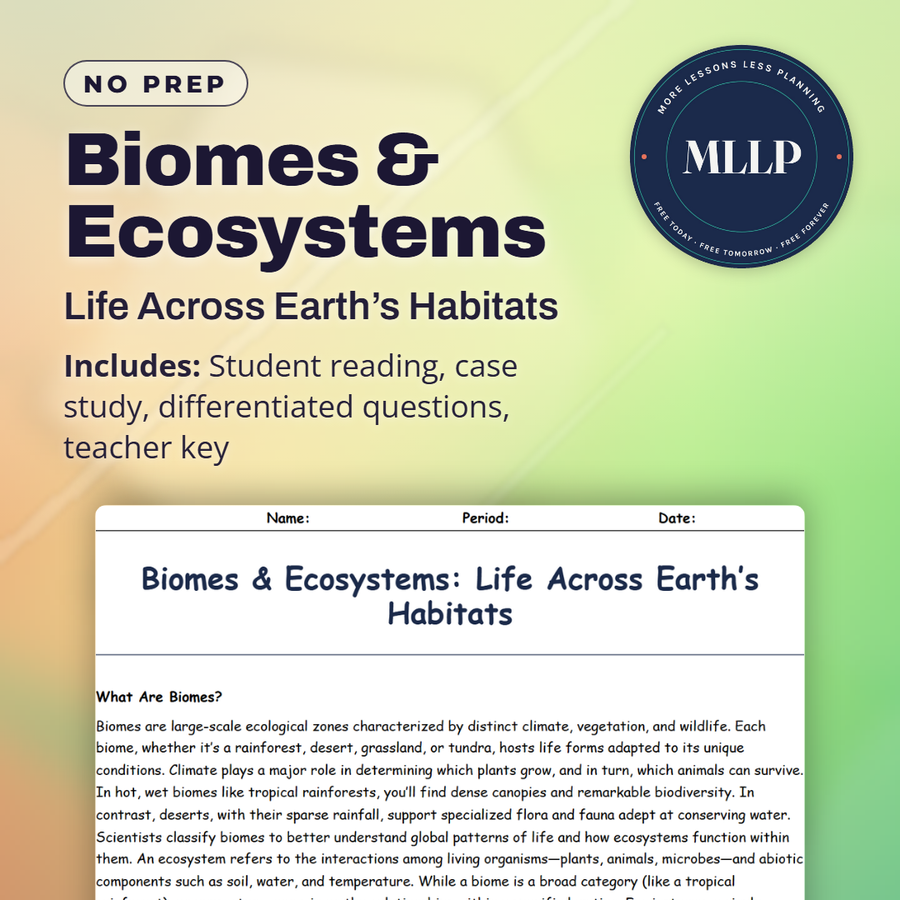
Biomes & Ecosystems: Life Across Earth’s Habitats
Quality reviewed September 2026
Facts verified September 14, 2026
- Subject
- Social Studies
- Grades
- Grades 9-12
- Length
- 7-page student worksheet
- Time
- About one 50-minute class period
- Great for
- Sub plans and independent work
- Includes
- Reading passage, comprehension questions + full answer key
- Format
- Print-and-go PDF
What students do
- Match terms like Biodiversity, Invasive Species, Carrying Capacity, and Deforestation to their correct definitions
- Fill in the blank sentences on biomes, habitat fragmentation, and animal adaptations
- Answer multiple choice questions on which biome has the greatest biodiversity, desert plant adaptations, and threats to marine biomes
- Write short answers on why biodiversity matters, how invasive species affect ecosystems, and how community-led conservation differs from government-imposed protection
What it covers
- What biomes are and how climate and vegetation define regions like tropical rainforests, deserts, and tundra, plus the difference between a biome and an ecosystem
- Biodiversity and adaptations, including desert plant water-conservation strategies and tundra animal insulation, and how invasive species disrupt ecosystem balance
- A case study on community-led conservation in Kenya's Maasai Mara savanna, balancing grazing, tourism, and wildlife protection
Start reading this worksheet
What Are Biomes?
Biomes are large-scale ecological zones characterized by distinct climate, vegetation, and wildlife. Each biome, whether it’s a rainforest, desert, grassland, or tundra, hosts life forms adapted to its unique conditions. Climate plays a major role in determining which plants grow, and in turn, which animals can survive. In hot, wet biomes like tropical rainforests, you’ll find dense canopies and remarkable biodiversity. In contrast, deserts, with their sparse rainfall, support specialized flora and fauna adept at conserving water. Scientists classify biomes to better understand global patterns of life and how ecosystems function within them. An ecosystem refers to the interactions among living organisms (plants, animals, microbes) and abiotic components such as soil, water, and temperature. While a biome is a broad category (like a tropical rainforest), an ecosystem zooms in on the relationships within a specific location. For instance, a single rainforest biome might contain thousands of distinct ecosystems, each with its own food webs and nutrient cycles. By studying biomes, ecologists reveal how nature organizes itself on a global scale, offering clues about evolution, adaptation, and the balance of life.
Biodiversity and Adaptations
Biodiversity, the variety of life in a particular habitat, tends to be highest in tropical regions. Warm temperatures, abundant rainfall, and extended growing seasons provide ample niches for plants and animals. In these areas, intense competition drives organisms to specialize. Meanwhile, biomes with harsh conditions, like the desert or tundra, boast fewer species overall, but those that do exist exhibit incredible adaptations. Desert plants, for instance, might have thick, waxy skins or deep root systems to store and find water. Tundra animals often have insulating fur and layers of fat to endure freezing temperatures. Adaptations can be structural (body shape, coloration) or behavioral (migration, hibernation). Ecosystems depend on these adaptations for balance: predators control prey populations, pollinators facilitate plant reproduction, and decomposers recycle nutrients. When an invasive species arrives without natural predators or controls, it can disrupt this equilibrium, outcompeting local species and altering entire ecosystems. Biodiversity is not just about having many species; it’s about maintaining functional relationships that enable life to flourish.
Like what you read? The full reading, the case study, and every question set are in the free download below, along with the answer key.
Why this matters
A desert plant and a tundra animal are up against opposite problems, one holding onto water and the other holding onto heat, and each survives with a completely different strategy. Lining those adaptations up next to each other is what makes the difference between a biome and an ecosystem click, since students see climate forcing different solutions to one shared challenge.
Grazing, tourism, and wildlife protection all compete for the same land in the Maasai Mara case study, and community-led management does not hand students a clean answer. I use it right after the invasive species material, so students weigh a local, negotiated solution against government-imposed protection.
From one teacher to another
This worksheet walks students through what separates a biome from an ecosystem, then digs into biodiversity and the adaptations that let species survive in extreme climates like deserts and tundra. The case study on Maasai Mara conservation gives students a real look at how local communities balance grazing and wildlife protection. I like pairing the quick reference table with the matching section since it reinforces vocabulary before students move into the short answer questions. This pairs well with a broader unit on ecosystems or human impact on the environment.
What you get
Download
Where should I send the next one?
Everything here is free and it stays that way. Leave your email and I'll send you the new lessons as they go up. You can unsubscribe from any one of them.
Related resources
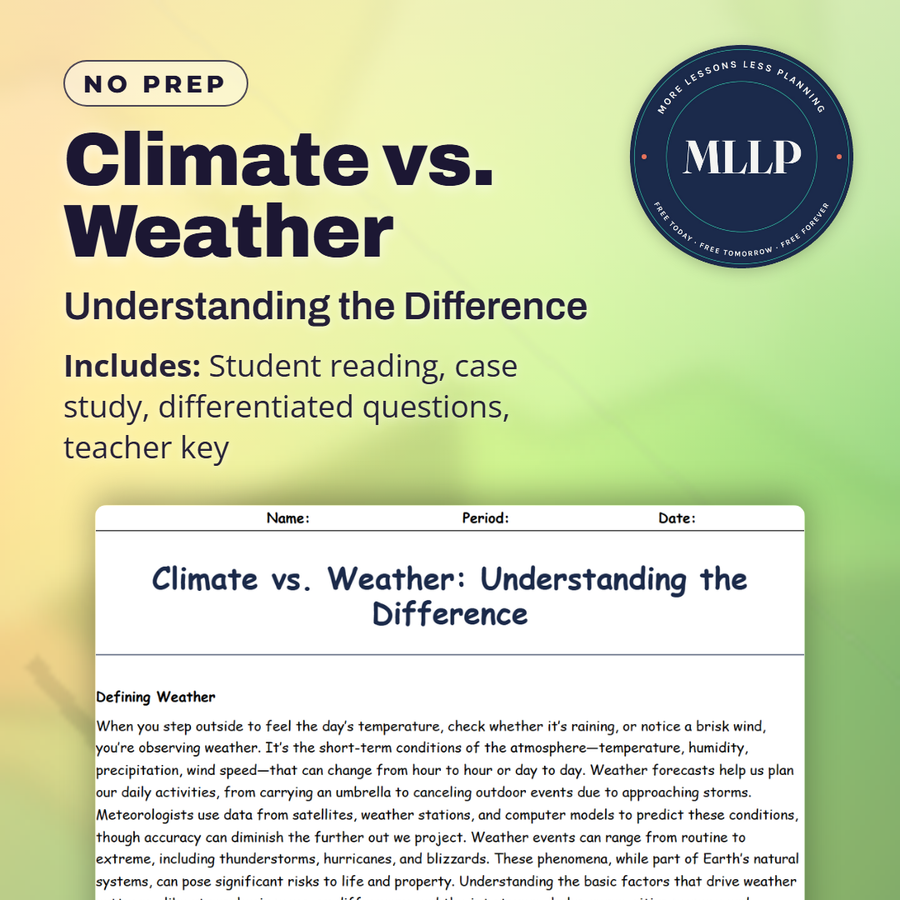
Climate vs. Weather: Understanding the Difference
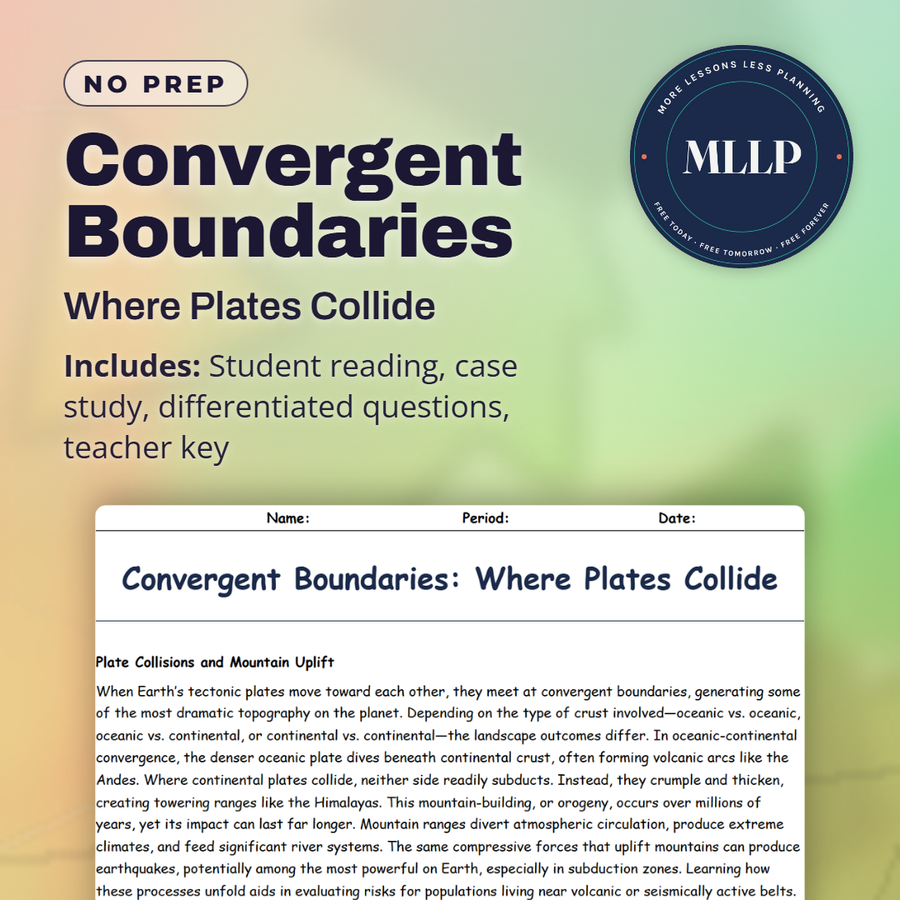
Convergent Boundaries: Where Plates Collide
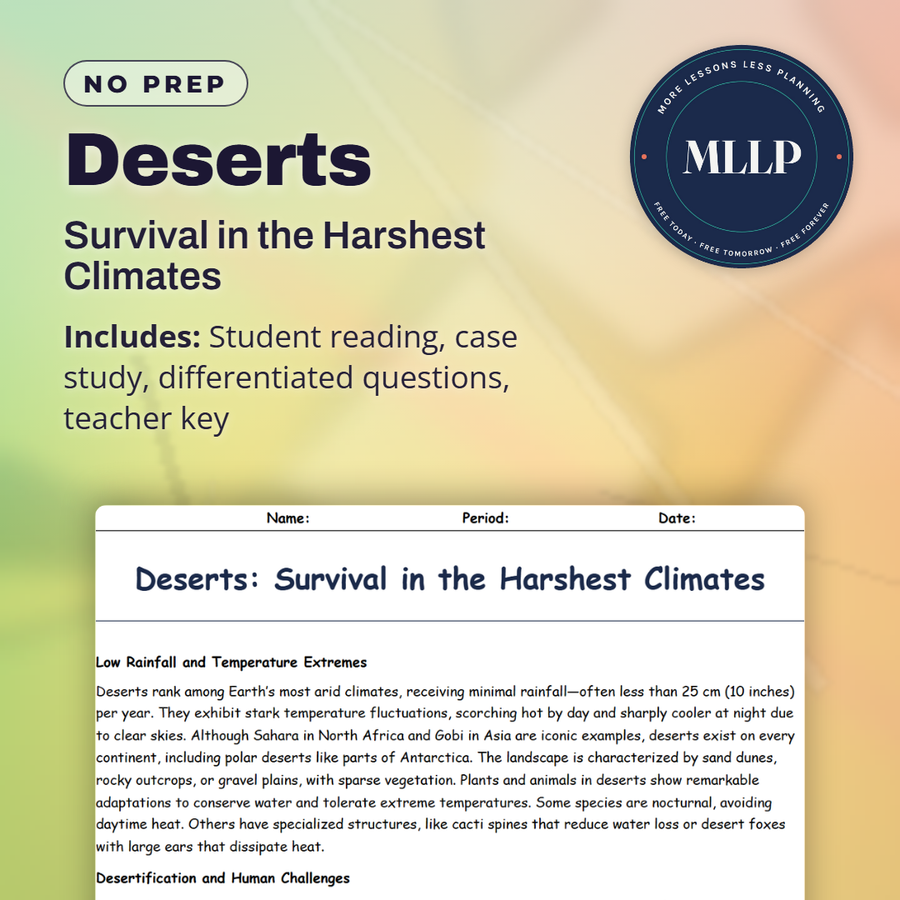
Deserts: Survival in the Harshest Climates
Divergent Boundaries: Where Plates Pull Apart
Earth’s Layers: From Crust to Core
Grasslands: Where Grasses Rule the Landscape
Every lesson on this site is free to download and use. If one of them saved you a prep period, you can chip in a few bucks toward my three kids' daycare fund. That's genuinely where tips go.