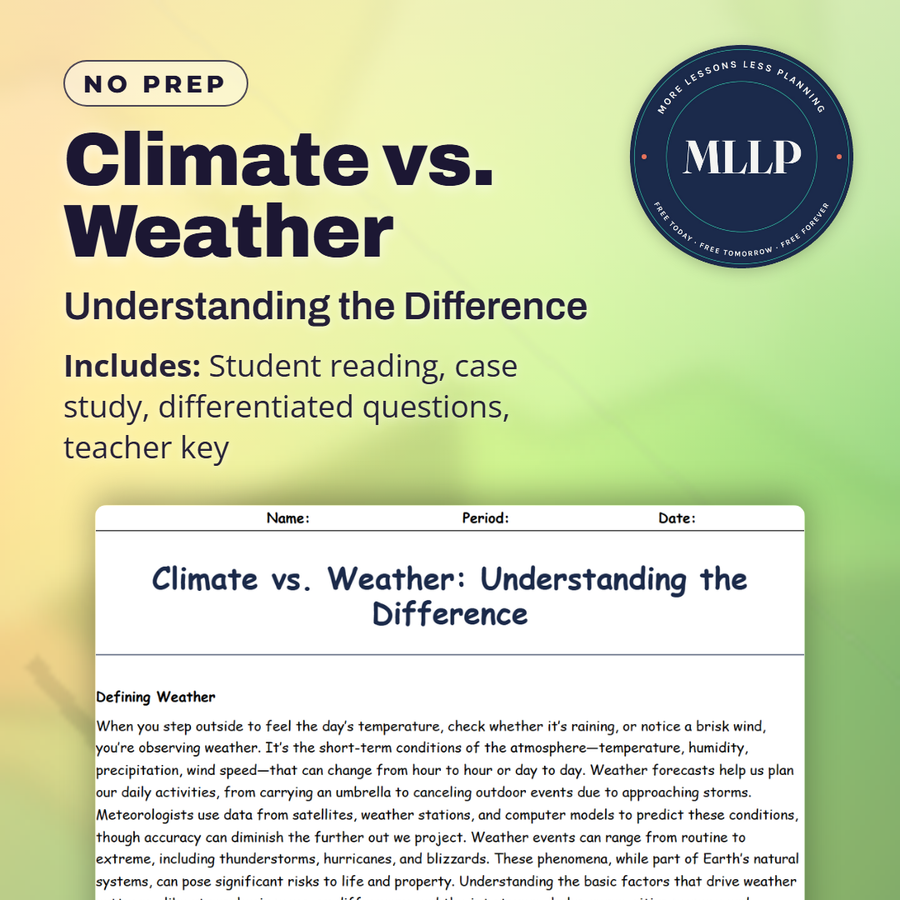
Climate vs. Weather: Understanding the Difference
Quality reviewed September 2026
Facts verified September 14, 2026
- Subject
- Social Studies
- Grades
- Grades 9-12
- Length
- 7-page student worksheet
- Time
- About one 50-minute class period
- Great for
- Sub plans and independent work
- Includes
- Reading passage, comprehension questions + full answer key
- Format
- Print-and-go PDF
What students do
- Match terms like Humidity, Blizzard, Climate, Weather, and Greenhouse Effect to their correct definitions
- Fill in the blank sentences distinguishing short-term weather events from long-term climate trends
- Answer multiple choice questions on what separates climate from weather, the timescale used to measure each, and what counts as a weather event
- Write short answers on why one cold winter does not disprove global warming, how businesses use climate data to plan, and how El Niño cycles affect coastal economies
What it covers
- The definitions of weather and climate, including the factors that shape each, like temperature, precipitation, latitude, and proximity to oceans
- Clear side-by-side examples of weather versus climate, plus practical applications in agriculture, urban planning, and disaster risk assessment
- A case study on how El Niño disrupts cold-water upwelling off Peru's coast and affects local fisheries and coastal communities
Start reading this worksheet
Defining Weather
When you step outside to feel the day’s temperature, check whether it’s raining, or notice a brisk wind, you’re observing weather. It’s the short-term conditions of the atmosphere (temperature, humidity, precipitation, wind speed) that can change from hour to hour or day to day. Weather forecasts help us plan our daily activities, from carrying an umbrella to canceling outdoor events due to approaching storms. Meteorologists use data from satellites, weather stations, and computer models to predict these conditions, though accuracy can diminish the further out we project. Weather events can range from routine to extreme, including thunderstorms, hurricanes, and blizzards. These phenomena, while part of Earth’s natural systems, can pose significant risks to life and property. Understanding the basic factors that drive weather patterns, like atmospheric pressure differences and the jet stream, helps communities prepare and respond. Despite our technological advancements, weather remains somewhat unpredictable, reflecting the complexity of Earth’s dynamic atmosphere.
What Is Climate?
Climate, by contrast, describes the long-term pattern of weather in a particular region. It’s determined by average conditions (think temperature ranges and precipitation trends) over 30 years or more. For instance, a region’s climate might be described as tropical if it’s consistently warm and receives abundant rainfall, or arid if it’s dry most of the year. The latitude of a location, its proximity to oceans or mountains, and global wind patterns significantly influence its climate. While daily weather fluctuations can be drastic, climate is more stable, revealing broader atmospheric trends. It also shapes ecosystems: deserts, rainforests, and tundra all develop under specific climatic conditions. Any changes in average temperature or precipitation patterns can alter vegetation, wildlife habitats, and even ocean currents. Scientists track climate through decades of data collection, ice cores, and satellite observations. This information feeds models that attempt to predict future climate scenarios, which are critical for policy-making, urban development, and agricultural planning.
Examples: Weather vs. Climate
An example of weather might be a sudden thunderstorm on a hot afternoon. Within a couple of hours, the storm dissipates, and the skies clear. Climate, however, tells us if hot afternoons and sudden storms are typical for that time of year in that region. If you look at a daily forecast for Atlanta, Georgia, you’re examining weather. If you examine the city’s average temperature and rainfall patterns over 50 years, you’re studying its climate. Similarly, a single snowfall in the Sahara Desert does not imply the region is experiencing a permanent shift from arid to snowy. It’s an isolated weather event. In contrast, a steady increase in average global temperatures over several decades is a climatic trend. Recognizing this distinction between weather anomalies and systematic shifts is vital for understanding debates around climate change and how we interpret historical weather records.
Like what you read? The full reading, the case study, and every question set are in the free download below, along with the answer key.
Why this matters
One cold winter does not disprove a warming planet, and this reading exists to make that distinction stick by separating a single afternoon thunderstorm from decades of temperature data. Weather and climate get used interchangeably outside the classroom, so pulling them apart with concrete examples matters more than the definitions alone ever could.
El Niño is the section that makes the distinction pay off, since a shift in ocean temperature off Peru's coast changes fishing seasons and coastal economies without any single storm to point to. I run this right before a climate zones unit, because students who can separate weather from climate stop confusing a hot day with a trend.
From one teacher to another
Weather and climate sound similar but describe completely different timescales, and this worksheet keeps that distinction front and center. The reading walks through concrete examples, from a single afternoon thunderstorm to decades of temperature data, before moving into the El Niño case study on Peruvian fisheries. That case study connects an ocean pattern directly to an economic outcome for coastal communities. This pairs well right before or after a climate zones unit, since it sets up the weather-versus-climate distinction those units rely on.
What you get
Download
Where should I send the next one?
Everything here is free and it stays that way. Leave your email and I'll send you the new lessons as they go up. You can unsubscribe from any one of them.
Related resources
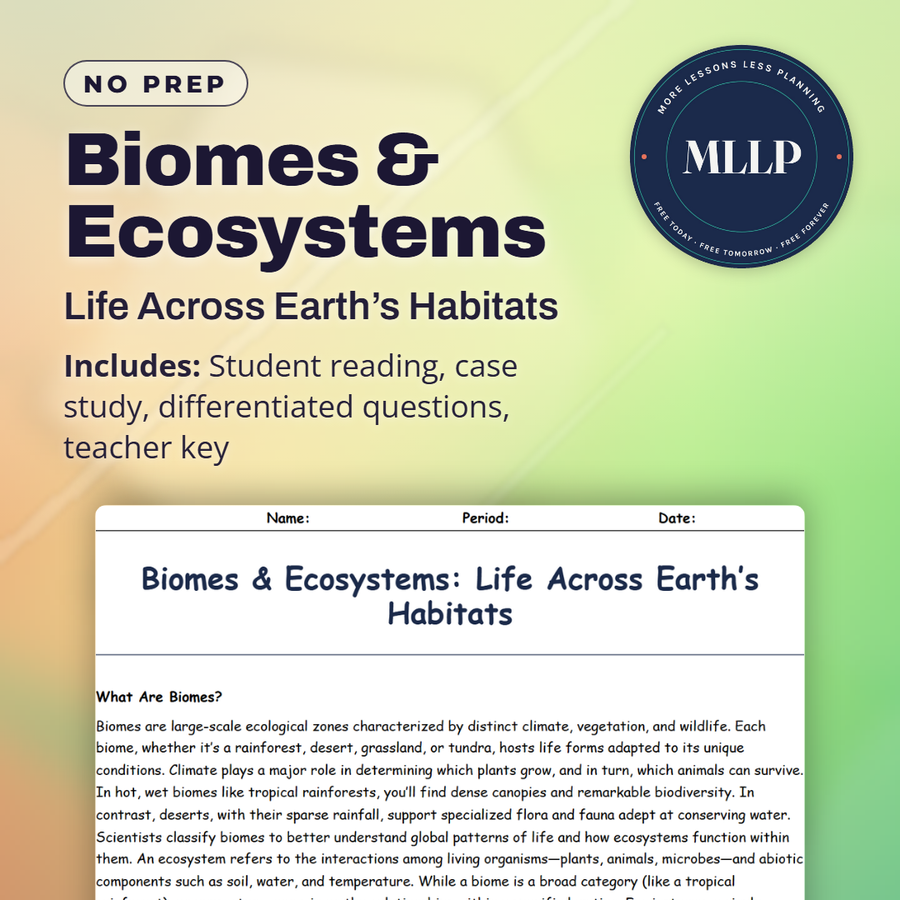
Biomes & Ecosystems: Life Across Earth’s Habitats
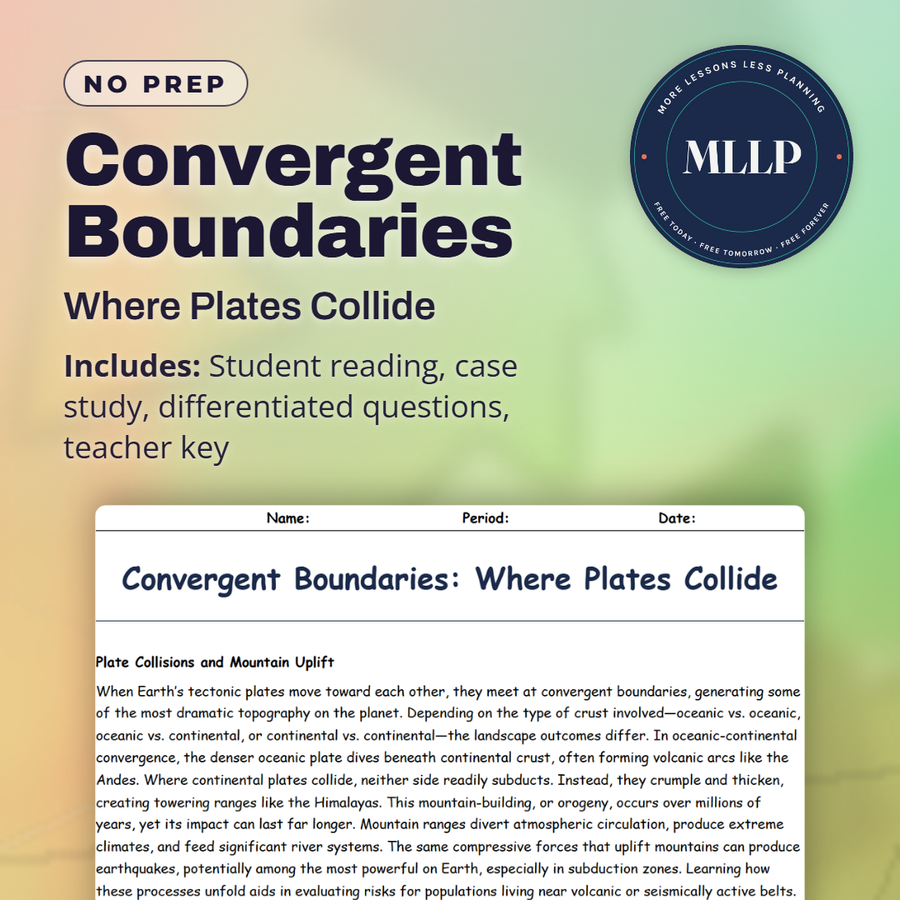
Convergent Boundaries: Where Plates Collide
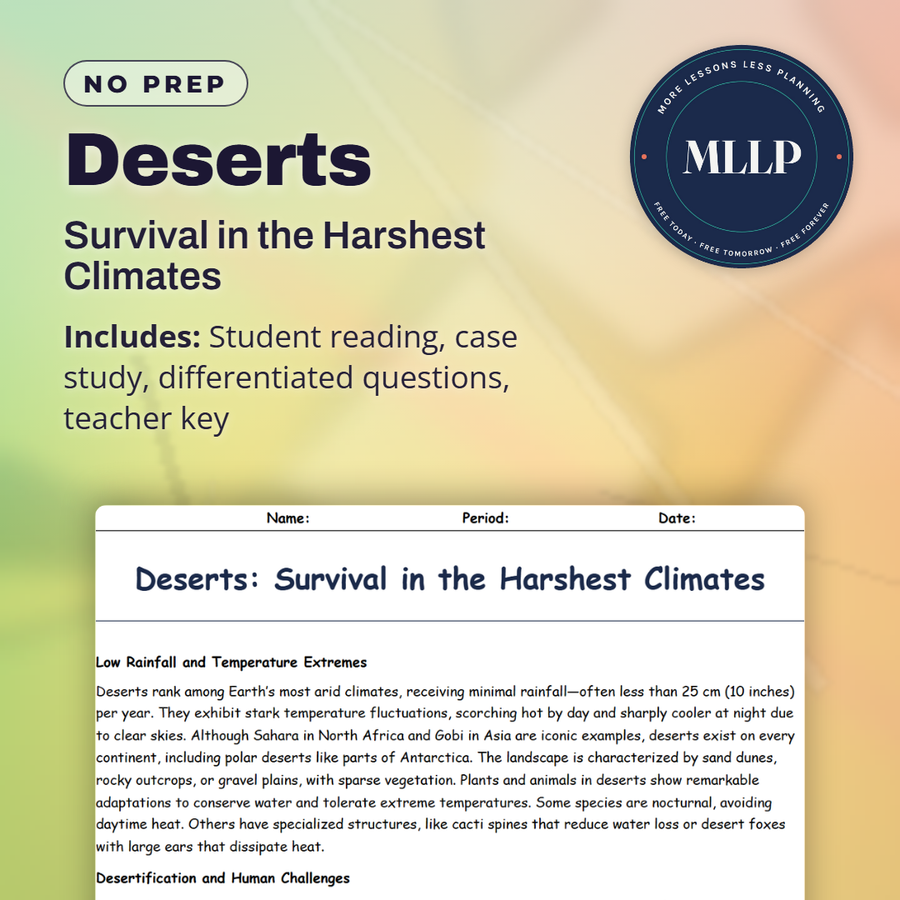
Deserts: Survival in the Harshest Climates
Divergent Boundaries: Where Plates Pull Apart
Earth’s Layers: From Crust to Core
Grasslands: Where Grasses Rule the Landscape
Every lesson on this site is free to download and use. If one of them saved you a prep period, you can chip in a few bucks toward my three kids' daycare fund. That's genuinely where tips go.