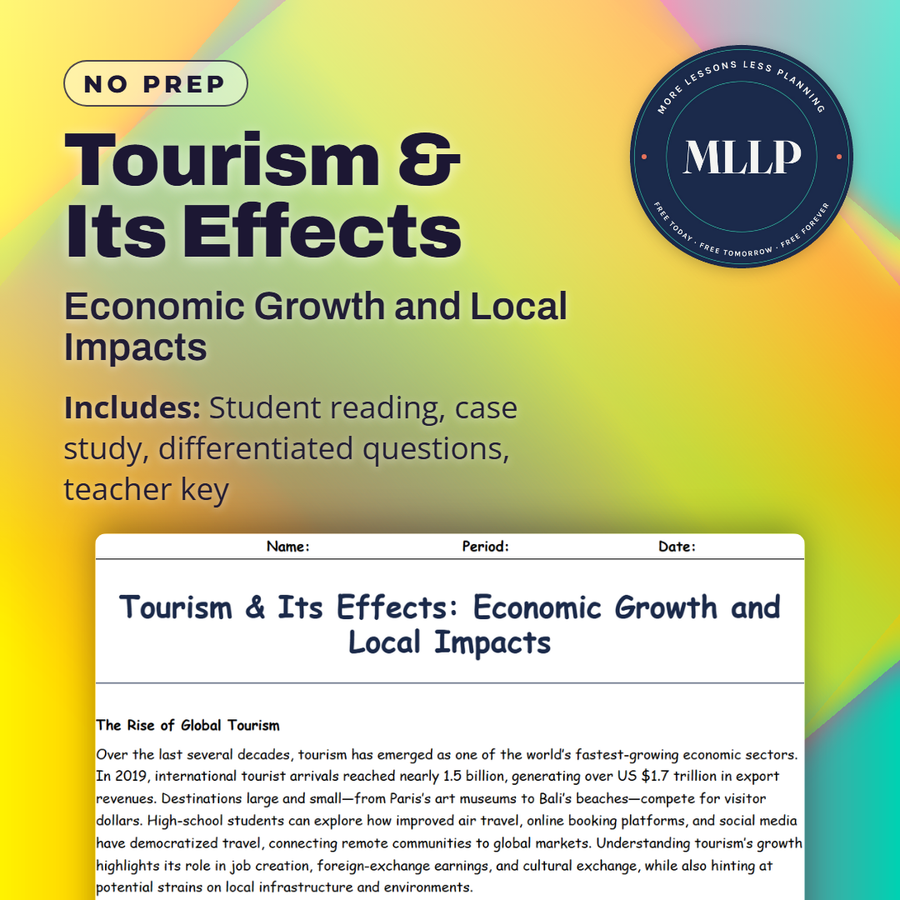
Tourism & Its Effects: Economic Growth and Local Impacts
Quality reviewed September 2026
Facts verified September 14, 2026
- Subject
- Social Studies
- Grades
- Grades 9-12
- Length
- 7-page student worksheet
- Time
- About one 50-minute class period
- Great for
- Sub plans and independent work
- Includes
- Reading passage, comprehension questions + full answer key
- Format
- Print-and-go PDF
What students do
- Match terms like carrying-capacity limit, day-trip entry fee, eco-certification, and slow-tourism to their correct definitions
- Fill in the blank sentences on tourism revenue, rising housing costs in popular destinations, and eco-certification standards
- Answer multiple choice questions on what overtourism leads to, a key sustainable tourism strategy, and what community-based tourism emphasizes
- Write short answers on the benefits and challenges of mass tourism, how entry fees fund heritage conservation, and a policy to disperse tourism flows
What it covers
- The rapid growth of global tourism and its role in job creation and foreign exchange earnings, especially for small island economies
- Overtourism in cities like Venice and Barcelona, including rising housing costs and strain on historic sites
- A case study on Venice's cruise-ship caps, entry fees, and slow-tourism efforts to manage overtourism
Start reading this worksheet
The Rise of Global Tourism
Over the last several decades, tourism has emerged as one of the world’s fastest-growing economic sectors. In 2019, international tourist arrivals reached nearly 1.5 billion, generating over US $1.7 trillion in export revenues. Destinations large and small (from Paris’s art museums to Bali’s beaches) compete for visitor dollars. High-school students can explore how improved air travel, online booking platforms, and social media have democratized travel, connecting remote communities to global markets. Understanding tourism’s growth highlights its role in job creation, foreign-exchange earnings, and cultural exchange, while also hinting at potential strains on local infrastructure and environments.
Economic Benefits of Tourism
Tourism stimulates GDP and employment in multiple ways. Visitors spend on lodging, dining, transportation, and entertainment, creating multiplier effects: hotel revenue funds local suppliers, while tour operators hire guides and drivers. In small island economies, such as the Maldives or Seychelles, tourism can account for over 25 percent of GDP and up to 60 percent of foreign-exchange earnings. Workers gain entry-level jobs in hospitality, while entrepreneurs launch restaurants, souvenir shops, and adventure-tour ventures. For students, comparing tourism’s share of GDP across countries illustrates how service industries drive modern economies, and why policymakers prioritize investments in airports, hotels, and marketing campaigns.
Negative Impacts & Overtourism
Despite its benefits, unregulated tourism can inflict social, economic, and environmental harms, a phenomenon known as overtourism. Historic centers like Barcelona or Venice see overcrowded streets, rising housing costs as locals sell properties to short-term rental platforms, and strained public services. Natural sites such as coral reefs suffer from anchor damage and pollution, while wildlife habitats face disruption from safari vehicles. Overreliance on tourism also exposes economies to external shocks: pandemics, political unrest, or natural disasters can collapse visitor numbers overnight. By examining both sides, students appreciate why balanced development and robust regulation are crucial for long-term prosperity. Table 1: Tourism’s Share of GDP and Employment in Selected Countries
Like what you read? The full reading, the case study, and every question set are in the free download below, along with the answer key.
Why this matters
Venice makes a living off visitors and is also being worn down by them. Tourism revenue funds jobs and, for small island economies especially, brings in foreign exchange few other industries can match. But when a city receives far more visitors than its streets and housing were built for, costs rise for residents, and historic sites take damage that eco-certification and carrying-capacity limits are meant to prevent.
My students walk in treating tourism as an unambiguous good, all jobs and no downside, until they see what an entry fee and a cruise-ship cap are trying to fix. Weighing Venice's slow-tourism policies against its tourism income forces them to hold both truths at once, that an industry can support a local economy and strain it in the same year.
From one teacher to another
This reading pairs tourism's economic upside with the real strain it puts on places like Venice, a more honest picture than simply celebrating travel and GDP growth. The Venice case study gives students concrete policies to evaluate, like entry fees and cruise-ship caps, instead of an abstract debate. It pairs well with the economic sectors reading, since tourism sits squarely in the tertiary sector.
What you get
Download
Where should I send the next one?
Everything here is free and it stays that way. Leave your email and I'll send you the new lessons as they go up. You can unsubscribe from any one of them.
Related resources

Agriculture & Food Production: Feeding the Future
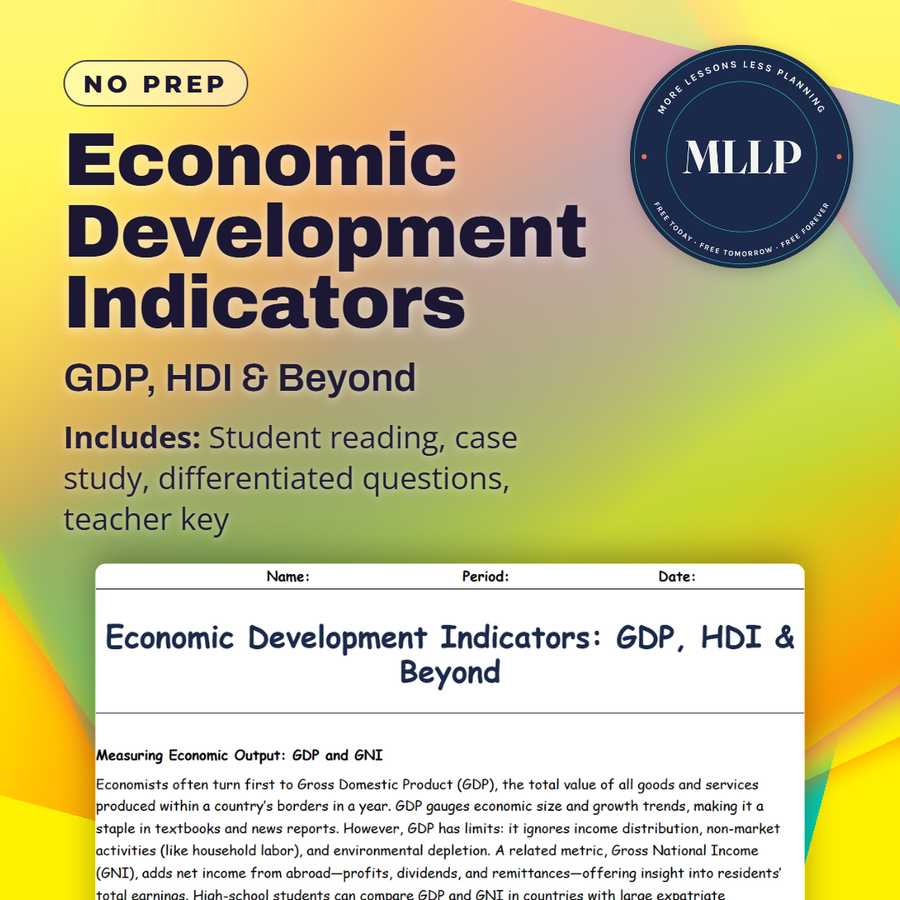
Economic Development Indicators: GDP, HDI & Beyond
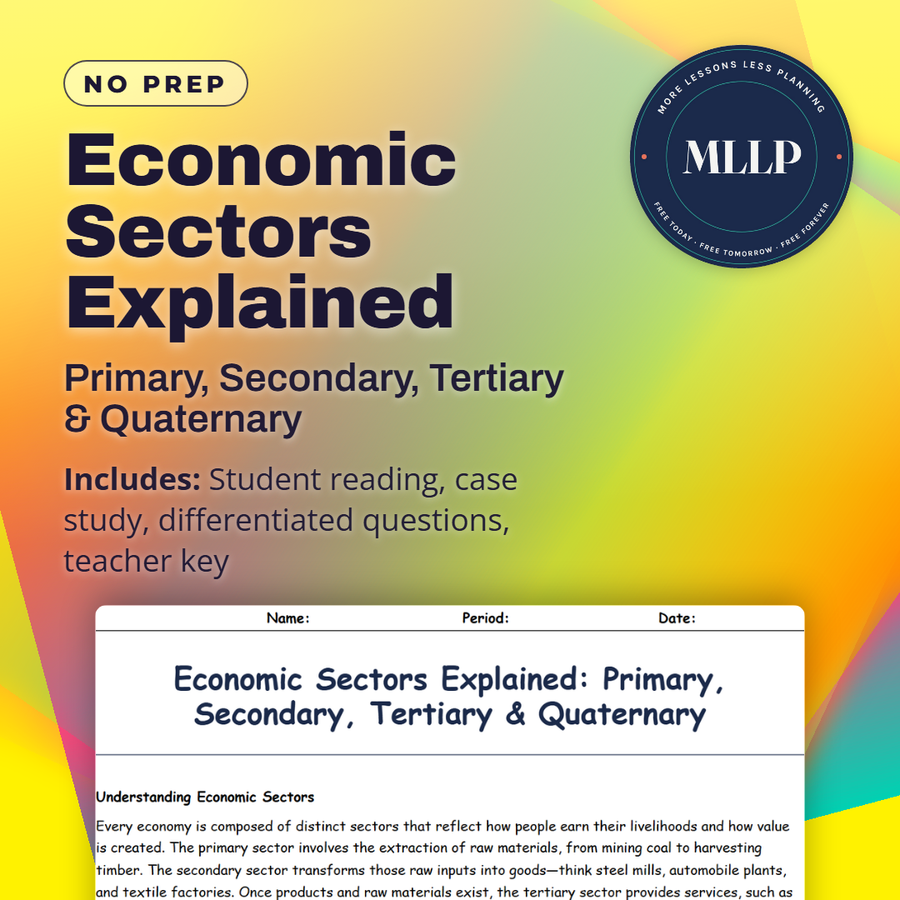
Economic Sectors Explained: Primary, Secondary, Tertiary & Quaternary
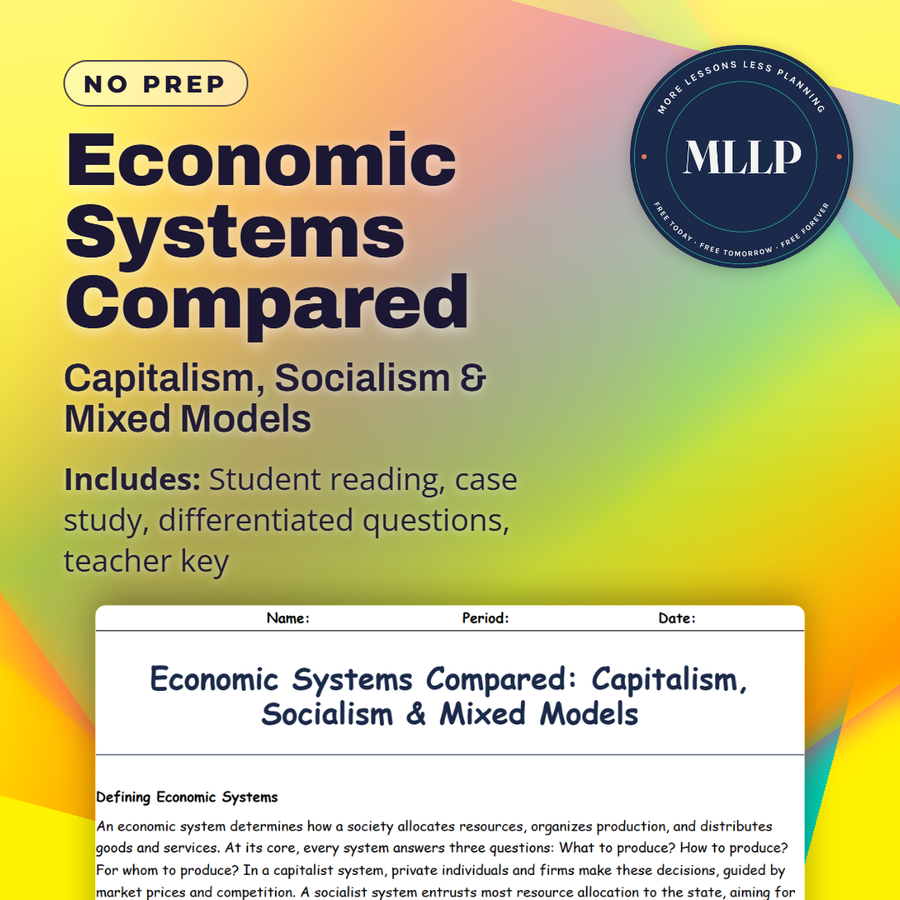
Economic Systems Compared: Capitalism, Socialism & Mixed Models
Globalization & Outsourcing: Connecting World Economies
Industrial Resources & Sustainability: Balancing Growth
Every lesson on this site is free to download and use. If one of them saved you a prep period, you can chip in a few bucks toward my three kids' daycare fund. That's genuinely where tips go.