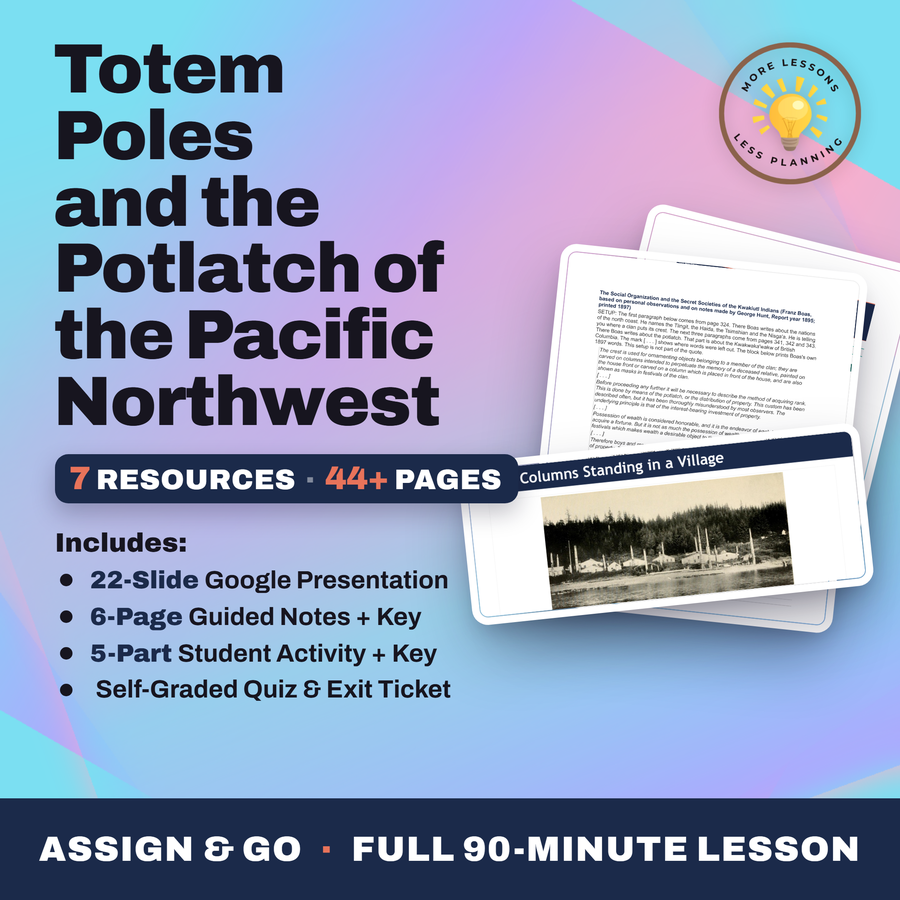
Totem Poles and the Potlatch of the Pacific Northwest
- Slide deck
- Guided notes
- Guided notes teacher key
- Activity + answer key
- Quiz + answer key
- Exit ticket + answer key
- Teacher guide
- Teacher presentation notes
Where should I send the next one?
Everything here is free and it stays that way. Leave your email and I'll send you the new lessons as they go up. You can unsubscribe from any one of them.
Every file in this toolkit
Related resources
Cliff Palace and the Ancestral Puebloans
The Mound Builders of Cahokia
Bound Labor: How Servitude Became Slavery
Puritan New England Life
The Great Awakening: Preaching That Crossed the Colonies
The Salem Witch Trials, 1692
What students do
- Decode what a carved crest column tells a viewer about a family's rights and rank
- Compare three ways the Pacific Northwest coast kept a record: the columns, community testimony, and outside ethnography
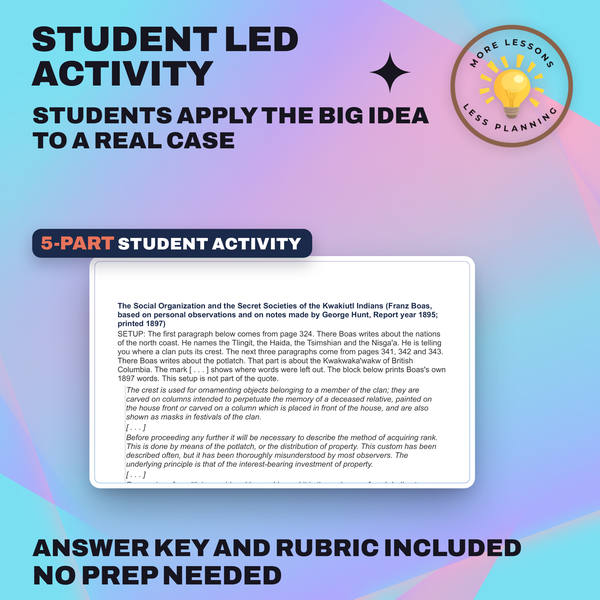
- Read Franz Boas and George Hunt's 1897 account of the potlatch and rule on what a witnessed ceremony could actually prove
- Explain how blankets functioned as the coast's unit of value in Boas's 1897 record
What it covers
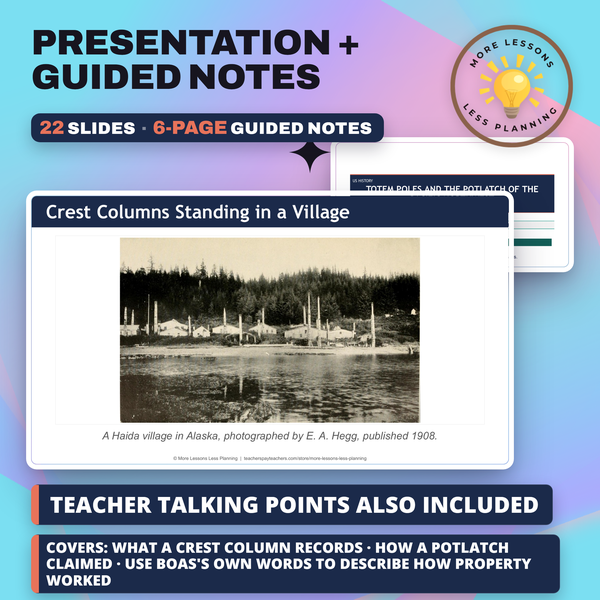
- What a crest column records, and who has the right to raise one
- How a potlatch turned a family's claim into something a whole village had witnessed
- Why George Hunt is credited as a co-researcher rather than a mere informant
- What an 1897 ethnography can and cannot settle about a coast with no alphabet
Learning targets
- Explain what a crest column records and who has the right to raise one.
- Explain how a potlatch claimed and confirmed standing in front of witnesses.
- Use Boas's own words to describe how property worked as a record.
- Name who set a record down, when, and from what standpoint.
- Judge what these records can and cannot settle about the coast.
From one teacher to another
This is the lesson I built to retire the "totem pole tells a story" line for good. Students learn that a crest column is a claim carved in cedar, and that the potlatch is what made the claim stick, since accepting a gift in front of witnesses meant accepting a family's rank. I like that the reading comes from Boas and Hunt together, because George Hunt's name on that title page is its own lesson about who actually did the work of recording a coast that didn't keep any records on paper.
Every lesson on this site is free to download and use. If one of them saved you a prep period, you can chip in a few bucks toward my three kids' daycare fund. That's genuinely where tips go.